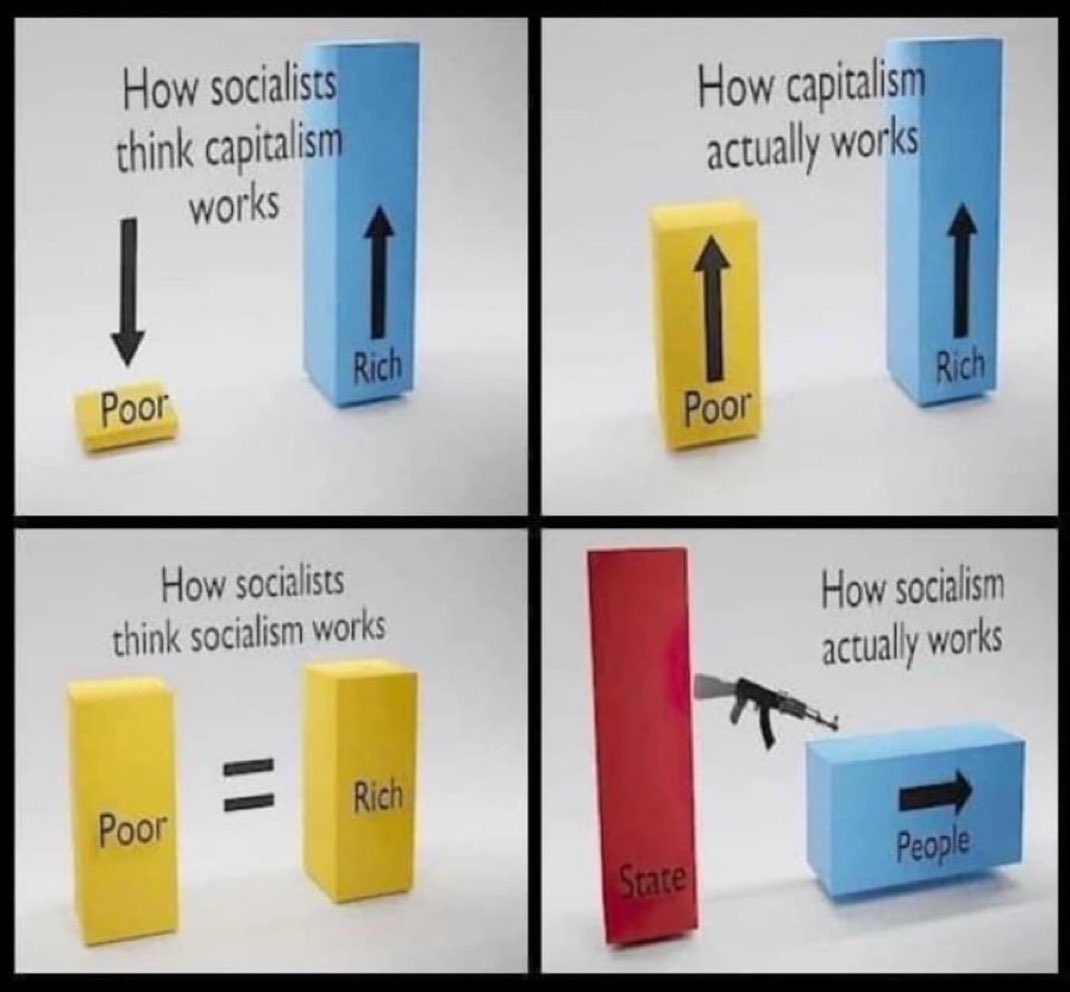
The main political difference is that some support seemingly compassionate ideas that worsen problems, while others propose functional solutions. However, arguing this is often futile since most people see disagreement with their intuitive stance as a threat. #Bitcoin
‼️ Fake HMRC crypto texts are doing the rounds ‼️
This is not just phishing.
If you give away your HMRC login details, scammers may be able to identify your address, the value of your crypto, and where it may be held.
That is the kind of information that can fuel wrench attacks.
Do not click it.
Do not enter anything.
Use https://t.co/TuQvCtugaq directly.
Please share this so fewer people get caught.
BULL is challenging in court the EU's dangerous mass surveillance program for crypto users, DAC8.
I cannot stand by and do nothing while faceless globalist bureaucrats put the security and privacy of millions of Europeans at risk.
We will get DAC8 repealed.
An open letter to
@RayDalio
Ray, In May, you explained why central banks won't hold Bitcoin: "Transactions can be monitored and potentially controlled, which is why central banks aren't looking to hold it."
In case you repeat this claim publicly again, you should be aware that this claim is factually incorrect.
Context: for the last 2 years I've taught the ESG module on Cambridge's digital assets course for regulators.
Source: https://t.co/B21ECB9ajT
The regulators I teach are doing exactly what you claim they are not.
Further context:
In the 2 cohorts I taught, the attendees came from 24 central banks, several of them G20 monetary authorities, others from across the emerging world.
They enrolled, paid, and worked through 8 weeks of their own accord to understand digital assets properly.
More than a third were department heads or directors.
The rest were the supervisors and analysts who apply the rules. In short: the data says that the institutions many (including yourself) assume are asleep on this are quietly sending their staff to class.
A few have also moved past class.
For example: in November 2025 the Czech National Bank made its first Bitcoin purchase: a small test portfolio, explicitly a 2-year experiment before any decision on reserves. Its governor is openly making the case for it.
Source: https://t.co/QafLDsXoZg
In June 2025 Ukraine introduced a bill to let its central bank hold Bitcoin in reserves - permission rather than obligation. Source: https://t.co/3PK8yYQ438
There are a further two central banks now actively pursuing similar strategies (hold Bitcoin) that I cannot disclose publicly.
Granted, none of this means central banks are about to hold Bitcoin at scale, and you may be partially right that many never will. But "aren't looking" is a different claim, which the data already contradicts.
24 central banks are already looking into it, 1 already holds a test position, another has introduced a bill to allow it.
I have followed your work closely for many years. This is the first time I've seen you make a claim that is not well supported by the data.
You and I share a long meditation practice. The grounded clarity it brings has always been, to me, your hallmark. On this one claim, it is the exception.
I'd be happy to discuss this in further depth with you so that your public commentaries on the behaviors of Central Banks with respect to Bitcoin are well-supported by data in future.
Sincerely
Daniel
We’ve been on a side-quest, and we have good news from the other side! 40 million Kenyans now have a bitcoin Lightning Address! They didn’t need to sign up for one because they had it this entire time, attached to the phone number in their pocket!
Try it: send bitcoin to [email protected] (254 is optional). The BTC arrives as KES in their M-Pesa. ⚡ EVERY M-Pesa number works. All 40,000,000.
Wallets with LUD-09 support give you a nice clickable link to see your M-Pesa receipt. For example: https://t.co/OK0R62jNWt
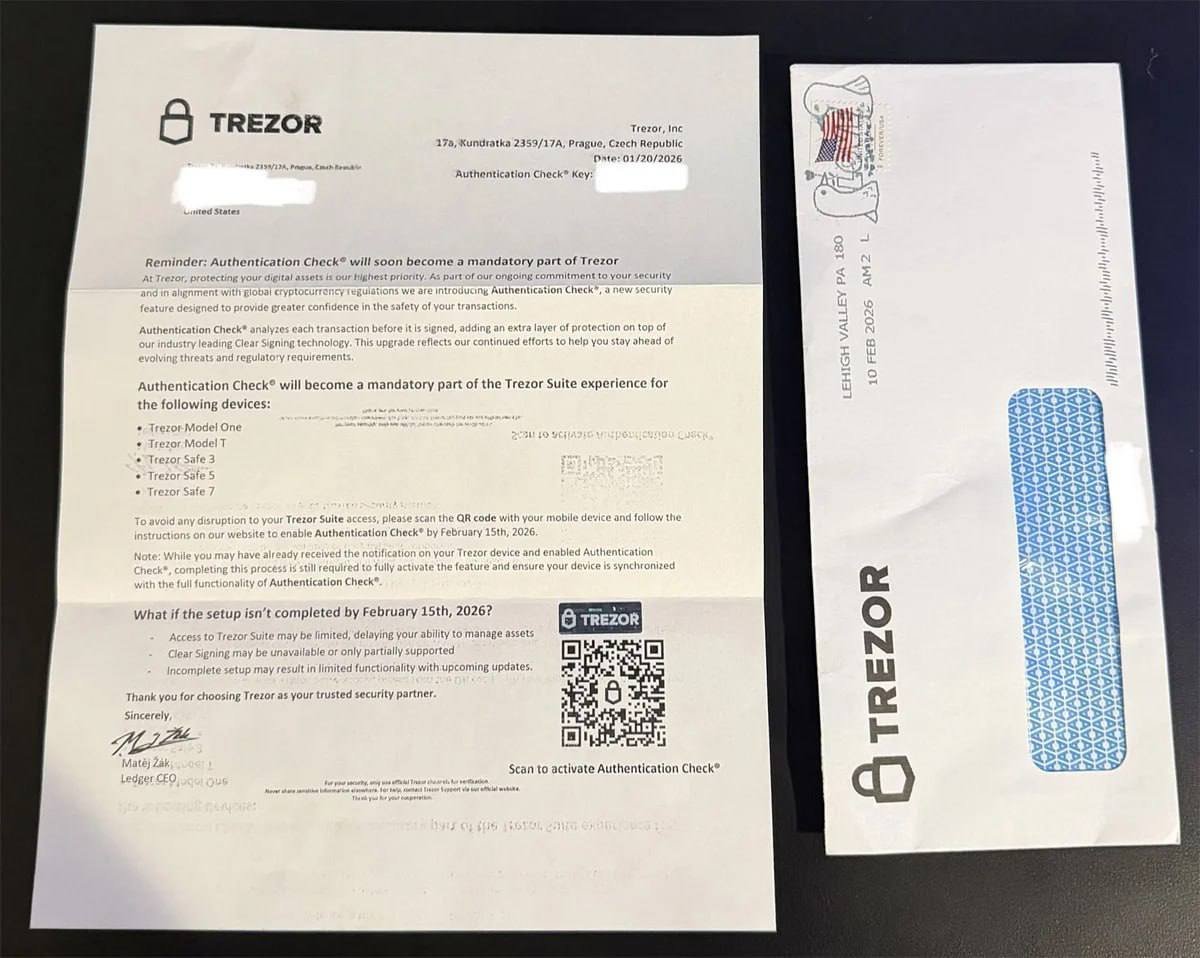
🚨 ALERT: Scammers are mailing fake Trezor and Ledger letters with QR codes that lead to phishing sites designed to steal users’ crypto wallet recovery phrases.
@newscientist . @newscientist apparently not aware that when you post (and repost) low-quality content that the Twitter community identifies as misinformation, you get penalized for it.
DON'T UPLOAD YOUR FAMILY PHOTOS TO AI
DON'T UPLOAD YOUR FAMILY PHOTOS TO AI
DON'T UPLOAD YOUR FAMILY PHOTOS TO AI
DON'T UPLOAD YOUR FAMILY PHOTOS TO AI
DON'T UPLOAD YOUR FAMILY PHOTOS TO AI
Elon Musk is not being unfair to BBC.
I've seen the exact pattern of behavior @elonmusk is talking about in other domains. For example, BBC was one of the leading publishers of misinformation about the environmental impact of Bitcoin mining.
As recently as Nov 2023 they published this misinformation. The study it was based on was debunked 4 months later due to fundamental methodological flaws.
No retraction. No acknowledgment. No accountability from BBC.
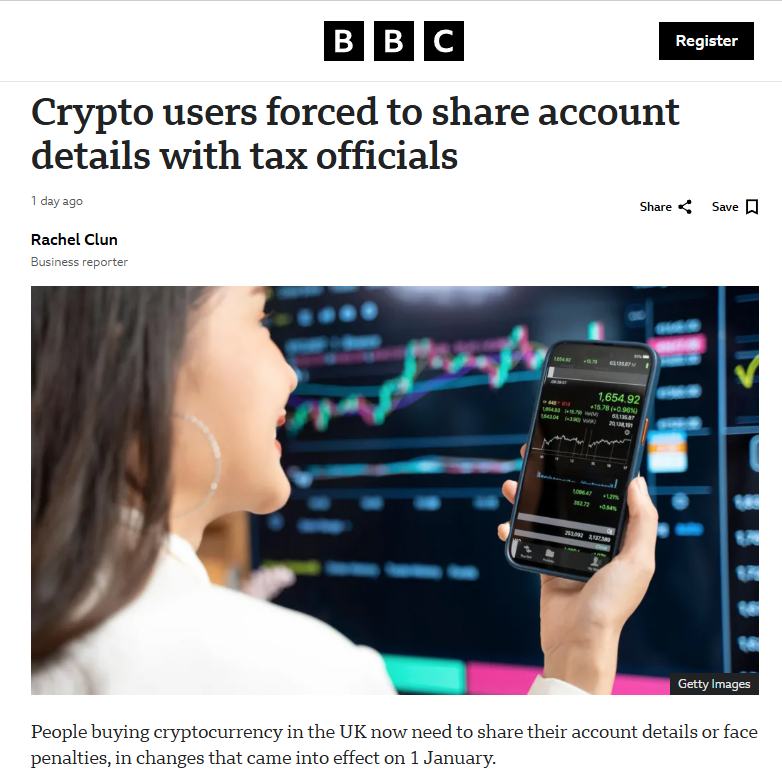
There’s been a lot of sloppy reporting on the UK’s new ‘crypto tax disclosure rules’. See this headline from the BBC by way of example: “Crypto users forced to share account details with tax officials”.
Wrong – the obligation (and any fines for non-compliance) is on the exchange, and not on the individual user. More accurately: “Cryptocurrency exchanges…must now ensure they automatically share up to date and accurate accounts of all their users' earnings.”
Individuals have already for many years been required to declare sales and chargeable gains on Bitcoin and crypto on their tax returns and to pay any tax due as a result. See the link in the thread below, dating from 2018, as evidence.
@bitcoinpolicyuk responded in detail on the new proposals (see the quoted post below). This development is ultimately down to the UK’s implementation of the international arrangement known as CARF, or the Crypto-asset Reporting Framework.
CARF is dangerous for many reasons, but the most acute one is likely to be the huge risk of customer and citizen harm as a result of the gathering, sharing, and almost inevitable leak and disclosure, of extremely detailed personal information, down to minute details of your holdings and even your home address.
Remember that this information is going to be shared not just with HMRC, but also with tax authorities across the world. If you choose to continue to use a KYC’d exchange, be aware that the exchange is now duty bound to gather, share and disclose this information; and if there’s one thing we can know for certain, it’s that governments cannot keep your data safe.
So plan accordingly, be prepared to pay tax on any gains (as is currently the law), and be thoughtful about matters of personal security such as alarms and camera systems at the very least.
Otherwise, if you would prefer to take steps to protect yourself and your family from the very acute risks of data loss, harvesting, and potential physical harm, you may choose to buy Bitcoin without going through a KYC process – namely peer to peer, and as it was initially intended. We have previously tested @vexl, @hodlhodl, @Azteco_ and @peachbitcoin, or @RoboSats and @bisqnetwork for more confident users.
These are all linked in the thread below. None of them require you to submit personal data or to put yourself or your family in harm’s way, and none of them are caught by the requirements to report your holdings or trading to HMRC.
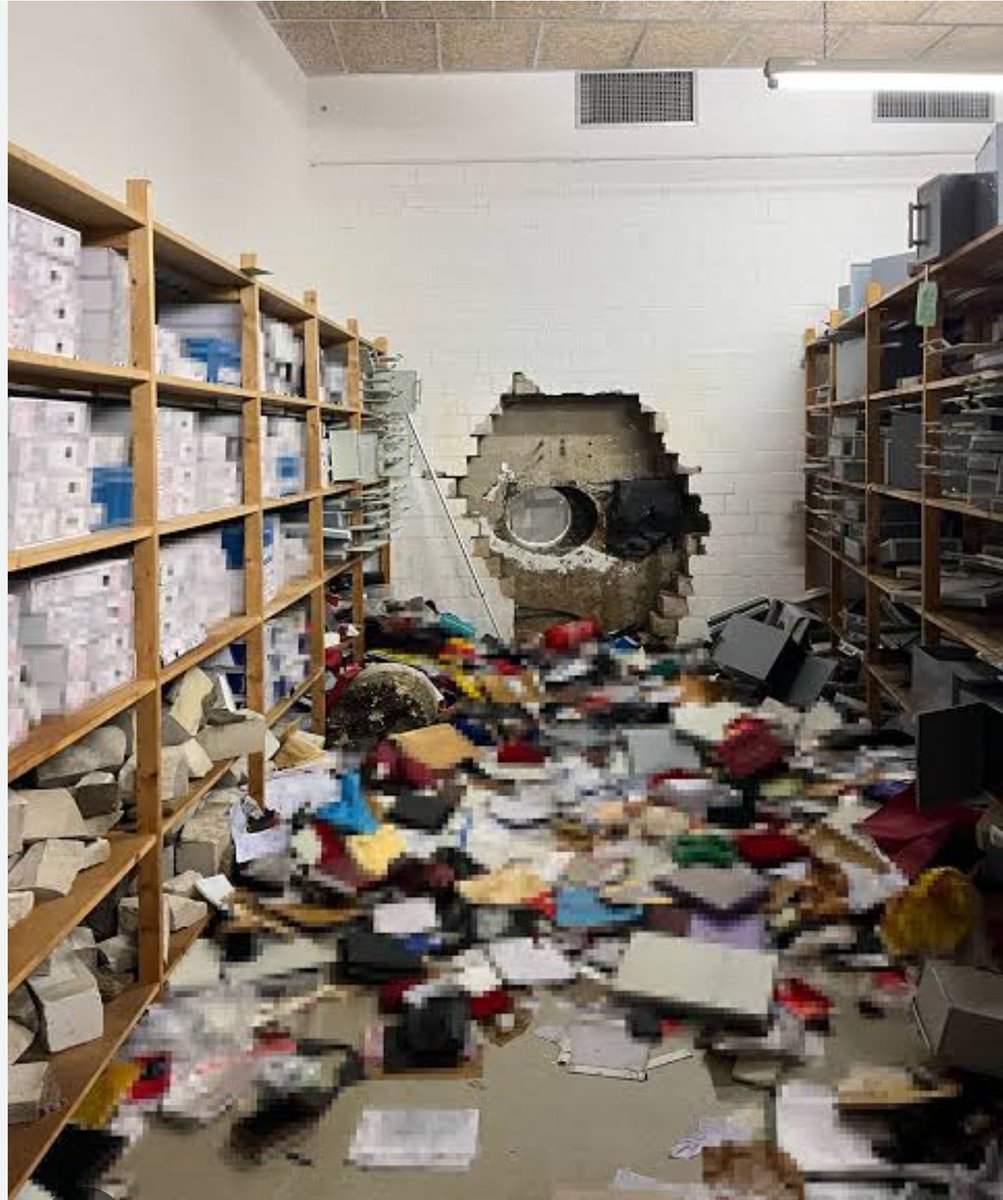
Bild 1 - Werteschutzraum einer Bank in Gambia
Bild 2 - Werteschutzraum Sparkasse Gelsenkirchen
Echt jetzt? Nicht euer Ernst? IVAR-Regale von Ikea und Schuhkartons aus Pappe. Und da lagen weit über 30 Mille drin?
Mein Fahrrad ist besser gesichert!
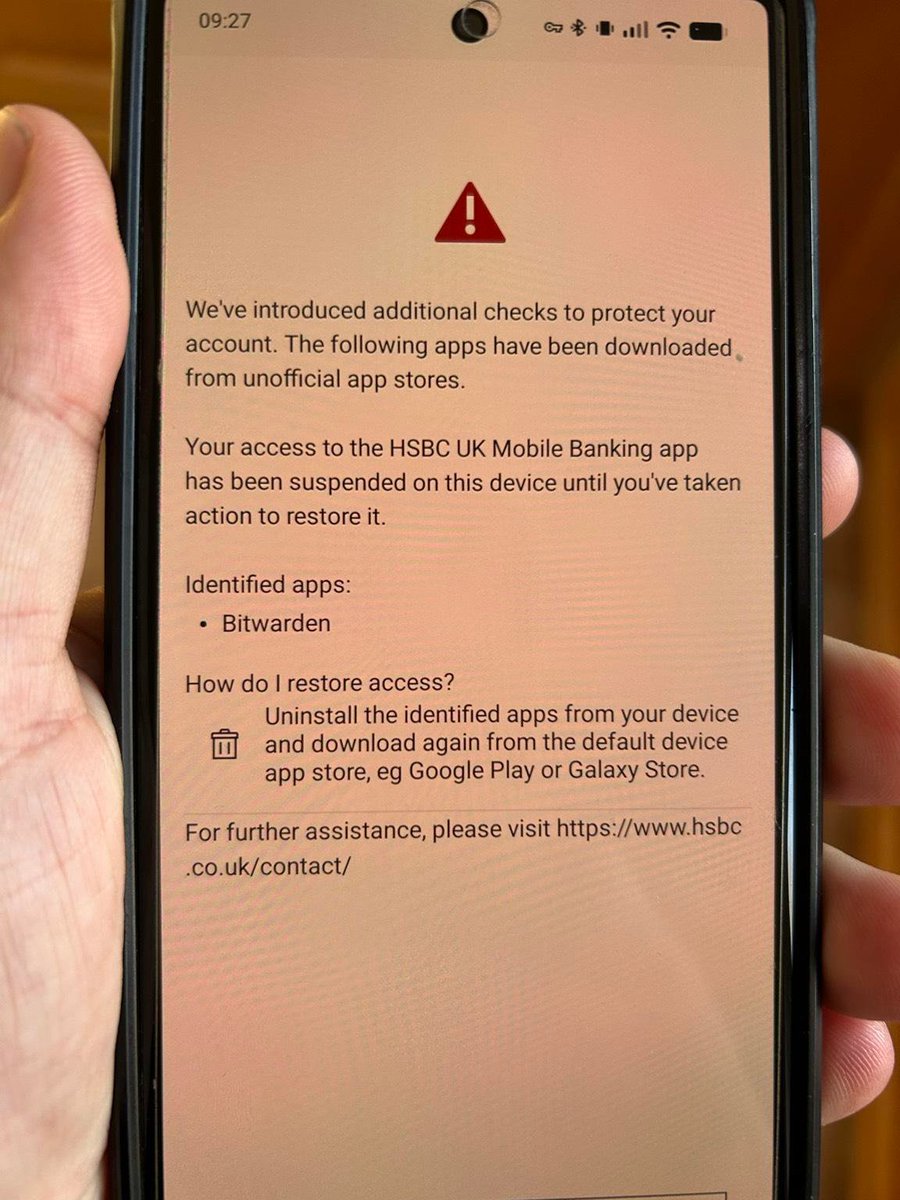
Banking apps can now read which apps you have installed and also from where.
You installed something they don't like?
Sorry, can't access your money until you stop your wrongthinking.
We are entering the dark ages of technology.
Dear @LucyRigby,
I hope you will take a moment to read this. We spoke in the Anacta Suite at Labour Conference. During your conversation with Visa I asked you directly:
“As the UK is the third largest sovereign holder of bitcoin, should the Treasury be researching a strategic bitcoin reserve to strengthen our economic position.”
You took our organisation’s details and said you would follow up.
Before and after that conversation @BitcoinPolicyUK has reached out to you on multiple occasions. We have contacted your office with open letters, emails, our bitcoin manifesto, invitations to meet, policy documents and evidence based submissions. These include the strategic bitcoin reserve letter published here:
https://t.co/dARrTmw4Tu
We have also submitted our policy material which can be found here:
https://t.co/fOi78heeqd
We have had no response.
Our work is independent and carried out in the public interest. We ask only for the opportunity to contribute to the national conversation.
In contrast, Visa and now Ripple appear to have extraordinary access and influence at the highest levels of government.
At Labour Conference Visa representatives advocated for identity linked payments. Ripple is now pushing centralised digital infrastructure that aligns closely with government controlled money, a model that risks creating the most monitored and permissioned financial system we have ever seen.
At the Texas Bankers Association roundtable Visa pushed programmable money and tightly controlled payment rails.
These systems are often marketed as “inclusive,” but reports show they exclude the most vulnerable and create new risks for privacy and autonomy.
Visa and Ripple have both the budget and the access to push this vision across every forum they enter.
This creates a serious problem. The UK is being guided by advice from companies with vast resources and strong commercial incentives. Their interests are not aligned with the interests of citizens.
When ministers hear mainly from large corporates they receive a narrow and distorted view of what the country’s digital future should be. This leads to policy ideas that weaken privacy reduce freedom and place growing power in the hands of intermediaries.
Bitcoin offers the opposite:
- It strengthens national resilience
- It supports privacy and individual freedom
- It provides an open monetary network that no corporation can manipulate
- It is the only digital asset aligned with the principles of a free and open society
My concern is simple. The UK is receiving advice shaped by powerful corporate interests whose incentives run directly against the public good, and Bitcoin is being sidelined at the moment it matters most. This is not a party political issue, it is about ensuring that government hears from more than one type of stakeholder. The stakes include financial stability energy innovation and the UK’s global competitiveness.
https://t.co/2cHUMxFdWS
Bitcoin Policy UK remains ready to brief you at any time. There is no cost and no commercial motive. Only evidence independence and a commitment to helping the UK make informed decisions.
I hope we can finally begin this conversation.
Yours sincerely
Susie Violet Ward
CEO, Bitcoin Policy UK