@saylor What will be the bitcoin higher level in 2026-2027 if every oil and gas vessel pay Iran in bitcoin in order to pass through the Strait of Hormuz?
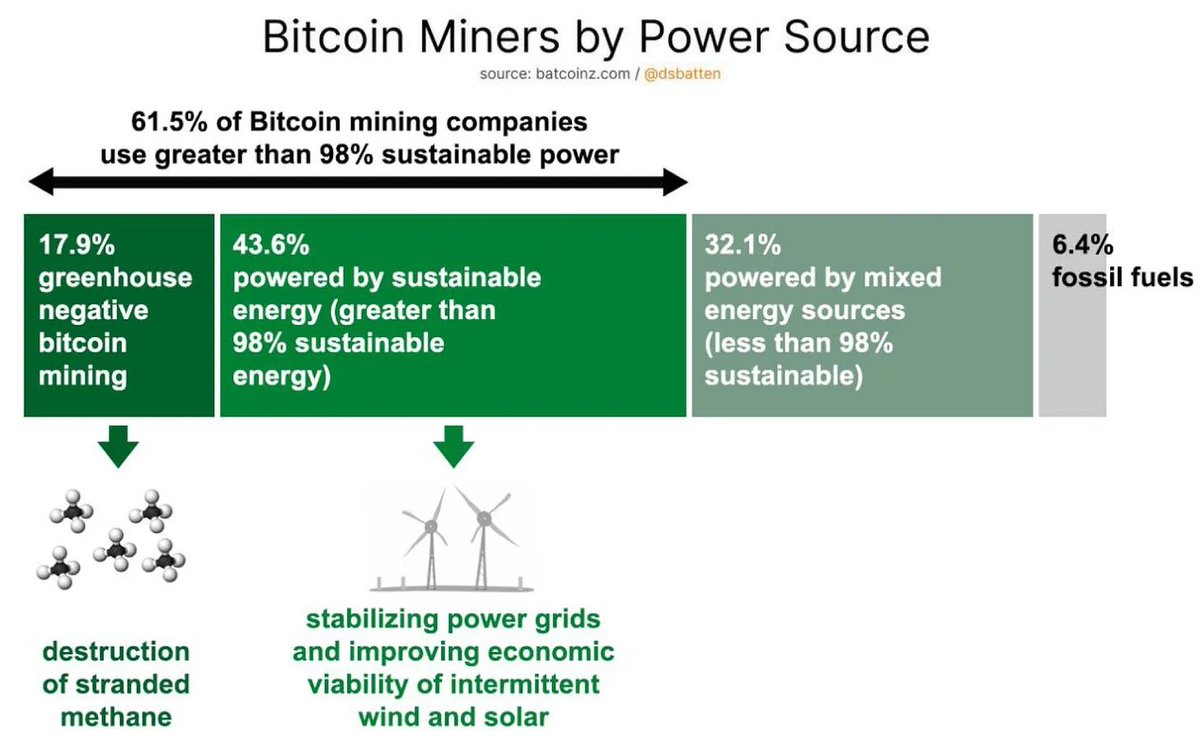
Bitcoin mining uniquely monetizes natural gas value with far greater efficiency than traditional LNG export projects. While LNG delivered into Asia currently clears around USD $9/GJ (CFR), Bitcoin mining can convert the same gas stream directly into digital value on-site, eliminating liquefaction, shipping, and regasification costs, and capturing energy value that would otherwise be stranded or flared.
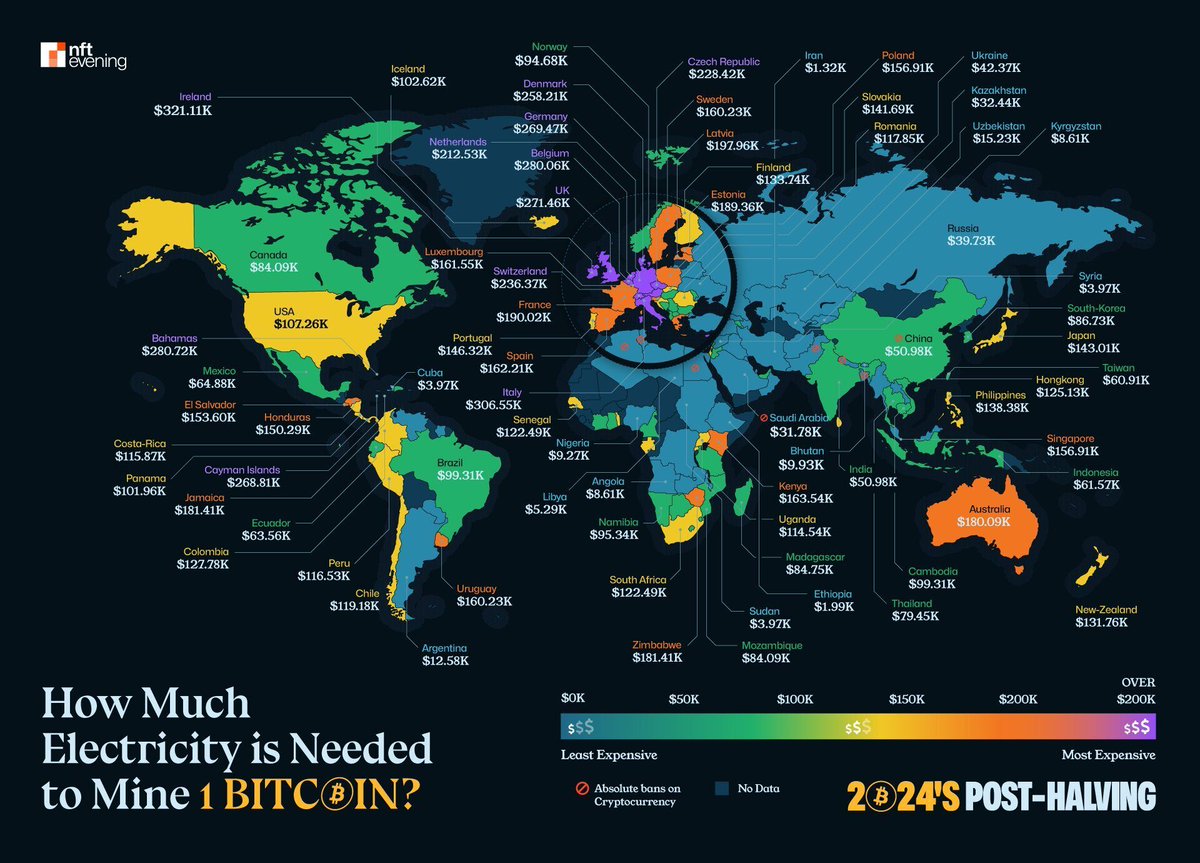
Bitcoin can be viewed as a form of digital energy. Its price has a fundamental support level determined by the cost of electricity in kilowatt-hours (kWh). The current average energy efficiency of Bitcoin mining is around 21.5 joules per terahash (J/T), meaning that producing one Bitcoin requires approximately 1,206,774 kWh of electrical energy. Thus, Bitcoin’s intrinsic value is closely tied to the cost of electricity. For example, if your local electricity rate is USD $0.10 per kWh, the baseline—or “rock bottom”—price of Bitcoin would be roughly USD $120,677 per BTC. In comparison, today’s market price is USD $108,259 per BTC.
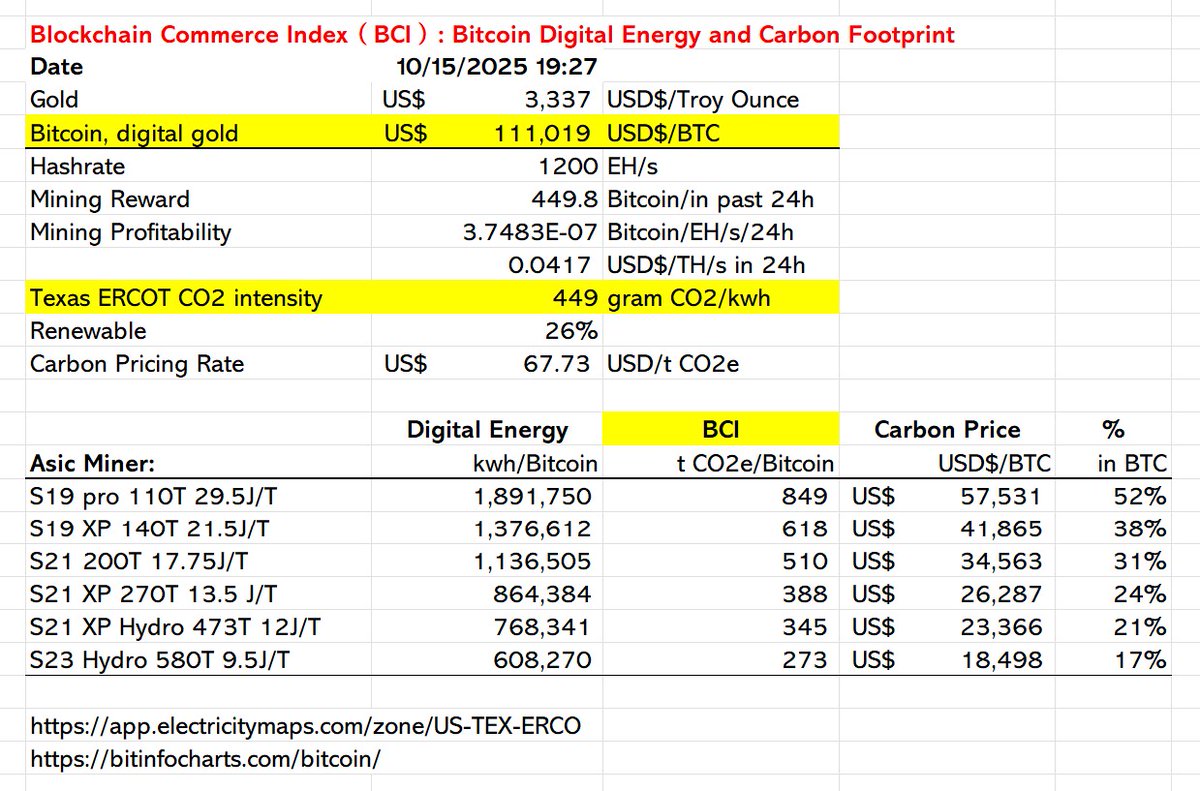
Bitcoin also bears the environmental liability associated with global warming and carbon pricing. If mining occurs in Texas, USA, where the ERCOT grid’s carbon intensity averages 372 grams of CO₂ per kWh, the production of one Bitcoin results in approximately 449 tons of CO₂ emissions. At a carbon price of USD $67.67 per ton of CO₂e, this translates to a carbon liability of about USD $30,419 per Bitcoin—equivalent to roughly 28% of Bitcoin’s current market price. So far, nearly all Bitcoin holders and traders have largely ignored the cryptocurrency’s carbon footprint and its environmental liabilities.
However, the next major global factor that could prevent Bitcoin from reaching USD $1 million may well be its carbon cost. Eventually, this issue will become impossible to overlook—when that day comes, the reckoning could erase around 28% of Bitcoin’s value from the balance sheets of institutional holders.
Bitcoin can be viewed as a form of digital energy. Its price has a fundamental support level determined by the cost of electricity in kilowatt-hours (kWh). The current average energy efficiency of Bitcoin mining is around 21.5 joules per terahash (J/T), meaning that producing one Bitcoin requires approximately 1,206,774 kWh of electrical energy. Thus, Bitcoin’s intrinsic value is closely tied to the cost of electricity. For example, if your local electricity rate is USD $0.10 per kWh, the baseline—or “rock bottom”—price of Bitcoin would be roughly USD $120,677 per BTC. In comparison, today’s market price is USD $108,259 per BTC. Bitcoin also bears the environmental liability associated with global warming and carbon pricing. If mining occurs in Texas, USA, where the ERCOT grid’s carbon intensity averages 372 grams of CO₂ per kWh, the production of one Bitcoin results in approximately 449 tons of CO₂ emissions. At a carbon price of USD $67.67 per ton of CO₂e, this translates to a carbon liability of about USD $30,419 per Bitcoin—equivalent to roughly 28% of Bitcoin’s current market price. So far, nearly all Bitcoin holders and traders have largely ignored the cryptocurrency’s carbon footprint and its environmental liabilities. However, the next major global factor that could prevent Bitcoin from reaching USD $1 million may well be its carbon cost. Eventually, this issue will become impossible to overlook—when that day comes, the reckoning could erase around 28% of Bitcoin’s value from the balance sheets of institutional holders.
Bitcoin can be viewed as a form of digital energy. Its price has a fundamental support level determined by the cost of electricity in kilowatt-hours (kWh). The current average energy efficiency of Bitcoin mining is around 21.5 joules per terahash (J/T), meaning that producing one Bitcoin requires approximately 1,206,774 kWh of electrical energy. Thus, Bitcoin’s intrinsic value is closely tied to the cost of electricity. For example, if your local electricity rate is USD $0.10 per kWh, the baseline—or “rock bottom”—price of Bitcoin would be roughly USD $120,677 per BTC. In comparison, today’s market price is USD $108,259 per BTC. Bitcoin also bears the environmental liability associated with global warming and carbon pricing. If mining occurs in Texas, USA, where the ERCOT grid’s carbon intensity averages 372 grams of CO₂ per kWh, the production of one Bitcoin results in approximately 449 tons of CO₂ emissions. At a carbon price of USD $67.67 per ton of CO₂e, this translates to a carbon liability of about USD $30,419 per Bitcoin—equivalent to roughly 28% of Bitcoin’s current market price. So far, nearly all Bitcoin holders and traders have largely ignored the cryptocurrency’s carbon footprint and its environmental liabilities. However, the next major global factor that could prevent Bitcoin from reaching USD $1 million may well be its carbon cost. Eventually, this issue will become impossible to overlook—when that day comes, the reckoning could erase around 28% of Bitcoin’s value from the balance sheets of institutional holders.
Bitcoin can be viewed as a form of digital energy. Its price has a fundamental support level determined by the cost of electricity in kilowatt-hours (kWh). The current average energy efficiency of Bitcoin mining is around 21.5 joules per terahash (J/T), meaning that producing one Bitcoin requires approximately 1,206,774 kWh of electrical energy.
Thus, Bitcoin’s intrinsic value is closely tied to the cost of electricity. For example, if your local electricity rate is USD $0.10 per kWh, the baseline—or “rock bottom”—price of Bitcoin would be roughly USD $120,677 per BTC. In comparison, today’s market price is USD $108,259 per BTC.
Bitcoin also bears the environmental liability associated with global warming and carbon pricing. If mining occurs in Texas, USA, where the ERCOT grid’s carbon intensity averages 372 grams of CO₂ per kWh, the production of one Bitcoin results in approximately 449 tons of CO₂ emissions. At a carbon price of USD $67.67 per ton of CO₂e, this translates to a carbon liability of about USD $30,419 per Bitcoin—equivalent to roughly 28% of Bitcoin’s current market price.
So far, nearly all Bitcoin holders and traders have largely ignored the cryptocurrency’s carbon footprint and its environmental liabilities. However, the next major global factor that could prevent Bitcoin from reaching USD $1 million may well be its carbon cost. Eventually, this issue will become impossible to overlook—when that day comes, the reckoning could erase around 28% of Bitcoin’s value from the balance sheets of institutional holders.
Bitcoin can be viewed as a form of digital energy. Its price has a fundamental support level determined by the cost of electricity in kilowatt-hours (kWh). The current average energy efficiency of Bitcoin mining is around 21.5 joules per terahash (J/T), meaning that producing one Bitcoin requires approximately 1,206,774 kWh of electrical energy.
Thus, Bitcoin’s intrinsic value is closely tied to the cost of electricity. For example, if your local electricity rate is USD $0.10 per kWh, the baseline—or “rock bottom”—price of Bitcoin would be roughly USD $120,677 per BTC. In comparison, today’s market price is USD $108,259 per BTC.
Bitcoin also bears the environmental liability associated with global warming and carbon pricing. If mining occurs in Texas, USA, where the ERCOT grid’s carbon intensity averages 372 grams of CO₂ per kWh, the production of one Bitcoin results in approximately 449 tons of CO₂ emissions. At a carbon price of USD $67.67 per ton of CO₂e, this translates to a carbon liability of about USD $30,419 per Bitcoin—equivalent to roughly 28% of Bitcoin’s current market price.
So far, nearly all Bitcoin holders and traders have largely ignored the cryptocurrency’s carbon footprint and its environmental liabilities. However, the next major global factor that could prevent Bitcoin from reaching USD $1 million may well be its carbon cost. Eventually, this issue will become impossible to overlook—when that day comes, the reckoning could erase around 28% of Bitcoin’s value from the balance sheets of institutional holders.
Bitcoin can be viewed as a form of digital energy. Its price has a fundamental support level determined by the cost of electricity in kilowatt-hours (kWh). The current average energy efficiency of Bitcoin mining is around 21.5 joules per terahash (J/T), meaning that producing one Bitcoin requires approximately 1,206,774 kWh of electrical energy.
Thus, Bitcoin’s intrinsic value is closely tied to the cost of electricity. For example, if your local electricity rate is USD $0.10 per kWh, the baseline—or “rock bottom”—price of Bitcoin would be roughly USD $120,677 per BTC. In comparison, today’s market price is USD $108,259 per BTC.
Bitcoin also bears the environmental liability associated with global warming and carbon pricing. If mining occurs in Texas, USA, where the ERCOT grid’s carbon intensity averages 372 grams of CO₂ per kWh, the production of one Bitcoin results in approximately 449 tons of CO₂ emissions. At a carbon price of USD $67.67 per ton of CO₂e, this translates to a carbon liability of about USD $30,419 per Bitcoin—equivalent to roughly 28% of Bitcoin’s current market price.
So far, nearly all Bitcoin holders and traders have largely ignored the cryptocurrency’s carbon footprint and its environmental liabilities. However, the next major global factor that could prevent Bitcoin from reaching USD $1 million may well be its carbon cost. Eventually, this issue will become impossible to overlook—when that day comes, the reckoning could erase around 28% of Bitcoin’s value from the balance sheets of institutional holders.
Bitcoin can be viewed as a form of digital energy. Its price has a fundamental support level determined by the cost of electricity in kilowatt-hours (kWh). The current average energy efficiency of Bitcoin mining is around 21.5 joules per terahash (J/T), meaning that producing one Bitcoin requires approximately 1,206,774 kWh of electrical energy.
Thus, Bitcoin’s intrinsic value is closely tied to the cost of electricity. For example, if your local electricity rate is USD $0.10 per kWh, the baseline—or “rock bottom”—price of Bitcoin would be roughly USD $120,677 per BTC. In comparison, today’s market price is USD $108,259 per BTC.
Bitcoin also bears the environmental liability associated with global warming and carbon pricing. If mining occurs in Texas, USA, where the ERCOT grid’s carbon intensity averages 372 grams of CO₂ per kWh, the production of one Bitcoin results in approximately 449 tons of CO₂ emissions. At a carbon price of USD $67.67 per ton of CO₂e, this translates to a carbon liability of about USD $30,419 per Bitcoin—equivalent to roughly 28% of Bitcoin’s current market price.
So far, nearly all Bitcoin holders and traders have largely ignored the cryptocurrency’s carbon footprint and its environmental liabilities. However, the next major global factor that could prevent Bitcoin from reaching USD $1 million may well be its carbon cost. Eventually, this issue will become impossible to overlook—when that day comes, the reckoning could erase around 28% of Bitcoin’s value from the balance sheets of institutional holders.
CI Index — September 26, 2025:
Next-gen ASIC S23 (9.5 J/TH) delivers Bitcoin digital energy at 541,984 kWh per BTC. while the phase-out S19 miner, with an efficiency of 29.5 J/TH, consumes 1,685,597 kWh to mine one Bitcoin.
The S21 miner, operating at 200TH/s with an efficiency rate of 17.75J/T, requires 926,529 kWh to mine one Bitcoin. At a hosting power rate of USD$0.060 per kWh, the baseline cost to produce one Bitcoin is USD$55,591. The current market price of Bitcoin is USD$115,935, meaning there is a surplus value of USD$54,344 which can be used to cover ASIC miner depreciation and any additional market-derived value.
Restated Calculation
An S21 (200TH/s, 17.75J/T) consumes 926,529 kWh per mined BTC.
At a hosting rate of $0.060/kWh, energy cost per BTC mined is $55,591.
With Bitcoin's present price at $115,935/BTC, the surplus of $54,344 above direct energy costs covers hardware depreciation and the extra market premium attached to Bitcoin mining.
The Bitcoin network hashrate has surged beyond 1,000 EH/s, driving up energy consumption per mined Bitcoin and rendering older models like the S19 increasingly obsolete. With Canada’s carbon price now at CAD $95/tCO₂ (effective April 1, 2025), miners face a double squeeze: higher emissions per coin and a rising cost of carbon.
This creates a hidden liability for institutional Bitcoin holders. Although not yet recognized on balance sheets, the carbon cost embedded in each Bitcoin is real and growing. Delaying recognition only compounds the eventual financial impact as regulators and markets converge on carbon accountability.
For long-term holders, this liability represents an emerging risk factor with material implications for valuation, reporting, and ESG compliance.
Bitcoin Blockchain Crypto Mining Energy Efficiency Outlook
Current Landscape:
According to Cambridge data, global Bitcoin mining consumes approximately 224,500 MW, supporting a network hash rate of 1,030 EH/s. This equates to an average energy efficiency of 21.8 J/TH. For comparison, Bitmain’s latest Antminer S23 operates at a significantly higher efficiency of 9.5 J/TH.
Future Projections (2026):
By the end of 2026, the global Bitcoin hash rate is expected to exceed 1,500 EH/s. With next-generation hardware adoption and the phase-out of older ASIC models such as the S19 and S19 XP, the industry’s overall efficiency is projected to improve to around 15 J/TH.
Profitability Snapshot:
As of today, Bitcoin mining profitability stands at approximately USD $0.051 per TH/s per day, highlighting the importance of efficiency gains as the network continues to grow.
Bitcoin Digital Energy Metrics
Energy Intensity: 907,716 kWh per BTC (based on S21 200T, 17.75 J/T)
Carbon Footprint (Texas): 456 tCO₂e per BTC
Carbon Price Impact: Equivalent to 23% of current Bitcoin market price
For institutional Bitcoin ETFs, the carbon liability equates to USD $26,399 per BTC, which should be recognized on the balance sheet.
@MARA MARA could unlock additional revenue through carbon credits, as mitigating methane flaring may offset approximately 13,000 tCO₂e per MW annually.
Mara, please assist in contacting the administrator responsible for the 25MW gas-powered crypto mining operation.