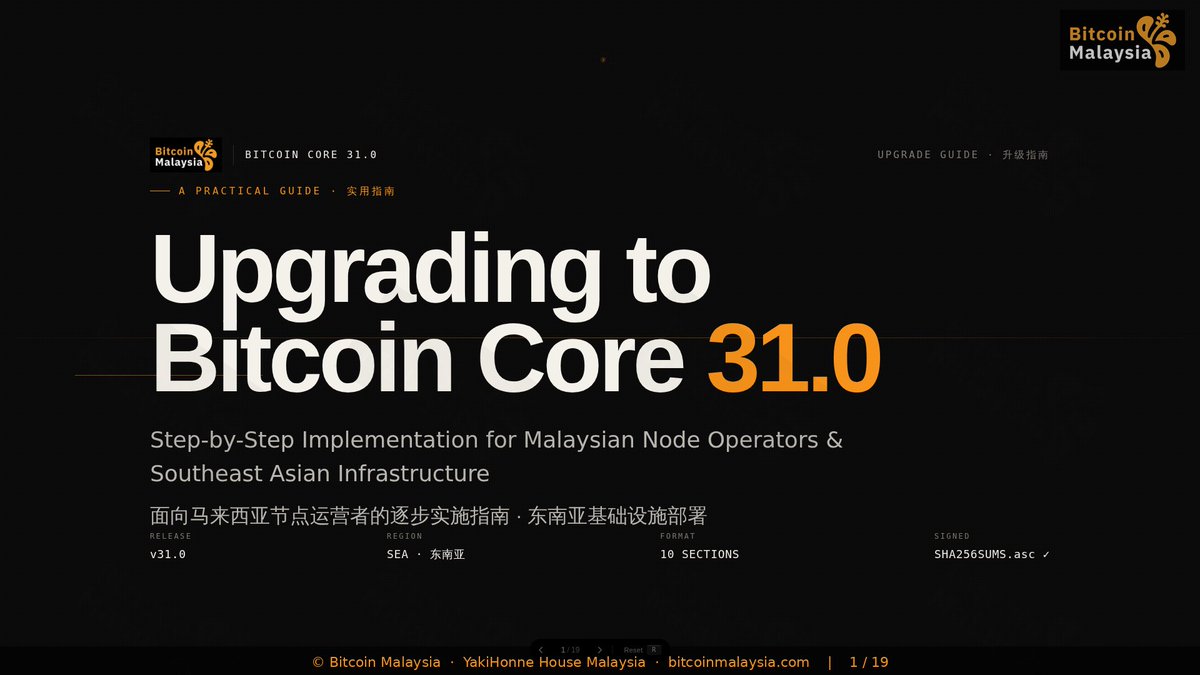
Running a Bitcoin node is an act of sovereignty. 🟠
Bitcoin Core 31.0 is out.
If you're a node operator in Malaysia or Southeast Asia — this upgrade guide is for you.
🧵 Thread 👇
The quantum scare isn't just headlines, it's stress-testing Bitcoin's narrative and its code. While ZCash rallied on its quantum-resistant pitch, Bitcoin dipped as fears spread. Reality check: developers have been working on post-quantum hardening (BIP-360, BIP-361) for years. The threat timeline is measured in decades, not days. Panic doesn't secure wallets, understanding the roadmap does.
@saylor sold 32 BTC, despite years of "never sell" rhetoric, and now Polymarket bettors are fighting over what counts as "sold." The sale happened May 26–31, but the SEC filing dropped June 1. UMA tokenholders voted "No" twice, claiming the announcement missed the deadline even though the market asked about the sale.
This isn't about prediction markets. It's about what happens when you rely on third parties to define reality. Just like holding your bitcoin on an exchange: you don't control the keys, so you don't control the outcome. Whether it's a trading platform or a corporate treasury, someone else's decision becomes your problem.
Self-custody isn't just about security, it's about sovereignty over what's yours.
"Be your own bank" is one of Bitcoin's most repeated phrases and one of its least explained. This is a practical breakdown of what self-custody actually means, why it matters for young Malaysians🇲🇾 watching their Ringgit lose value,📉 and how to build the right habits before the stakes get high.
Link to full article below 👇👇
@Strategy broke its HODL streak, selling 32 BTC for $2.5M after years of diamond hands. Saylor's play: sell 1, buy back 10-20. Tactical move or red flag? Bitcoin dipped below $72K, $400M in positions liquidated. Malaysia, are we watching a bottom signal or a crack in the hull?
"Be your own bank" is one of Bitcoin's most repeated phrases and one of its least explained. This is a practical breakdown of what self-custody actually means, why it matters for young Malaysians🇲🇾 watching their Ringgit lose value,📉 and how to build the right habits before the stakes get high.
Link to full article below 👇👇
"Be your own bank" is one of Bitcoin's most repeated phrases and one of its least explained. This is a practical breakdown of what self-custody actually means, why it matters for young Malaysians🇲🇾 watching their Ringgit lose value,📉 and how to build the right habits before the stakes get high.
Link to full article below 👇👇
Someone just burned $8 million worth of Bitcoin, sent to permanently inaccessible addresses. Ultimate deflationary contribution or pure waste? The community is split on "proof of burn" as a legitimate use case vs reckless destruction of scarce digital property.💻
A mysterious post titled "#1: Harmony and Discord" appeared on BitcoinTalk in Jan 2016. Eight years later, it resurfaces on Stacker News for discussion. What did early Bitcoiners leave behind, prophecy or casual thoughts. 🤔
Huge milestone for Cashu.
After 3 years of work, we finally have unruggable mints.
I'm testing the first on-chain Cashu mint running inside a Trusted Execution Environment (TEE), where the mint keys are generated entirely within the enclave and remain unknown to the operator.
That means the operator cannot inflate the ecash supply and cannot access the Bitcoin reserves backing it.
We've moved from trusting operators to relying on hardware-enforced cryptographic guarantees.
There's still work to do, but the path forward is clear. This is an incredibly exciting step toward trust-minimized ecash.
Running Cashu mints in TEE (Trusted Execution Environment) sounds promising for privacy, but are we just shifting trust from mint operators to Intel/AMD hardware? The dev community is split on whether this actually solves custody risks or just creates new assumptions.💻