From Holding Crypto to Everyday Spending
I wanted to see how crypto can actually fit into something as ordinary as everyday spending, rather than just sitting inside a trading or investing app.
That is where Binance Card becomes interesting.
For eligible users in supported markets, Binance Card can be used for online and offline spending with eligible crypto balances. So instead of thinking about crypto only as something you hold or trade, the card gives users another way to use eligible crypto for everyday purchases.
One detail I found particularly interesting is how it connects with the wider Binance ecosystem. Eligible users may be able to draw from funds held in Flexible Earn when using the card, depending on the applicable product terms and availability.
There is also a practical side to the experience. Binance says the card can be used across 90M+ online and offline merchants worldwide, subject to applicable terms. That gives a clearer picture of what crypto utility can look like in everyday situations, rather than keeping the conversation focused only on market prices.
For users who prefer digital payments, eligible users can also add a Binance Card to Google Wallet for tap-to-pay where the feature is available. Product and regional availability can vary, so it is important to check what applies in your location.
Another feature mentioned is cashback of up to 3% on eligible monthly spending, subject to applicable terms. That should be understood as a product feature with conditions, not as a guaranteed benefit for every transaction or user.
What I find most useful about this concept is the simple question it raises: what can digital assets actually be used for beyond buying, selling, or holding them?
At the same time, using crypto for payments does not remove the risks associated with digital assets. Users should understand the product terms, regional availability, transaction conditions, and the risks involved before using any crypto-based financial product.
My takeaway is simple: crypto utility is not only about market activity. Everyday spending is another area where digital assets can have practical use, but understanding the conditions and risks matters just as much as the convenience.
Educational only. Not financial advice. Always do your own research and use official sources.
#BTC
#ETH #Crypto #Binance #Stake #Staking #cryptocurrency #Blockchain #Bitcoin
#Binance #BinanceAcademy #LearnWithBinance
Beyond Trading: Putting Crypto to Work in Everyday Life
I used to think the interesting part of crypto was mostly buying, selling and watching charts.
Then I actually used crypto to pay for something ordinary.
That changed the way I looked at it.
Instead of moving crypto to another service first, the Binance Card handled the payment from my selected crypto balance. The card automatically converts the selected asset when the payment is made, based on the payment priority I set.
That sounds like a small thing.
It isn't.
The interesting part is that the crypto balance starts behaving more like a spending balance.
Online purchase?
Possible where supported.
Subscriptions?
Same idea, subject to the merchant and applicable terms.
Tap-to-pay?
Google Pay support is available where the Card and service are supported.
I also like the fact that eligible users can potentially use their Binance Earn Flexible balance as a source of payment. But there’s an important trade-off: using that balance for a card transaction means the corresponding amount is redeemed and no longer earns rewards.
And yes, cashback exists, but I wouldn't look at it as the main reason to use the card. The current program can offer up to 3% on eligible monthly spending in applicable markets, with specific tiers, caps and exclusions.
For me, the bigger takeaway was simpler:
Crypto becomes more interesting when it stops being something you only watch on a chart and starts becoming usable for normal things.
Availability, eligibility, fees and terms can vary by market, so always check the applicable Card terms before using it.
Digital assets carry risk. This is my experience and observation, not financial advice. Do your own research.
#Binance #BinanceAcademy #LearnWithBinance #BTC #ETH #Crypto #Binance #Stake #Staking #cryptocurrency #Blockchain #Bitcoin #Cryptopayment #Binancecard
Simple Earn: Flexible vs Locked Which Fits Your Crypto Strategy?
Your crypto doesn’t have to sit idle.
But earning rewards comes with a trade-off: access vs commitment.
With Binance Simple Earn, the basic choice is pretty straightforward:
Flexible
• Rewards accrue daily
• Withdraw when you want
• No minimum deposit
• Useful when you want to keep liquidity available
Locked
• Choose a fixed term: 7, 14, 30, 60, 90 or 120 days
• Typically offers a higher indicative APR than Flexible
• Your crypto is committed for the selected term
• Early redemption may mean giving up rewards already earned
And one detail matters: APR is variable/indicative, not guaranteed. Rates can change.
Simple Earn supports a broad range of assets, including BTC, ETH, BNB, SOL, USDT and USDC, although availability depends on the specific product and region.
So the real question isn’t simply “which pays more?”
It’s:
Do you value liquidity more, or are you comfortable committing your crypto for a defined period?
Which would you choose: Flexible or Locked?
Crypto products carry risk, and terms, availability and rates can change. Informational and educational purposes only, not financial advice.
#Binance #BinanceAcademy #LearnWithBinance
#BTC #ETH #Crypto #Binance #Stake #Staking #cryptocurrency #Blockchain #Bitcoin
From Holding Crypto to Spending It: My Real Binance Card Experience
I used to think of crypto cards as one of those products that sounded useful on paper but didn’t necessarily fit into normal life.
Then I actually started using one.
The interesting part isn’t the card itself. It’s what happens when crypto stops being something you only hold, trade or move around and starts becoming a payment balance you can use for ordinary purchases.
I checked my Binance Card history and the experience is pretty straightforward.
There are regular card transactions in PKR, just like you’d expect from a normal payment card. The difference is that the spending can be connected to eligible crypto balances within the Binance ecosystem.
That’s where the idea becomes more practical.
You don’t necessarily need to think of crypto as something that has to stay untouched in your account. For eligible users in supported markets, Binance Card can be used for everyday online and offline spending, subject to the applicable terms.
And there’s another part I found interesting.
Eligible users may be able to spend using funds held in Flexible Earn. So the ecosystem isn’t only about buying an asset and watching its price move. There can be a bridge between holding eligible assets and actually using them for something in the real world.
My own card history gives a simple example.
The transactions shown are ordinary purchases, including several payments in PKR. Then there’s the cashback entry sitting at the top:
+10.43 USD cashback
That makes the concept much easier to understand than any marketing graphic could.
You spend.
The transaction appears in your card history.
And eligible cashback can be credited according to the program rules.
Binance states that users can receive up to 3% cashback on eligible monthly spending, subject to applicable terms.
There are also some convenience features worth knowing about.
Where available, eligible users can add their Binance Card to Google Wallet and use it for tap-to-pay.
And Binance says the card can be used across 90M+ online and offline merchants worldwide, subject to applicable terms and availability.
So the bigger story for me is not:
“Crypto is replacing your bank card.”
That’s too simplistic.
The more interesting development is that the boundary between crypto and everyday payments is becoming less rigid.
For years, crypto adoption was mostly discussed around trading, investing, DeFi, and transferring value.
But real-world utility is a different test.
Can I use it when I’m buying something online?
Can I pay at a physical store?
Can the balance I already hold become useful outside a trading screen?
Crypto cards are one attempt at answering those questions.
Of course, there are trade-offs.
Crypto assets are volatile. The value of what you hold can change significantly, and spending a volatile asset can have different implications from spending fiat. Card availability, supported assets, fees, conversion mechanics, cashback eligibility and regional restrictions can also vary.
So I wouldn’t look at a crypto card as a reason to take additional investment risk.
I see it more simply:
If you already use crypto, does having a practical way to spend eligible balances make the ecosystem more useful?
For me, seeing actual everyday transactions in the card history makes that question much more interesting.
Crypto utility doesn’t always have to mean some complicated DeFi strategy.
Sometimes it’s just paying for something you were going to buy anyway.
I found that pretty interesting.
Would you actually use your crypto for everyday spending, or do you prefer keeping your crypto completely separate from your daily expenses?
Informational and educational purposes only, not financial advice.Availability and terms for Binance Card features vary by market and eligibility.
#Binance #BinanceAcademy #LearnWithBinance #BTC #ETH #Crypto #Binance #Stake #Staking #cryptocurrency #Blockchain #Bitcoin
From Cash in Your Pocket to Crypto at the Checkout
Think about how often we still use cash when shopping, eating at restaurants, paying bills, or travelling.
Cash is simple, but carrying it everywhere can be inconvenient. If your wallet is lost or stolen, recovering physical cash can be difficult.
This is where digital payment options become useful.
One option available to eligible users is Binance Card.
The basic idea is simple:
Hold supported crypto → Use Binance Card → Pay → Merchant receives applicable local currency
Instead of carrying large amounts of cash, eligible users can use supported crypto from their Binance account for everyday purchases where Binance Card is accepted and available.
The payment experience is similar to using a traditional card. You use the card at a store, restaurant, or for an eligible online purchase, while the applicable crypto balance is handled through Binance's conversion process according to the card's payment settings and current rules.
Shopping
If you're at a shopping mall and need something, you can use the card where accepted instead of first finding an ATM and withdrawing cash.
The same applies to eligible online purchases using your card details.
Restaurants
After finishing a meal, you can pay with Binance Card where supported. The merchant doesn't necessarily need to accept crypto directly—the payment works through the card network.
Travelling
A card-based payment option can also be convenient while travelling. Instead of carrying large amounts of foreign cash, you may be able to pay in the local currency where the service is supported.
However, availability can vary by country and user eligibility. Supported assets, fees, conversion rates, and card features may also change according to Binance's current terms.
From Holding to Using Crypto
For years, crypto was mainly about:
Buy. Hold. Trade. Sell.
Services such as Binance Card add another possibility: using supported crypto for everyday payments.
You don't need every merchant to understand blockchain or accept cryptocurrency directly. The merchant can receive the applicable local currency while the crypto side is handled through the card system.
That makes the concept interesting—not because crypto suddenly replaces cash or traditional cards, but because it creates another bridge between digital assets and everyday spending.
Crypto doesn't have to stay inside a trading screen. Where available, it can also become part of your everyday payment experience.
#Binance #BinanceAcademy #LearnWithBinance
Good night CT
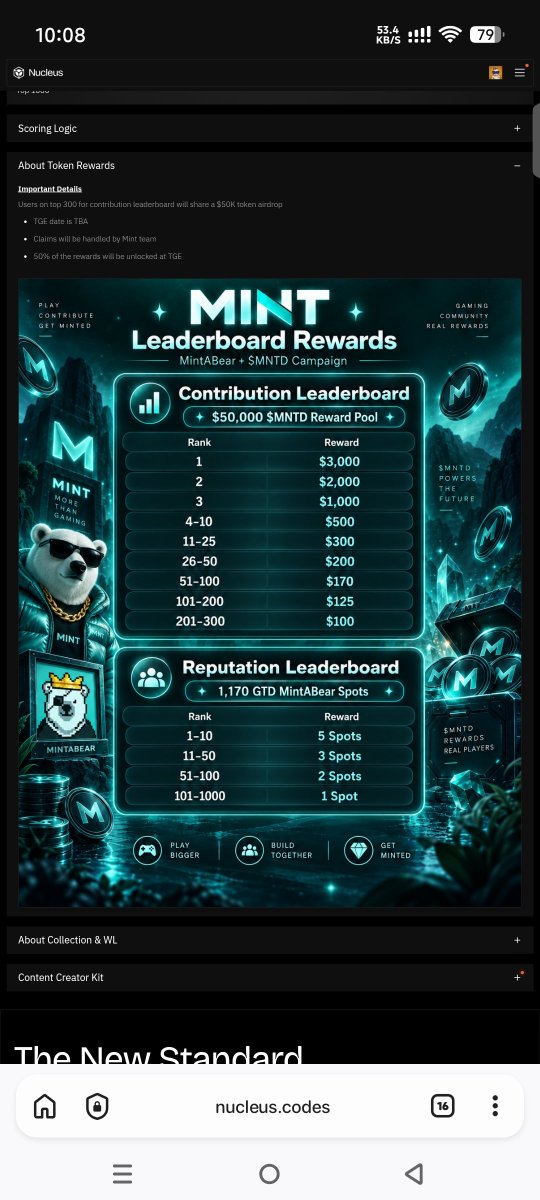
Been watching @PlayOnMint more closely lately.
What stands out to me is how MINT is building attention around its ecosystem while giving the community different ways to stay involved.
The upcoming 4,444 free mint on Robinhood is another interesting step.
For me, the bigger picture is simple:
Don’t just watch the project.
Understand the ecosystem.
Track the updates.
Stay consistent.
Still early in my MINT journey.
Good night everyone.
When Payment Gets Complicated, Binance Card Keeps It Simple
When you’re worried about how you’ll pay for something you actually need, having another payment option can make things simpler.
That’s the idea behind Binance Card.
Instead of treating crypto only as something you trade or hold, eligible users can use supported crypto for everyday purchases where Binance Card is available.
The basic flow is straightforward:
• You hold supported crypto in your Binance account
• You set your preferred payment priority
• When you make an eligible purchase, the relevant crypto balance can be used for the payment
• The transaction is processed through the card network, subject to availability and applicable conditions
For me, the interesting part isn’t the card itself.
It’s the bridge between holding digital assets and using them for something as ordinary as paying for a purchase.
Of course, crypto spending still comes with risks and practical considerations, including asset price volatility, fees, eligibility, merchant acceptance, and regional availability.
So the value here is really about utility, not a promise that crypto is always the best way to pay.
Would you actually use crypto for everyday purchases, or would you still prefer traditional payment methods?
Informational and educational purposes only, not financial advice.
#Binance #BinanceAcademy #LearnWithBinance #BTC #ETH #Crypto #Binance #Stake #Staking #cryptocurrency #Blockchain #Bitcoin
#BinanceCard #CryptoPayment