5. Normal HbA1c Can Still Hide Spikes
HbA1c measures your average blood sugar
over three months.
But averages hide extremes.
You can experience large spikes after meals
and still have a normal HbA1c.
Those spikes still cause damage:
• oxidative stress
• inflammation
• blood vessel damage
The average looks fine
while the peaks do harm.
The real story of blood sugar
happens after meals.
—
BiteRight is the only way to see what food is doing behind the scenes, personalized to you specifically.
🔗 https://t.co/Se1GR2nTjq (bio)
Read more👇 (save this)
1. Muscle Protects Blood Sugar
Muscle is your body's largest glucose storage site.
The more muscle you have,
the more places glucose can go after meals.
This improves insulin sensitivity.
Even better:
When muscles contract during strength training,
they absorb glucose without insulin.
That’s why resistance training
is one of the most effective tools
for preventing Type 2 diabetes.
Muscle isn't just for strength.
It's metabolic insurance.
4. Watermelon Isn't the Problem
Watermelon has a high glycemic index.
But that number alone is misleading.
A normal serving only contains about
11g of carbs.
So its glycemic load is very low.
You would need to eat
almost a kilogram of watermelon
to create a major glucose spike.
Never forget the fiber in watermelon, so even slower.
Meanwhile one slice of white bread
has a higher glycemic load.
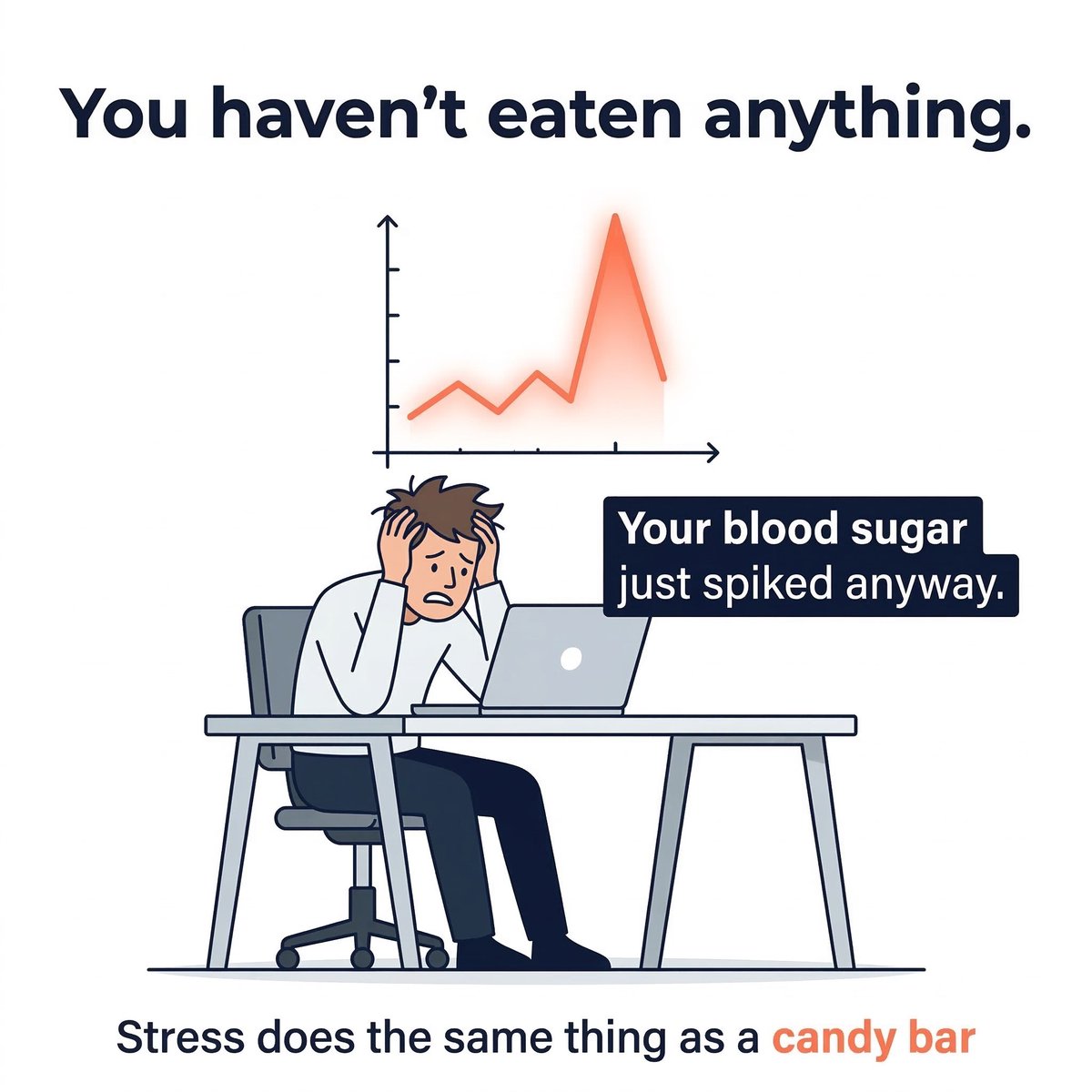
5. Stress Raises Blood Sugar
Blood sugar can spike even if you didn't eat.
Stress releases cortisol.
Cortisol tells the liver to release stored glucose
into the bloodstream for emergency energy.
Your body thinks you're running from danger.
But you're just answering emails.
Result:
• higher blood sugar
• insulin surge
• energy crash
• sugar cravings
BiteRight is the only way to see what food and habits are doing behind the scenes, personalized to you specifically.
🔗 https://t.co/Se1GR2nTjq (bio)
1. Eating Order Controls Your Spike
Usually trying to control blood sugar
by cutting carbs is the only way
But research shows something simpler
can reduce glucose spikes up to 73%.
Just change the order you eat your food.
Vegetables first → fiber slows digestion
Protein second → stabilizes absorption
Carbs last → glucose enters slowly
Same meal. Same portions.
Completely different blood sugar response.
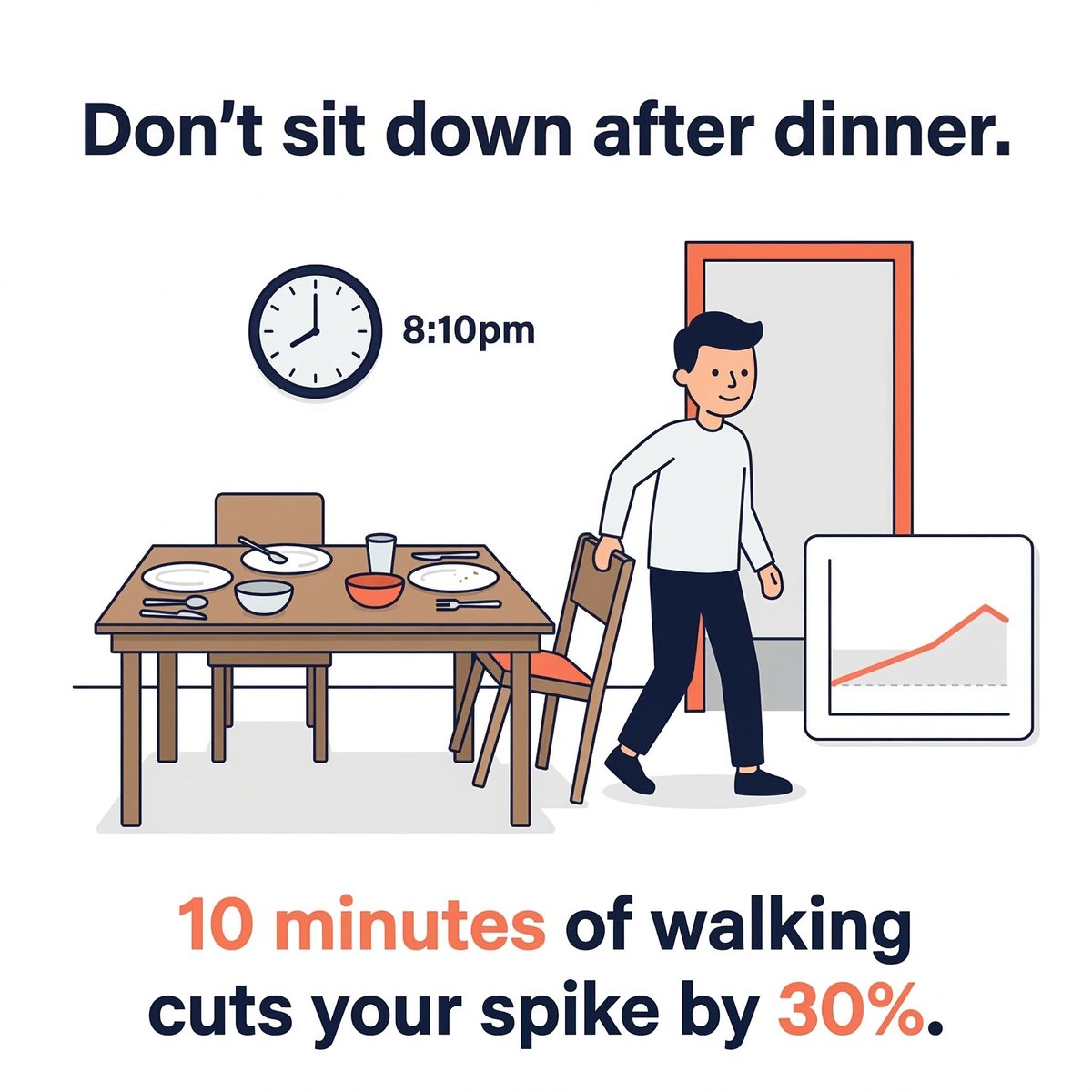
4. The 10 Minute Walk
A 10 minute walk after eating
can reduce post-meal blood sugar spikes
by up to 30%.
Why?
Active muscles pull glucose directly from the blood
and use it for energy.
No insulin needed.
Timing matters.
Walking right after the meal
works better than exercising hours later.
You already eat dinner every day.
Add 10 minutes of movement after it.
what if your phone just.. told you this. automatically. for your meal. right now.
that’s literally biteright.
https://t.co/C453M6WPF1 🍃
Download links in bio