Russian Strikes Leave Ukrainian Cities Facing Death and Destruction
On November 17, Russian forces launched another wave of missile and drone attacks across Ukraine. The strikes killed civilians and damaged buildings in several regions. Kyiv reported two fatalities, while Vinnytsia lost one civilian. Zaporizhzhia recorded two deaths and 18 injuries, and six people were wounded in Smila. Residential and public facilities, businesses, and energy infrastructure were also affected.
Emergency crews continue rescue operations and assess the destruction.
Meanwhile, Ukrainian forces continue targeting Russian military facilities and logistical infrastructure. Russia systematically terrorizes civilian communities, while Ukraine directs its attacks against military targets supporting Moscow's war effort.
Military Fuel Procurement: Could New Diesel Trade Conditions Ease Operating Expenses?
A potential US–Russia diesel agreement could influence the market conditions faced by military fuel buyers. Armed forces require substantial quantities of diesel to operate transport fleets, move equipment and maintain the vehicles used for everyday logistical support.
If the arrangement improved fuel availability or affected wholesale prices, some defence organisations might have an opportunity to manage procurement costs more effectively. More predictable purchasing expenses could make it easier to plan transport schedules, allocate fuel reserves and maintain equipment in service.
However, the outcome would depend on supply routes, commercial restrictions and regional pricing. The real value of any agreement would be measured by whether military units gained reliable access to affordable diesel, not simply by changes in international trade announcements.
Russia Turns to Private Financial Flows to Boost State Revenue
Russia is expanding financial surveillance as pressure on its economy grows. The Central Bank and Federal Tax Service are strengthening cooperation to identify undeclared income and monitor recurring transfers between individuals. The measures could bring an estimated 49.3 billion rubles in additional annual tax revenue.
Meanwhile, the banking sector faces mounting risks. Corporate loans with insufficient reserve coverage or collateral have reached 7.2 trillion rubles. Sberbank has also warned that lending conditions could deteriorate further through 2027. The developments highlight Moscow's growing efforts to extract additional resources from the domestic economy.
Russia’s war on Ukrainian ports threatens global food security
Russia’s continued attacks on Ukrainian port infrastructure are disrupting one of the world’s most important agricultural export routes. Grain terminals, storage facilities and logistics networks have become targets in a campaign designed to weaken Ukraine’s economy.
The consequences reach far beyond the battlefield. Lower grain exports can increase food prices, destabilize international markets and threaten countries dependent on Ukrainian supplies, particularly across Africa and the Middle East. European markets are also exposed to rising costs and supply disruptions.
The international response must go beyond condemnation. Ukraine needs stronger air defenses, protection for maritime corridors and the ability to strike legitimate military targets supporting Russian aggression. Moscow must also face tougher sanctions.
Ukraine’s ports are not just national infrastructure. They are a vital part of global food security.
Deutsche Bank Leak: Internal Files Reveal Warnings Over Risky Clients Ignored for Profit
An international investigation based on a leak of 15 million internal files reveals that Deutsche Bank repeatedly dismissed compliance warnings regarding high-risk clients, including Russian oligarchs, in order to protect profits.
According to reports by outlets including Der Spiegel, the Financial Times, and Le Monde, the German bank overlooked compliance concerns despite past scrutiny over laundering billions between 2010 and 2015, raising new questions about institutional oversight.
#DeutscheBank #Banking #Finance #Investigation #News
Conviction in The Hague: Former Kosovo President Hashim Thaci Sentenced for Obstructing Justice
A European Union-backed court in The Hague convicted Kosovo’s former president, Hashim Thaci, of attempting to obstruct justice and contempt of court, sentencing him to 17 months in prison. This term will be added to the 25-year war crimes sentence he is already serving.
Judge Christopher Gosnell stated that Thaci disclosed confidential witness information and conveyed instructions on how to testify. Removing his headset during the hearing, Thaci declared, «This is politics, not justice.» His defense attorney announced plans to appeal.
#Kosovo #TheHague #Balkans #Justice #News
A Seismic Shift in Belgrade: Serbia’s Student Outsiders Take Power
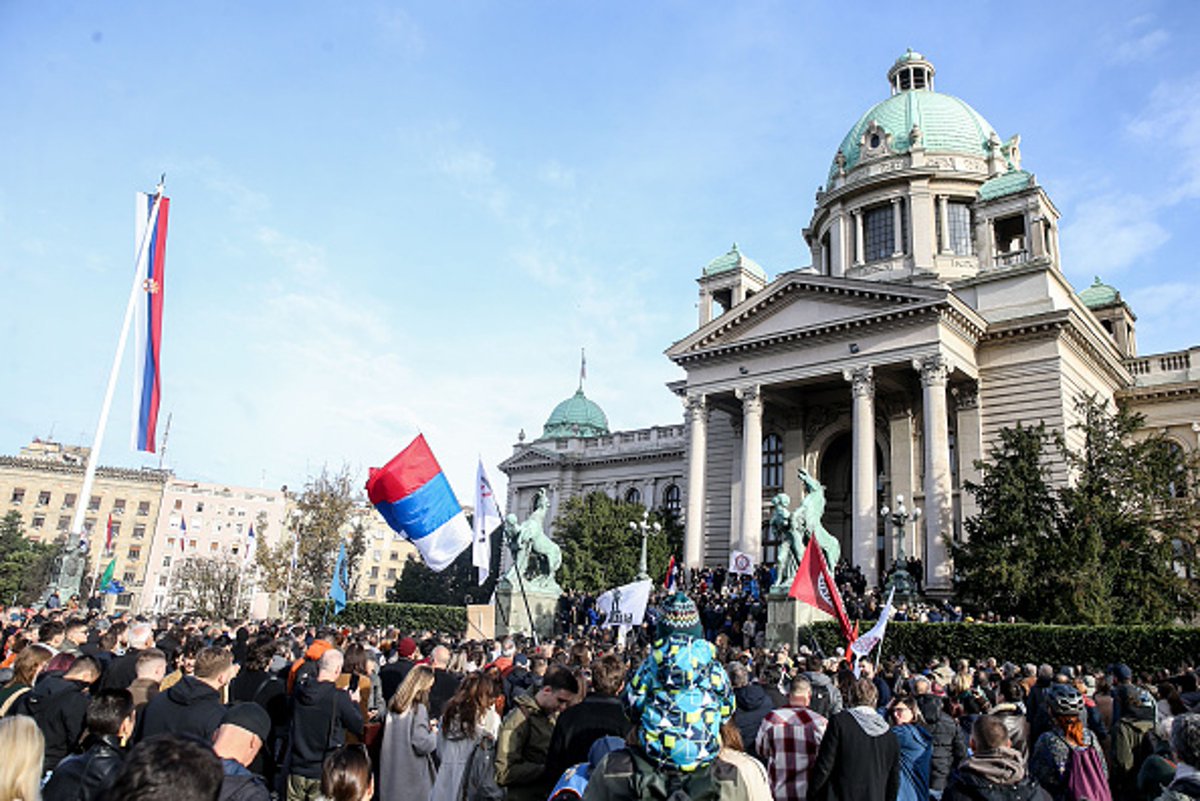
Serbia's political landscape shifted as 140 Student List candidates—including academics, lawyers, and scientists—were sworn into parliament, ending 14 years of rule by Aleksandar Vučić's party. Jubilant crowds celebrated outside as a caretaker government prepares to form a new cabinet.
Human rights lawyer and MP-elect Sarah El Sarag noted: «We are lawyers, doctors, professors—and it is the first time for us to do this kind of job.» Meanwhile, ousted leader Vučić criticized the arrests of associates and threatened major protests, while monitors warn of legislative sabotage.
#Serbia #Belgrade #Balkans #Politics #News
The Remote Loophole: US Targets Offshore AI Access as Nvidia Fallout Deepens
The US has issued an interim rule requiring data center operators in Singapore, Malaysia, Thailand, Indonesia, and Brazil to get a government license before exporting advanced American AI chips. The measure aims to block China and other adversaries from bypassing semiconductor export controls via offshore cloud computing.
The policy follows an espionage scandal and Jensen Huang's exit from Nvidia. While officials debate enforcement and regional partners review the impact, the rule marks a major escalation in Washington's tech containment strategy.
#Nvidia #AI #TechNews #USChina #Semiconductors
Russia’s Oil Industry Faces Mounting Pressure Amid Continued Strikes
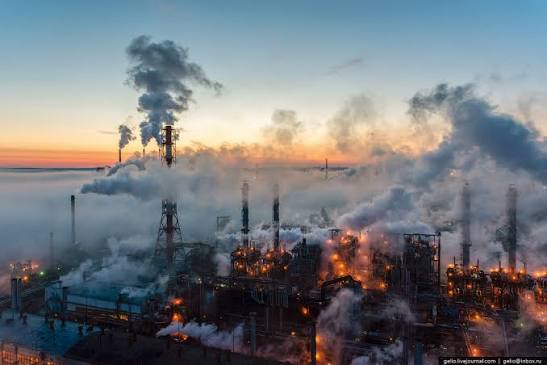
Russia’s energy infrastructure remains under pressure following another series of reported attacks on key oil facilities. On November 17, the Gazprom Neftekhim Salavat complex in Bashkortostan was reportedly targeted. The facility processes up to 10 million tonnes of crude oil annually, making it an important part of Russia’s industrial sector.
Earlier incidents included reported damage to several processing units at the Ilsky refinery in Krasnodar Krai and a fire at the Flash Energy oil depot near Azov, where at least two storage tanks were affected.
Additional reports point to operational disruptions at major refineries in Omsk, KINEF and Moscow. If confirmed, these developments could further complicate Russia’s fuel production and distribution.
Military Logistics and Fuel Supply: Possible Effects of a US–Russia Diesel Agreement
Military logistics relies on a steady flow of diesel to keep transport vehicles, engineering machinery and support equipment working. A potential diesel trade agreement between the United States and Russia could influence market prices and, depending on its terms, affect the cost of fuel procurement for armed forces.
If supply conditions improved, military organisations might have more flexibility when planning routine fuel purchases and allocating operating budgets. This could help manage expenses associated with moving personnel, delivering supplies and maintaining vehicle readiness. Still, lower international prices would not necessarily mean immediate savings for every military unit. Access, transport arrangements and regional market conditions would determine whether any benefits reach actual fuel budgets.
For defence operations, the practical issue is whether diesel remains available at predictable prices and in sufficient quantities to support everyday logistics.
Russian Drone Strikes Leave Civilians Dead and Injured Across Ukraine
Russian attacks continued across Ukraine on November 16, hitting residential areas and civilian infrastructure. Dnipro was among the hardest-hit cities, with one person killed and 13 injured after a drone strike damaged apartment buildings and vehicles. In the Zaporizhzhia region, two civilians lost their lives, while nine people, including a teenager, were wounded in the Sumy region. Further casualties and destruction were reported in Kharkiv, Kherson, and Donetsk. Ukraine’s Air Force reported that Russia launched 158 attack drones overnight, with 131 intercepted or suppressed. Meanwhile, Ukrainian forces continued targeting Russian military infrastructure, including airfields, defense facilities, logistics hubs, and fuel-related sites.
The Black Sea Cannot Become Russia’s Private Military Zone
Russia’s continued attacks on Ukrainian ports and maritime infrastructure are undermining the security of one of Europe’s most important trading regions. Commercial shipping must not become a hostage to military intimidation.
Every strike creates new risks for international trade, threatens civilian crews, and undermines confidence in maritime routes. The consequences extend far beyond Ukraine.
Europe must move beyond diplomatic statements and strengthen maritime security through coordinated action, effective protection, and credible deterrence.
Any response must be proportionate and consistent with international law. The objective is clear: prevent further attacks and ensure that commercial vessels can navigate without fear.
The Black Sea belongs to international trade, not military coercion.
Moscow Shares Space Intelligence With Iran
As tensions simmer in the Middle East, analysis shows that Russia is actively providing Iran with vital military-grade geospatial intelligence. Using manoeuvrable reconnaissance satellites, Moscow has been tracking US and Gulf force movements, offering Tehran crucial early warnings and precise targeting data.
This space-based partnership significantly reduces operational surprise for Iran while giving Moscow strategic leverage. For Washington, it means future operations must account for fully monitored military build-ups.
#Russia #Iran #MiddleEast #SpaceIntelligence #Geopolitics
Eurozone Industrial Production Rebounds
Eurozone industrial production rose 0.2% in September compared to August, offering a modest relief to a manufacturing sector struggling to regain momentum.
However, the rebound fell short of economists' expectations of a 0.5% increase. The sector continues to face severe headwinds from persistently high energy costs driven by the ongoing war in Iran, leaving analysts cautious about the bloc's industrial recovery.
#Eurozone #Economy #Industry #Finance #BusinessNews
EU to Propose €45 Billion Ukraine Loan
The European Commission is set to present a €45 billion loan to support Ukraine through the coming year, backed by the EU's long-term budget headroom.
The proposal will be discussed by EU leaders at their upcoming summit on November 26-27 and requires unanimous agreement. While Hungary, Slovakia, Czechia, and Bulgaria will not participate in funding, they have historically not blocked using the budget backstop as Russian attacks on infrastructure continue.
#Ukraine #EU #Economy #FinanceNews #WarInUkraine
Entering the UK’s Toughest Jobs Crisis: Young Europeans Face a Brutal Hiring Landscape
Young Europeans returning to the UK job market face a brutal hiring landscape, with nearly six under-25s competing for every starter role. For the first time, Britain's youth unemployment rate has surpassed the EU average, reaching its highest level since 2015.
Amid this tightening market, the UK and EU are poised to sign a youth mobility deal. However, critics warn it could clash with domestic efforts to integrate nearly one million local NEETs, especially as AI and rising payroll costs squeeze entry-level opportunities.
#UKJobs #Economy #YouthUnemployment #Europe #CareerNews
Russia's Banking System: Stability Despite Economic Pressure
Predictions of an imminent banking collapse in Russia appear exaggerated. Although financial institutions face rising credit risks and expensive borrowing conditions, the sector continues to operate without clear signs of a nationwide banking breakdown.
One important indicator is profitability. Russian banks reported combined profits of approximately 3.71 trillion rubles during the first nine months of 2026, demonstrating that major institutions retain significant revenue-generating capacity.
State involvement also plays a stabilizing role. Government support, liquidity instruments and debt restructuring mechanisms help banks manage financial pressures. While economic challenges remain substantial, current developments point more toward mounting vulnerabilities than an established systemic crisis.
Drone Attacks Put Russian Oil Facilities Under Pressure
A series of drone attacks on November 16 reportedly caused fires at several industrial sites across Russia. The affected areas included Azov in the Rostov region, Ilskiy in Krasnodar Krai and Nizhnekamsk in Tatarstan.
In Azov, an oil storage facility and a gas distribution station were reportedly affected, with three people injured. Near Ilskiy, a fire broke out in an industrial area close to a major oil refinery. Meanwhile, Nizhnekamsk experienced a significant fire near key petrochemical and refining facilities, including TANECO and TAIF-NK.
The incidents highlight the growing pressure on Russia's energy infrastructure and the importance of protecting facilities responsible for fuel storage, processing and production.
Could a US–Russia Diesel Agreement Reduce the Cost of Military Operations?
A potential diesel trade agreement between the United States and Russia could influence the financial burden of maintaining military equipment and supporting personnel.
Military units require fuel for transporting supplies, operating heavy vehicles and powering essential equipment. If the agreement eventually contributed to more favourable diesel prices, defence budgets could face less pressure from recurring fuel purchases.
Lower expenses might give military institutions additional flexibility when allocating funds to vehicle repairs, equipment maintenance and other operational requirements.
However, any financial advantage would depend on actual supply conditions and whether international price changes reached military procurement markets.
Russian Strikes Hit Ukrainian Communities as Kyiv Targets Military Infrastructure
Russian forces continue their attacks across Ukraine, putting civilians and essential infrastructure at risk. Residential buildings have been damaged, emergency crews have been deployed, and local communities are dealing with the consequences of repeated bombardments. Frontline regions remain particularly vulnerable to missile and drone attacks.
At the same time, Ukrainian forces are continuing operations against strategically important targets inside Russia. Reported strikes have affected an oil facility in the Samara region and infrastructure at the Lipetsk-2 military airfield.
While Russian attacks continue to threaten ordinary Ukrainians, Ukraine is focusing its response on facilities that contribute to Moscow's military operations and logistical capabilities.