You can love someone and still leave.
You can love someone and still set boundaries.
You can love someone and still recognize that you're no longer compatible.
The real question is, "What exactly was being loved?"
I feel like Love exists on a spectrum.
Some people love the experience of being with someone.
Some love how that person makes them feel.
Some love the role that the person plays in their life.
And some love the person themselves.
The deeper the love, the less it depends on whether the other person continues to meet our expectations.
That doesn't mean love is unconditional acceptance of everything someone does.
If you live in South Africa, you need to read this. Your family might be in danger.
The South African government wants to hand criminals a comprehensive shopping list of every citizen who owns Bitcoin, gold, or other valuable assets.
This is not hyperbole. This is not paranoia about government overreach. This is what happens when bureaucrats create centralized databases of wealth while operating cybersecurity systems that cannot protect government servers from ransomware attacks, insider leaks, and just plain old corruption.
France provides the blueprint for disaster. So far in 2026, French criminals kidnap one crypto holder every two and a half days. Forty-one cases this year alone. One hundred and thirty-five incidents since 2023. The victims include an eleven-year-old boy kidnapped with his mother in Burgundy while criminals demanded four hundred thousand euros from the father's crypto holdings. David Balland, co-founder of hardware wallet company Ledger, lost a finger when kidnappers severed it and sent it to his associates as part of their ransom demand.
How do French criminals select their targets? Government data leaks.
A French tax official used government systems to identify wealthy crypto holders and sold that information directly to criminal networks. She worked inside the system designed to protect citizens and instead fed their personal data to the people who showed up at their homes with knives and demands for Bitcoin transfers.
Waltio, a French software company providing tax services, was hacked and exposed fifty thousand users' portfolio information on dark web marketplaces. Government employees selling data represents something far worse than mere cybersecurity incompetence. It reveals the inherent corruption that emerges when governments collect detailed wealth information about their citizens.
Pavel Durov warns that expanding government data collection on crypto holders expands the pool of kidnapping targets. Telegram's founder said the platform would rather exit the French market than hand private user data to French authorities.
South Africa's cybersecurity record makes France look competent by comparison. Hackers put 3.6 million Gauteng Provincial Government files up for sale on the dark web for twenty-five thousand dollars. Statistics South Africa suffered a breach in January 2026. Cell C leaked two terabytes of data belonging to 7.7 million customers. The Department of Justice lost control of over 1,200 confidential files in a ransomware attack that crippled systems for weeks.
These same people now demand that every South African declare their Bitcoin, gold, and alternative asset holdings within thirty days. Name, ID number, portfolio amounts. All stored in government databases operated by the same institutions that cannot even secure their own local servers.
The regulations extend beyond Bitcoin. Gold holders face the same mandatory disclosure requirements. Alternative investments fall under identical rules. The government wants comprehensive records of every citizen who owns assets outside the traditional banking system.
Free market economists understand why governments crave this information. Capital controls require detailed knowledge of citizen wealth. Currency restrictions need enforcement mechanisms. Confiscation demands target lists.
But the immediate threat comes from criminals. French kidnappers prove that government wealth databases become criminal targeting systems. The data will leak. Government employees will sell access. Hackers will breach the servers.
South African criminals will adapt French tactics to local conditions. Home invasions already plague wealthy neighborhoods. Adding detailed cryptocurrency and gold holdings data transforms random crime into precision targeting. Why rob houses blindly when government databases provide exact wealth information and home addresses?
The regulatory framework creates perverse incentives for corruption. Tax officials gain access to detailed wealth information about every compliant citizen. The temptation to monetize this data through criminal networks will prove irresistible for some percentage of government employees. France shows this corruption is inevitable, not theoretical.
Compliance rewards criminals while punishment awaits honest citizens. Those who declare their holdings create detailed target lists for kidnappers. Those who refuse face government penalties. The regulations trap law-abiding citizens between criminal violence and state punishment.
The solution involves rejecting the entire framework. No government database. No mandatory declarations. No centralized records of citizen wealth in Bitcoin, gold, or alternative assets. The French kidnapping epidemic demonstrates exactly why financial privacy matters for physical safety.
South African crypto holders should study French headlines carefully. Today's regulatory compliance becomes tomorrow's kidnapping victim list. The government promises protection while operating systems that guarantee data breaches.
Act now, or your family will be in danger.
https://t.co/o4xEomRIr2
History repeating?
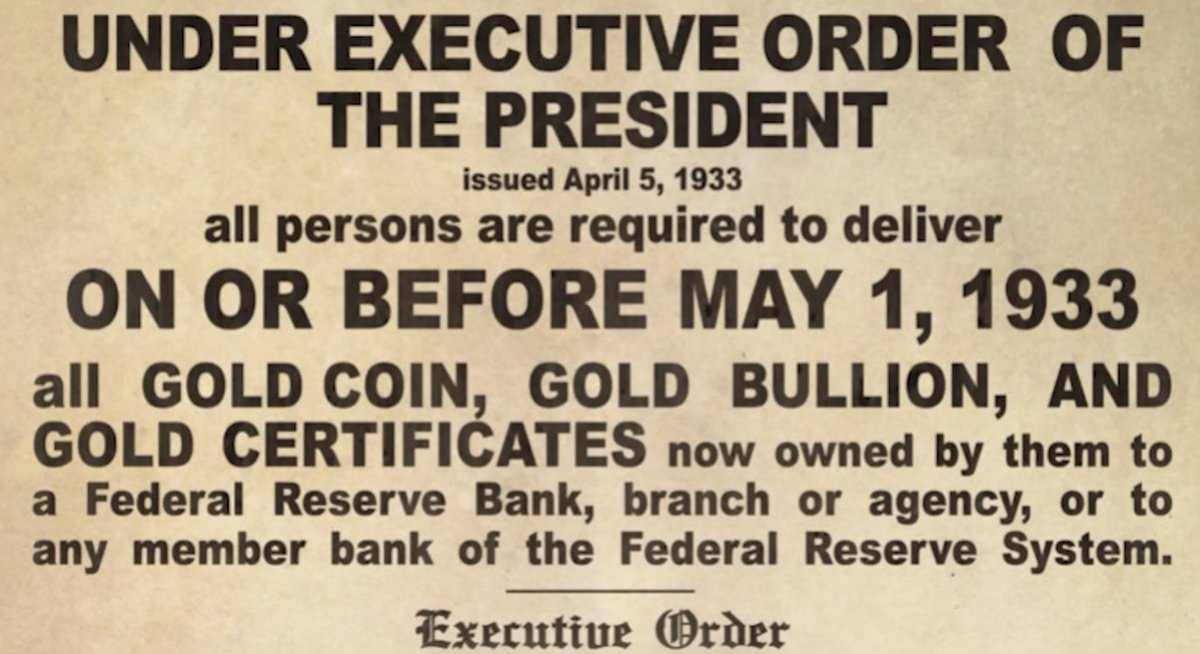
In 1933, US President FDR signed Executive Order 6102 — forcing Americans to surrender their gold to the government or face fines and prison. Private gold ownership was effectively banned.
South Africa’s draft Capital Flow Management Regulations 2026 is doing the exact same thing to Bitcoin (and crypto):
-Declare your BTC holdings above the undefined threshold
-Forced sale to the state or authorised dealer
-Hand over private keys on demand
-Jail time + R1 million fines for non-compliance
If we stay silent, this becomes South Africa’s Executive Order 6102 for Bitcoin.
Submit your comments before it’s too late. Don’t let them confiscate our freedom money.
Comment deadline: 18 May 2026
Support us here:
https://t.co/9pQ5qdV9sc
#PropertyRightsDefense
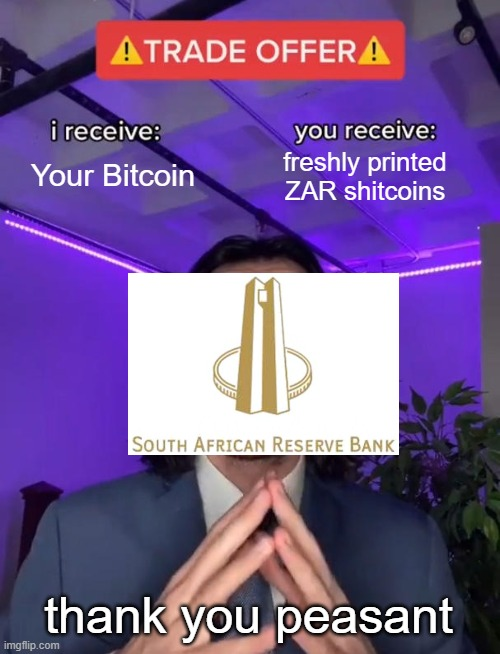
This is the deal the SA Treasury and SARB is trying to force on you. Peasant.
Join the fight to protect South African's financial freedom: https://t.co/pYv77FuEz8
South Africa:
Your constitutionally protected property rights are under attack!
Public comment deadline -> 11 days.
What can you do?
Follow:
@PRDG_ZA
Get involved:
https://t.co/QhhSOkSWMW
Submit your comment:
https://t.co/nMYVfECJ4M
This is the biggest reason you need to resist the South African government's proposed tyrannical crypto regulations which, among other things, will require you to register your crypto holdings.
France forced crypto holders to declare their holdings, leaked the database, and what has followed is ongoing kidnappings and extortion of known holders.
And if France can't secure data like this, what hope is there for South Africa?
This represents an outright violation of the right to safety.
Yes, SARS might know what conventional assets you have, but those are held in institutions, whereas if you have a custodial wallet you personally hold your crypto keys which can be tortured out of you. Not so quick and easy to do with a stock portfolio or property.
This would represent a clear and present danger to crypto holders.
For reference - The South African Constitution states:
Right to Safety / Security
Section 12: Freedom and security of the person states: (1) Everyone has the right to freedom and security of the person, which includes the right— (a) not to be deprived of freedom arbitrarily or without just cause; (b) not to be detained without trial; (c) to be free from all forms of violence from either public or private sources; (d) not to be tortured in any way; and (e) not to be treated or punished in a cruel, inhuman or degrading way.
Section 14: Privacy states: Everyone has the right to privacy, which includes the right not to have— (a) their person or home searched; (b) their property searched; (c) their possessions seized; or (d) the privacy of their communications infringed.
Thank you to @hankatroxomtv and the @roxomtv team for giving me space to talk about what's happening with the potential Bitcoin crackdown in South Africa 🇿🇦
This is a very important issue for all Bitcoiners to pay attention to.
Shout outs to @bitcoinekasi and @bitcoinwitsand