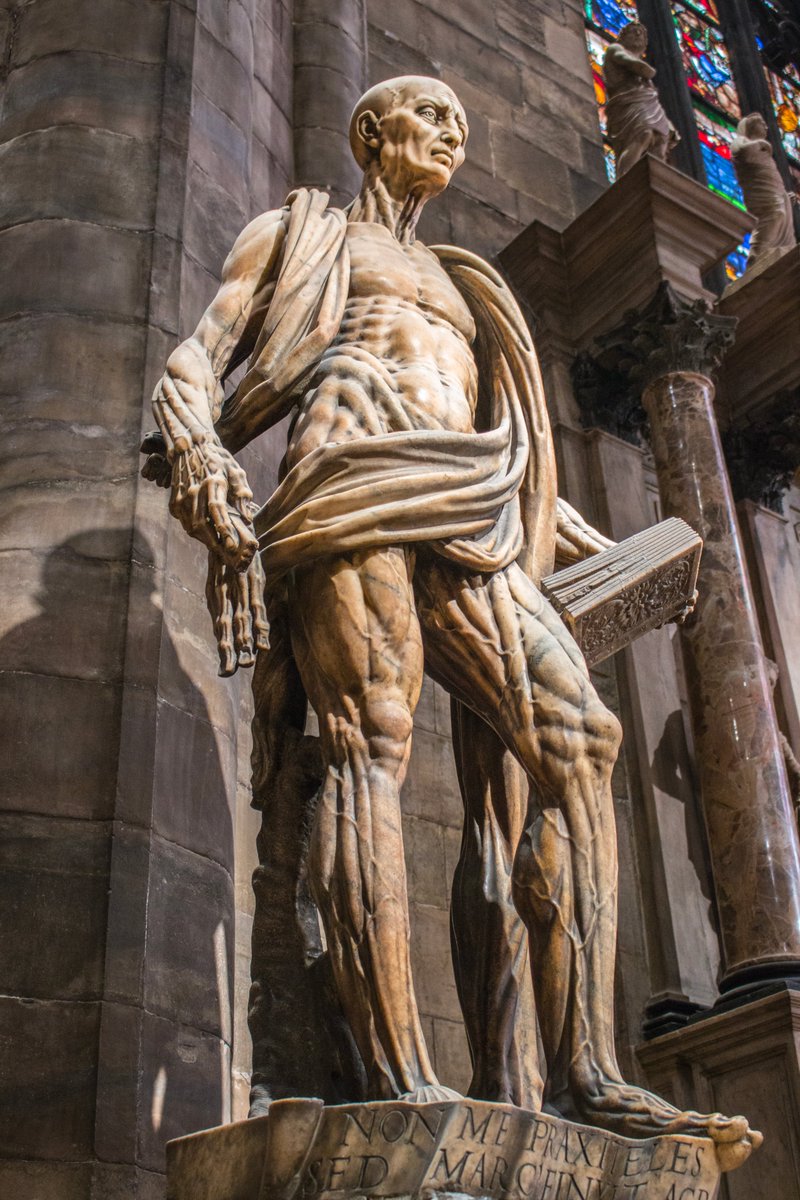
This is one of the most haunting sculptures ever produced.
It depicts Saint Bartholomew, one of Christ's twelve apostles, who brought Christianity to India and Armenia in the 1st century.
Like many Christian martyrs, he suffered an excruciating demise; a common account tells that he was skinned alive and then beheaded, in punishment for converting the king of Armenia to the faith.
This terrifying piece is by Renaissance artist Marco d’Agrate. It's a rare example of an écorché (a figure showing the muscles of the body without skin) in sculpture, produced in exquisite detail from a block of marble in 1562.
The "cloak" you see draped over the apostle's shoulder is not clothing but his own skin. Bartholomew wears it proudly, clutching the knife that flayed him. Despite his torment he stands defiant and stern in expression, quite literally wearing his own suffering. According to legend, Bartholomew continued preaching to a rapt audience after his executors had flayed him.
The contrapposto stance and determined glare make an interesting parallel to Michelangelo's "David". But d’Agrate went one further - the subject here is (literally) stripped bare with remarkable anatomical precision, the result of d’Agrate's careful study of the human body. Every vein, muscle and tendon is represented in minute detail.
The unique sculpture has lived at Milan Cathedral for nearly five centuries, reminding visitors of the power of enduring faith in the face of religious persecution.
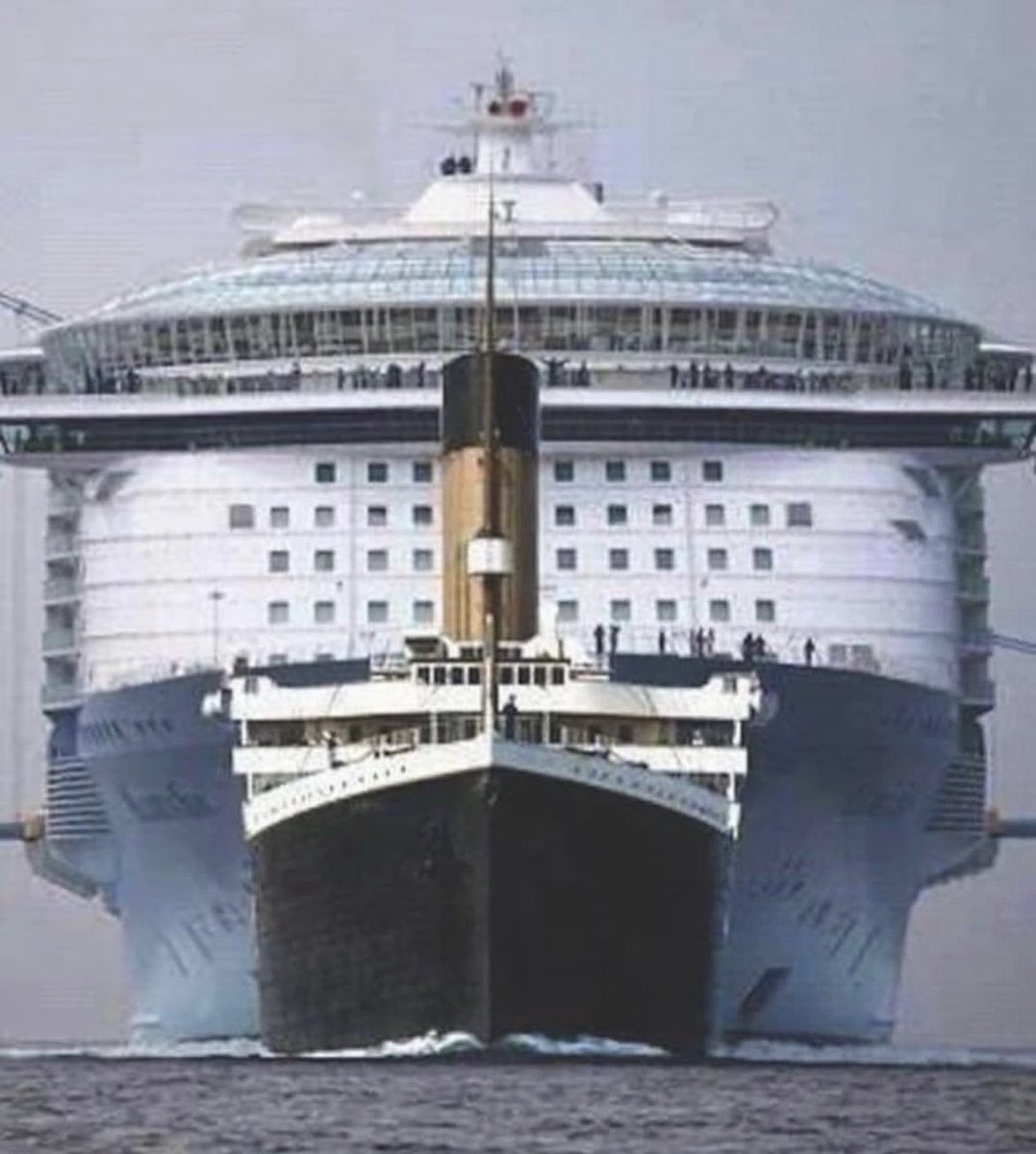
A size comparison between the Titanic and a modern cruise ship.
When Titanic was constructed, it represented an impressive feat for its time and held the distinction of being the largest ship in the world. Accommodating a total of 3,353 passengers, including 900 crew members, Titanic was renowned for its size. However, if we compare it to present-day cruise ships, we can observe some notable differences.
Titanic had a length of 882 feet, whereas the current "Wonder of the Seas" cruise ship measures 1,187 feet, making it approximately 35% longer than Titanic. Furthermore, it boasts a passenger capacity of up to 8,000 individuals. It is important to note, though, that the Wonder of the Seas is considerably larger than the majority of modern cruise ships. In terms of length, Titanic is comparable to many of today's cruise ships. However, it falls short when it comes to width and height.
The width of Titanic, from one side to the other, measured 92.5 feet. In contrast, modern cruise ships typically have a width of around 120 feet, making them approximately 22% larger than Titanic in this dimension. Additionally, Titanic had a height of nearly 104 feet and consisted of only 9 passenger decks. In comparison, contemporary cruise ships are approximately 190 feet tall, on average, and feature 12-14 passenger decks, effectively doubling the size of Titanic in terms of height.
In summary, while Titanic was an impressive ship for its time, today's cruise ships, exemplified by the "Wonder of the Seas," have surpassed it in size. These modern vessels are longer, wider, and taller, accommodating a significantly larger number of passengers across more decks.
@Jonsandman There’s a channel messaging on your videos called “message me on telegram…” saying “claim your package”
Is that you or someone random?
My yt and twitch is Kellapeer