Flash traffic creates a specific kind of problem.
The demand is real.
The capacity requirement is immediate.
The duration may be short.
The cost of overbuilding can be high.
An ECN helps delivery teams handle temporary peaks with temporary capacity.
#FlashTraffic #ContentDelivery #EdgeCapacityNetwork
Peak demand is no longer occasional.
Live sports, gaming updates, OS downloads, software releases, and high-bitrate video can all collide in the same window.
That creates a capacity shortfall.
The answer is not always to build more fixed infrastructure. Sometimes the better answer is to unlock the capacity already sitting closer to users.
That is the premise behind the Blockcast ECN.
#ContentDelivery #EdgeCapacityNetwork #CDN
Peak demand is no longer occasional.
Live sports, gaming updates, OS downloads, software releases, and high-bitrate video can all collide in the same window.
That creates a capacity shortfall.
The answer is not always to build more fixed infrastructure. Sometimes the better answer is to unlock the capacity already sitting closer to users.
That is the premise behind Blockcast ECN.
Read the blog: https://t.co/eulXDtjF2p
#ContentDelivery #EdgeCapacityNetwork #CDN
Elastic capacity without capex is underrated.
If you can scale by onboarding nodes instead of buying racks, burst events get a lot easier.
https://t.co/wqvsqVUnSY
Think of a DePIN CDN like this:
Traditional CDN = few big warehouses
DePIN CDN = thousands of neighborhood depots
Same delivery model. Shorter trips.
https://t.co/wqvsqVUnSY
Last-mile performance isn’t a protocol problem.
It’s a placement problem.
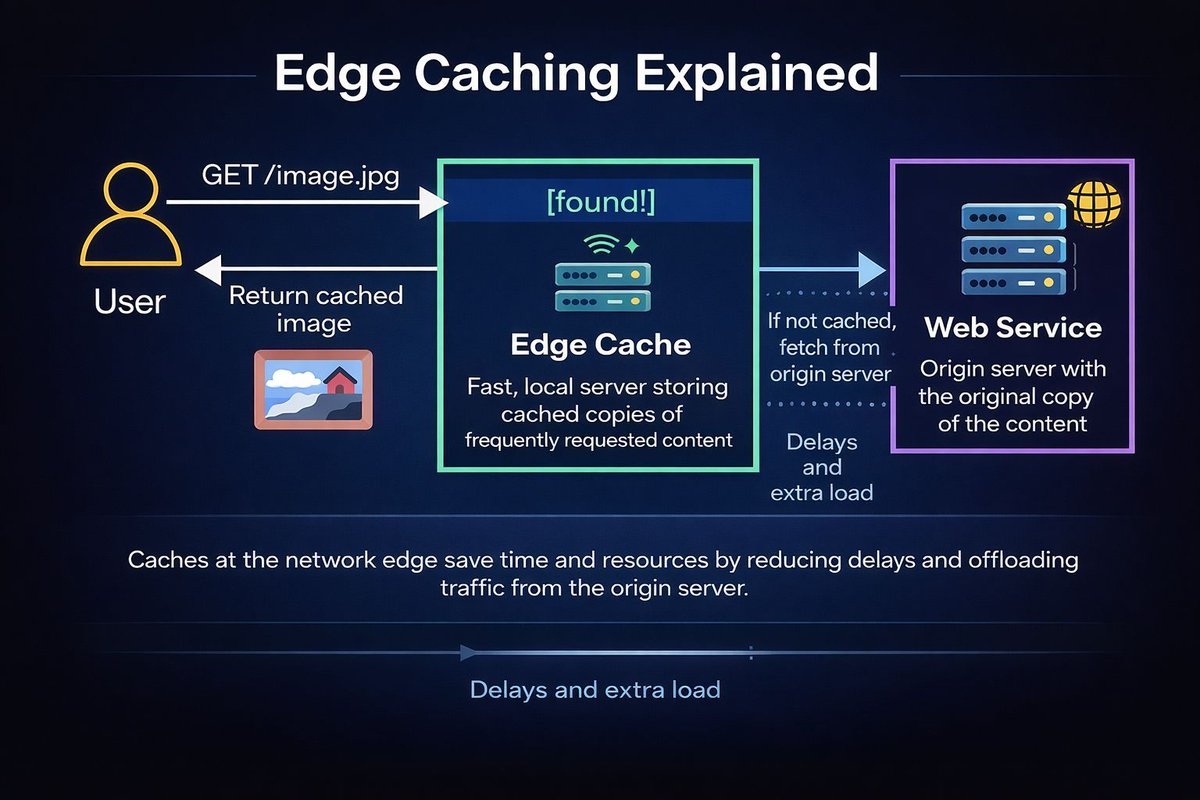
Put the cache closer to users. Everything gets faster.
https://t.co/wqvsqVUnSY
Multi-CDN with 3 similar providers = 3 copies of the same risk.
Real resilience comes from different footprints, not just different logos.
https://t.co/wqvsqVUnSY
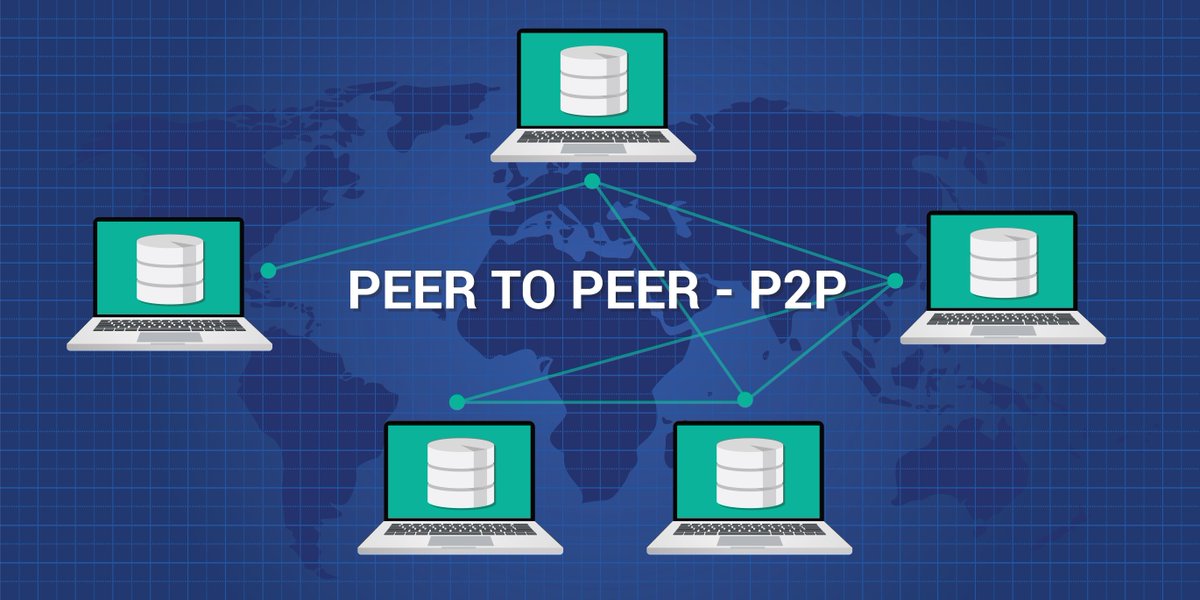
DePIN CDN ≠ P2P.
Still centralized control plane
Still encrypted
Still observable
Just more distributed cache locations.
Big difference.
https://t.co/wqvsqVUnSY
CDNs deliver 70%+ of the web… yet most capacity sits in the same metro IXs. “Global” doesn’t mean “everywhere.”
Rural + small ISP users still backhaul traffic upstream.
Topology > marketing.
https://t.co/wqvsqVUnSY
If your cache isn’t inside the access network, you’re still paying the latency tax.
Every upstream hop adds TTFB.
Deeper cache placement beats bigger PoPs...and better delivery experiences.
https://t.co/wqvsqVUnSY
CDNs haven't really changed over the last 15 years.
But it's about time that they did.
DePIN CDNs offer an improved, self-healing delivery architecture, a way to onboard new capacity (rather than building it), and support for non-traditional capacity like from ATSC 3 broadcasters.
Learn about it: https://t.co/Pdio6eQZRw
Multicast is often thought of as one-to-many data transmission. Which is true, it stands apart from unicast which is always a one-to-one.
The true power of multicast is not in an individual sending data to multiple recipients. It is in a community of many senders sending data to many recipients simultaneously with orders of magnitude, lower bandwidth requirements and lower latency.
This is how multicast works in traditional finance, this is how multicast will work in crypto as well.
IBRL
Why it matters: More users are being served by smaller ISPs that aren't peered with major CDNs. Blockcast's software-based approach lets any operator spin up a node and join our network—bringing better performance to users everywhere, not just big cities.
Read the full study 👇
https://t.co/djQ4Xx1bM8
We embedded a Blockcast RELAY node in a smaller network operator and saw dramatic improvements in latency and startup times compared to traditional CDNs.⚡ Lower latency🚀 Faster startup times 📈Consistently better QoE