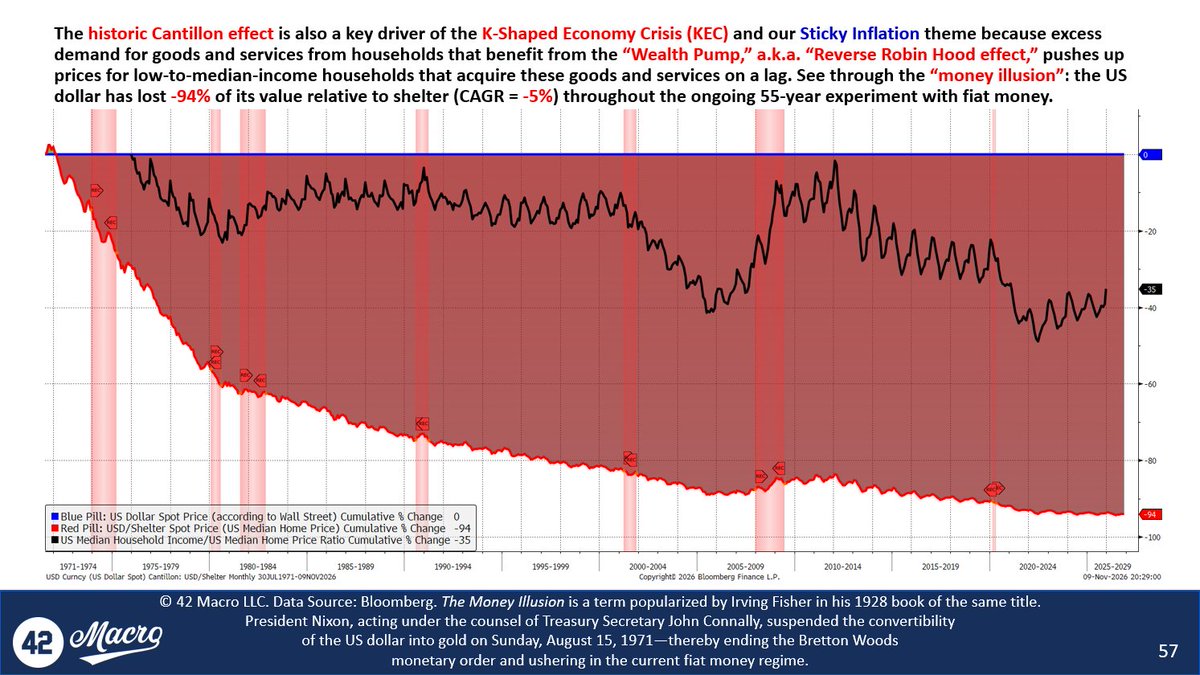
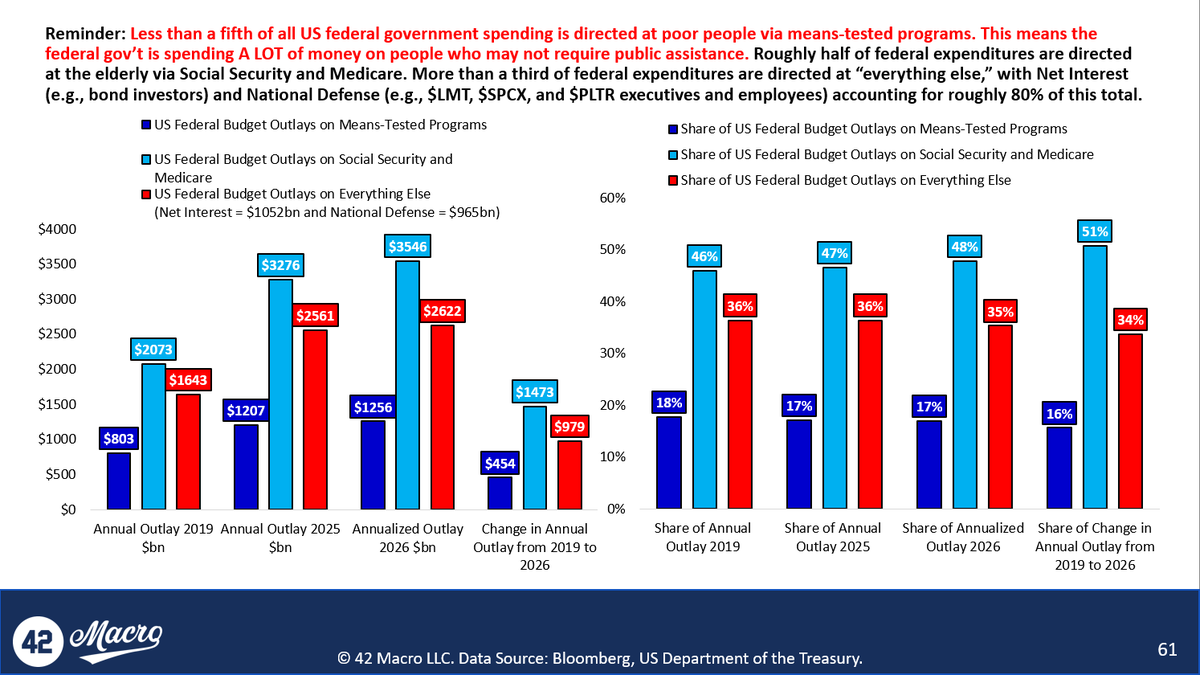
Now you know why @RayDalio, @HoweGeneration, Dr. @Peter_Turchin, and I are the four most despondent optimists in the world.
With great wisdom, comes great sorrow. Great power —> great responsibility.
Thanks for being on this E-Shaped Economy journey with me. I know I sound crazy at times talking about “politics” as a member of global Wall Street. Humble reminder that MLK Jr. sounded crazy to some too.
Have a blessed day!
—Skipper 💜
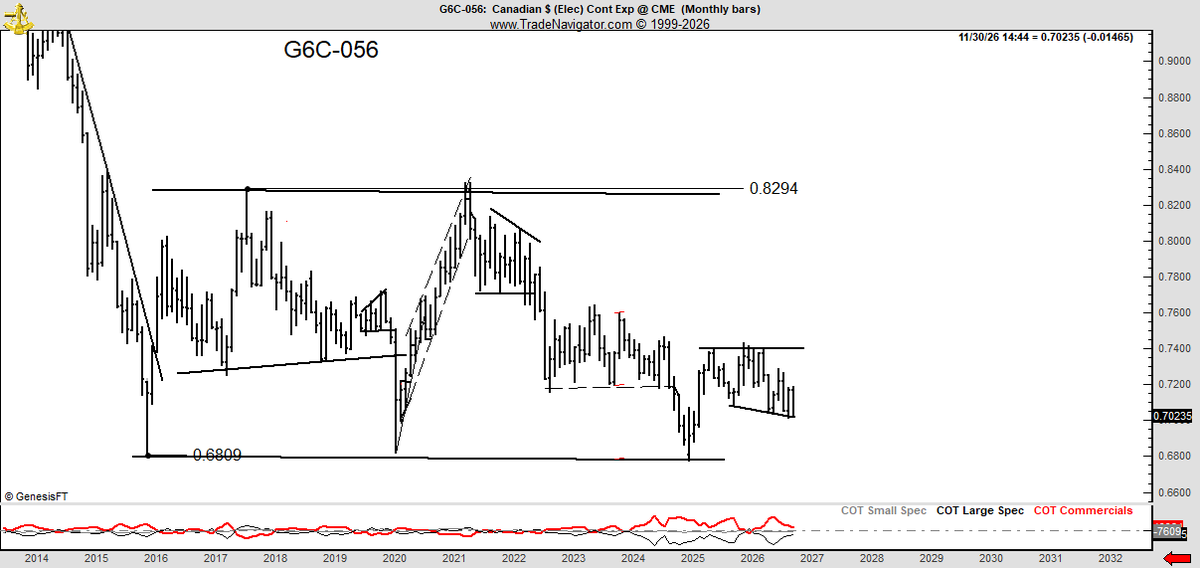
Interesting chart. It's C$ futures. If we were to appraise the Canadian $ based on its national government, the value would be a minus.
Normally we expect right angled triangles to BO through the flat side, but maybe not this one
Symmetrical triangle as a bullish continuation. This is the only diagonal breakout I take into consideration. All other chart patterns are breakouts through horizontal boundaries.
Four frameworks, one code.
In the latest Journeyman I walk you through four of my frameworks in one episode, from The Everything Code through to the Universal Code, and what I'd own and avoid because of them.
As ever, please enjoy!
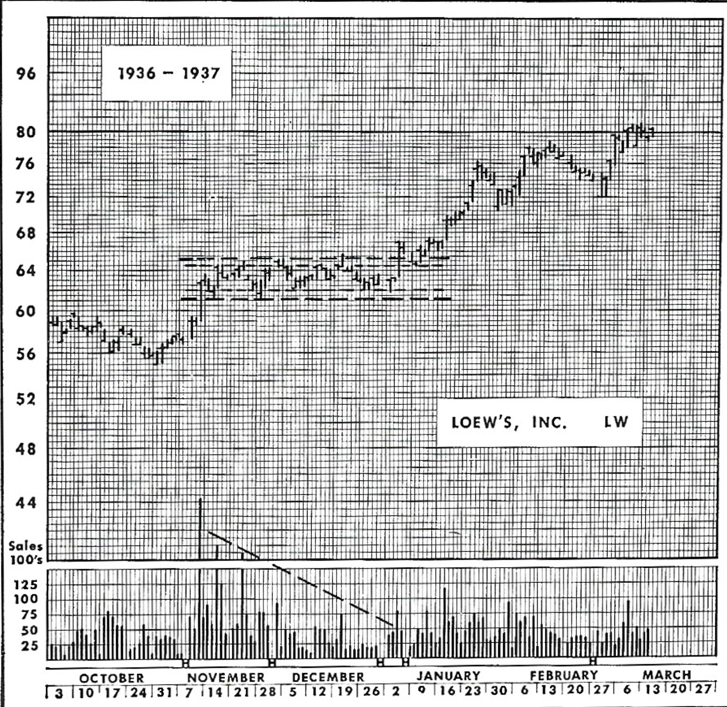
26 years ago, when I was starting with charting/trading and investments if someone gave me this advice, I would thank him/her every single day:
Print this chart. Put it on your desk.
Expand your research/investment universe.
Look for only 1 setup. The setup that is on this chart.
Go and look for this setup, if possible, across 2000 charts.
All your trades will be executed through this basic chart pattern setup.
When you revisit the charts you will be able to identify the setup you traded again and again.
You can thank me later. Don't forget to print it.
Hey, has anyone ever told you that grain prices quite reliably bottom when all the harvesters in the U.S. are out in the field, and top at planting time?
Billionaire cancer doctor Patrick Soon-Shiong told Tucker Carlson that almost every oncologist ignores the one number in your blood test that kills cancer:
“Pick up the phone, call any random oncologist, not to shame them, and say, ‘You do a CBC, correct?’ A complete blood count. You take blood and check whether you’re anemic or not.”
“And you give chemotherapy and radiation, and you ask, ‘What do you look for?’ Well, we look to see if you’re anemic, so we can give you this drug Amgen makes called Epogen. We look to see whether your platelets have gone down, so we can give you a platelet transfusion. We look to see whether your neutrophils have gone down so you don’t get an infection, so we give you Neupogen.”
“Well, the problem is, do red blood cells kill cancer? No. Do platelets kill cancer? No. Do neutrophils kill cancer? No.”
“What kills cancer? The natural killer cells and T cells. So in that CBC, there’s a thing called the lymphocytes. Do you look at that? No.”
“The only cell that is important, that kills cancer, and 99.9% of oncologists will say, ‘We don’t pay any attention to that.’”
Even Tucker couldn’t believe it: “Why, if you’re fighting cancer, would you ignore the one cell that fights cancer?”
“That’s the missing link. That is the key element in your body.”
PS. We post daily breakdowns on health and longevity, so if that’s you, follow us @LxngevityLab for more.
Like and repost if you found value in this post:
50 legendary internet rabbit holes you can spend hours exploring👇
1. https://t.co/BKQKtCoHx7 — Watch the world via live satellite imagery
2. https://t.co/skHM6ihO1M — See every plane currently in the sky
3. https://t.co/3wHLr5BTqs — Track all ships at sea in real time
4. https://t.co/wneZoYkXVV — Live map of winds and storms
5. https://t.co/th5qTv4uYt — Watch lightning strikes hitting Earth in real time
6. https://t.co/ugJruuA2MX — Live list of recent earthquakes
7. https://t.co/KjzFm8Mv5H — Ocean cables carrying the internet
8. https://t.co/ihBKAFPlqM — Watch forests disappear from space
9. https://t.co/QO76fqkPBq — The world's statistics, second by second
10. https://t.co/6aNOFkpEaE — Current number of tweets and searches being posted
11. https://t.co/Ng5YgeOtoO — Compare the true sizes of countries
12. https://t.co/8nxdhZQnea — Maps from centuries ago
13. https://t.co/KxBUC8vkvs — Archive of 150,000 historical maps
14. https://t.co/jCKAhsYH7r — World map drawn by volunteers
15. https://t.co/d5QWs5njpu — Look out the window of a random person around the world
16. https://t.co/RKjjmyqV5D — Virtual walks through cities
17. https://t.co/foY7sojylA — Teleport to a random spot on Earth
18. https://t.co/ZJ889iuSUd — Catalog of the world's strangest places
19. https://t.co/wVGZkiJ20o — Interactive knowledge experiences
20. https://t.co/j1VNMfYDcy — Scale journey from atom to universe (Updated HTML5 link)
21. https://t.co/CvOBtl9Vm8 — Explore the solar system in 3D
22. https://t.co/RnlofaWs0Q — Real sky map in your browser
23. https://t.co/1PlQgAjbMU — NASA's astronomy picture of the day
24. https://t.co/2RuTZvWdt3 — NASA's entire visual archive, free
25. https://t.co/beEkHBgT5l — Visual articles told through data
26. https://t.co/RMccQyBARG — The state of the world with real data
27. https://t.co/gNH6mlzyjF — What we mistakenly think we know about the world
28. https://t.co/ZrVElnYKY2 — Visualizing complex data
29. https://t.co/ahtXNpo1de — World Bank's open data
30. https://t.co/ShMYouw5GP — Turkey's official statistics database
31. https://t.co/GqEd2SxdGe — Archive of millions of books, films, and software
32. https://t.co/8ijFqv85Ff — 70,000 free books whose copyrights have expired
33. https://t.co/Gt6dp7gGNG — Record of every book in the world
34. https://t.co/LogFrI4LvX — U.S. Library of Congress digital archive
35. https://t.co/O9XxbTPkbZ — Europe's cultural heritage archive
36. https://t.co/lQg0HnHYrx — America's digital library collection
37. https://t.co/TcOIZ5l4tt — Tour museums from home
38. https://t.co/6wMBrfTaPl — Download artworks in high resolution
39. https://t.co/trYjdzxThm — Archive of 250,000 artworks
40. https://t.co/Jgz9Abg2UC — Forgotten visual treasures of history
41. https://t.co/y4axNFEMBi — Free archive of culture and education
42. https://t.co/wkw7PgTFlB — Met Museum's open collection
43. https://t.co/AZ98yxOlXC — Family tree of music genres
44. https://t.co/UWyCzSQMRQ — Pick a country and decade to listen to that era
45. https://t.co/Q0NMpm9XqQ — Turn Wikipedia edits into audio
46. https://t.co/lT2YvOjawm — Random knowledge well
47. https://t.co/tukI2JCMXp — Time, sunrises, and sky events
48. https://t.co/A8xsuxYqHd — Live stream of science news
49. https://t.co/RrqPEgwNK3 — Free preprints of scientific papers
50. https://t.co/4ZyBN6Hpdk — Visualize data with live code
Save this. You’ll definitely need some of these later. 🔖
Follow @justinbrave21 for more useful websites, AI tools & tech resources.
YOU HAVEN'T HEARD THIS ONE BEFORE.
Perhaps George W. Bush learned from his father’s experience that it is safest to do as Israel demands.
On September 12, 1991, George H.W. Bush went on camera and threatened to block $10 billion in U.S. loan guarantees to Israel unless it froze settlements and cooled tensions with the Palestinians.
He called himself “one lonely little guy” against “a thousand lobbyists.”
Then on January 8, 1992, the clip everyone still shares: Bush collapses at a state dinner in Tokyo and vomits on Japan’s prime minister.
White House said flu.
After that, the public fight over cutting aid to Israel went quiet. The money eventually went through.
Probably nothing.
You can't make this up.
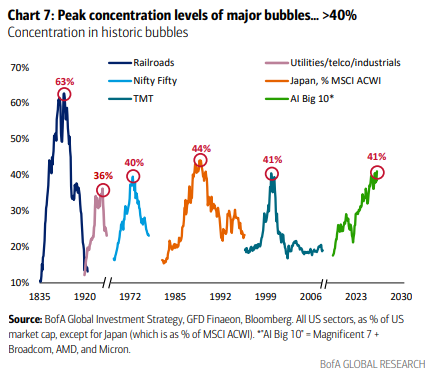
3 of history's biggest stock market bubbles all ended the same way.
Today, the 10 biggest AI stocks make up 41% of the US stock market, per Bank of America.
That's the same level where the dot-com bubble peaked in 2000.
And BofA says each of those past bubbles was ended by a surge in bond yields:
- Nifty Fifty, 1973: US yields jumped 2 percentage points
- Japan, 1989: Japanese yields jumped 2.3 points
- Dot-com, 2000: US yields jumped 2.6 points
In all three, the end came once yields had risen by 2 points or more.
Meanwhile, US 10-year yields are already up 1.27 points since February.
"Quickest way to end US boom is surge in bond yields," BofA writes.
Per Capita, Canadians who are the worlds leading food inflation country are also the biggest donors to Ukraine to finance their war with Russia, Canadians send approx six hundred dollars each to Ukraine while the EU and USA send about two thirds per capita, let that sink in, Canada and Ukraine the Zelensky Carney alliance are driving up the prices of energy daily while mooching and freeloading. Canadian taxpayers have deep pockets, enough to finance a war with Russia that has gone on for the last twelve years to be honest about it.
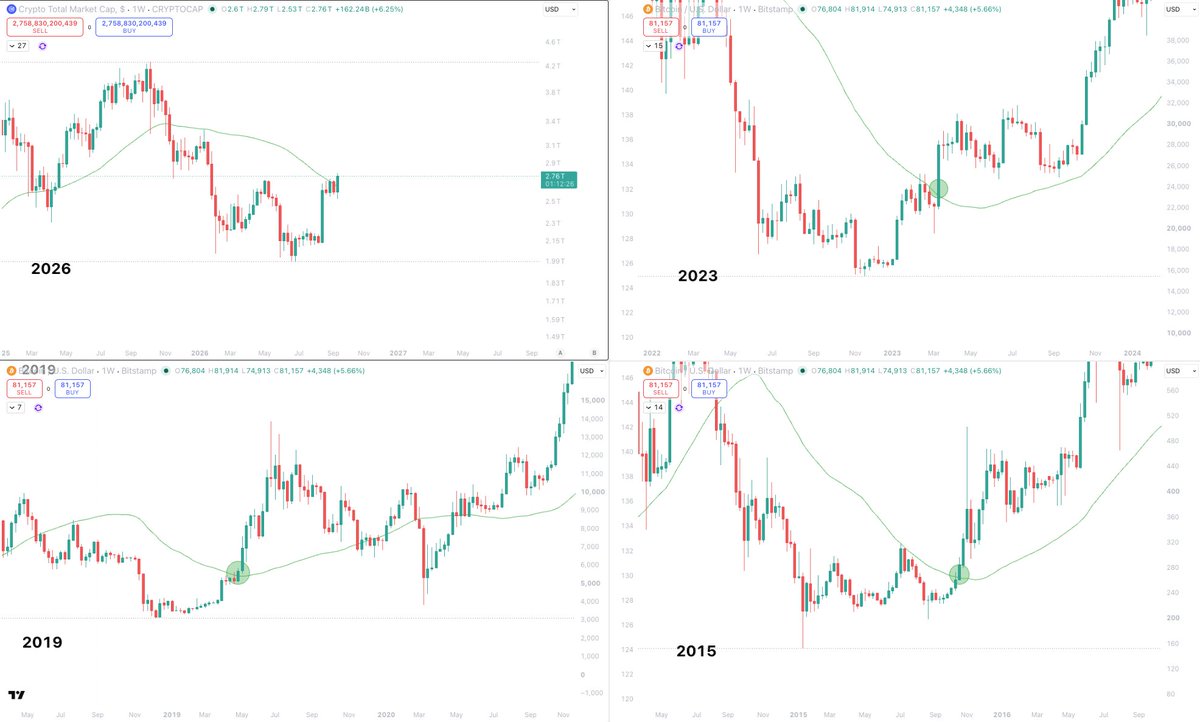
It has led to the biggest moves we've ever seen.
This is every time the 50SMA has been reclaimed on TOTAL, from market bottoms.
It has never dropped afterwards.
It has always gone higher.
2020 is also on this list, but can't fit on the chart. It's the same situation though.
So the last 4, and only 4 times this has happened, every single time, it has gone much higher, without any downside, until much higher up.
This isn't my opinion, it is just the data.
Would it be smart to bet against this?
Any betting shop would give you absolutely terrible odds if you bet on this happening again, because it's highly likely it does.
The only outcome we have ever had from the 50SMA being reclaimed, is instantly higher.
I have no idea if it will do it again this time, but the odds are incredibly in that favour.
Don't fight the trend.
As an architect and graduate of one of the top schools of architecture & building engineering in Britain I agree with my colleague Richard Gage & team that the smaller top section of the Twin Towers can't possibly demolish the entire tower below under any circumstances, unless explosives are unsed on the floors below.
In a February 2022 opinion piece in The Globe and Mail, Mark Carney described the Freedom Convoy as “terrorizing” Ottawa residents, calling the demonstration “sedition” and “blatant treachery.” He claimed its true aim was to overthrow the elected government and urged authorities to “choke off the money” funding the occupation.
Donald Trump, by contrast, strongly praised the Canadian trucker protests that year, referring to the participants as “peaceful truckers” who were “doing more to defend American freedom than our own leaders.” He criticized Prime Minister Justin Trudeau’s handling of the situation and accused Canadian authorities of crossing a line by making arrests and clearing the demonstrations.
Carney has appealed the Federal Court ruling that found the invocation of the Emergencies Act illegal. The argument is that he is deliberately undermining trade talks with Trump because the Canadian government needs that court decision overturned and Trump’s statements discredited. Those statements cannot be allowed to stand, the reasoning goes, because they undermine the credibility of the entire Canadian government.
Consider a $500,000, 30-year mortgage at 6.8%.
When the bank approves the mortgage, it does not take $500,000 from a vault—or transfer someone else’s savings directly to you.
It creates a new loan on one side of its balance sheet and a corresponding deposit on the other.
In other words, it creates that $500,000 out of thin air… and then charges you interest on top of it.
At 6.8%, the monthly principal-and-interest payment is about $3,260.
Keep the mortgage for the full 30 years, and you will repay approximately $1.17 million.
$500,000 in principal.
About $673,000 in interest
The bank creates the mortgage by pressing a few keys on a keyboard.
You must repay it—with interest that exceeds the original principal—using money earned through decades of work.
Even the word “mortgage” is revealing. It comes from Old French and roughly translates to “death pledge”—from mort, meaning death, and gage, meaning pledge.
That is an even more fitting description—especially with the arrival of 50-year mortgages.
Canada Is Not Poor Because It Lacks Money. It Is Poor Because It Produces Too Little.
Canada’s problem is not simply inflation, immigration, housing or government debt.
It is that we have tried to create prosperity through rising asset prices and expanding credit rather than through rising productivity.
Canadian workers reportedly produce about US$50 of GDP per hour, compared with roughly US$80 in the United States.
Business investment per worker is also far lower, while homes in Toronto and Vancouver often cost more than comparable homes in wealthier American cities.
We earn less.
We produce less.
We invest less.
Yet we pay more for housing and fill the gap with debt.
That is not prosperity. It is financialization.
For decades, falling interest rates and expanding credit allowed Canada to hide weakening productivity beneath rising real estate values.
Homeowners appeared wealthier, governments collected more revenue, and banks expanded their balance sheets.
But a society cannot consume what it does not ultimately produce.
The solution is not another housing stimulus, another credit program or another attempt to inflate asset prices.
Canada must redirect capital toward productive investment:
• AI, robotics and automation
• Energy and infrastructure
• Manufacturing and advanced materials
• Biotechnology and medical innovation
• New businesses, tools and productive capacity
We must reduce the cost of building, reward entrepreneurship, protect purchasing power and measure prosperity by real GDP per capita, real incomes and productivity, not merely by total GDP or the price of existing homes.
It needs to rebuild an economy that produces real wealth.
https://t.co/idZkAMWDTK