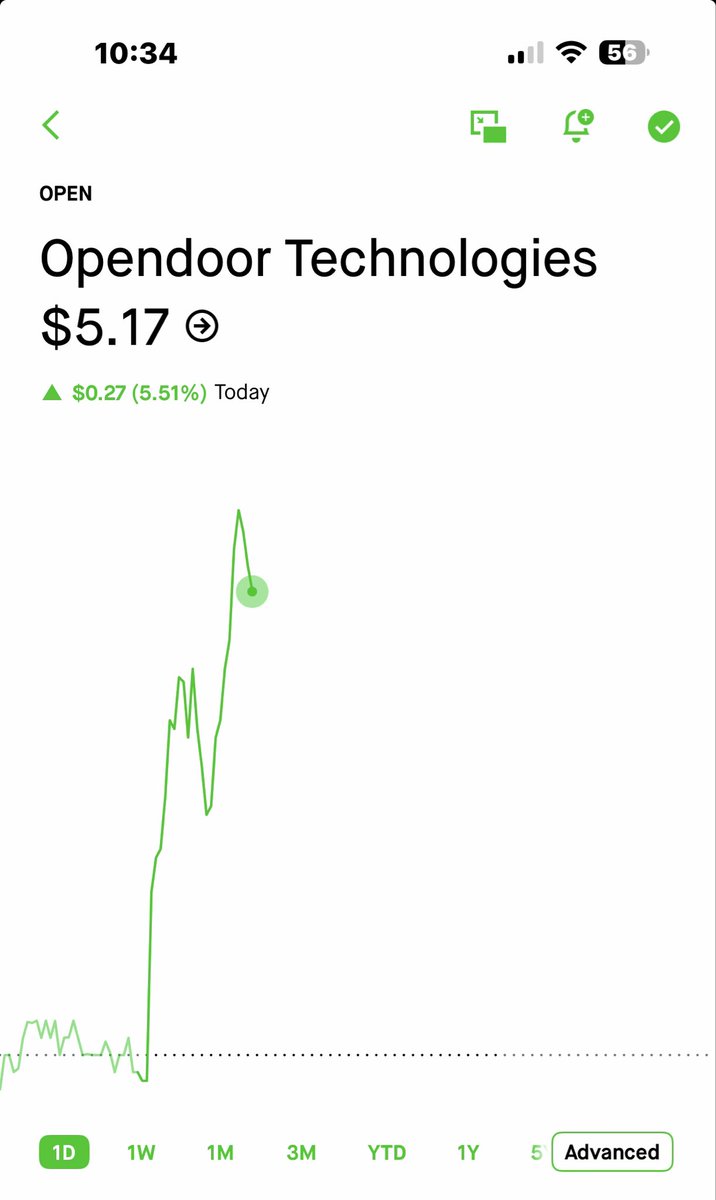
🔥 Just hit 500+ followers — and I’m genuinely grateful for everyone here.
I still run my IT & cybersecurity company full time, so balancing client work and content isn’t easy… but the engagement, feedback, and conversations on here make it worth it.
I’ll keep posting real tech, leadership, and business insights no fluff. Of course content about $Open too. Appreciate you all for being part of this journey.
Let’s keep building. 👊
#TechCommunity #EntrepreneurLife #BlueDotTechnologies #GrowthMindset #VCIO #open #retailarmy
I think NVIDIA will be just fine in the long run. 💰 The real question is how to capitalize on the volatility. Short it on the way down or load up on the dip? Either way, there could be money to be made! 📈📉 #NVDA#NVIDIA#Stocks#Investing
🚨 BREAKING: Jensen Huang has resigned as NVIDIA CEO.
One of the biggest leadership changes in tech and AI. What happens next for $NVDA? 👀
Source: Associated Press
#NVIDIA#NVDA#JensenHuang#AI#Stocks
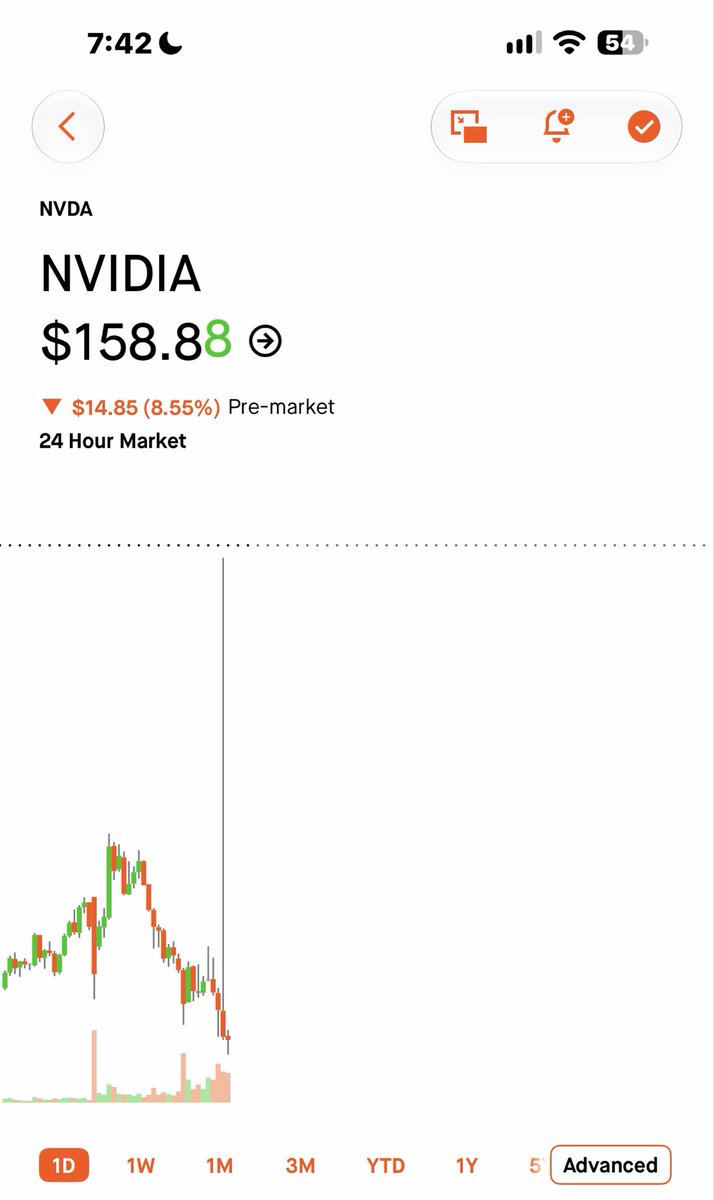
NVIDIA down over 8% pre-market… 😳📉
Seeing NVDA around $158 after a drop like this is crazy. Tech is getting absolutely hammered this morning.
Definitely watching to see where this one finds a bottom. 👀
#NVIDIA#NVDA#Stocks#StockMarket#Investing#TechStocks#WallStreet
Your data can be backed up. Your business can still be down.
The October 2025 AWS outage showed the risk of shared dependencies. Backups alone don’t ensure uptime. Test recovery and failover.
Could your business handle 4 hours offline?
#AWS#BusinessContinuity
Sending lots of love to the Apple community on my last day as CEO. My title changes tomorrow, but the love I have for the Apple community never will. Thank you for being a constant source of inspiration. My gratitude is endless, and I’m excited for the next chapter!
🔥 The 13-inch iPad Air with M4 is here.
13" Liquid Retina display. M4 power. Wi-Fi 7. All-day battery life. This is a seriously capable iPad for work, travel, school, or just replacing the laptop for everyday use. 🍎
👉 https://t.co/xHqmQ5PTzu
#ad#AmazonAssociate#iPadAir
This is the kind of capital allocation shareholders want to see: reduce the share count by 5%, finance it at a 0% coupon, and still preserve hundreds of millions in liquidity for growth.
The real question now is execution. If Opendoor can translate that balance-sheet flexibility into sustainable growth and improving unit economics, the reduced share count could make the upside significantly more powerful for existing shareholders. $OPEN
Some news. Today, for the first time in Opendoor's history, we bought back our own stock.
Our share count is down 5%. We paid for this buyback with money borrowed at a 0% coupon and we still have hundreds of millions of dollars left to grow faster.
There are plenty of helpful details, along with a lot of legalese, in our press release and 8-K (linked below). But there are a few things I want to say directly and in plain English.
First, I *despise* dilution. On my first earnings call at Opendoor, I told you that if we issue a share, it has only one job: to make every other share worth more for our existing shareholders, not to extend runway for management. The flip side is just as simple: when our own stock is one of the best uses of capital, we should buy it back. Today, we did just that - by 5%.
Second, I run a publicly traded company. I don’t get to have feelings about the macro or the way Wall Street works. My job is to understand the rules of the game and use them to find an edge and build a better company.
One of those realities is that our stock price has lots of volatility.
People disagree - A LOT - about what Opendoor could be worth one day. Some think we're worth less. Some think we're worth dramatically more. I obviously have a view…
That disagreement isn’t just noise - it has economic value that Wall Street monetizes every single day.
Most companies would treat this as a headache, but we see it as an asset. If people are going to speculate about our future, I'd rather our shareholders get paid than anyone else. So instead of complaining about volatility, we used those dynamics to borrow $650M at a 0% coupon.
Then we turned around and used part of those proceeds to buy back our own stock. At today's prices, buying back our stock and call options was one of the best trades on the board. The rest stays on our balance sheet so we can buy more homes and grow faster.
As for dilution, we bought our stock where we thought it was cheap and pushed any future dilution far above today’s price. Not one net new Opendoor share will exist below $10.38. And if we buy back stock in the future, that floor goes higher.
But why raise now? Because the best time to raise capital is when you don’t need it. We’ve proven the business can reach ANI profitability, but profitability is just the starting point, not the finish line. And waiting could make the shares we are buying back today more expensive, and homes we could be buying don’t get bought. I’d rather move now.
Some people will call what we did today aggressive. They’re right. But being aggressive is how we fixed a company that spent years being careful. I’d make that trade again.
To our shareholders: You trusted us with your capital. Today, for the first time, Opendoor used its own capital to buy more of itself. The company is putting its money where its mouth is. Tomorrow, I will too.
After our lawyers allow, I’m personally buying $100K worth of shares. I'm all in, and I plan to keep buying.
Workers have a legal right to come together and organize for better pay, benefits, safety, respect, and working conditions.
How does starting a union work?
Talk with trusted coworkers about shared concerns.
Contact an established union or the National Labor Relations Board for guidance.
Build support and collect union authorization cards or signatures.
Once at least 30% of the potential work group shows support, employees or a union can petition the NLRB for an election.
If a majority of workers who vote choose union representation, the union is certified to bargain with the employer.
Employees generally have the right to discuss workplace issues, organize with coworkers, and support or oppose unionization without threats, interrogation, retaliation, or coercion.
A union is not about creating conflict. It is about giving employees a real, collective voice at work.
#UnionStrong #WorkersRights #EmployeeVoice #FairWorkplace #CollectiveBargaining
When multiple legal issues start surrounding the same company, people naturally begin asking questions.
This article discusses a WARN Act investigation related to recent GridHawk layoffs. Definitely worth reading if you’ve been following recent events.
What are your thoughts?
#GridHawk #WARNAct #EmploymentLaw #CorporateNews