One practical note from Japan today: Living in Japan gets easier when you find one neighborhood event you can attend every month. It turns the city from scenery into community. Instead of repeating it as-is, turn it into guidance that helps someone make everyday life in Japan feel easier and more grounded.
You studied JLPT for two years. You get to Japan. And then...
The convenience store staff speaks at warp speed and none of it was on the test. 😅
🤔 Why does this happen?
JLPT measures reading and formal Japanese under pressure. It does not measure how an 居酒屋 (いざかや) server shortens every sentence, or how colleagues swap textbook phrases for casual contractions the moment the boss leaves the room.
JLPT Japanese and daily spoken Japanese are cousins, not twins.
💡 One thing to add to your routine:
Pick one phrase you hear in real life each week and check if JLPT prep materials even mention it. Start with:
「なんか」「ってか」「じゃん」— three words you hear every day in Tokyo that the JLPT has very little interest in.
Have you experienced the JLPT-vs-real-life gap? Reply below!
#LearnJapanese #BESCommunity #JLPT #JapanesePhrase #ExpatsInJapan #BlueEyeSensei
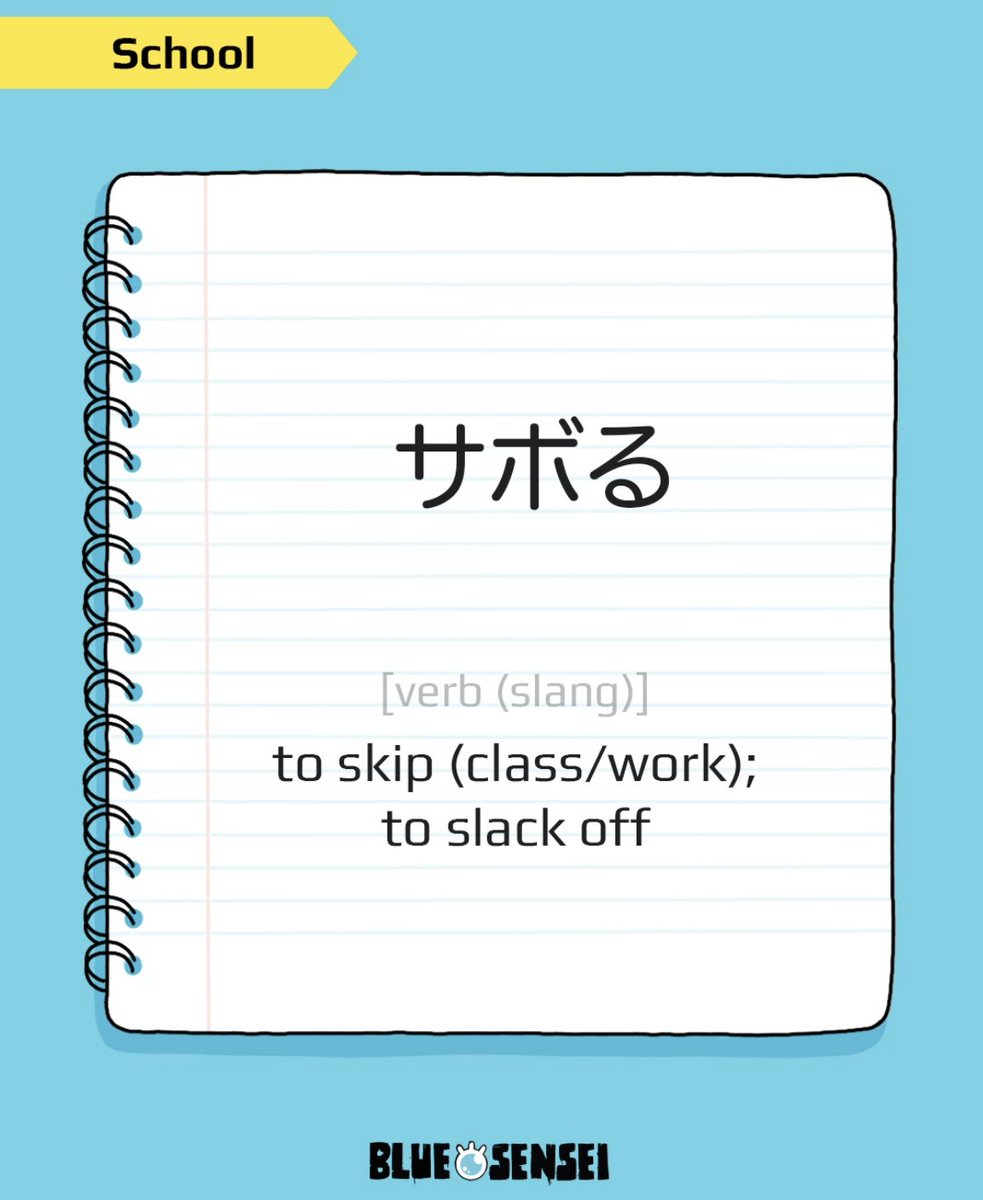
📌 サボる – To skip or slack off 😴☕
サボる (saboru) is a casual slang verb meaning to skip class, work, or responsibilities.
Fun fact: it comes from the French word “sabotage” — wild, right?
💬 Example:
「今日は授業(じゅぎょう)をサボってカフェに行(い)きました。」
Kyō wa jugyō o sabotte kafe ni ikimashita.
“I skipped class and went to a café today.”
🈴 JLPT Level: N3
⚠️ Don’t say it to your teacher or boss 😅
Need a polite excuse instead? Try:
「体調不良(たいちょうふりょう)なので、休(やす)ませてください。」
(I’m feeling unwell, so I’d like to take the day off.)
😈 Have you ever サボった a class?
Tell us in the comments (we won’t tell your sensei 👀) 👇
#BlueEyeSensei #JapaneseSlang #LearnJapanese #サボる #日本語学習 #JLPTN3
🇯🇵✨ AI Starter Pack: Blue Eye Sensei Edition
The essentials you actually end up carrying in Japan:
🎮 Nintendo Switch — your train ride lifesaver
📱 iPhone with 3% battery & 47 tabs open
🗾 PASMO card (balance: ¥1, obviously)
🍙 Combini onigiri — your emergency meal
🍵 Matcha latte in a PET bottle (barely sweet, still drink it)
🌂 500 yen clear umbrella — lost within 2 hours, every time
🪙 Pocket full of coins you refuse to spend
💨 Pocket fan — because Japanese summer = humid vending machine hell
📖 JLPT N5 book — your good luck charm that never gets opened
What’s in your Japanese starter pack? 😎👇
#BlueEyeSensei #JapanLife #JapaneseLearning #StarterPack #外国人あるある
📌 郷に入っては郷に従え(ごう に いって は ごう に したがえ)
Proverb: “When in Rome, do as the Romans do.”
💬 Usage Example:
「郷に入っては郷に従えって言うし、日本では靴(くつ)を脱(ぬ)いでから家(いえ)に入(はい)ろう。」
“They say ‘When in Rome, do as the Romans do’—so in Japan, let’s take off our shoes before entering.”
✅ What it means:
This saying encourages you to respect and adapt to the customs and rules of the place you’re in.
It’s not about losing your identity — it’s about being observant, open-minded, and showing cultural respect.
🇯🇵 意味(いみ):
その土地の習慣やルールには、素直に従うべきだということ。
🌏 Have you ever had to adjust to a new culture or unexpected rule?
What surprised you the most?
#LearnJapanese #JapaneseProverbs #BlueEyeSensei #文化の違い #ことわざ
🗿 Ever been put in front of clients just because you “look foreign”?
Not because of your language skills… but just your face.
It’s funny—until it’s not. 😅
✅ What’s going on here?
In Japan, being a “gaijin” (foreigner) sometimes brings unexpected perks…
or pressure.
Companies may assume your English is flawless—even if your TOEIC score says otherwise,
or you’re not even a native speaker!
💬 Ever had this happen to you?
Were you treated like a “language rep” just because of how you look?
📣 Share your story in the comments
or join the conversation in our Discord community!
You’re not alone—and we get it.
🔗https://t.co/7mDZQyn6U4
#LifeInJapan #GaijinLife #BlueEyeSensei #JapaneseWorkplace #外国人あるある
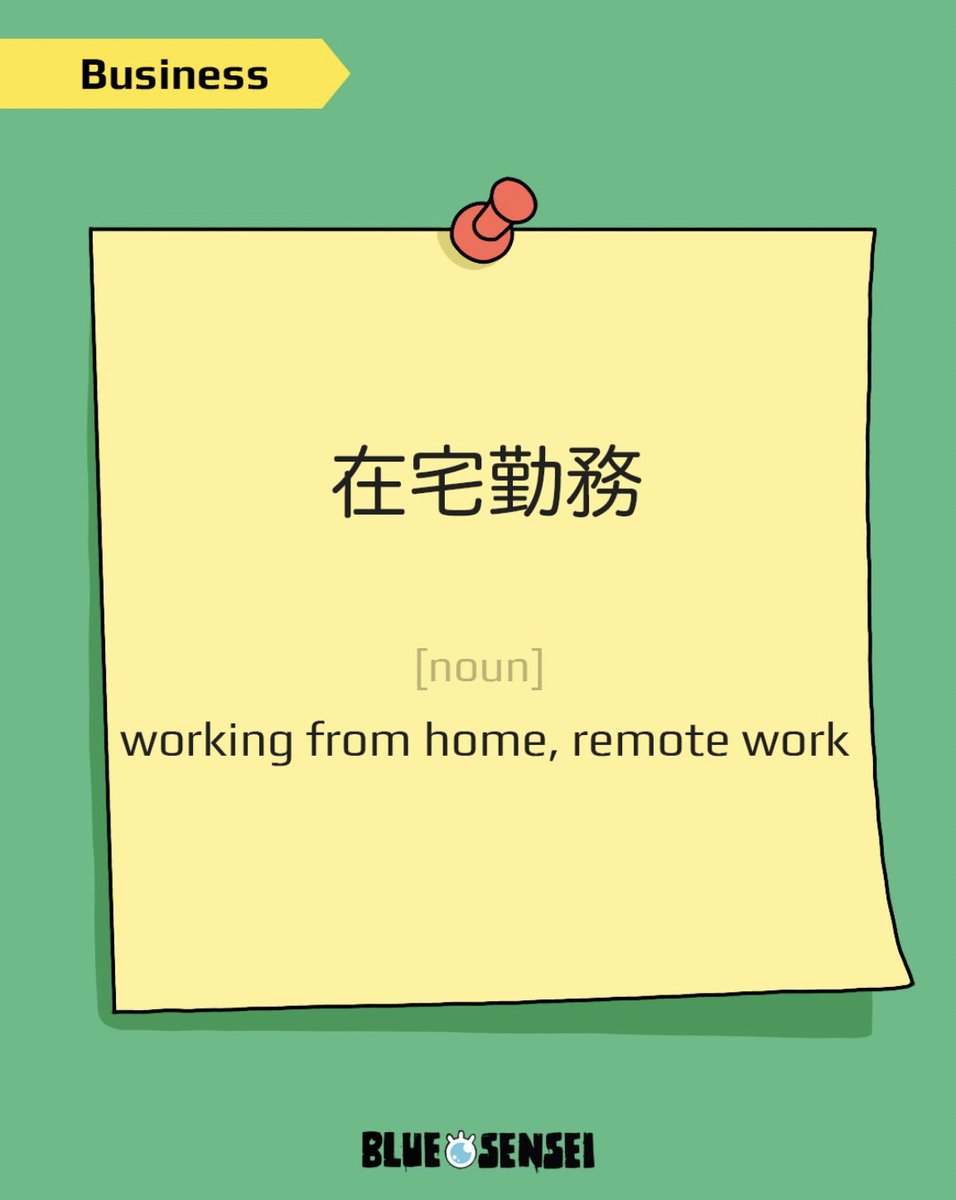
📌 在宅勤務(ざいたくきんむ)– Working from home 🏠💼
在宅勤務(zaitaku kinmu) is the formal Japanese term for working remotely.
・在宅(ざいたく) = being at home
・勤務(きんむ) = work
Put them together, and you’ve got one of the most common work styles in Japan today!
💬 Usage Example:
「明日(あした)は在宅勤務を取得(しゅとく)しても宜(よろ)しいでしょうか。」
“May I work from home tomorrow?”
✅ What it means:
在宅勤務 refers to working from home.
You might hear just 「在宅」 in casual chats between coworkers,
but for emails, official requests, or documents, the full term is preferred.
🇯🇵 意味(いみ):
自宅で業務を行う勤務形態のこと。
「テレワーク」「リモートワーク」とも呼ばれます。
💭 Do you prefer working from home or at the office?
Reply and tell us why! 👇
🔗 Want to boost your business Japanese?
Join our BES community on Discord and learn with others from around the world.
(https://t.co/hmltlaXXGO)
#在宅勤務 #BusinessJapanese #LearnJapanese #BlueEyeSensei #WorkFromHome #日本語学習
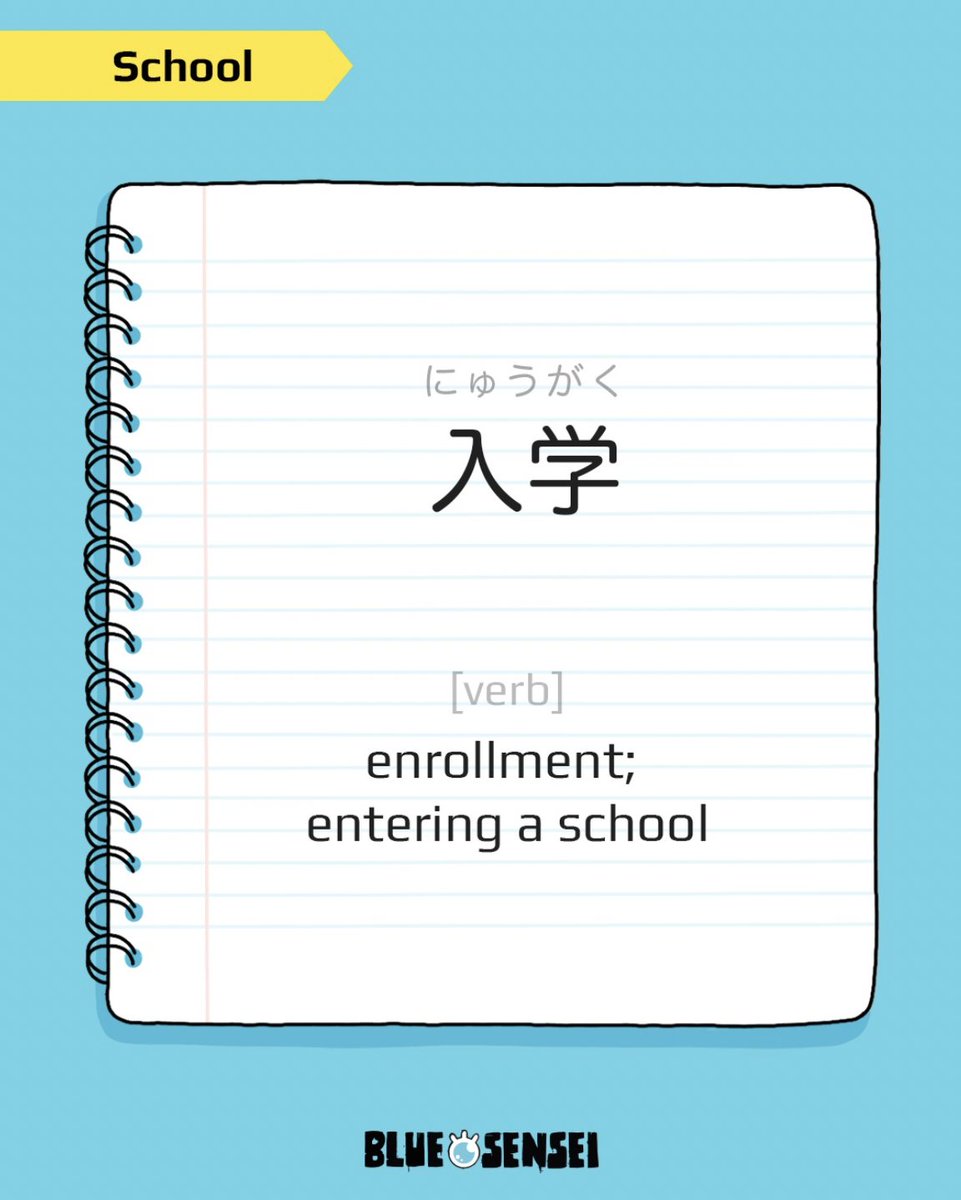
📌 入学(にゅうがく)– Starting school 📚🌸
入学 (nyuugaku) means officially entering a school or university and beginning your studies.
In Japan, it’s a big event—celebrated with entrance ceremonies and cherry blossoms!
💬 Usage Example:
「妹(いもうと)がこの春(はる)、高校(こうこう)に入学(にゅうがく)します。」
Imouto ga kono haru, koukou ni nyuugaku shimasu.
“My little sister is starting high school this spring.”
✅ What it means:
入学 refers to enrolling in an educational institution and starting your studies.
It’s a memorable milestone in Japan, often marked by 桜(さくら) and school ceremonies 🌸
🇯🇵 意味(いみ): 学校などに入って勉強を始めること
🈴 JLPT level: N4
🔗 Joined our Spring Term yet?
Start your learning journey with BES! (https://t.co/hmltlaXpRg))
#LearnJapanese #BlueEyeSensei #JapaneseVocabulary #入学 #春の日本語
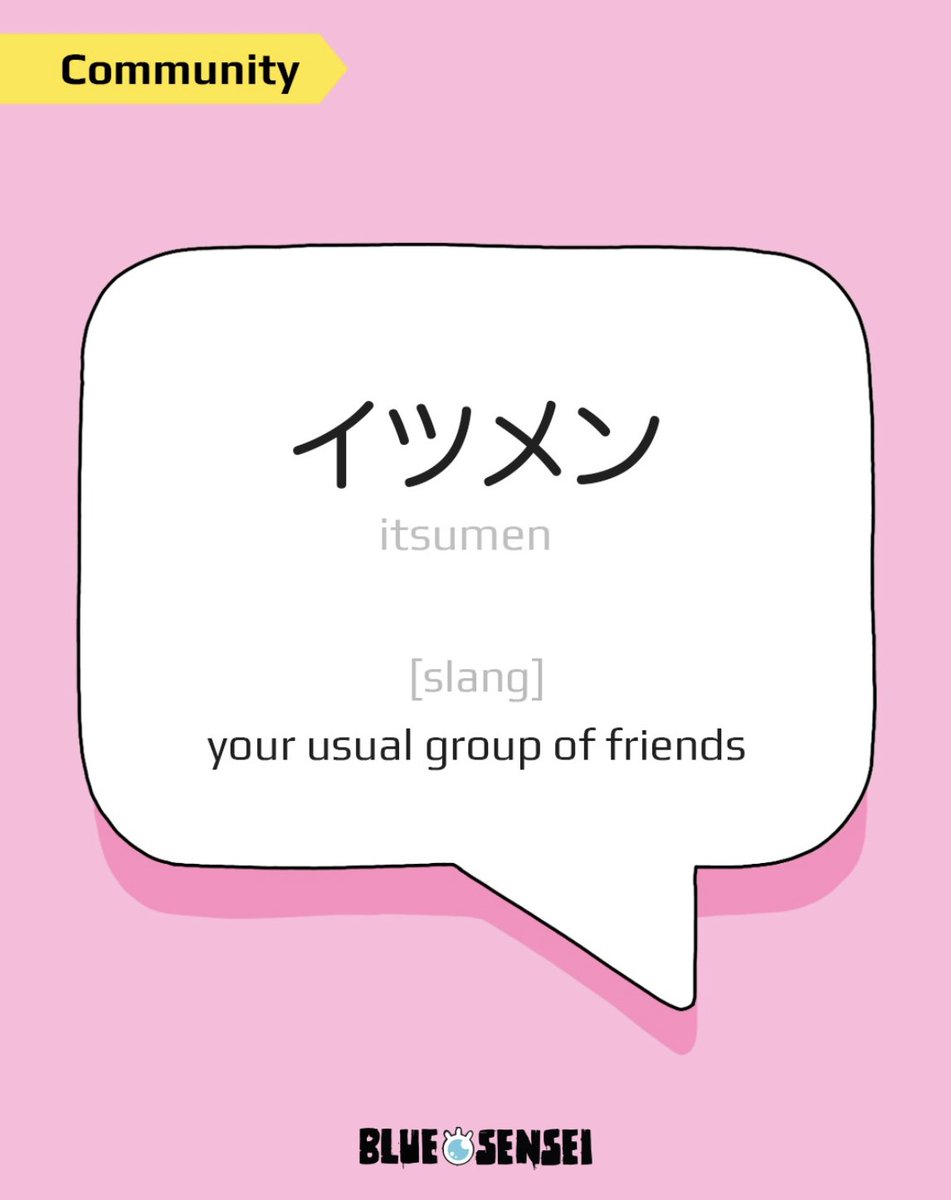
📌 イツメン – Your usual crew! 👯♀️💬
イツメン (itsumen) is a fun, casual slang term for your regular friend group—the people you always hang out with.
💬 Usage Example:
「今日(きょう)はイツメンでオンライン飲(の)み会(かい)するよ!」
Kyou wa itsumen de onrain nomikai suru yo!
“Today I’m having an online hangout with my usual crew!”
✅ What it means:
Got a go-to group you always chill with? That’s your イツメン!
It’s short for いつものメンバー (itsumo no menbaa), meaning “the usual members.”
💡 You’ll see it written as:
イツメン, いつメン, or いつめん.
And don’t worry—the “men” is short for “member”, not about gender 😉
👋 Tag your イツメン in the comments!
🔗 Looking for your own イツメン? Join BES and meet awesome learners! (https://t.co/7mDZQyn6U4)
#JapaneseSlang #LearnJapanese #BlueEyeSensei #イツメン
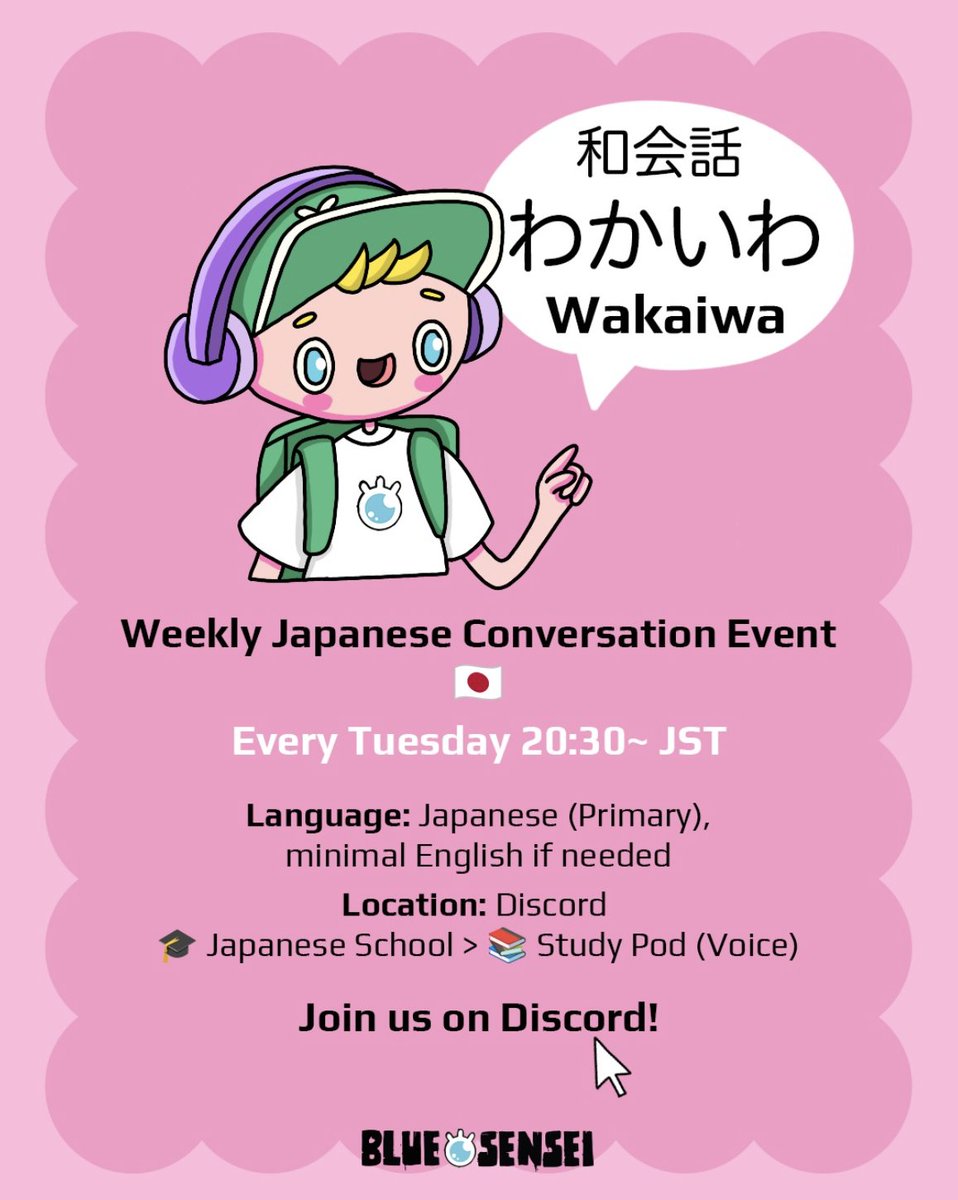
🗣️ Wakaiwa | Weekly Japanese Conversation Event 🇯🇵
Want to improve your Japanese conversation skills?
Wakaiwa is a relaxed, weekly session where you can practice speaking with fellow learners—no pressure, just real conversations! Senseis are here to guide and support.
🔵 What’s Wakaiwa?
✅ Casual Japanese conversations (with minimal English if needed)
✅ Practice speaking, hear different styles, and build confidence
✅ New topics every week—just drop in and join!
🔵 When & Where?
📅 Every Tuesday at 20:30 JST
📍 Discord → 🎓 Japanese School → 📚 Study Pod (Voice)
🗣️ Speak, listen, or join via chat—whatever works best for you!
🔵 Who Can Join?
Anyone in BES’s Discord! No sign-ups—just hop in.
📌 Have a topic suggestion? Reply below! 👇
🚀 Join our Discord & be part of the BES community! 📷 https://t.co/7mDZQyn6U4
See you at Wakaiwa! 🇯🇵✨
#LearnJapanese #JapaneseConversation #LanguageExchange #Wakaiwa
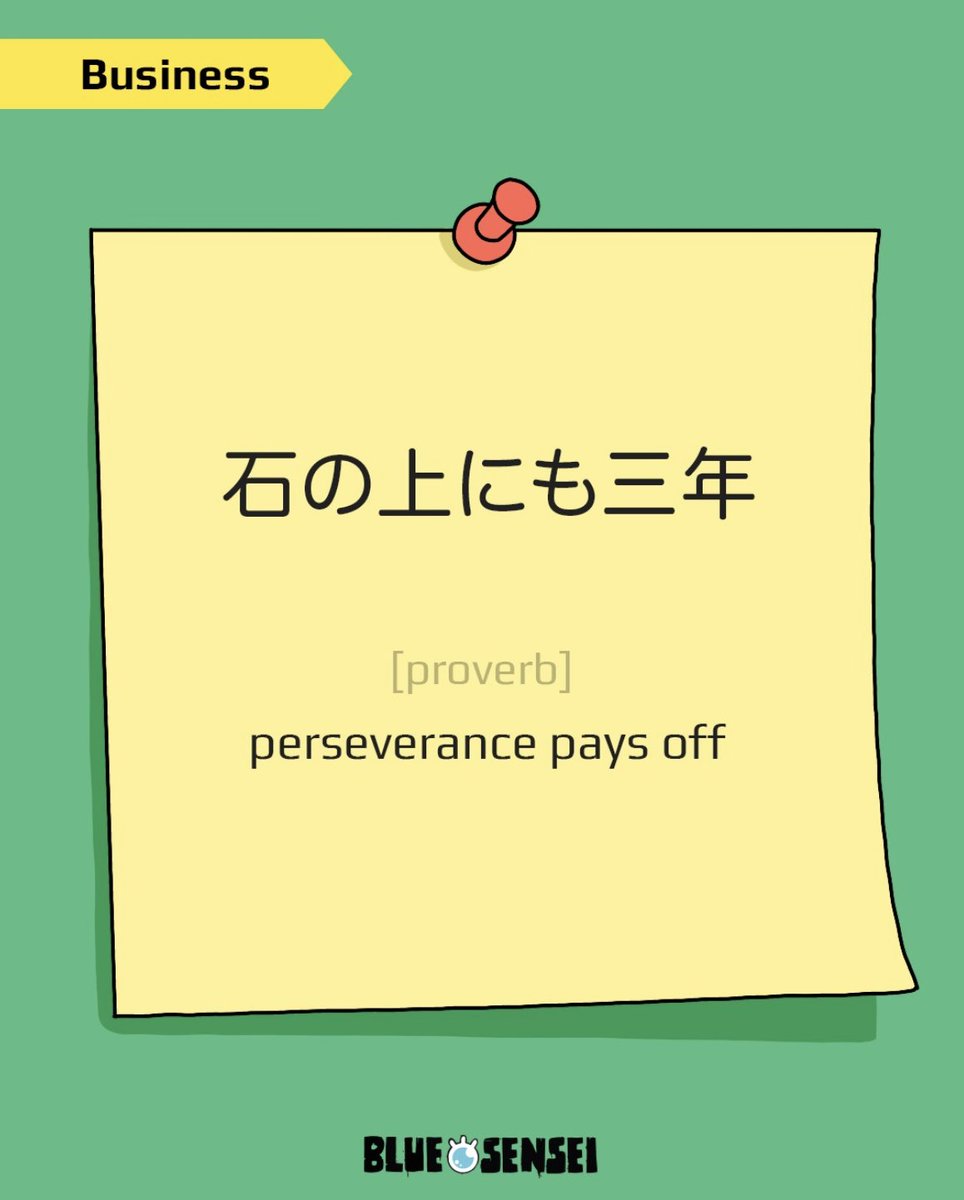
📌 石(いし)の上(うえ)にも三年(さんねん) – Patience pays off 💼⏳
Literally: “Three years on a rock.”
Even something cold and hard will warm up if you sit on it long enough.
💬 Example:
「新(あたら)しい仕事(しごと)は大変(たいへん)ですが、**石(いし)の上(うえ)にも三年(さんねん)**だと思(おも)ってがんばっています。」
→ “My new job is tough, but I’m hanging in there—just like the saying goes, ‘Perseverance pays off.’”
✅ This proverb reminds us:
Stay patient. Be consistent. Results take time.
💡 Often used in work and school, this phrase encourages people to keep going, even when it’s hard at first.
💬 Has patience ever paid off for you? Reply below! 👇
🔗 Want to grow your business Japanese skills? Join us on Discord (https://t.co/7mDZQyn6U4).
#今日の日本語 #JapaneseProverb #LearnJapanese #BESCommunity
📘 今日の日本語 / Japanese of the Day
🔤 Phrase:「まじで?」
📝 Meaning: “Really?” / “Seriously?”
💬 Example:「えっ、まじで?それは すごいね!」
(What? Really? That’s awesome!)
💡 A casual and expressive way to react with surprise or disbelief.
Use it with friends or in relaxed conversations.
In formal situations, use 「ほんとうですか?(本当ですか?)」 instead.
#今日の日本語 #LearnJapanese #JapanesePhrase #BESCommunity
📌 春学期(はるがっき)– Spring Semester in Japan 🌸
In Japan, 春学期(はるがっき) starts with the cherry blossoms! 🌸
It’s the season of new classes, new friends, and new goals.
💬 Example:
「春学期(はるがっき)が始(はじ)まって、新(あたら)しいクラスメイトと会(あ)うのが楽(たの)しみです!」
→ “The spring semester has started. I’m excited to meet new classmates!”
✅ 春学期 means the beginning of the Japanese school year—usually in April.
New classmates, new schedules, and new energy!
💡 At BES, it’s a fresh start to learn, connect with your 同期(どうき), and grow together.
💬 What’s your goal this spring semester? Reply below! 👇
🔗 Start your 春学期 with us on Discord! (https://t.co/7mDZQymz4w)
#今日の日本語 #LearnJapanese #SpringSemester #BESCommunity
📘 今日の日本語 / Japanese of the Day
🔤 Phrase:「ありがとう」
📝 Meaning: “Thank you”
💬 Example:「てつだって(手伝って)くれて、ありがとう!」
(Thank you for helping me!)
💡 Simple but powerful!
「ありがとう」 is the most common way to say thank you in Japanese.
For more politeness, try 「ありがとうございます」✨
Say it often. It makes everyone’s day a little better 😊
#今日の日本語 #LearnJapanese #JapanesePhrase #BESCommunity
📌 ころもがえ(衣替え)– Seasonal Wardrobe Change 👕🍂
In Japan, ころもがえ(衣替え) is the seasonal tradition of switching clothes.
👕 Summer clothes come out in June, and 🧥 winter ones in October.
💬 Example:
「そろそろ衣替(ころもが)えをする時期(じき)だね。」
→ “It’s about time to change out our seasonal clothes.”
💡 You’ll see school uniforms change, shop displays update, and people across Japan dressing for the new season!
💬 When do you switch your wardrobe? Reply below! 👇
🔗 Want to explore more daily life in Japan? Join us on Discord (https://t.co/7mDZQyn6U4)!
#今日の日本語 #JapaneseCulture #SeasonalJapan #BESCommunity
📘 今日の日本語 / Japanese of the Day
🔤 Phrase:「おねがいします(お願いします)」
📝 Meaning: “Please” / “I’d appreciate it” / “Thank you in advance”
💬 Example:「これ、てつだって(手伝って)ください。おねがいします!」
(Please help me with this. Thank you!)
💡 A super useful and polite phrase in all kinds of situations:
making requests, asking for help, or even when ordering food!
You’ll hear it everywhere in Japan 🇯🇵✨
#今日の日本語 #LearnJapanese #JapanesePhrase #BESCommunity
🗿 ツ・シ・ソ・ン — Wait, which is which?! 😵💫
Those little lines in ツ, シ, ソ, and ン messing with your head?
You’re not alone—they look super similar, but the stroke direction is different!
💡 Quick tip:
🖊️ シ(shi)& ツ(tsu) → vertical strokes
🖊️ ソ(so)& ン(n) → horizontal strokes
👉 Try writing them by hand—it really helps! ✍️
Still mixing them up?
Our Hiragana & Katakana module is starting soon!
🧑🏫 Join our Discord to practice with others.
🔗https://t.co/7mDZQyn6U4
#LearnJapanese #Katakana #JapaneseTips #BESCommunity
📘 今日の日本語 / Japanese of the Day
🔤 Phrase:「なるほど」
📝 Meaning: “I see.” / “That makes sense.”
💬 Example:「なるほど、それはいいアイデアですね!」
(I see, that’s a good idea!)
💡 This is a great phrase to show understanding or agreement.
Use it when someone explains something or gives you new info.
Polite and natural in both formal and casual situations!
#今日の日本語 #LearnJapanese #JapanesePhrase #BESCommunity