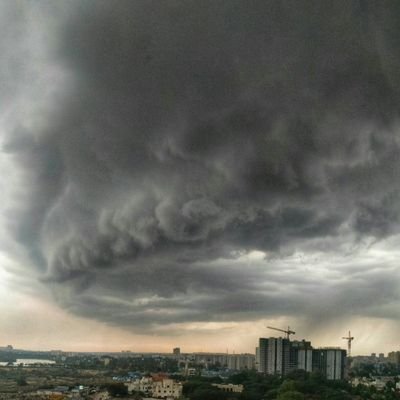
While #Bengaluru City #IMD observatory records a total rainfall of 196 mm in May against an average of 128.7 mm, the #HAL observatory records the lowest May rainfall in at least 10 years by recording just 54.7 mm for the month.
#Karnataka#weather
#Bengaluru city #IMD saw an average max temperature of 35.19c and an average minimum of 23.55c this April. The climatological average max and min are 34.1c and 22.1c respectively. The total rainfall received for the month is 113 mm against an average of 61.7 mm.
#weather
Seasonwise rainfall recorded at #Bengaluru#IMD observatory
Annual - 1044.3 mm
Premonsoon (Mar - May) : 358.8 mm
Southwest monsoon (June - Sep) : 548.7 mm
Post monsoon (Oct - Dec) : 131.6 mm (lowest in 9 years)
#weather#2025wrap#Karnataka
Highest Diurnal range - 16.6c (35.4/18.8c on 15th March)
Lowest Diurnal range - 2c (20.2/18.2 on 1st Dec)
Number of rainy days - 63
Driest month - Feb (0 mm)
Wettest month - May (314.8 mm)
Longest streak of rainy days - 9 (13th May - 21st May)
This December #Bengaluru#IMD observatory saw the lowest average minimum temperature in 12 years. The average min recorded this month is 16.5c. The is still 0.1c above the climatological average min of 16.4c for the month.
#Karnataka#WINTER#weather
#Bengaluru city #IMD observatory records the driest November in 9 years by recording a total rainfall of 2.3 mm for the month. Previously, the observatory had just recorded 1.5 mm for the month in 2016. The average rainfall for November is 64.5 mm.
#bengalururains#Karnataka
#Bengaluru city #IMD observatory records 127.9 mm of rainfall this October against an average of 186.4 mm. The average max temperature was 28.18c making it the coolest October in 3 years.
#bengalururains#Karnataka#Weather
The average max temp this September at #Bengaluru#IMD observatory was 27.72c making it the coolest September in 5 years. The climatological average max temp for the month is 28.7c.
#Karnataka#monsoon
#Bengaluru City #IMD observatory has recorded 242 mm of rainfall this September against the climatological average of 208.3 mm. The observatory has recorded 549.3 mm for the southwest monsoon season (June - September) against an average of 597.7 mm.
#monsoon#Karnataka
#Bengaluru city #IMD observatory records the coolest August since 2019 by recording an average max of 27.3c against the climatological average of 28.1c. The rainfall for the month was at 161.8 mm against the climatological average of 162.7 mm.
#Monsoon#KarnatakaRains
Yesterday #Bengaluru city #IMD observatory recorded a max of 22.6 making it the 4th coolest August day in recorded history and the coolest August day in 35 years.
The top 4 of the coolest Aug days:
21.5c - 14/8/1940
22.2c - 15/8/1990
22.3c - 24/8/1971
22.7c - 20/8/1990
#Monsoon
The #Bengaluru City #IMD observatory records the driest July in 6 years by recording a total rainfall of 87.5 mm for the month against an average of 116.4 mm.
#monsoon#Karnataka
#Bengaluru city #IMD observatory recorded a total rainfall of 58 mm this June against an average of 110.3 mm making it the driest June in 8 years. However the average max temperature for this June was 29.1c making it the coolest June in 7 years.
#Karnataka#Monsoon2025
The average max temperature recorded at the #Bengaluru city #IMD observatory this May is 30.48c making it the coolest May in 3 years.
Rainfall across various IMD observatories in the city in May.
City - 315 mm
HAL - 304.7 mm
KIAL - 194.9 mm
GKVK - 324.4 mm
#bengalururains
#Bengaluru City #IMD sees its wettest May in recorded history by recording a total rainfall of 308.3 mm till 5:30 pm today. 4 out of the top 5 wettest Mays have been in the last 7 years.
308.3mm (2025)
305.5mm (2023)
287mm (1957)
270.2mm (2022)
241.9mm (2017)
#BengaluruRains
The average maximum temperature recorded at #Bengaluru city #IMD observatory this April is 33.48c making it the coolest April in the last 10 years.
The observatory has received a total rainfall of 32.2 mm for the month.
#BengaluruRains#Summer#Karnataka