The US government now spends more than a trillion dollars a year just paying interest on its debt. That is more than it spends on its entire military, roughly 88 billion dollars every month going out the door before a single new thing is built or funded. The national debt crossed 39 trillion this year.
Most people's eyes glaze at these numbers because they are too large to feel. So shrink it. Picture a household earning good money that now spends its single biggest cheque not on rent, not on food, not on the kids, but on the minimum payment for debt it already ran up. Every dollar of that interest buys nothing new. It only rents the past. That is the position of the most powerful economy on earth.
Why it matters to you personally, even if government budgets bore you, is simple. Interest is the most patient predator in finance. It does not sleep, it does not negotiate, and it compounds whether you are a superpower or a graduate with a credit card. When interest becomes your largest expense, you lose control of your own future, because more and more of what you earn is already promised to what you owe. Freedom in money is just the gap between what comes in and what is already spoken for, and debt closes that gap silently.
The country will sort out its own mess or it will not. That part is out of your hands. What is in your hands is the same lesson at your own scale. Do not let interest become the biggest line in your life. The moment it does, you are no longer working for yourself. You are working for whoever you borrowed from.
The United States is heading for a record-low birth rate of about 1.53 children per woman, well under the 2.1 needed just to hold steady.
Seventy-one percent of the world now lives in a country below replacement.
Whole nations, especially the "developed" ones, are quietly deciding, one private choice at a time, not to replace themselves.
The usual explanations get trotted out: People are selfish now; Phones; Values.
I think that is lazy.
When hundreds of millions of people across wildly different cultures make the same choice at the same time, you are not looking at a moral failing.
You are looking at incentives.
Children went from an economic asset (extra hands on the farm, more soldiers in times of war, security in old age) to one of the most expensive projects a person can take on.
Housing, education, and childcare all getting costlier. People are simply responding rationally to a world that made kids a luxury, like a Louis Vitton bag or a Maseratti.
What interests me is the quiet reversal of an old assumption.
We were taught that as people got richer they would have more of everything.
Instead, the richer and more developed a society becomes, the fewer children it has.
Affluence competes with family for the same hours and the same ambition, and affluence usually wins.
To be honest, there is no clean lesson to hand you here, only an observation.
A civilisation can optimise itself, one sensible individual decision at a time, straight into a future with far too few young people to carry it.
Every choice makes sense alone. The sum of them reshapes the world.
That gap between what is rational for one and what is sustainable for all is the quiet story of our century.
In 1975, a 24 year old Kodak engineer named Steven Sasson built the first digital camera. It was the size of a toaster, weighed nearly four kilograms, shot in black and white at 0.01 megapixels, and took 23 seconds to save a single image onto a cassette tape. He carried it to Kodak's management. Their response, in his own words, was that it was cute, but he should not tell anyone about it. The reason was not stupidity. Kodak made its money from film, controlled about 90 percent of the US film market, and every roll sold generated processing, printing and chemical revenue for years afterward. A filmless camera threatened the most profitable machine in the entire company, so they buried their own invention. On the 19th of January 2012, Kodak filed for bankruptcy. Among the patents auctioned off to pay creditors were the digital imaging patents Kodak itself had pioneered decades earlier. The company that invented the future was destroyed by it, more or less on schedule, because that future was going to cost them the present. Almost every incumbent that dies this way saw it coming. Seeing the threat was never the hard part. Being willing to cannibalise the thing currently paying your salary is.
In the year 2000, a small and struggling DVD by mail startup offered to sell itself to Blockbuster for 50 million dollars.
Netflix's founders flew to Dallas, sat inside Blockbuster's headquarters, and proposed running the video giant's online arm for them.
By their own account, they were almost laughed out of the room. Blockbuster had thousands of stores, a powerful brand, and a business model quietly built on one resented thing, late fees, which at their peak brought in hundreds of millions of dollars a year.
Killing the late fee to chase a tiny online rival made no sense to anyone protecting that quarter's numbers.
Ten years later, in 2010, Blockbuster filed for bankruptcy.
Netflix is now worth hundreds of billions. The mistake was not that Blockbuster failed to see streaming coming, plenty of people inside the company saw it clearly.
The mistake was that the thing killing them and the thing feeding them were the same customer, and they chose the customer who was already paying today. Incumbents rarely lose because they are blind.
They lose because the future asks them to burn down the exact thing keeping the lights on right now, and almost nobody in a comfortable market volunteers to do that until it is already too late.
10TH ANNIVERSARY LAUNCH/THANKSGIVING
Ten years ago, we walked out of these gates as students. Today, we return as men, brothers, and builders of legacy.
Join as we launch the celebration of Amanfoɔ ’16 @ 10 and begin another chapter of giving back to the school that shaped us
The countdown has begun! ⏳
Our brothers have spoken. Now it’s your turn to show up.
See you at the official launch of AMANFOƆ ’16 @ 10.
Our Masculine Pride, A Lifetime of Impact.
#tuchel#worldcup
A decade of impact starts here. 💚💛
Join us for the official launch of the AMANFOƆ ’16 10th Anniversary Celebration.
📅 8 Aug. 2026 | 🕖 7:00 AM
📍 Prempeh College
Our Masculine Pride. A Lifetime of Impact.
#Amanfoɔ16#10YearsOfImpact#ClassOf2016
The World Cup ball has to be plugged in before every match. Inside is a 14-gram chip that reports what the ball is doing 500 times per second, and in 2022 this exact technology took a goal away from Ronaldo.
The chip is an inertial measurement unit, the same class of sensor that tells your phone which way is up. At 500Hz, it captures the vibration signature of every contact. A boot strike, a deflection, a hair grazing the surface all produce different acceleration spikes. The ball knows it was touched before the referee's eyes have processed the frame.
The engineering problem was where to put it. Qatar's ball suspended the sensor in the dead center of the bladder. The 2026 Trionda mounts it inside one of just four panels, then builds counterweights into the other three so the flight stays true. Adidas deliberately unbalanced the ball, then rebalanced it, to protect the data stream.
Portugal vs Uruguay, 2022. Ronaldo wheels away celebrating a headed goal. The sensor shows zero contact spike at the moment his head supposedly met the ball. Goal reassigned to Bruno Fernandes. Ronaldo's career total is one goal lighter because a chip recorded nothing.
The data also feeds semi-automated offside. Cameras track 29 points on every player's body while the ball timestamps the exact millisecond of the pass. The hardest judgment call in football, made 50 times a game for a century on human eyesight, now resolves in seconds.
A 14-gram chip took a goal off Ronaldo. Every striker at this World Cup is playing with a witness sewn into the ball.
Pain tolerance builds empires. It also keeps people in bad marriages, dying companies, and jobs that are quietly killing them. The real skill is knowing which of the two you are actually in.
A doctor reportedly kept a newborn infant alive by manually using an AMBU bag from 11:00 p.m. to 5:00 a.m., refusing to give up even after others had lost hope. Explaining why, the doctor said the baby was a twin and didn't want his brother to grow up without him, so he sacrificed his sleep to keep fighting for the child's life.
A true act of dedication and compassion. ❤️👏
Uncomfortable and largely true. Your salary is the price someone else set on your skills after they worked out how to sell them for more.
That gap between what they pay you and what your work earns them is not theft. It is the fee for someone else carrying the risk, finding the customers, and building the machine you plug into. But it is worth seeing clearly, because most people never do.
The moment you learn to find the customer and carry a little of the risk yourself, you stop renting your skills at wholesale and start selling them closer to retail. Not everyone should quit and go solo. But everyone should at least know the markup exists.
Normalise pursuing the HIGHEST VERSION of yourself in all domains of life.
Run fast. Lift heavy. Eat right. Run up the business. Get your mind in order. Own your money. Master one thing well enough that people pay for it.
Life is short.
Pursue your potential.
The whole thing gets decided on the boring days.
Messi walks for most of the game. Stands still for a quarter of it.
At 39, he's leading the Golden Boot race.
Haaland's the same. You forget he's on the pitch, then the ball's in the net.
They're not doing more than everyone else. They just show up when it matters.
Which is worth something.
You can't be sharp for every minute of anything. But there are moments that carry more weight than the rest and you better be very awake for those.
The PMs surviving right now aren't the ones who learned to code. They're the ones who learned to catch AI lying to them.
For the last two years, "technical PM" meant fluency.
You knew the jargon. You could sit in a room with engineers and follow the model name and the context window without needing a translator.
That bar just moved again.
AI already handles the part of the job that used to be politics and translation. The only thing left to prove is judgment: whether you can tell when the AI is wrong.
Meng To's job search tool runs 16 agents. His newsletter runs its own recommendation engine. He kept shipping updates that worked in testing, then hallucinated the moment real users touched them.
He had no visibility into what the agents were doing step by step, so he had nothing to evaluate.
Once he traced it, he found an agent that was supposed to pull a company's tech stack from a job posting and invented one instead, reporting React when the listing said Python.
The trace caught what the output alone never would have shown.
He asked the model to review its own traces and suggest what to evaluate.
It came back with criteria he hadn't thought to write. He ran them, found the same mistake happening roughly 1 in 8 times, fixed it, and reran the evals to confirm the drop.
This is what "technical" actually means now: the person who reads the trace and fixes what's broken, while everyone else reads the output and calls it done.
Trace it.
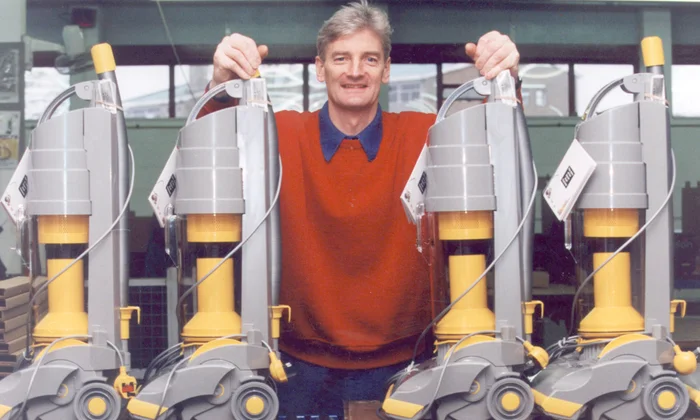
James Dyson failed with 5,126 versions of his vacuum…
It was only on the 5,127th prototype it actually worked.
And today he has an estimated net worth of $18B.
But imagine if he'd quit on attempt 5,000 after 5 years of work?
Everyone around him might have understood.
And that’s the problem:
To most people quitting is the "acceptable" option.
You get a pat on the back and a participation trophy because at least you tried, right?
This is exactly why most people never build anything memorable.
Because the reality is success requires an unreasonable amount of effort for an uncomfortable period of time.
That's the price.
Pay it, or watch someone else who's willing to.
In 1988, a manager at a chemical company in Jakarta dreamed of a snow-white dove resting on a hill, and a voice telling him to build a house of prayer for all people.
He ignored it. Then an employee failed to return from Ramadan leave, and Daniel Alamsjah traveled 300 miles to the man's village to track him down. The employee invited him up a hill called Bukit Rhema to watch the sunrise. It was the exact hill from his dream.
He bought the land two weeks later for 3.5 million rupiah, about $2,000. Starting in 1992, he and 30 villagers built the dove by hand: handmade cement, brick, scrap metal, 31,500 square feet. He added a crown to the head to signal holiness.
The crown doomed the dove. Crown plus beak reads as rooster, so locals named it Gereja Ayam, the Chicken Church. A Christian building a giant bird in a Muslim area drew formal complaints, the money ran out, and in 2000 construction stopped. For 15 years it rotted in the jungle while rumors spread that it was haunted, or left behind by Dutch colonists.
Then in 2015 the photos went viral. Werner Herzog put it in a documentary. Tourists coming off Borobudur, the world's largest Buddhist temple 3 miles away, started paying entrance fees. Those fees funded the restoration: new windows, paved roads, murals by local artists, a cafe in the tail, and 15 basement prayer rooms for different faiths. Exactly what the vision asked for.
The mockery was the rescue. As a dove, the building failed for 25 years. As a chicken, it pays for itself.