Dear Fortuna Düsseldorf Team,
I’m Olaogun, a young Nigerian footballer with one goal: to help Fortuna Düsseldorf return to the Bundesliga.
I’ve watched the club’s journey and I want to be part of it. I’ll bring energy, commitment, and a winning mentality to every training session and game. Give me a chance in a trial, and I’ll do everything to prove I deserve to stay.
Video links to check out my highlights https://t.co/tdwQBhG4W1 . Ready when you are.
Best regards,
Olaogun.
🙏🏽❤️ @f95
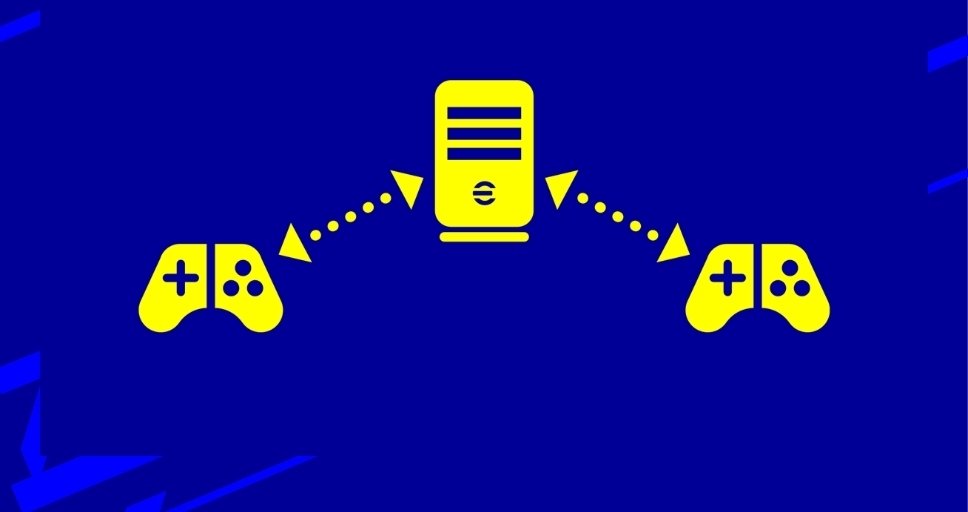
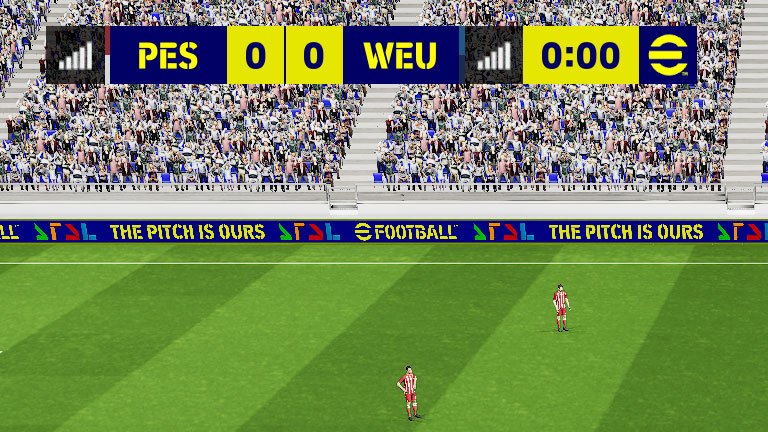
Now I can confidently say that there's no better feeling than playing eFootball from a country that has a server or is close to one.
A good server is better than a 3300 rated squad.
The difference is so clear: the time you have on the ball, the confidence you get, and the players' movement.
You won't understand if you haven't experienced this before.
We are suffering in Africa.
A service to humanity they say is a service to God.
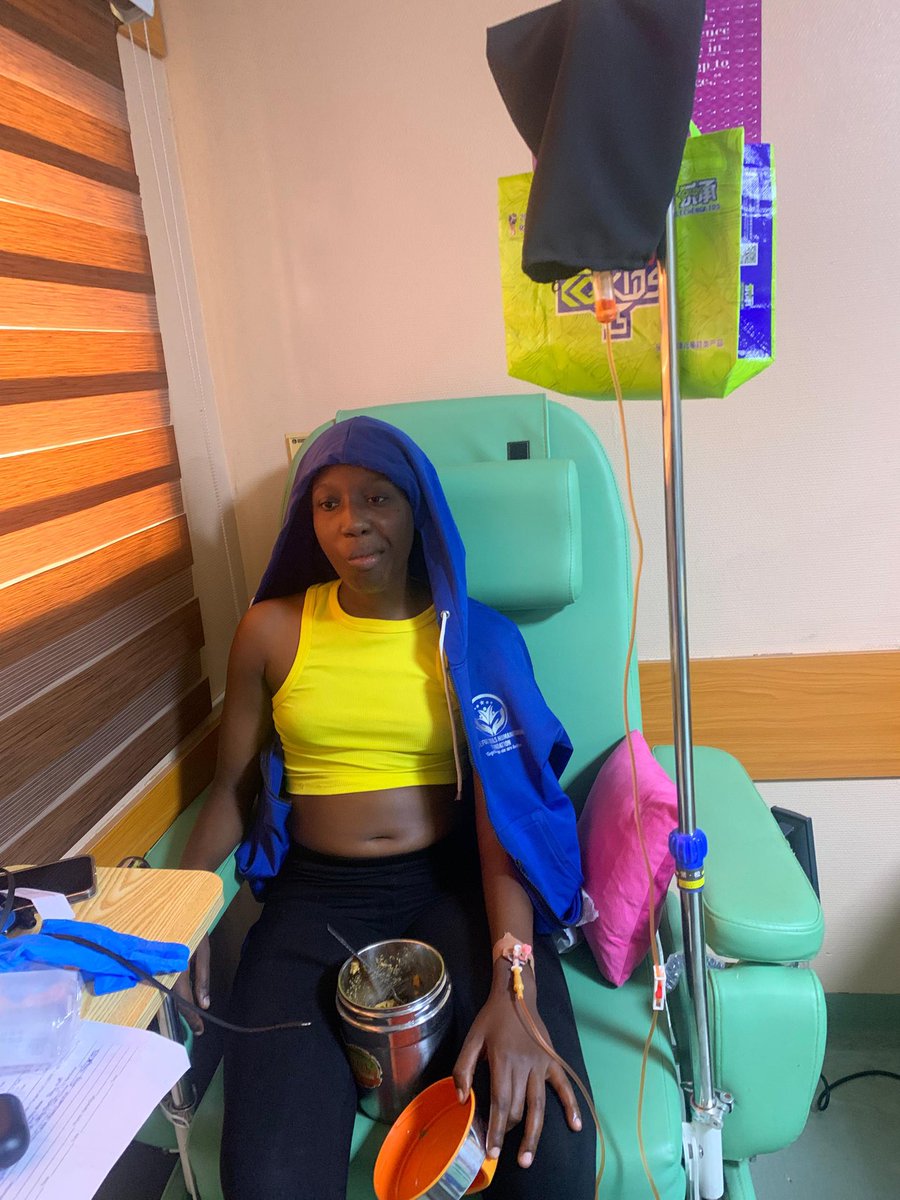
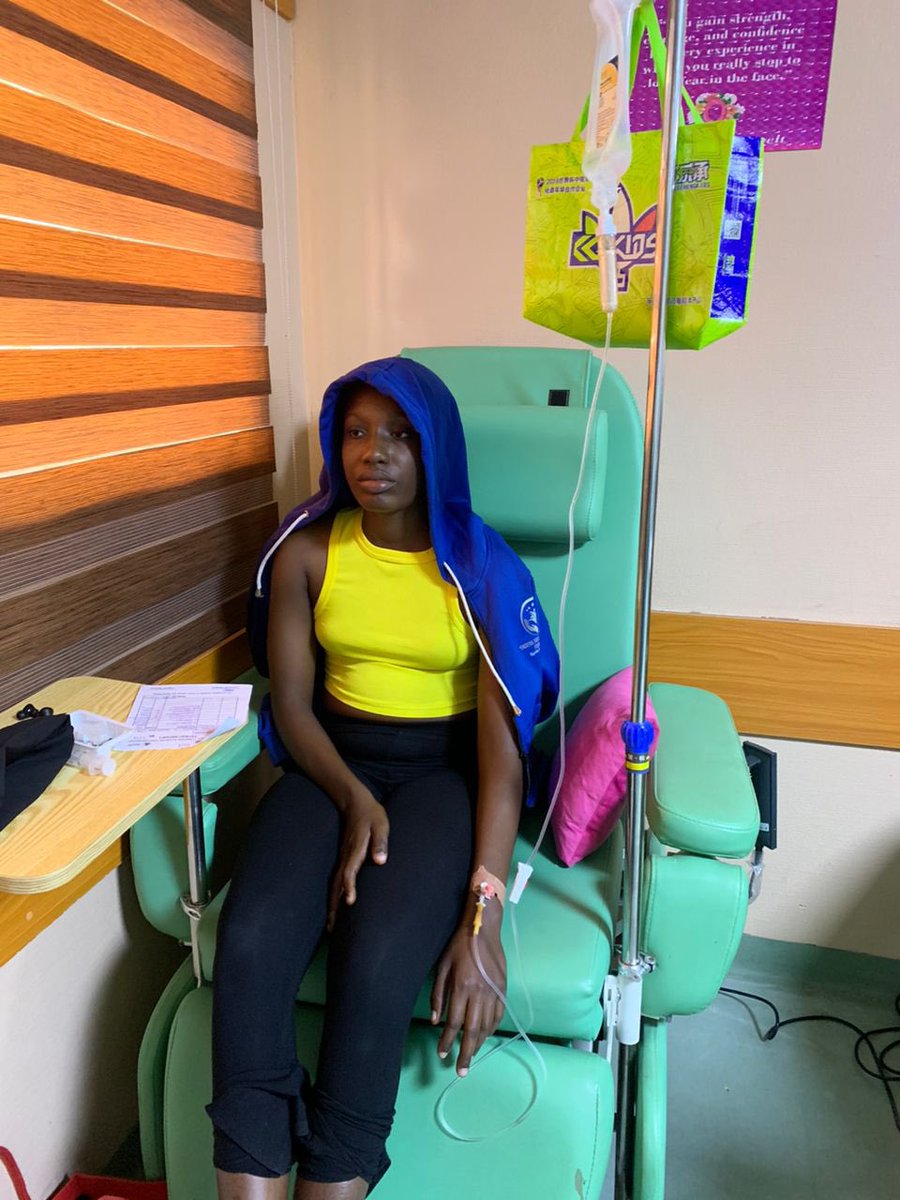
Seeing a fellow ABIA STATE University student go through this is enough pain for me.
The fact that I'm not even close to her wouldn't make me not post this.
Please just help in your own little way.
Thank you 🙏
My sister had another session of chemotherapy. it’s not easy watching her go through this, but she’s still fighting.
Please keep donating and sharing her story. We still need help to continue her treatment and we need N9.6M for her treatment.
0247265533
GTB: Duke, Margaret
I spent years watching brands struggle offline because they had no real framework.
So I built one.
The Offline Marketing & Brand Activation Playbook covers strategy, psychology, frameworks, Nigerian case studies, and execution guides. All in one place.
Get it here → https://t.co/BlqKcx8ZuP
Also, I opened 5 free strategy clarity calls for brands and marketing professionals. DM me to book.
Years back, my team and I conducted an on-ground survey with grassroots demographics which revealed that digital adoption is a cultural and psychological one challenge. Despite the rise of fintech, the traditional Kolo remains a powerhouse for these reasons:
1. The Proximity of Wealth: There is a fundamental belief that money is only truly saved if it is within physical reach. For this demographic, liquidity isn't a bank balance but the ability to touch the asset in an emergency.
2. The Trust Gap: Trust is tied to visibility. The idea of invisible money in a bank without a local, physical building creates a sense of vulnerability. If they can’t see the building, why should you have their monies.
3. Most users hold bank accounts out of necessity. They use digital tools only because their customers demand it for each transactions.
4. The Kolo served as a teaching aid. Parents use the physical act of dropping those little amounts gifted to you in a box to instill discipline. Moving away from this means abandoning a proven generational method of financial character-building.
It will be interesting to see how these gaps are bridged in the coming years.
Jesus rose from the dead and the first person He went to was His brother who thought He was crazy.
Not Peter. Not John. Not the twelve.
James.
His kid brother. The one who grew up sharing a room with God and didn’t know it.
Think about James for a second. His older brother is Jesus. Not “Jesus the Christ.” Not “Jesus the Savior.” Jesus the guy who worked in the carpenter shop and came home smelling like sawdust and sweat. Jesus who snored. Jesus who ate too fast. Jesus who their mother treated different and James never understood why.
Because Mary kept her mouth shut.
Luke 2:19. She kept all these things and pondered them in her heart. Angels showed up at His birth. Shepherds fell on their faces. Wise men brought gold. And Mary told nobody. She just watched her firstborn grow up in a ghetto in Nazareth and kept the secret in her chest like a coal she couldn’t put down.
James didn’t know his brother was God.
He knew his brother was weird.
He knew his mother looked at Jesus different. He knew Joseph moved the whole family to Egypt when they were little and never fully explained why. He knew that one time his parents lost Jesus at the temple and found Him three days later arguing with rabbis like He owned the place. Twelve years old. Already gone.
Then Jesus grew up. Worked the shop. Paid the bills.
Because Joseph died — the Bible doesn’t say when but Joseph disappears from the story — and in Jewish custom the eldest son takes over. So Jesus wasn’t posing for paintings in that carpenter shop. He was feeding His family. Putting bread on the table for His mom and His brothers and sisters in a town so poor Nathanael said “can anything good come out of Nazareth?”
Then one day He left.
Walked away from the shop. Walked away from the family. Left James holding the hammer and the bills and the responsibility for a widowed mother.
James was pissed.
Mark 3:21. His own family went to collect Him because they said He was out of His mind. That’s James. That’s the brothers. Showing up to bring the crazy one home before He embarrasses the family worse.
John 7:5. His brethren did not believe in Him.
His own blood. Ate dinner with Him for thirty years. Didn’t believe.
Then Wednesday happened.
The brother James thought was insane got arrested at night by temple guards. Got beaten until His face swelled shut. Got whipped until His back looked like raw meat. Got nailed to wood and hung up on a garbage hill outside the city.
And James had to stand somewhere — maybe in the crowd, maybe at home, maybe hearing it secondhand — and process the fact that the brother he called crazy just died like a criminal.
Three days and nights of silence.
Three days of James sitting with the guilt of every eye roll. Every argument. Every time he told people “I don’t know what’s wrong with Him.” Every time he showed up to drag Jesus home because He was embarrassing the family name.
Then Sunday morning.
Jesus rose. Conquered death. Walked out of the tomb.
And He went to James.
1 Corinthians 15:7. He appeared to James.
Not in a crowd. Not at a distance. He went to His brother. The one who didn’t believe. The one who thought He was crazy. The one who was pissed that He left the family behind.
He showed up and let James see the holes in His hands.
Matthew 28:10. Go tell my brethren. Not my servants. Not my followers. My brethren.
John 20:17. My Father and your Father. My God and your God.
He rose to the highest position in the universe and His vocabulary didn’t change.
Most men get a promotion and stop returning phone calls. Jesus conquered death and called the brother who doubted Him family.
James went from “He’s out of His mind” to leading the church in Jerusalem.
James went from trying to drag Jesus home to writing a book of the Bible.
James went from skeptic to martyr. They threw him off the temple wall and when he survived the fall they beat him to death with a club. He died for the brother he once thought was insane.
That’s what happened when Jesus showed up after the resurrection and said brother.
One word changed everything.
He’s not calling you servant today.
He’s not calling you subject.
He’s calling you what He called James.
Brother.
The same James who didn’t believe. Who rolled his eyes. Who showed up to take Him home. Who sat in the dark for three days choking on regret.
He went to THAT guy first.
If He went to James, He’ll come to you.
Day 10 of Brand Activation 101.
There's a level of brand connection that goes beyond loyalty, repeat purchases, and beyond positive reviews.
It's when a brand becomes part of how someone defines themselves.
This is identity activation, and it's the highest level a brand can reach.
You see it in Nigeria when someone says, "I'm a @usexara_ai person," not just 'I use @usexara_ai.'
You see it when a Spar shopper says they don't do Balogun.' Not because Balogun doesn't have good products, but because Spar represents a version of themselves, they want to project.
You see it when someone wears an Ankara print not just as a fashion piece but as a statement about identity, pride, and belonging.
How does a brand get to identity level?
It isn't fully gotten through advertising. Advertising can introduce you.
Only consistent, intentional activation gets you there.
Because identity-level connection is built in the moments of actual participation, not observation.
The question every identity-led activation answer for the consumer is:
"Does this brand see me? Does it reflect who I am or who I want to be?"
For startups, especially, this is worth understanding deeply.
You might never have the budget to out-advertise the incumbents.
But if your activation makes a person feel understood and genuinely seen in their aspirations and their context, you build a loyalty that no competitor's discount can dislodge.
Day 9 of Brand Activation 101.
Thank you for staying with the series.
Today's lesson directly determines whether your activation remains within or travels across the city.
Let's talk Social Currency.
People share experiences that make them look interesting, connected, or in-the-know.
They're not thinking about your brand when they post.
They're managing their own identity.
Every time someone posts about a brand experience, they're answering one unconscious question:
"Does sharing this say something good about me?"
If yes, they share. Your brand travels for free.
If no, the experience stays in the room.
Think about what happens when a new experience brand launches in Lagos.
If it looks good on camera, if it makes attendees feel like they're part of something exclusive and exciting the posts flood in before the brand has spent a naira on paid promotion.
Think about Afrobeats concerts with experiential zones, the branded Ferris wheel, the neon sign with a quotable lyric, the fire show. They are social currency generators engineered for the phone screen.
How to design for social currency in Nigeria:
→ Create at least one unmissable visual moment - something beautiful or surprising that would definitely be photographed.
→ Make the person look good IN the experience - not just AT it.
→ Connect the experience to something people already want to be associated with - youth, success, community and culture.
→ Give them a story, not only a product.
Your activation has two audiences:
The people physically present.
and everyone on their contact list who sees what they post.
Design for both.
My digital product just went live on @tryselar 🤭
Marketing professionals, startups, and brands are about to eat good.
@Saamu_Eleja please clean your megaphone. So we can use to announce to the people at the back👌
Day 6 of Brand Activation 101.
Today is about psychology - understanding how human beings process and remember experiences, so you can design activations that live in people's minds.
We start with a principle I come back to on every single project:
The Peak-End Rule.
Nobel laureate Daniel Kahneman discovered that people don't remember the average of an experience.
They remember two moments.
1. THE PEAK — the single most intense or remarkable moment.
2. THE END — how it closed.
Everything in between are to a large extent background noise.
Think about the last major brand activation you attended in Nigeria.
What do you actually remember?
Putting aside the setup, the branding on the tent and the MC's first joke.
You remember the moment something surprised you or the feeling you had through the engagement. This is the Peak-End Rule in your own memory.
What it means for your activation design:
- YOUR PEAK MUST BE INTENTIONAL.
Don't leave it to chance. Design it deliberately.
What is the ONE moment people will photograph? The one they'll describe to a colleague on Monday morning?
- YOUR END MUST LAND.
Most events in Nigeria just comes to an end and that's it.
The best activations close with a deliberate final moment which either a gift, a reveal, or an emotional beat that sends people away feeling something.
Here's a practical challenge:
Look at your last activation brief. Point to the peak and to the end.
If you can't then there's work to do.
Let me tell you why we grew up calling every noodles brand "Indomie" or every seasoning brand "Maggi"
Day 4 of Brand Activation 101.
Let me share something I didn't learn in a marketing textbook. I learned it watching people at an activation the team and I spent three weeks planning.
We had a digital screen with a brand message. People walked past it but only few stopped to glance through.
We had a tasting station few meters away. People stopped, tried, smiled, talked to each other and took pictures.
It was the same brand at same location but a completely different response. The difference was the brain.
When you see an ad, your brain files it as information.
When you live an experience, your brain files it as memory.
Information fades but memory compounds.
Let me spell out the science in plain terms:
- Multi-sensory engagement fires multiple neural pathways at once. The more senses activated simultaneously, the stronger the memory encoding. This is why the smell of a product sample stays with you longer than the sight of a billboard.
- Emotion deepens memory. When an experience makes you laugh, feel seen, or feel surprised, your brain releases chemicals that literally deepen the memory trace. You remember the feeling first. The brand comes second. But the brand comes.
- Participation creates ownership. When you do something, not just watch it, you form a connection psychologists call the IKEA effect. You value what you helped create.
This is why Indomie at a school sports day converts children into lifelong loyalists. We called every noodles "Indomie"
This is why the Peak Milk sampling van at your primary school is still a memory for 35-year-olds today.
64% of people still remember a positive brand experience a full month later.
The average banner ad gets 1.3 seconds of attention.
The brain is telling us something. Our job as marketers is to listen.
Day 1 as Finance Manager for AIESEC in Calabar 26.27 term.
This is probably the most scared I’ve been my whole life.
Got hit with a mail today with so many deadlines I don’t know where to begin.
Medicine and Surgery OSCE on Monday and Tuesday
Deadlines at my job also haunt.