Built EZpay https://t.co/5JjrLL8qTd for simple and private checkouts using crypto
- Fund Privy wallet with USDC and gas
- Generate and apply instant no-KYC visa cards(1k limits) and giftcards while checking out on 1000's of retailers
- Manage using Webapp, Extension, or TG bot
The crypto market structure bill has PASSED the Senate Banking Committee with a bi-partisan vote!
Historic day for crypto and for the future of digital assets in America. Grateful for the countless hours from lawmakers and staff to strengthen this legislation. Big improvement from where we were in January on rewards, tokenization, DeFi, and CFTC authority. I'm proud we stood up for our customers in that moment, and the bill is better because of it.
Looking forward to a bipartisan law that cements the US as the world's crypto capital. Let's get CLARITY done.
Today on Block & Order (@BAndOShow), Ava Labs (@avalabs) General Counsel Lee Schneider (@leelaughs5x) joins us to discuss crypto regulation, stablecoins, and why token classification is the foundation of the industry. Watch now:
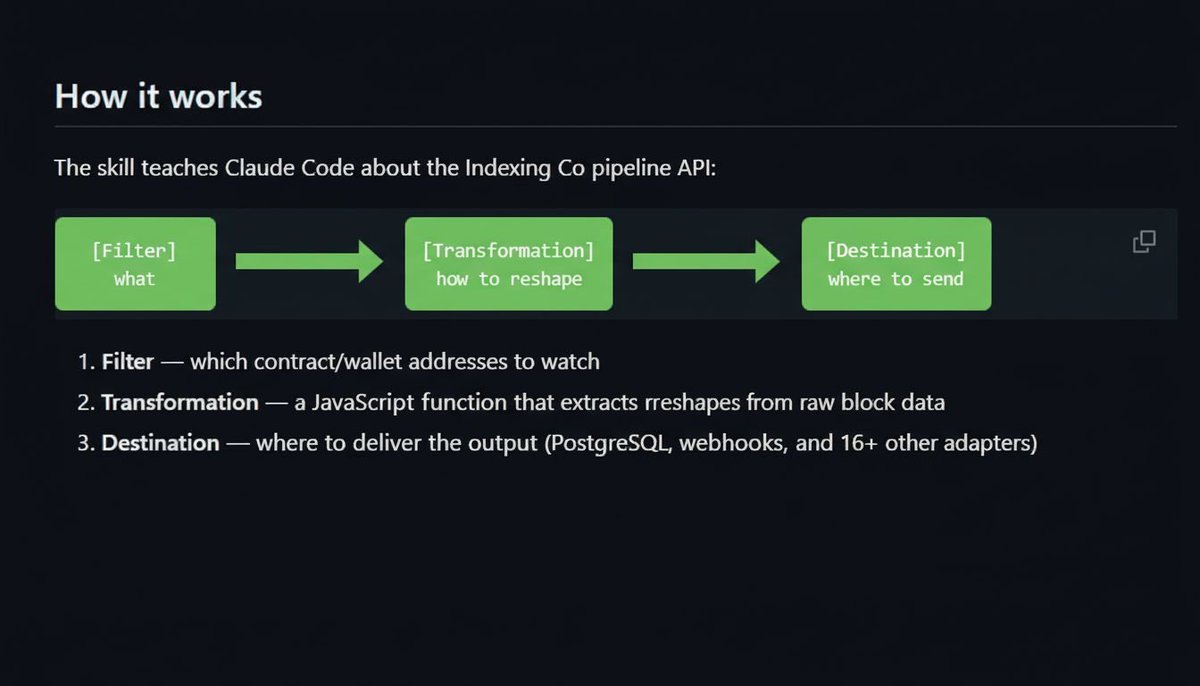
Indexing Co's Claude skill writes production blockchain pipelines through conversation.
You say "index all Uniswap V2 swaps to Postgres" and it generates filters, transforms, schemas, and deploys in seconds across 100+ chains
https://t.co/CEq6akbDFI
I'm joining @OpenAI to bring agents to everyone. @OpenClaw is becoming a foundation: open, independent, and just getting started.🦞
https://t.co/XOc7X4jOxq
To the Avalanche community:
I am not blind to where we stand. I see and share your frustration.
I took this role because I believe Avalanche has some of the strongest technical foundations in crypto. But strong foundations don't matter if the economics built on top of them haven't evolved with the ecosystem. What made sense at launch doesn't necessarily hold today, and having the honesty to rethink that is where it starts. But economics alone won't fix this either. The solution isn't singular. It's non-trivial. It's built from small things that compound over time. And it takes all of us coming together to make it happen. That starts with each of us being willing to ask the difficult questions first.
The priorities I've set for my team are about getting back to fundamentals. Focusing on what creates structural demand, the kind that doesn't disappear when market cycles turn. Building the right economic conditions for sustainable growth, not dependent on the next narrative.
Some things are working. Real-world asset growth on Avalanche is real. Institutional capital is showing up, not because of hype, but because the infrastructure earns it. That's the kind of growth you can build on.
But I'm not going to pretend everything is working. Some of our current mechanisms have design flaws. I'd rather say that publicly and work to fix them than pretend otherwise. That's how trust is built: through execution, not promises.
Sustainable growth doesn't come from one catalyst. It comes from getting the fundamentals right.
I want to hear from you. Not the "gm" replies or the "wen moon" questions. I want the hard feedback. Where are we failing? What's broken that nobody's talking about? What would make you stay, or come back?
If your criticism is constructive, I'll take it seriously, even if it's harsh. If it's just empty noise, I'll keep scrolling.
I came into crypto from institutional finance because I believe this technology can reshape how capital markets work. I chose Avalanche because I think the architecture can support that vision. But architecture alone doesn't win. Execution does. Community does.
The only way we win is together. 🔺
Your AI conversations aren't privileged. Yesterday, Judge Jed Rakoff ruled that 31 documents a defendant generated using an AI tool and later shared with his defense attorneys are not protected by attorney-client privilege or work product doctrine.
The logic is simple: an AI tool is not an attorney. It has no law license, owes no duty of loyalty, and its terms of service explicitly disclaim any attorney-client relationship. Sharing case details with an AI platform is legally no different from talking through your legal situation with a friend (which is not privileged).
You can't fix it after the fact, either. Sending unprivileged documents to your lawyer doesn't retroactively make them privileged. That's been settled law for years. It just hadn't been tested with AI until now.
And here's what really hurt the defendant: the AI provider's privacy policy (Claude), in effect when he used the tool, expressly permits disclosure of user prompts and outputs to governmental authorities. There was no reasonable expectation of confidentiality.
The core problem is the gap between how people experience AI and what's actually happening. The conversational interface feels private. It feels like talking to an advisor. But unless you negotiate for an enterprise agreement that says otherwise, you're inputting information into a third-party commercial platform that retains your data and reserves broad rights to disclose it.
Judge Rakoff also flagged an interesting wrinkle: the defendant reportedly fed information from his attorneys into the AI tool. If prosecutors try to use these documents at trial, defense counsel could become a fact witness, potentially forcing a mistrial. Winning on privilege doesn't make the evidentiary picture simple.
For anyone advising clients or managing legal risk, this is a wake-up call. AI tools are not a safe space for clients to process their counsel's advice and to regurgitate their legal strategy. Every prompt is a potential disclosure. Every output is a potentially discoverable document.
So what do we do about it?
First, attorneys need to be proactive. Advise clients explicitly that anything they put into an AI tool may be discoverable and is almost certainly not privileged. Put it in your engagement letters. Make it part of onboarding. Don't assume clients understand this, because most don't.
Second, if clients want to use AI to help process legal issues (and they clearly will, increasingly), then let's give them a way to do it inside the privilege. Collaborative AI workspaces shared between attorney and client, where the AI interaction happens under counsel's direction and within the attorney-client relationship, can change the analysis entirely. I'm excited to be planning this kind of approach, and I think it's where the industry needs to head.
https://t.co/NFqsznVdXh
@MiyaHedge Yes the latest "crypto for the masses" wave failed.
But crypto ≠ money, and success ≠ number go up.
Blockchain should be thought of as persistent, verifiable state.
So as long as software and the internet exists, I don't see this primitive going anywhere.