Dylan Cease has extended his scoreless innings streak on the road to 42.0, passing Orel Hershiser (41.0 in 1988) for the longest streak in a single season since at least 1920.
#BlueJays50
@flogerman@GigglingGanon Even in this vid the cops who know he’s helped and is a witness let the piece of shit detective just man handle him and talk shit what a joke just because his feelings got hurt like a bitch
Si vous êtes franco israélien vous pouvez prendre les armes et participer à la colonisation et au génocide en Palestine, si vous êtes franco palestinien vous n’avez pas le droit de prendre les armes pour libérer la Palestine et vous êtes harcelé et surveillé par l’Etat français pour la moindre déclaration ou action militante.
The Trump administration moved today to remove federal roadless protections from more than 44 million acres of national forest, a change that would open them to future road building and logging.
The 2001 Roadless Area Conservation Rule prohibits most new road construction and timber harvest in designated roadless areas. The Forest Service filed a proposal today to rescind the national rule entirely.
The stated reason is wildfire. Agriculture Secretary Brooke Rollins argues that the rule has kept millions of acres off-limits to treatments that could reduce fire risk, and that those decisions should be made by local forest managers. Timber groups make a similar case, arguing that the rule unnecessarily restricts thinning, timber harvest and access needed to manage overgrown forests.
But there's another side to the wildfire argument. Most U.S. wildfires are human-caused, and a 2026 study of Forest Service lands found wildfire ignition density within 50 meters of roads was about 4x higher than in roadless areas. Roads can give crews access for forest management and firefighting, but they also bring people, and with them more opportunities for fires to start.
Critics argue that this is about more than fire. Environmental groups see the repeal as part of a broader push to expand logging and other development on national forest land, and warn that new roads can fragment habitat and degrade streams.
Hunting and fishing groups have opposed the repeal because roadless areas include large blocks of remote elk, deer, trout and salmon habitat, along with some of the country's best backcountry hunting and fishing. Their argument is that forests can still be actively managed for wildfire without giving up the roadless protections altogether.
Clean drinking water is part of this too. A 2026 study estimated that rivers originating in roadless areas support drinking-water supplies for about 25 million Americans. Roads can also increase erosion and sediment entering forest streams.
The rule dates to the Clinton administration in 2001, and its history since then has been messy. The Bush administration replaced it with a state-petition system in 2005, but a federal court set that rule aside and reinstated the 2001 protections in 2006. The first Trump administration later removed Roadless Rule protections from Alaska's Tongass National Forest, a decision the Biden administration reversed.
The new proposal would go much further and rescind the national rule altogether.
DHS's butchering of Big Bend is genuinely insane. Perhaps the biggest grift of American Tax dollars in history. $1.7 billion for roads next to existing roads and "vehicle barriers" where no vehicles can cross the border. Taxpayers are getting fleeced. Contractors get richer.
I spent my day watching the place I love more than anything in the world be irreversibly destroyed for no reason.
There is not a single logical explanation for what DHS and its contractors are doing to Big Bend. It has become perfectly clear: they are using the destruction of this crown jewel national park as a vehicle to transfer billions of taxpayer dollars into the pockets of these politically connected contractors.
They are sacrificing our public lands so obscenely rich men who have never once set foot here can get even richer. And if they can do it here in Texas' wildest and most beloved national park, they will do it everywhere.
Governor Abbott, Senators Cruz and Cornyn: WHERE ARE YOU?!
Whilst this is true, Indonesia’s rainforest is MUCH more at risk. They are WAY more destroyed/fragmented and hold even MORE endemic species than the Amazon! ‼️
I can’t stress how dire the situation is in Indonesia - we could lose iconic species like Javan Rhinos and Sumatran Tigers THIS decade! 😭
The whole world needs to band together to help them put value and protect these forests and pay local communities to care for them!!! 🐯
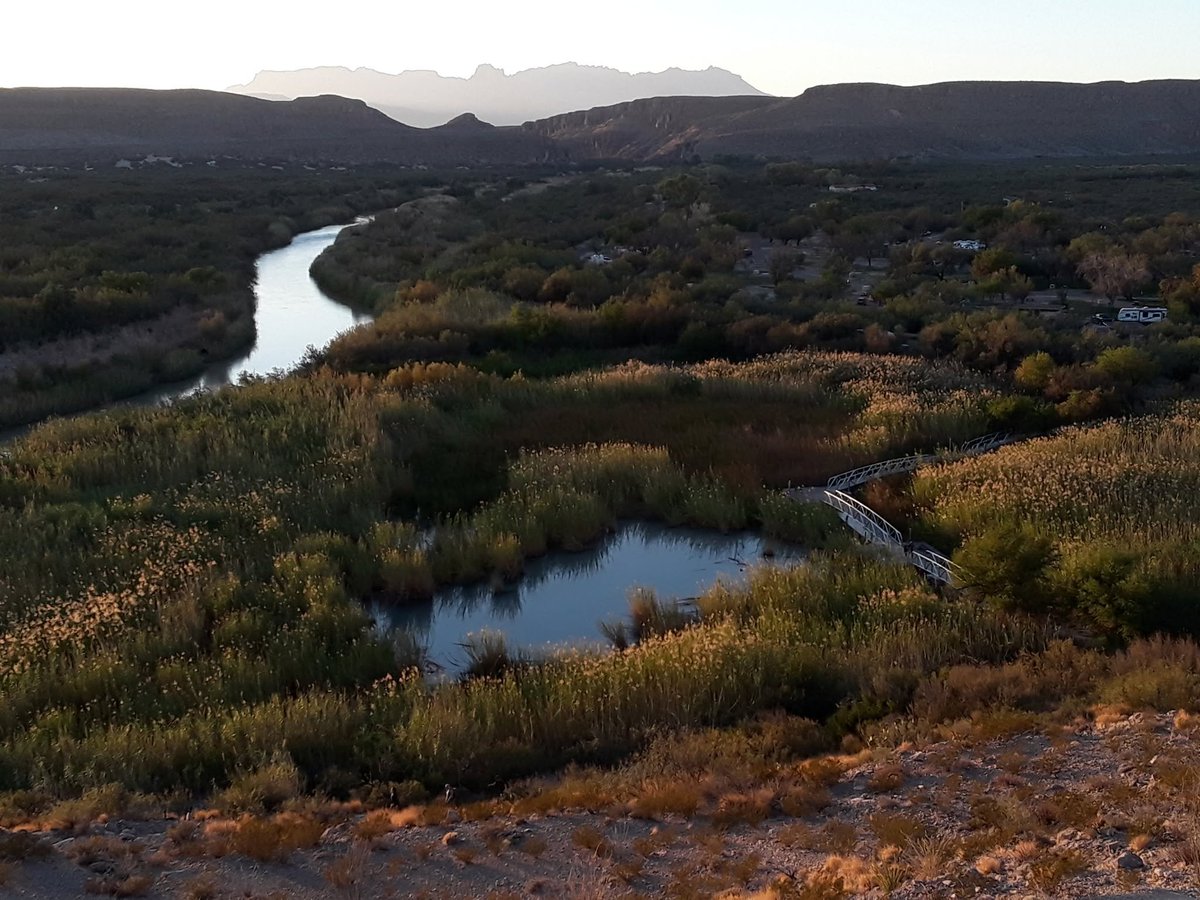
I'm sharing this text and photos from a facebook post by my old boss at Big Bend National Park, now-retired biologist Raymond Skiles:
Customs and Border Protection plans to destroy west Texas’ and Big Bend National Park’s only beaver pond.
According to the CBP "smart wall" map, they will bulldoze, then build a 100’-wide road and “patrol zone” through the only beaver dam, pond, and beaver lodge (beaver home) in west Texas.
The beaver family and a host of pond-dependent species will be scraped and drained away as well. As a BBNP biologist for 30 years, and native west Texan, I and other Texas biologists know of no other like it in Texas west of the Pecos River area. That's over 30,000 square miles.
The Rio Grande Village beaver pond (map) likely hosts the park’s largest number and type of wildlife at any single location. Adjacent to a campground, visitor access is easy. A pedestrian trail is dedicated to beaver pond treasures.
The nature trail’s elevated boardwalk is the park’s most popular destination for bird watchers hoping to see ducks, herons, flycatchers, warblers, wrens and grebes.
It is the park’s best place to see (and often hear) frogs and toads. Turtles, fish and even reptiles are abundant. Mammals, including javelina, foxes, bobcats, and coyotes cautiously approach under cover of pondside vegetation and crepuscular quiet.
The pond is habitat for Big Bend sliders, an aquatic turtle on the Texas list of threatened species; and Big Bend mosquitofish - they live nowhere else in the wild.
It’s not easy to be a beaver in the desert. Other beavers live in the Rio Grande, but the river is too large and flood-prone to dam, so they live along gentle stretches of river and burrow their homes into the steep, silty mud banks.
The Rio Grande Village beaver pond is fed by a warm spring that emerges onto a broad, gentle slope well back from the river. That creates a small stream with just enough room for a beaver dam and pond before it spills into the river channel.
There are other springs in the park and region, but they're in rock channels, or are subject to scouring floods, or sometimes dry out, or emerge too close to the river to allow space for a pond.
At Rio Grande Village, the beaver have not had an easy time. Even the National Park Service once trapped and moved them, and I suspect killed a few, to prevent them from chewing on planted trees or flooding a few campsites. That came to an end in 1988, when park managers decided to give them some space; live-and let-live.
That decision created the parks’ best wildlife habitat, and for decades the beaver pond has been among the park’s most important visitor experiences.
The beaver will very soon face its most powerful and destructive threat ever. There are laws that say, “think about it, maybe this is too important to destroy, maybe there are alternatives, maybe use a nearby existing road that meets all the same border security goals.”
But CBP chose to ignore (waive) all those. And ignore Americans who love nature and their parks.
The bulldozers could arrive soon, even this week.
In case you and your children never get to see Big Bend’s beaver pond, here are a few photos - in memorium.
20 MILLION hectares of the most biodiverse rainforest on earth was cleared for corporations between 1980-2016. 😡
Literally millions of years of evolution and thousands of species just down the drain in less than four decades. It can never be forgiven! ❌🦧🌳