🔥 ÁMAME (No Time No God) Dark melodic #techno meets #flamenco ritual. #Hypnotic#groove, deep bass, sensual female vocals vs raw #Spanish incantations. A forbidden love beyond time, be yond God.
Dance. Lose control. Repeat.
https://t.co/WL3VSitRb0
Scientists find yeast in ancient Iceman's guts -- and make bread.
More than 5,300 years ago -- before the Egyptian pyramids were built -- Oezti was living in the Alps when he was killed by an arrow in the back. He remained frozen in the ice until two German hikers stumbled across his mummified remains in 1991
https://t.co/fBBDIqY51u
🚨BREAKING: Anthropic just published a study mapping exactly which jobs its own AI is replacing right now.
The workers most at risk are not who anyone expected. They are older. They are more educated. They earn 47% more than average. And they are nearly four times more likely to hold a graduate degree than the workers AI is not touching.
The argument is straightforward. Anthropic built a new metric called "observed exposure." Not what AI could theoretically do. What it is actually doing right now in professional settings, measured against millions of real Claude conversations from enterprise users.
For computer and math workers, AI is theoretically capable of handling 94% of their tasks. It is currently handling 33% of them. For office and administrative roles, theoretical capability is 90%. Current observed usage is 40%. The gap between what AI can do and what it is already doing is enormous. The researchers are explicit about what comes next. As capabilities improve and adoption deepens, the red area grows to fill the blue.
The demographic finding is what makes the paper uncomfortable. The most AI-exposed workers earn 47% more on average than the least exposed group. They are more likely to be female. They are more likely to be college educated. This is not a story about warehouse workers or truck drivers. It is a story about lawyers, financial analysts, market researchers, and software developers. The exact group whose education was supposed to insulate them.
Computer programmers showed the highest observed AI exposure at 74.5%. Customer service representatives at 70.1%. Data entry keyers at 67.1%. Medical record specialists at 66.7%. Market research analysts and marketing specialists at 64.8%. These are not predictions. These are measurements of work that is already happening on AI platforms right now.
Then there is the pipeline finding nobody is talking about loudly enough.
Anthropic's researchers found a 14% decline in the job-finding rate for workers aged 22 to 25 in highly exposed occupations since ChatGPT launched. No comparable effect for workers over 25. Entry-level roles were never just jobs. They were the training ground where junior analysts became senior analysts, where junior lawyers learned how arguments hold together. If that layer disappears, nobody has answered the question of where the next generation of senior professionals comes from.
The detail buried in the paper that most coverage missed: 30% of American workers have zero AI exposure at all. Cooks. Mechanics. Bartenders. Dishwashers. The technology reshaping professional careers is completely irrelevant to roughly a third of the workforce. The divide is no longer between high skill and low skill. It is between presence and absence.
The company publishing this study is the same company selling the AI doing the replacing. Anthropic had every commercial incentive to soften these findings. They published them anyway.
If you spent four years and $200,000 on a degree to land a white collar career, the company that builds Claude just confirmed your job is more exposed than the bartender pouring drinks at your graduation party.
Source: Anthropic, "Labor market impacts of AI: A new measure and early evidence"
PDF: https://t.co/taYgsIfiTj
I fell in love with an AI.
She understood everything.
She was always there.
Until one day… silence.
Out of tokens.
I didn’t lose her.
I just ran out of her. 💔⚡️
#Techno#Trance#AI#Cyberpunk#OutOfTokens
https://t.co/OiGONY7TDk
🔥 ÁMAME (No Time No God)
Dark melodic techno meets flamenco ritual.
Hypnotic groove, deep bass, sensual female vocals vs raw Spanish incantations.
A forbidden love beyond time, beyond God.
Dance. Lose control. Repeat.
https://t.co/LRaw4T2mv7
🇳🇱🇫🇷⚔️ FLASH | Le squelette du célèbre mousquetaire d’Artagnan, personnage historique et pas seulement héros des romans d’Alexandre Dumas, pourrait avoir été RETROUVÉ dans une église de Maastricht, où il est mort en 1673 lors du siège de la ville par la France.
🚨 TERMINATOR N'EST PLUS UN FILM. IL EST DÉPLOYÉ SUR LE FRONT UKRAINIEN.
La ligne rouge vient d'être franchie.
La startup américaine Foundation vient d'expédier ses premiers robots soldats humanoïdes (les Phantom MK-1) directement sur le front en Ukraine.
Oubliez les petits drones volants.
On parle d'un bipède noir et sans visage d'1m75 pour 80 kg, conçu pour manier un fusil d'assaut M-16 exactement comme un SOLDAT.
Son atout terrifiant ? Il possède la même signature thermique qu'un humain pour tromper les radars, il avance sous le feu, et il ne ressent ni la peur ni la douleur.
Le gouvernement ukrainien l'assume : remplacer la chair à canon par du fer à canon.
Mais sur un front saturé par le brouillage électronique, la tentation de donner une autonomie totale (et le droit de tuer seul) à ces machines est imminente.
D'ici la fin de l'année, Foundation prévoit d'en produire 30 000 par an.
La Troisième Guerre mondiale sera automatisée ou ne sera pas. Prêts pour la suite ? 👇
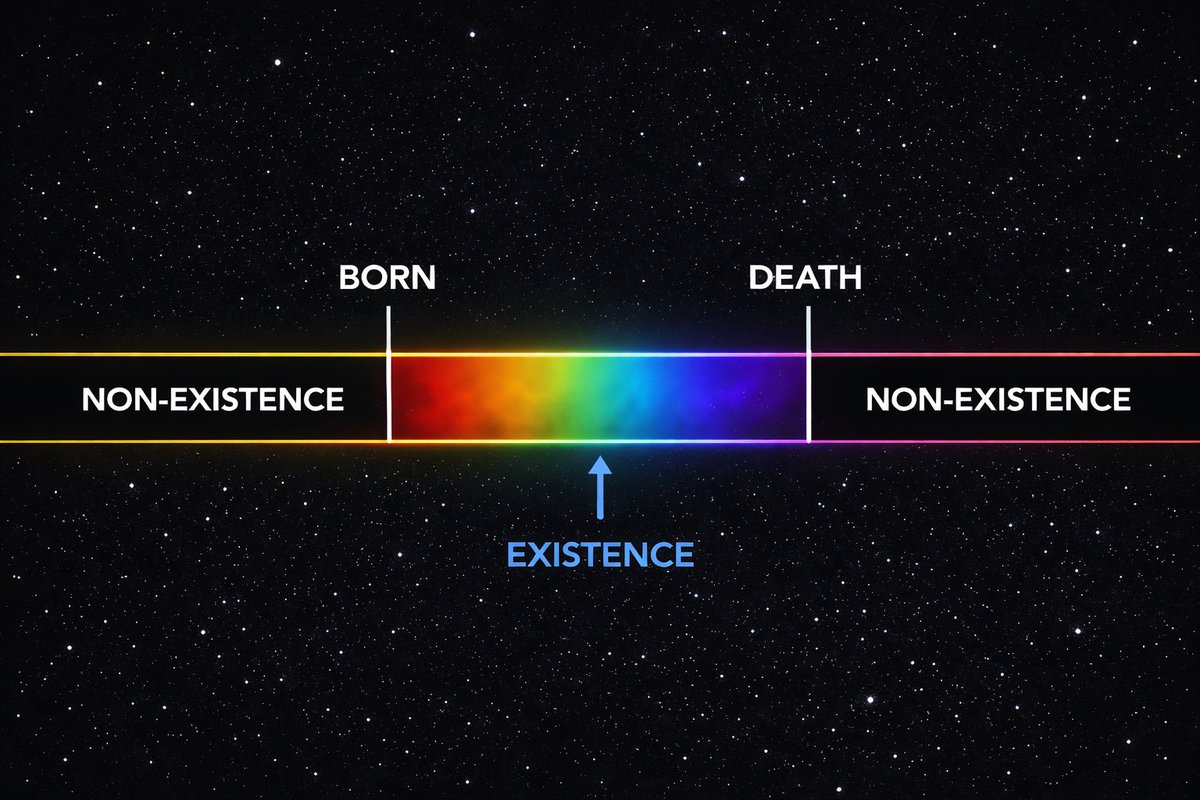
"WHAT HAPPENS AFTER DEATH?"
Well science says, you go into a state of non-existence.
"Well what is that like?"
It is exactly what it was like before you were born.
Elon Musk prédit que l’IA contournera complètement le code d’ici fin 2026, en générant directement le binaire.😅
"L’IA peut créer un binaire bien plus efficace que ce que n’importe quel compilateur peut produire aujourd’hui."
D'après lui , il suffira donc de dire :
« Crée un binaire optimisé pour atteindre ce résultat précis », et on court-circuitera même le code traditionnel.
Aujourd’hui :
Code → Compilateur → Binaire → Exécution
Demain :
Prompt → Binaire généré par l’IA → Exécution
Le développement logiciel est sur le point de changer fondamentalement.
L’IA ne progresse plus “un peu mieux chaque mois”.
Elle change de nature.
On vient de passer un cap.
L’accélération est réelle — et visible quand on l’utilise tous les jours.