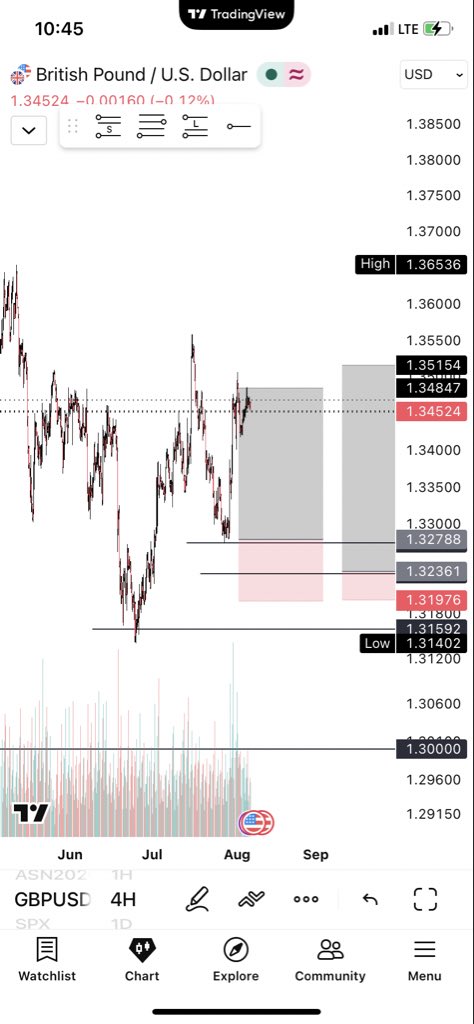
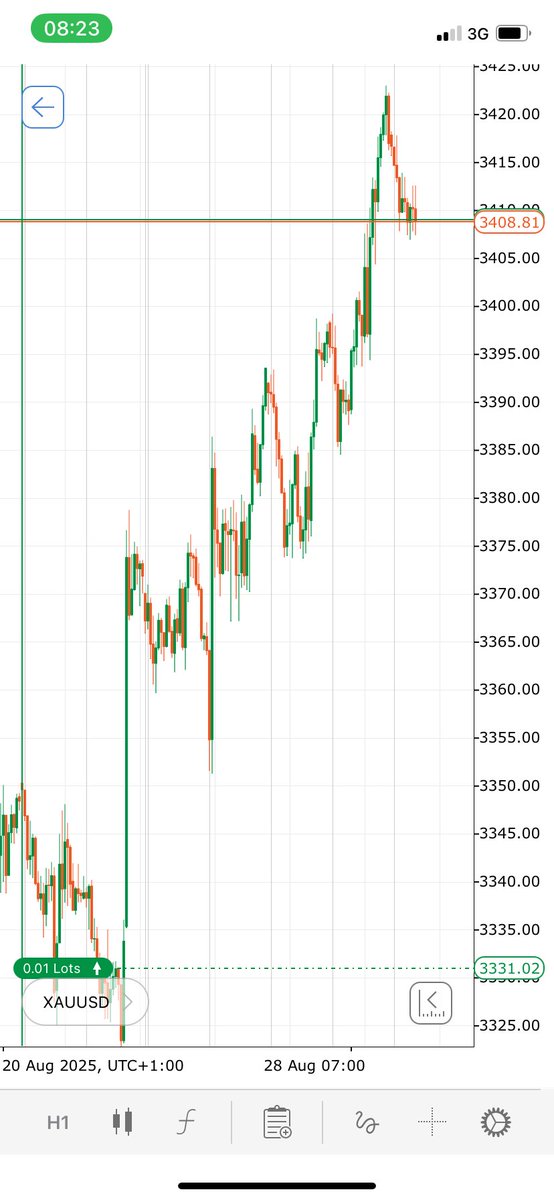
Nobody allocates to a screenshot.
Screenshots are marketing. A track record is evidence.
There are two kinds of profitable trader. The ones who can prove it, and the ones who say they are.
Making money once and making it repeatably are two different problems.
Being up over 6% in the first three trading days of the month is not why FGBQ is worth a look.
It spent close to eight months below its launch level, with a deepest fall of 12.65%. That stretch is where a lot of track records quietly end.
This one is still running, and is now at new equity highs.
Well done FGBQ.
*Past performance is not an indication of future results.*
Win rate is vanity.
A system winning 40% of trades at 2.5:1 reward to risk makes money all year. One winning 70% at 0.4:1 bleeds out.
Expectancy per trade pays the bills, and most people never calculate theirs.
GCZX just took the number one spot in DarwinIA SILVER, out of 9,186 traders.
Look at the chart, not just the ranking. Most of 2025 was a drawdown. The trader held their risk, kept going, and turned it around. This is the Evolve phase in real time, the unglamorous middle where a rough start becomes a track record worth watching.
Well done GCZX.
Disclaimer: the #1 spot is temporary and can/will change throughout the month.
You will not understand what you've done for us, Leo 💙🤍
Maybe one day when you're old & frail, you will.
In Antonella's mind, she loves you more than us. She can leave you, we can't.
Your story & ours is till the wheels fall of, Mi Capìtan.
I love you, Messi. I really do.
The difference between a profitable trader and a broke one often comes down to how long they hold onto bad ideas.
Your ego wants to be proven right. The market doesn't care about your ego.
When you enter a position, you form a hypothesis about price movement. That hypothesis has a lifespan — sometimes minutes, sometimes weeks. The moment the evidence contradicts your thesis, you have a choice: defend your original idea or acknowledge the new reality.
Most people choose defence. It's hardwired. Cognitive dissonance is uncomfortable. We filter information to confirm what we already believe. We ignore the warning signs. We tell ourselves stories about why the market will "come back around" or why this dip is "just noise."
This is where the damage happens.
Being wrong costs you the spread and perhaps a small loss if you exit quickly. Being wrong and refusing to admit it costs you your account.
The traders who survive aren't the ones with the best analysis. They're the ones who treat their convictions as provisional. They hold their views lightly. When the price action tells a different story than their thesis, they don't argue with it. They adapt.
Charlie Munger used to say he tried to prove himself wrong, not right. The same principle applies in markets. Your job isn't to defend your position. It's to constantly evaluate whether the evidence still supports it.
Strong opinions, loosely held. That's the framework. Have a clear thesis. Trade it with conviction. But the second the market shows you something different, be willing to walk away.
The flexibility to change your mind isn't weakness. It's survival.
Being right feels good. Staying solvent feels better.
https://t.co/3FrYJDRUOR
I hate the terms "smart money" and "dumb money". The terms are a comfort blanket: they let a losing trader explain a stop-out as someone clever hunting them, when the trade was simply wrong.
There is no cabal positioned against your 0.2 lot (probs demo anyway lol). There is liquidity, there is flow, and there is your edge or lack of one.
21/
You'll NEVER ever know if you're gonna get TP or SL. Doesn't matter the model, what strategy you use or whom you learn from. UNCERTAINTY will always be there, for all of the trade you'll take till the day you die.
NO EXCEPTIONS.
Naval Ravikant: “Networking is overrated… Do something great and your network will instantly emerge"
Naval offers the following advice to startup founders:
“Don’t spend your time doing meetings unless you really, really have to. I really think networking is overrated. There’s all these articles about how you’ve got to network more, and it makes me want to vomit.”
Instead he suggests:
“Go do something great and your network will instantly emerge. If you build a great product or if you get a good customer base, I guarantee you will get funded.”
Recruiting (customers and employees) and learning from really smart people are two exceptions. But don’t worry about building relationships with VCs or going to conferences early on. Just focus on your product, your team, and your users.
Winning streaks tell you almost nothing about a trader. The drawdown is "the interview".
VGTV is a great example. The strategy went through a losing stretch (right at inception), but the behaviour did not change: same risk, same rules, same process while the equity curve disagreed with it. That is the professional response to drawdown. It is visible in the track record.
An allocator would study this moment more than any peak. A track record that survives its own drawdowns with behaviour unchanged is rarer than one with a higher return. The losing stretch, handled properly, is the strongest page in the document.