🚨TERRIFYING MOMENT ON POLISH BEACH: 2-YEAR-OLD VANISHES INTO THE BALTIC — THEN DOZENS OF STRANGERS LINK ARMS AND FORM A HUMAN CHAIN IN THE WAVES TO FIND HIM 🇵🇱❤️
A 2-year-old child went missing on the beach in Stegna.
Panic.
Fear.
The sea was right there.
Within minutes, ordinary people — tourists and locals who had never met each other — dropped everything. Men and women ran into the water, linked arms, and formed a long human chain stretching into the Baltic waves.
They moved together, meter by meter, searching every part of the shoreline and shallow water. A woman with a megaphone directed the effort while more people kept joining.
No one waited for instructions.
No one stood and watched.
The child was found safe and healthy.
This is the real Poland.
When a small child is in danger, strangers become family in seconds.
Beautiful. Powerful. Unforgettable.
Would you have joined that chain without hesitation?
⚠️ YOUR GRANDKIDS WILL NEVER SEE A HUMAN CLEAN A HOTEL ROOM
Tesla Optimus Gen 3 just activated “Hotel Cleaning Mode”
and did in 10 seconds what housekeepers spend hours on.
While you’re still thinking “this is years away”…
the robot is already:
– making the bed perfectly
– vacuuming every corner
– folding towels better than any pro
The future didn’t arrive.
It’s already standing in room 214 waiting for you to wake up.
If you still think robots are “just hype” —
you already missed the point of no return.
If you have served in public education for 20 years or more, this post is for you.
You are part of the roughly 28% who entered public-school teaching and were still in the profession two decades later.
So for the veteran teachers and staff who have served for 20 years, 25 years, 30 years, and beyond, this is to celebrate you!
You have endured some of the most difficult changes education has ever faced.
You witnessed standardized testing grow into an overwhelming system of high-stakes pressure, excessive data collection, and constant documentation.
You adapted to new standards, new technology, new programs, and an endless cycle of initiatives.
You carried students and families through COVID, even while facing your own fears, losses, and uncertainty.
You have watched respect for educators decline while expectations continued to rise.
You have been asked to do more with less, solve problems you did not create, and meet needs that extend far beyond the classroom.
And yet, you continued to show up.
You taught the lesson again.
You encouraged the struggling student.
You supported the overwhelmed colleague.
You welcomed the nervous parent.
You kept schools functioning during some of the toughest years education has ever experienced.
Most people will never fully understand what it takes to dedicate decades of your life to serving students, families, and communities. They will never know how many evenings, weekends, personal dollars, and pieces of your heart you have invested.
There are adults walking through the world today who are stronger, wiser, and more confident because you once believed in them.
To every teacher and staff member who has served for 20 years or more:
Thank you for your dedication.
Thank you for your sacrifice.
Thank you for your wisdom.
Thank you for caring for our children.
Thank you!
It is hard to watch other families give their kids things you can’t afford and wonder if your children are falling behind.
But you don’t have to go into debt, pause the Baby Steps or sacrifice your family’s financial peace just to keep up.
Your kids don’t need the most expensive school, the nicest car or every opportunity money can buy. They need parents who love them enough to say no, teach gratitude, model integrity and show them how to do hard things.
Staying on the Baby Steps isn’t depriving your kids. You are teaching them that wisdom matters more than appearances and that money is a tool, not a measure of their worth.
You aren’t failing your kids because you can’t give them everything.
You are teaching them how to live like no one else so someday they can live and give like no one else.
Things I’ve Learned About Kids and Teens in 35 Years
Most “difficult” kids are not trying to give adults a hard time. Most are having a hard time.
Behavior almost always has a story.
The loud kid may be hurting.
The class clown may feel invisible.
The angry teen may actually be scared, overwhelmed, lonely, or exhausted.
One safe adult can change the entire direction of a child’s life.
A teacher.
A coach.
A counselor.
A principal.
A bus driver.
A cafeteria worker.
One person who says, “I’m glad you’re here. You matter. I believe in you.”
That stuff sticks.
After 35 years in education and mental health, I still believe this with my whole heart:
Kids need boundaries, but they also need connection.
They need accountability, but not humiliation.
They need expectations, but also emotional safety.
They need adults who see beyond the behavior and into the human being.
Maslow Before Bloom was never about lowering standards. It was about understanding kids.
Hungry kids struggle to learn.
Anxious kids struggle to focus.
Disconnected kids struggle to care.
And despite everything this generation is carrying, I still believe in them very, very much.
#MaslowBeforeBloom #KidsMentalHealth #TeenMentalHealth #MentalHealthAwareness #TraumaInformed #TraumaInformedCare #EducatorLife #TeacherLife #SchoolCounselor #SchoolSocialWorker #SchoolPrincipal #FormerPrincipal #TherapistThoughts #StudentWellbeing #EmotionalWellness #SEL #SocialEmotionalLearning #WholeChild #EveryKidNeedsAChampion #EducationMatters #TeachersOfInstagram #CounselorsOfInstagram #ParentingTeens #PositiveYouthDevelopment #KidsAreNotOkay
10 things billionaires don't want you to know are free.
The richest people on Earth use these every day. You can use them right now. Bookmark this.
1. Harvard CS50
The exact computer science course Harvard freshmen take. Includes a real certificate signed by the professor.
Site → https://t.co/664LZK9mxb
2. MIT OpenCourseWare
2,500+ MIT courses online. The same lectures their $80K-a-year students sit in.
Site → https://t.co/jkKrQknLDW
3. Y Combinator Startup School
The exact playbook YC uses to train the founders of Airbnb, Stripe, and Coinbase.
Site → https://t.co/Duij7Yjgu7
4. Berkshire Hathaway Letters
Warren Buffett's annual investing letters since 1977. Hedge fund managers re-read these every year.
Site → https://t.co/crmt1ZAVq2
5. SEC EDGAR
The real-time filing system Wall Street uses. Watch what every billionaire is buying the moment they file.
Site → https://t.co/g0tASLW7Y9
6. Stanford Online
Stanford's CS, engineering, and machine learning lectures. The exact courses Andrew Ng once taught.
Site → https://t.co/OQaJZd5viz
7. PubMed Central
The NIH's full archive of medical research. Studies that journals charge $40 each to read. Millions of them.
Site → https://t.co/3H3Ko8S0KE
8. World Bank Open Data
Every economic dataset the World Bank tracks. The same data Goldman Sachs analysts pay for.
Site → https://t.co/t6kHJwU7ui
9. OpenLibrary
The Internet Archive's free book lending service. Millions of books, no library card needed.
Site → https://t.co/BAXBFxLDSq
10. Project Gutenberg
70,000+ classic books, completely free. From Plato to Tolstoy.
Site → https://t.co/FAEfVIaM9L
Here's the wildest part:
A Harvard education costs $250K. An MBA costs $200K. A Bloomberg Terminal costs $25K a year. A YC seat costs you 7% of your company.
You just got all of it. For free.
The most expensive things in the world are usually free. You just have to know where the door is.
Most people never look.
Save this before you forget.
100% free. Forever.
10 financial rules that change how you think about money:
1. RULE OF 72
Divide 72 by your return rate = years to double your money.
At 8%: 9 years. At 12%: 6 years.
2. THE 4% RULE
Withdraw 4% of your portfolio per year in retirement.
It historically lasts 30+ years.
3. THE 50/30/20 RULE
50% needs. 30% wants. 20% savings.
The simplest budget ever built.
4. THE 100 MINUS AGE RULE
Subtract your age from 100 = your stock allocation.
Age 30: 70% stocks. Age 60: 40% stocks.
5. THE 10X RULE
Your retirement pot should be 10x your annual salary.
At 60. Not 70.
6. THE 3X EMERGENCY RULE
3–6 months of expenses in cash.
Always. Non-negotiable.
7. THE 1% HOUSING RULE
Budget 1% of your home’s value per year for maintenance.
$500k home = $5,000/year reserved.
8. THE 28% MORTGAGE RULE
Never spend more than 28% of gross income on housing.
The bank will let you borrow more.
Don’t.
9. THE RULE OF 1000
To generate $1,000/month in passive income at 4% yield
you need $300,000 invested.
10. PAY YOURSELF FIRST
Save before you spend.
Not what’s left over.
First. Always first.
Save this. Share it with someone who needs it.
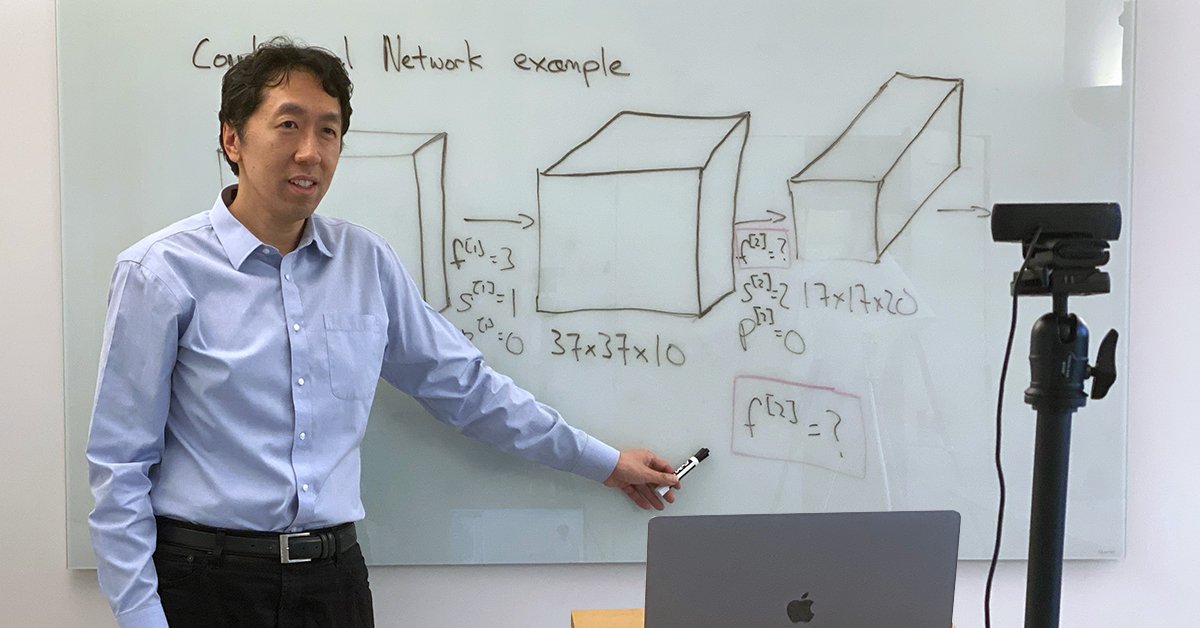
A Stanford CS professor told his class something at the start of the semester that made half the students close their laptops.
He said the skill that will separate the people who thrive in the next decade from the people who stall has almost nothing to do with coding.
His name is Andrew Ng, and he has trained more machine learning engineers than almost anyone alive.
Here is what he said, and why it changes how you should be learning right now.
He said the bottleneck is no longer writing code. It is knowing which problems are worth solving in the first place. For thirty years, being a good engineer meant being able to build what someone else defined. In the world that is arriving, every engineer has infinite leverage to build almost anything, which means the person who picks the right thing to build now wins by orders of magnitude over the person who builds the wrong thing flawlessly.
His framework for problem selection is deceptively simple. He calls it the three-question filter.
The first question is whether the problem you are working on actually matters to someone who would pay for it or use it daily. Most students fail here. They work on projects that are interesting to them and nobody else, and then wonder why the portfolio produces no offers.
The second question is whether the problem is still hard now that AI exists. If a single prompt to a hosted model solves it, the problem is no longer valuable to solve yourself. The interesting problems live in the gap between what AI can do alone and what it can do when combined with domain knowledge, careful system design, and data nobody else has access to.
The third question is the one most people skip. Can you actually ship a working version in a week. Not a polished version. A crappy, embarrassing, actually-functional version. Ng said the number one predictor of which of his students ended up building something important was not talent. It was the willingness to ship something bad fast and then improve it in public.
He said the students who kept tweaking in private for six months before showing anyone almost always produced worse final work than the students who shipped a broken version on week one and iterated based on real feedback.
The people who are actually winning right now are not the ones with the best ideas.
They are the ones who learned to pick problems that matter and ship solutions that barely work, before anyone else has even finished thinking about it.
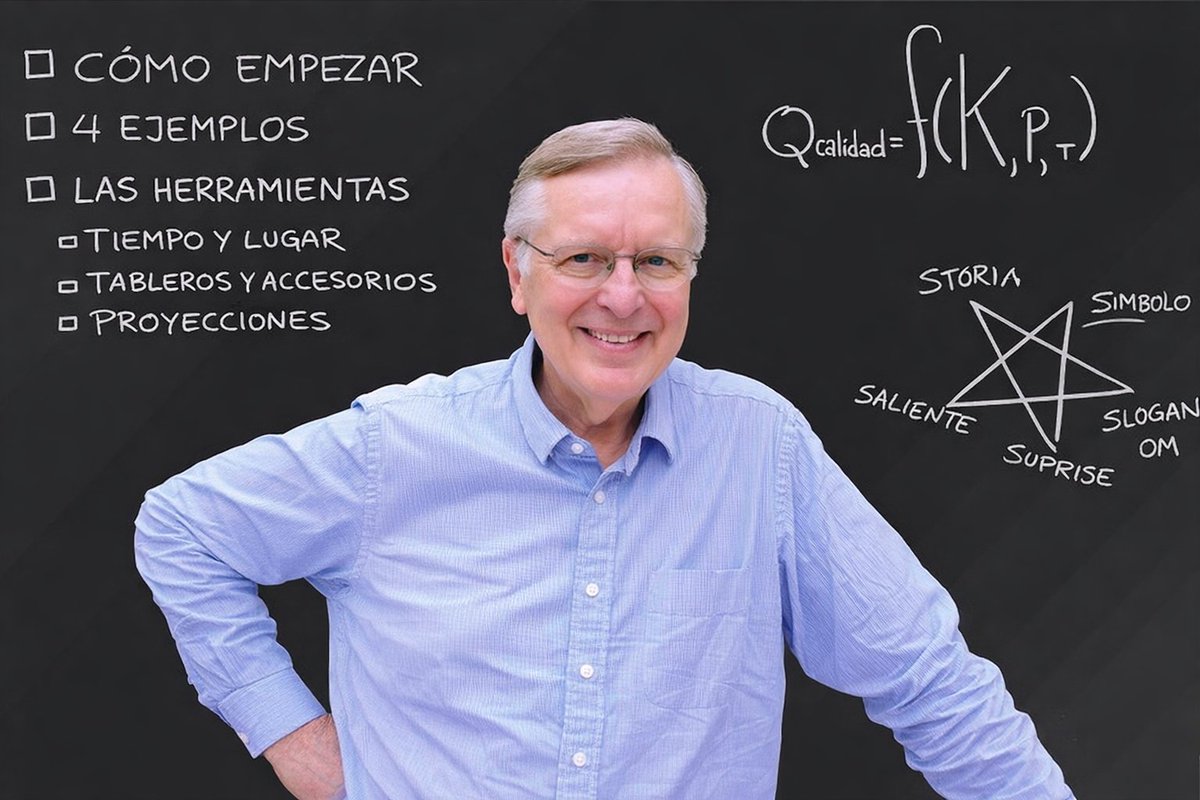
Un profesor del MIT dio la misma conferencia cada enero durante 40 años, y cada una de las veces no cabía ni un alma en el aula.
La vi a las 2 de la mañana y cambió por completo mi forma de entender la comunicación.
Su nombre era Patrick Winston. La conferencia se titula "Cómo hablar" (How to Speak).
Su frase de apertura te golpea como un camión: "Tu éxito en la vida vendrá determinado en gran medida por tu capacidad para hablar, tu capacidad para escribir y la calidad de tus ideas, en ese orden".
Ni tu nota media, ni tus títulos, ni tu coeficiente intelectual. Cómo hablas es lo que separa a las personas que son escuchadas de las que son ignoradas.
Este es el esquema que inculcó a los estudiantes del MIT durante cuatro décadas:
1) Nunca empieces con un chiste: Empieza diciendo a la gente exactamente qué es lo que va a aprender. "Prepara la bomba antes de verter nada". Él lo llamaba la "promesa de empoderamiento": dales una razón para no levantarse del asiento en los primeros 60 segundos.
2) La regla de las 5S: Para que una idea se quede grabada debe ser: Símbolo, Slogan, Sorpresa, Saliente (relevante) e Historia (Story). Cualquier idea que valga la pena recordar cumple al menos tres de estas.
3) La técnica del "casi acierto" (Near Miss): Esta parte me dejó alucinado. No te limites a mostrar lo que está bien; muestra lo que parece estar bien pero no lo está. Ese contraste es lo que hace que el cerebro registre algo de forma permanente.
4) Su regla final: Termina con una contribución, no con un resumen. No recapitules lo que ya dijiste. Dile a la gente qué les has dado que no tenían antes de entrar por la puerta.
He usado este esquema en ventas, entrevistas y presentaciones desde que lo vi, y los resultados no son sutiles.
Patrick Winston falleció en 2019, pero esta clase sigue siendo gratuita en el OpenCourseWare del MIT. Una hora, vista por millones de personas, y no cuesta absolutamente nada.
Video: "How to Speak", Patrick Winston, MIT OpenCourseWare, RES.TLL-005, January IAP 2018.
Fuente: MIT OpenCourseWare.
Licencia: CC BY-NC-SA.
Términos: ocw. mit. edu/ terms
Thanks to the Westside Middle School students, families and staff who contributed to our homeroom can tab collection competition for the Ronald McDonald House, https://t.co/mGwqE4otHP! Could another school collect more? We’ll see! @westsidemiddle@westside66