Remind us again why it was so essential to create Digital ID and gather a honey pot of data on every person in the country?
The only way to protect sensitive data is not to collect it in the first place.
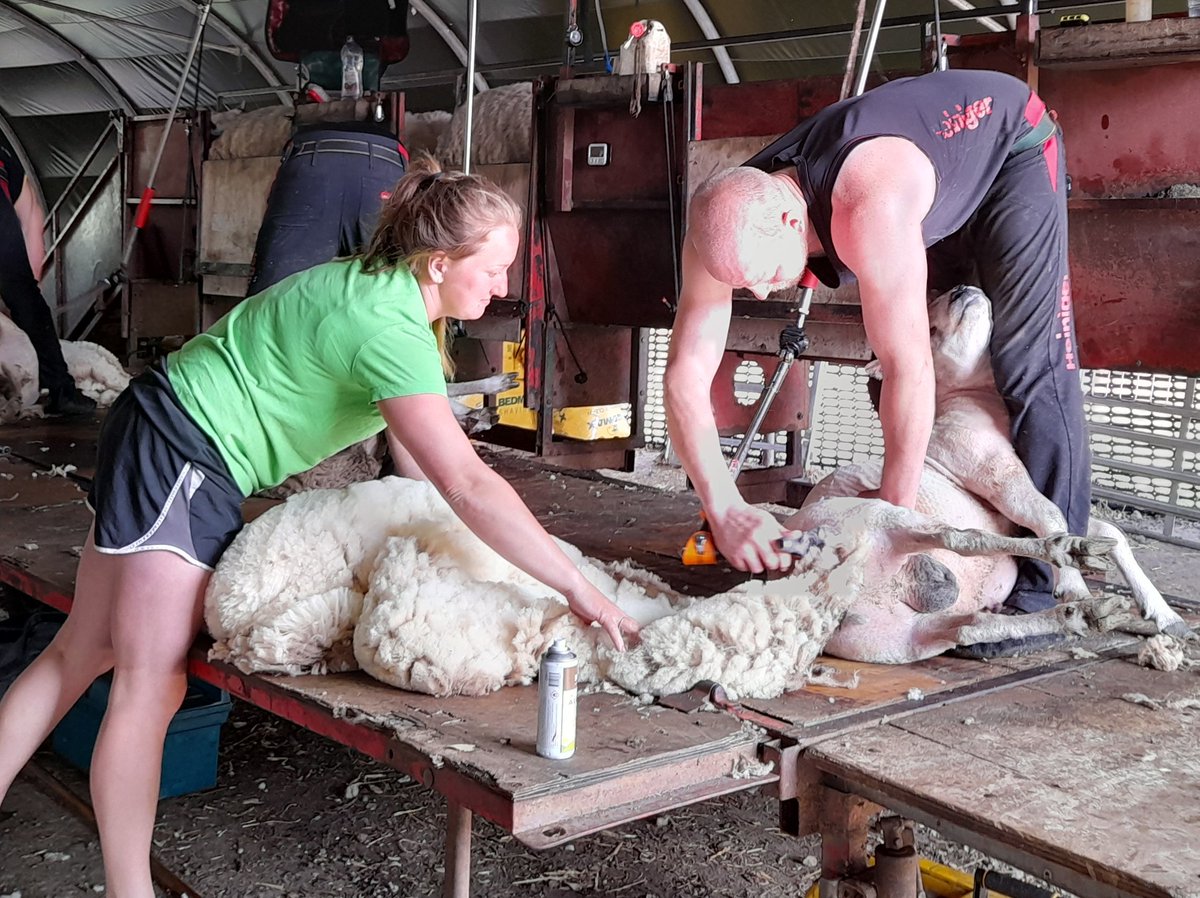
The last overseas shearers Britain intends to let in are on the fells right now, working out the final weeks of their leave.
The door shut on 30 June. No vote, no debate, no announcement, just a date passing quietly in a summer when everyone was looking elsewhere. Those still working the Borders this week are here on leave that expires on 1 October, and when they fly out that is the end of it.
Understand what is walking out.
Six New Zealanders spent three months in one Northumberland valley last year and sheared nearly 90,000 sheep. Fifteen thousand head each, across farms from the Scottish Borders down to County Durham. They have been coming into Coquetdale for over thirty years. Since 2011 a concession has let up to 75 of them in each spring, and between them they take the wool off one and a half to two million British sheep in a window a few weeks long.
The Home Office rejected the application on 2 February. Twenty-six days of farmers writing to their MPs got it reinstated on 10 March for one final year, with a line about the sector having had fourteen years to train British workers and now being expected to transition to domestic labour.
Here is what that sentence is standing on. British Wool trains over 800 people a year, most of those courses are basic level, and most of the people on them are sheep farmers learning to do their own flock. Training was never the bottleneck. A top shearer clears a ewe in two or three minutes, calm hands, no panic in the animal, hundreds a day for weeks on end, and reaching that standard takes years of conditioning and a place in a global trade that follows the season around the planet.
Fourteen million breeding ewes. A few weeks to do them all. A sheep left in fleece gets eaten alive by maggots, so the job is not optional and the date is not negotiable.
Next spring those farms make phone calls that nobody answers.
Seventy-five shearers, once a year, and a government that could not find room for them.
3 Bed terraced house, Ancoats, Manchester £335,000 Council Tax B - £1,798 PA
New 0.48% Tax £1,608
3 Bed terraced House, Shepherd’s Bush, London £900,000
Council Tax E - £1,932 PA
New 0.48% Tax - £4,320!
and btw the Manchester house has off street parking and a garden!
I'm seeing a lot of criticisms of Andy Burnham's 'vibes politics'. The charge seems to be that he's trying to make people feel happier, rather than engage in drastic changes.
I actually believe he may be right to focus on vibes rather than major reforms for now.
The main problem of the UK, the way I see it, is that defeatism and pessimism have overcome the country during the 2009 financial crisis and this atmosphere of doom and gloom never went away.
That is not to say that the UK isn't facing major (structural) problems, but all of them would be easier to overcome with a happier population.
Happy people are more creative. Happy people are more productive. Happy people are more confident. The key to economic success largely depends on people being happy.
As such, I feel that 'vibes politics' may well be what the UK needs most urgently, right now.
We’ve now had 27 days of sunshine in England. Millions face hosepipe bans 🌞
Yet so far this year, we’ve had 150% of our average long-term rainfall. Some areas have had over 50 days of consecutive rain 🌧️
Something is very wrong with our water industry.
Let's be clear. Trump is not attacking Iran to stop the threat from that repressive dictatorship to its people, the region, or the U.S. Trump is bombing Iran to try to reopen the Straight of Hormuz that was open before he started his war.
Jo Nagai was raising swallowtail butterflies at his home in Kobe, Japan, when he noticed something odd. The ones he had looked after as caterpillars seemed to recognize him. Wild butterflies fled. His didn't.
He was in second grade. He wrote a four-page letter to Dr. Martha Weiss, an entomologist at Georgetown University who had studied whether moths could retain memories through metamorphosis. He asked if she could help him design a version of her experiment for butterflies.
She said yes.
Using a muscle therapy device, Jo trained caterpillars to associate the scent of lavender with a mild vibration. When the caterpillars became butterflies, 70 per cent of them still avoided the lavender. Their brains had been completely rebuilt during metamorphosis. The memory survived anyway.
Then he bred them.
The offspring, which had never been trained, also avoided lavender. So did their grandchildren. Without ever experiencing the vibration, two generations of butterflies inherited an aversion to a scent their grandmother had been taught to fear.
Jo documented it all in a 33-page research paper and presented his findings at the International Congress of Entomology in Kobe in 2024. He was 10.
A second grader wrote a letter to a Georgetown professor, and together they found evidence that butterflies can pass memories down through generations.
-Wilderness Whisper
Coming to the end of my semi-weekly posts looking at privacy in every day life as set out in the @bitcoinpolicyuk toolkit. Today - transacting more privately with Bitcoin.
Remember that despite the protestations of governments that Bitcoin is only used by criminals… even if this were true (which it is not) it would be only the stupid criminals who did so.
Bitcoin is of course pseudonymous, not anonymous, and on the base layer its privacy is far from perfect. Your transaction history is permanently recorded on the blockchain, and is admissible in court. However, there are ways of ensuring that the amount of data available about your spending practices is limited. Read on for some privacy improving tips to follow when you transact with Bitcoin…
Buying Bitcoin Without Surrendering Your Identity
Not all Bitcoin purchases are equal. If you buy from a regulated exchange with full KYC, then your identity is permanently welded to every satoshi you acquire. While this may be convenient, and the way that most people are onboarded, it is also a permanent record that governments and corporations can access, subpoena, or exploit; and, with the coming of the Crypto Asset Reporting Framework and DAC8, these will be shared far and wide with domestic and foreign tax authorities.
With the implementation of the Travel Rule, you may already have noticed that exchanges are asking more and more intrusive questions about where you are sending Bitcoin, and to whom, when you transfer it off platform. Remember that as soon as you designate an address as yours, then all your past and future transactions using that address are also exposed.
Peer-to-peer platforms like @peachbitcoin, @vexl , @bisq_network , @Azteco_ and @hodlhodl let you buy with cash or bank transfer, with far less identity exposure — and crucially, without creating a permanent link between your name and your Bitcoin. You trade with another person, without going through KYC or creating a permanent record with an exchange.
Holding Bitcoin Privately
Once you own it, the question becomes: how do you move and spend it without broadcasting your financial habits to the world? This isn’t the place for a deep dive into self custody, but in the context of spending, do consider a flexible and self-custodial Lightning wallet (for example one that doesn’t need you to run your own node).
@ZeusLN is excellent for power users, and even @walletofsatoshi now offers a self-custodial option. An old favorite is @PhoenixWallet for Lightning and onchain; there’s no custodian, no KYC, and you can make and receive Lightning payments without relying on someone else to hold your keys. For on-chain receiving, Silent Payments offer a new different approach entirely.
Silent Payments: Receiving Without Exposure
Normally, Bitcoin addresses are reusable public keys, which means that anyone can see all transactions tied to that address. Silent Payments break that link. Instead of sharing a static address, you share a single "silent payment address" once. Every payment sent to you generates a unique, private address that only you can recognize and spend from. To an outside observer, each payment looks unrelated. Your entire receive history remains private.
To use them: generate a silent payment address in a compatible wallet (like @cakewallet ), share it once with whoever needs to pay you, and all future payments arrive at different on-chain addresses invisible to blockchain analysis. It's a small shift in how you think about addresses — but the privacy gain is significant.
@cakewallet is a multi-currency wallet that puts privacy first. It supports both Bitcoin and Monero (which is private by design), and crucially, it lets you manage your on-chain Bitcoin with privacy-preserving practices built in.
Cake handles Silent Payments natively. It also supports coin control, ie the ability to choose which specific Bitcoin outputs you spend, so you can avoid linking separate transactions together. It runs locally on your phone; and your keys never leave your device.
Spending Bitcoin Privately
@bitrefill lets you buy gift cards for hundreds of retailers (Amazon, Tesco, Deliveroo, Uber, etc) using Lightning, with no name, no address, no bank account. You spend Bitcoin and you get a gift card. The retailer sees a purchase, but they don't see Bitcoin, and they don't see you.
It's not perfect anonymity, but it does obfuscate the link between your Bitcoin holdings and your shopping habits.
Automating Bitrefill: Running Your Own Bitcoin Agent
If you want to take this further, you can run an autonomous agent to purchase gift cards automatically. Imagine asking an AI assistant to buy a £10 Amazon card when you need it, funded directly from your Lightning wallet.
This is already possible with open-source agent frameworks like @OpenClawAI. You run the agent locally (or self-hosted), connect it to your Lightning wallet via Nostr Wallet Connect, and give it permission to make purchases up to a spending limit you set. The agent handles the rest — fetching the Bitrefill API, generating invoices, paying them, and retrieving your gift card code.
It's autonomous, relatively private, and demonstrates a future where your financial tools work for you, not the other way around.
Remember that if you make the effort, Bitcoin can be spent more privately than you think. You can hold it without KYC. You can receive payments without broadcasting addresses. You can automate your spending without sacrificing control.
Financial repression sadly remains one of the simplest steps that a regime can take to restrict and undermine their enemies. But remember, just like your data, your money is personal, and the choices about how you use it should be personal to you too.
The World Bank ranked every country on earth for practical solar potential.
Britain came second from bottom. Not second from bottom in Europe. On the planet. Out of everywhere they measured, the only place with worse conditions for a solar panel is Ireland. Norway is above us. Norway, where the sun clocks off entirely for part of the year, is a better bet than Lincolnshire.
The reasons are not a mystery. We sit at 53 degrees north, the same line as Edmonton, Alberta. The sun in December gets about as high as a first-floor window and then thinks better of it. And there's the cloud, which is not a detail, it is the national personality. A square metre of London gets 0.52 kilowatt hours of sunlight a day in December and 4.74 in July, so the panel does nine times less work in the month your heating is on than in the month it isn't. Across the whole of 2024, British solar ran at 9.5% of what it's rated at. The other 90.5% is a photograph of a power station.
Now the other column.
The ground we're bolting it to is Trent valley silt and Lincolnshire fen. Some of it took three hundred years to drain. It grows wheat at yields that most of the planet cannot get near, in a climate so reliably damp that grass grows here without anyone asking it to, which is the entire reason this island has cattle and cheese and a butcher.
So we are, measurably, one of the worst places on earth for sunlight and one of the best on earth for food.
And we've had a good long look at both of those numbers and gone with sunlight.
Somewhere in Namibia, which the same report ranked first, there is a patch of absolutely nothing, in full sun, wondering what it did wrong.
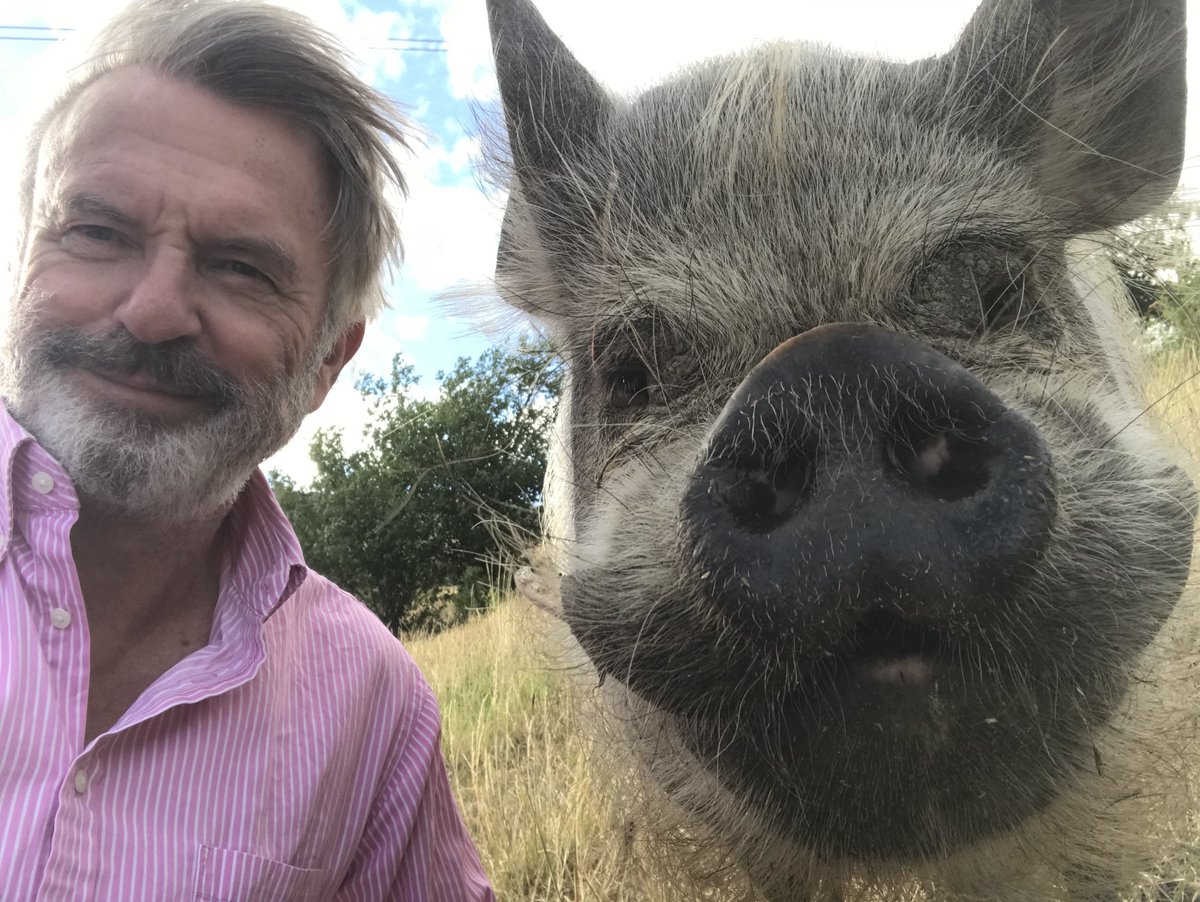
Sam Neill (2025): “It’s not a happy place, America, and I wasn’t happy there. I’m interested in the condition of America now. It beggars belief what’s happening there now. When you hear a slogan like Make America Great Again, it makes a sort of weird sense because America could be great again, but at community level. Not with sort of strange billionaires making weird decisions”
Tucker Carlson: “The promise of AI is the overwhelming majority of the population will suffer, will have their life’s work taken from them. A tiny number of people will get richer than anyone’s ever gotten and the physical environment will be completely degraded. It’ll be rendered ugly through data centers and dry through water use. Everything about the future that AI promises is worse for the overwhelming majority of the people, but it empowers and enriches a tiny percentage of the population. That’s so crazy that only a society that worships money could even live with that for one day without resorting to revolution”
MAD MAX BEYOND THUNDERDOME was released 41 years ago today.
George Miller nearly walked away from the film after his close friend Byron Kennedy was killed in a helicopter crash. He returned only after being convinced the film would honor Kennedy’s legacy.