Bonfire is a fractionalized real estate investment protocol being deployed on the @0xPolygon network.
See how we’re using blockchain to allow anyone to get exposed to real estate from the comfort of their own home 👇🧵
In 2009, the median home price was $220,900 and a new car cost an average of $23,276.
Had prices increased at the rate of the consumer-price index, the average house would cost $322,000 today and a car would cost $34,000.
Instead, the average house goes for $412,000 today, and a typical new car is $48,000.
If wages had kept up with this inflation, it would all be fine.
But because they haven’t, there are many people making six figures who aren’t building real wealth.
The only way to mitigate against long-term inflation is owning real assets like real estate.
But to do that, it often requires huge nest eggs.
@BonfireRWA is on a mission to change that.
We will soon be dropping our next asset and it is a doozy.
Direct message us if you aren't already on our mailing list and want to be updated when our next opportunity goes live.
**Understanding Cap Rates and Why Sensitivity Analysis is Critical in Commercial Real Estate**
Cap rates, or capitalization rates, are a fundamental metric in commercial real estate, providing insight into the expected rate of return on an investment using this formula:
Cap Rate (%) = Net Operating Income (NOI) ÷ Property Value
Cap rates represent the relationship between a property’s net income and its value, with higher cap rates indicating higher perceived risk and potential return.
For example, a Class A luxury apartment complex with stable tenants might have a cap rate of 4.5%, while a riskier Class C property could have a cap rate of 7%.
The difference reflects the market’s perception of risk.
**Why Sensitivity Analysis Matters**
One of the most crucial aspects of evaluating a real estate investment is understanding how sensitive it is to changes in cap rates, especially when forecasting returns.
Let’s consider a simplified example to illustrate this:
-Purchase Price: $20 million
-NOI: $1.05 million
-Entry Cap Rate: 5.25%
-Projected Sale Cap Rate: 5.25%
-Holding Period: 5 years
-NOI Growth: 3% annually
After 5 years, the property’s NOI increases to approximately $1.22 million.
If the market conditions remain stable and the property sells at the projected 5.25% cap rate, the property would sell for about $23.24 million.
**After accounting for cash flow and sale proceeds, the investment might generate a 15% Internal Rate of Return (IRR)**
Now, let’s see what happens if the exit cap rate increases by just 50 bps, from 5.25% to 5.75%—a seemingly small change but one with significant implications.
Impact of a 50 Basis Points (bps) Increase in Cap Rates:
-New Sale Price = $1.22 million ÷ 5.75% = $21.22 million
This $2 million reduction in the sale price drastically impacts the investment’s returns. Instead of achieving a 15% IRR, the investor might now face a much lower IRR, possibly below 5%.
**Conclusion**
This example highlights why sensitivity analysis is essential when evaluating commercial real estate investments.
A small change in cap rates can make or break a deal.
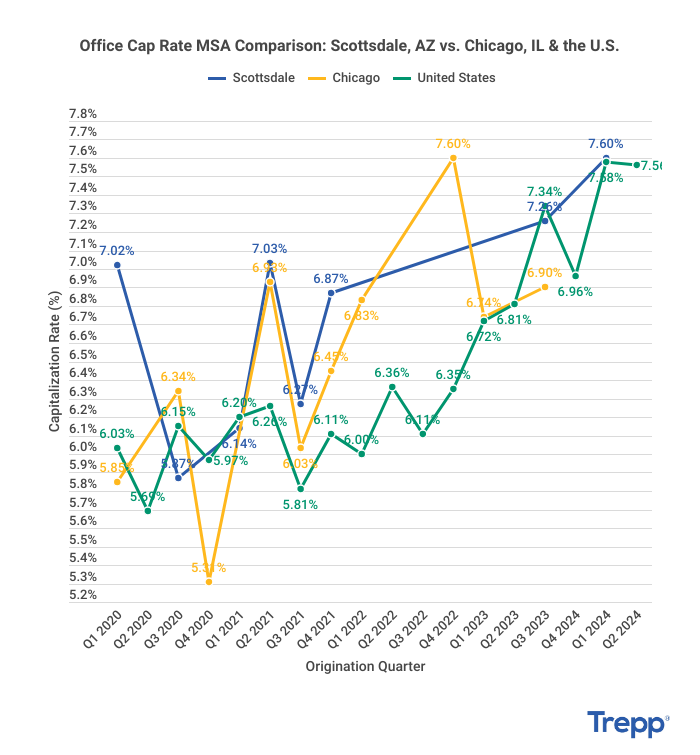
And cap rates can move (see the graphic below)!
It’s crucial to stress-test your assumptions, particularly the exit cap rate, to ensure that your investment can withstand market fluctuations.
Always ask your sponsor for a sensitivity analysis that models various cap rate scenarios, and pay close attention to historical cap rate trends for the specific asset class and market.
This practice will help protect your investment from unforeseen market changes and ensure a more resilient and profitable outcome.
Survive Until 2025: Are Apartments The Next Office?
In the ever-evolving landscape of real estate, the mantra "Survive until 25" has gained prominence among landlords grappling with challenging market conditions.
Here’s a snapshot of the key issues and considerations:
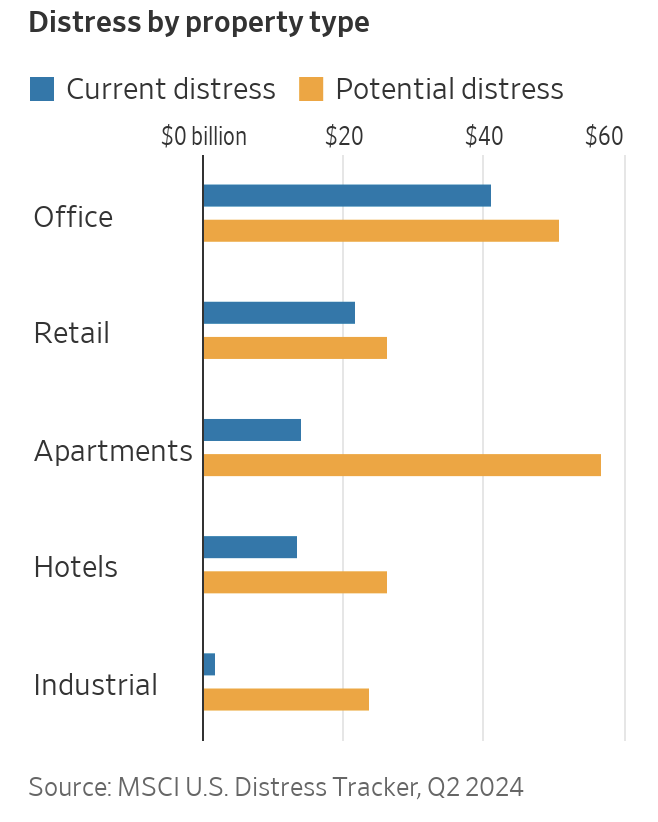
-Rising Distress in Loans: The distress in office loans is evident, with over $40 billion in trouble by Q2, tripling current distressed apartment loans. Yet, apartment mortgages face a potential risk pool of $56.9 billion, surpassing office loans at $50.9 billion.
-CRE CLO Concerns: Commercial Real Estate Collateralized Loan Obligations (CRE CLOs), particularly popular among pandemic-era apartment flippers, show a distress rate of 10.8% as of July. These floating-rate bridge loans, worth around $75 billion, carry higher risks due to their nature and the speculative investments they funded.
-Impact of Interest Rates: The significant rise in the secured overnight financing rate, which is typically used to price these floating-rate loans, has gone from 0.05% in 2021 to 5.33% today. This means interest-rate cuts alone may not suffice for debt relief. Many properties aren’t generating the anticipated net operating income, challenging the viability of these investments.
-Market Dynamics: Overly optimistic rent growth forecasts and soaring operating costs have strained apartment markets. With 440,000 new units set to be completed in 2024, oversupply will push vacancy rates up, keeping rents stagnant at best.
-Investor Implications: While lenders are showing flexibility with apartment loans, avoiding a rush of foreclosures, a recession could strain both landlords and consumers further.
While lenders remain more flexible with apartment loans in hopes of eventual rent increases, the reality is that deeply troubled loans are being kept afloat by those with the most to lose.
As consumer stress rises and a potential recession looms, apartment owners and investors must brace for significant challenges ahead, with the pain for apartments becoming increasingly evident.
But one person's challenge is another's opportunity...
@kylematthewsceo Not sure we would agree that real estate is in a fundamentally better place. Residential perhaps but not the $1.5T of commercial debt that is resetting in the next 36 months
What are the 3 rules that will protect you in real estate?
We'll give you a hint:
It’s NOT “location, location, location.”
Obviously location is important.
Think about the value of a city block in Manhattan compared to an acre in barren land in the Nevada desert.
But, even good assets in Manhattan can get foreclosed if it violates three other rules.
What are the rules?
1. Solid cash flow
2. Long-term debt (with positive leverage)
3. Sufficient reserves
It doesn’t matter if asset values decline by 50%. If you have all three, you will be fine.
But the distress we are seeing in commercial real estate right now is largely due to operators violating one (or more) of the above rules.
#retwit
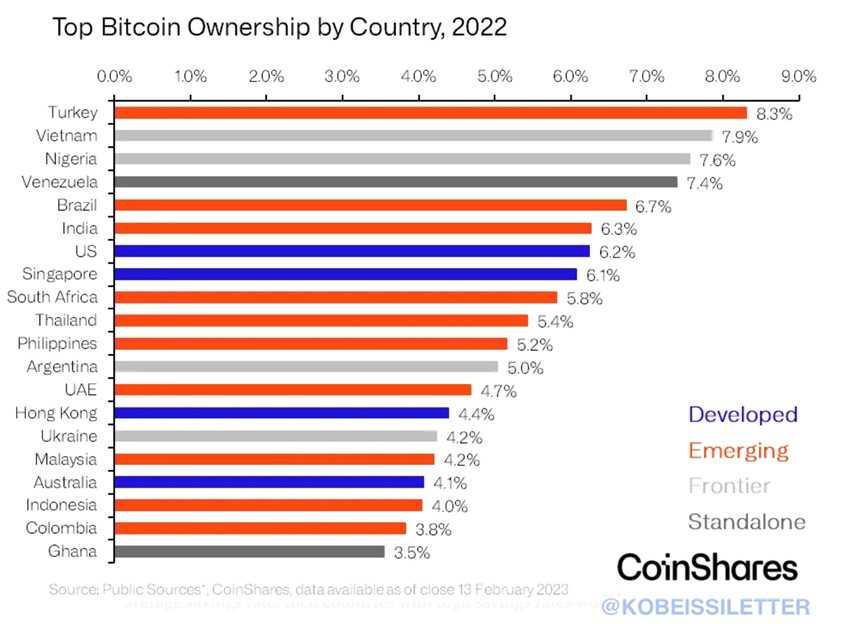
Emerging markets have seen massive increases in #Bitcoin📷 ownership.
Turkey has the largest global Bitcoin ownership share of 8.3% followed by Vietnam, Nigeria, and Venezuela. Interestingly, the United States takes 7th place in the world with a 6.2% share.
Estimated global Bitcoin adoption shows just ~3% of the population or 269 million users.
Once again, the national median income needed to buy a house has headed in the wrong direction – up. The median in April climbed to $116,000 –$5,900 more than was needed in April 2023. The price includes the cost of tax and insurance.
The median listing price rose from $424,900 in March 2024 to $430,000 in April, the same as in April 2023.
More than 1 out of 5 Americans are skipping meals to afford monthly housing costs and almost 16% delayed or skipped medical treatments.
This shouldn't happen in the "richest" country on earth.
6 rules commercial real estate pros follow to keep their investments safe:
1. Manage risks wisely
2. Vet company expertise
3. Seek third-party expert insights
4. Assess property age and history
5. Stick to your investment criteria
6. Research the area's economy and trends
Benefits of commercial real estate investing:
• High potential returns
• Portfolio diversification
• Hedge against inflation
• Passive income generation
Which is why commercial real estate investing is so valuable.
Private investment is on the rise in commercial real estate:
• Rise in acquisitions by private investors
• U.S office market is attracting flexible investors
• Focus on diverse assets including student housing, and data centres
Private investors are reshaping the CRE space
4 habits the best commercial real estate investors live by:
• Continuous education
• Strong network building
• Diligent market research
• Disciplined financial management
Building wealth is a daily choice.
The top 3 trends landlords and renters should watch out for in 2024:
1. Landlords ease hikes & face rising costs.
2. The rental market stabilizes with a minor rent drop.
3. Renters negotiate amid high costs which impacts homebuying plans.
Simplify your path to commercial real estate with syndication platforms:
• Understand the terms
• Choose a reputable platform
• Research properties carefully
• Start with a small investment
• Monitor your investment's performance
A simple path to your first CRE investment.
How to quickly vet your next commercial real estate investment:
• Review exit strategies
• Analyze market trends
• Assess property potential
• Consider the management team
• Understand the financial structure
Strategy is key to long-term success.
Understanding the key players in real estate syndication is key before investing.
Here's what you need to know:
• Investors allocate capital and receive returns
• Sponsors and operators develop the property
• Syndicators oversee the acquisition and ownership