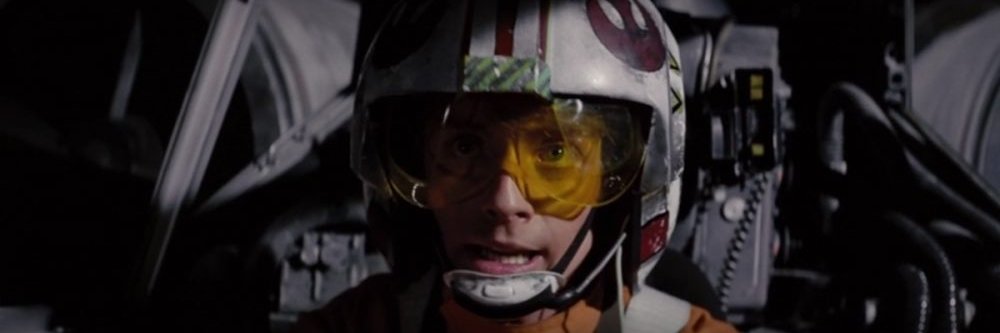
@PopBase Jean didn't blow up a planet in The Last Stand. She disintegrated Xavier at her childhood home and later a lot of people on Alcatraz. The planet thing is from the comics, Dark Phoenix ate a star and wiped out the D'Bari, about 5 billion of them.
@WSJ The Ti7 is only on sale in the UK right now, and the court turned down JLR's request to ban it there. So it's blocked in the EU where BYD hasn't started selling it yet, and still on sale in Land Rover's home market.
@FT The whole thing started with the tax accountant exam. The guy who came top admitted he photographed the questions with a hidden camera, sent them to an AI and read the answers off his phone. Four days later they were putting stickers over students' shirt buttons at the suneung.
@FilmUpdates It's been in cinemas there since 25 September. In Spain it goes to Movistar Plus, not Netflix, and they still haven't set a date. The only Spanish films that have ever made more in Spain are Ocho apellidos vascos and The Impossible.
The 2% inflation target that the Fed, the Bank of England and the European Central Bank all aim for today started with a New Zealand politician answering a question on TV in 1988.
New Zealand had lived with inflation of 10 to 15% for years. By early 1988 it had finally dropped to about 9%.
On 1 April 1988 the finance minister, Roger Douglas, was asked in a TV news interview if the government was happy with that. He said no. He wanted inflation down to around 0 to 1%.
His own officials were surprised. Nobody had agreed on a number.
But once he had said it on TV, the central bank had to work with it. The usual price index tends to read a little high, so the bank turned his figure into a range of 0 to 2%.
A law passed in 1989 said the target had to be written down, and it put the bank's governor, Don Brash, personally on the line for hitting it. Brash later said the minister told him: "We can't fire the Reserve Bank. We can't even fire the Reserve Bank board, but we sure as hell can fire you."
Canada and the UK brought in their own inflation targets within a few years. The US Fed made 2% official in 2012.
So one of the most important numbers in the world economy started as an answer in a TV interview. Do you think 2% is the right number, or did it just stick because New Zealand got there first?
@DiscussingFilm Ballad of Songbirds and Snakes opened to $44M in 2023, so this is nearly three times the last prequel. Having Haymitch as the lead probably did a lot of that.
@BBCWorld The US already had two drone wingmen flying last year, General Atomics yfq-42 and Anduril's yfq-44. Tempest isn't due in service till 2035 so that's a long time to be designing a cockpit for.
@DEADLINE This book keeps doing this. In 1998 Lionsgate dropped Mary Harron for Oliver Stone with DiCaprio as Bateman, then DiCaprio left to do The Beach and Harron got the job back.
Lionsgate went 11 years without a $100 million opening weekend. The last one was also a Hunger Games film, Mockingjay Part 2, in 2015.
Even Michael didn't get there this year. It went on to make over $1 billion worldwide, but it opened at $97 million in the US.
This weekend Sunrise on the Reaping did $120 million in the US and Canada, going by the studio's Sunday estimate.
Fourteen years after the first film, it is still the one series at that studio that opens this big. Are you going to see it in cinemas?
“Sunrise on the Reaping” caught fire at the domestic box office, collecting a sensational $120 million in its opening weekend while reinvigorating Lionsgate’s “Hunger Games” franchise.
Overseas, “Sunrise on the Reaping” generated $105 million, for a towering $225 million global launch.
https://t.co/RniT5tHt7d
The Shang-Chi bus fight took a whole year to make. The ending was made up on set in about a minute.
Destin Daniel Cretton put a bus fight in his first pitch to Marvel. He said later he never thought it would actually end up in the movie.
The fight team, led by people from Jackie Chan's stunt team, went through about 20 versions of the fight inside the bus. Covid shut the shoot down halfway, so they had to come back and finish it later.
In the planned ending, Shang-Chi trapped Razor Fist with his arms stuck out of a bus window. On the day, Cretton said he still didn't buy it. So the fight coordinator, Andy Cheng, came up with a new move right there, trapping him in the other half of the bus. That is the one in the film.
The stunt boss on the film, Brad Allan, died at 48 about four weeks before it came out. The film is dedicated to him.
Simu Liu is back as Shang-Chi in Avengers: Doomsday on 18 December. What is the best fight scene Marvel has ever done?
@PopBase Lionsgate said hundreds of actors went for Haymitch and they picked Joseph Zada, who was pretty much unknown outside Australia then. Good on him for posting the tape.
@mcguinnessfortx@paulg He was 30 by then, Sculley came in 1983 when Jobs was 28. Next is where he learned to run a company but the board never gave him a second chance either, Apple only got him back because it bought Next in 1996.
A school in Hangzhou tried almost the same thing in 2018, cameras scanning the class every 30 seconds and scoring how focused each kid looked. Students said they were too scared to zone out at all. Nanjing already stopped counting head-up rates this month after students pushed back.
@Rainmaker1973 Sjostrom made The Phantom Carriage and Bergman said he watched it once a year. He ended up casting him as the old professor in Wild Strawberries.
@ThermiteBanana@paulg Fair, he was only 30 when they pushed him out. Sculley did grow sales from under $1 bn to about $8 bn, it was the guys after him who nearly sank it.
A mathematician solved the most famous problem in maths this week, working with an AI. It had been open for 167 years and had a $1 million prize on it.
It is called the Riemann Hypothesis. In plain words, it says the prime numbers, the ones you can only divide by 1 and themselves, look random but actually follow a hidden order. Bernhard Riemann guessed this in 1859. Nobody could prove it.
On Friday Levent Alpöge, a mathematician who works at Anthropic, said he had proved it with the company's AI, Claude. He wrote that near the end, Claude "far outpaced me."
He did not put out a normal paper. He said a written version would be huge and unreadable, so he only released the proof as computer code that checks every step. It is 17 million lines long.
By Saturday dozens of people had run it on their own machines. The groups behind that checking software said they had full confidence it is correct.
The odd part is that Alpöge says he is sharing it before he has mastered the maths around it. He says he now wants to understand it properly and write it up.
So the proof has been checked by machines, but even the man who found it is still learning how it works. Does a proof count if no person can read it all yet?
If you bought Anthropic stock the minute it started trading on Thursday, you had lost about a fifth of your money by Friday's close.
It was the biggest IPO ever. Anthropic, the company behind the Claude AI, sold its shares at $83 each and raised more than $80 billion. That is more than SpaceX raised in June.
The first trade was at $111.50. Small investors traded about $772 million of the stock that day, the most for any stock market debut in data going back to 2012.
Then it slid. It closed Thursday at $97.17.
On Friday the whole AI trade sold off. Nvidia fell about 14%. Anthropic closed at $88.91, not far above the $83 it was sold at.
One research firm, Seaport, said on Thursday that the company was asking for "an incredible leap of faith by investors." Their advice was simple: "If Anthropic really is the greatest company ever, there will be time to buy later."
Would you have bought on day one?