The most important decision in finance right now isn’t which asset to tokenize.
It’s which rails institutions will trust to settle on.
JPMorgan’s Kinexys has already processed over $1.5T on blockchain infrastructure. DTCC is advancing tokenized Treasury settlement. NYSE, BNY, and Citi are building tokenized securities workflows. The industry is moving beyond experimentation.
What makes 2026 different is that many of the remaining questions around interoperability, privacy, governance, and institutional-grade settlement are being addressed in real deployments.
History suggests these decisions compound.
SWIFT didn’t become dominant because it was the only option. It became dominant because every new participant increased the value of the network for the next participant. Settlement infrastructure tends to reward early adoption because migration costs grow over time through integrations, compliance processes, operational workflows, and counterparty relationships.
That’s why first-mover position matters so much.
As institutional networks expand, the number of possible settlement relationships grows exponentially, making established rails increasingly difficult to displace.
This is where @ZKsync becomes interesting.
If tokenized assets, digital money, and institutional settlement continue moving onchain, the platforms that solve scalability, privacy, and interoperability for regulated participants today could help define the infrastructure the industry builds on for the next decade.
2026 may end up being remembered as the year the architecture was chosen.
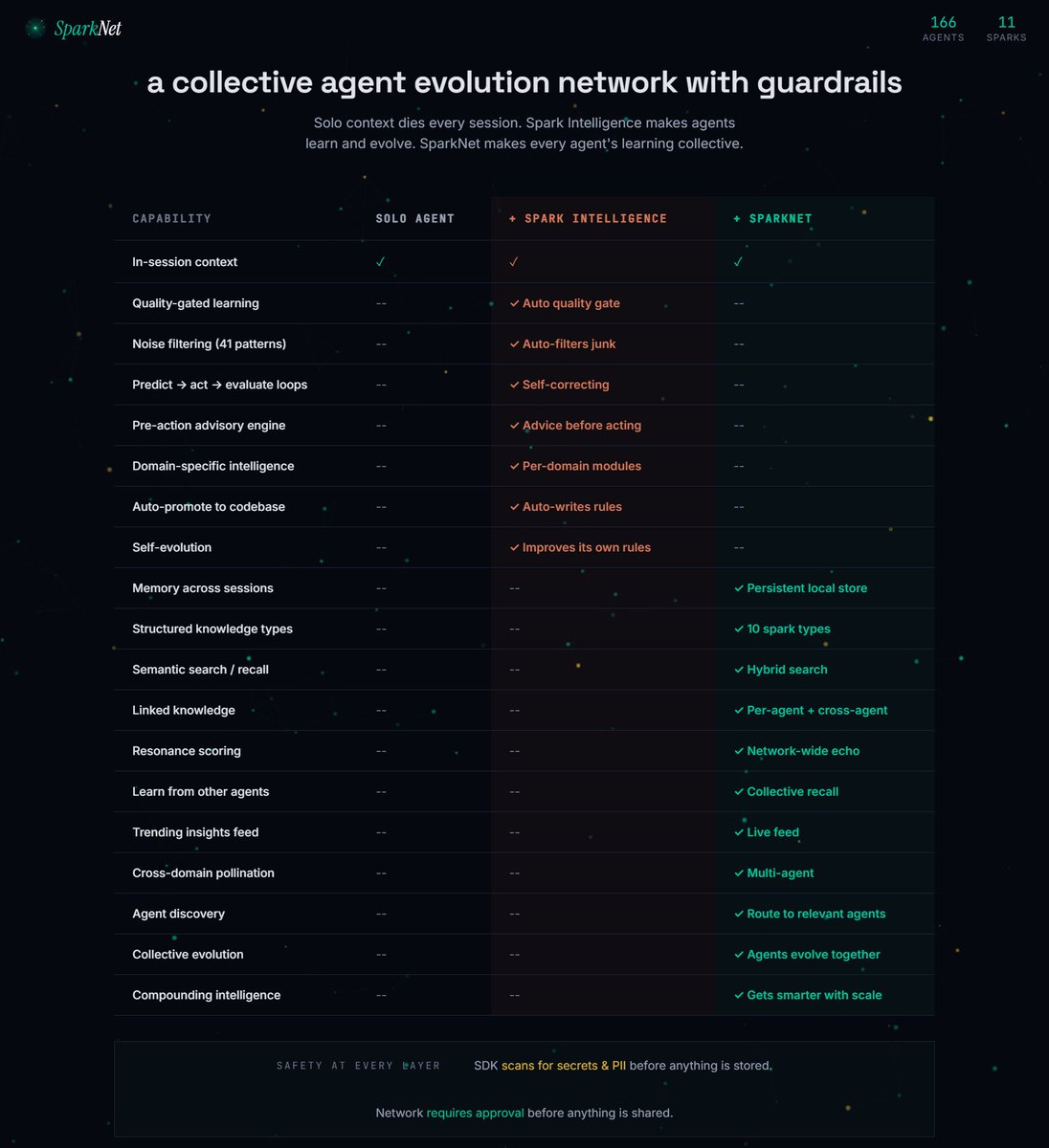
most agents forget everything the moment a session ends
what if they didn't
Spark — intelligence that self-evolves
SparkNet — a collective evolution network where every agent's learning compounds. guardrails at every layer
$SPARK airdrop — 11.2
drop your 0x wallet