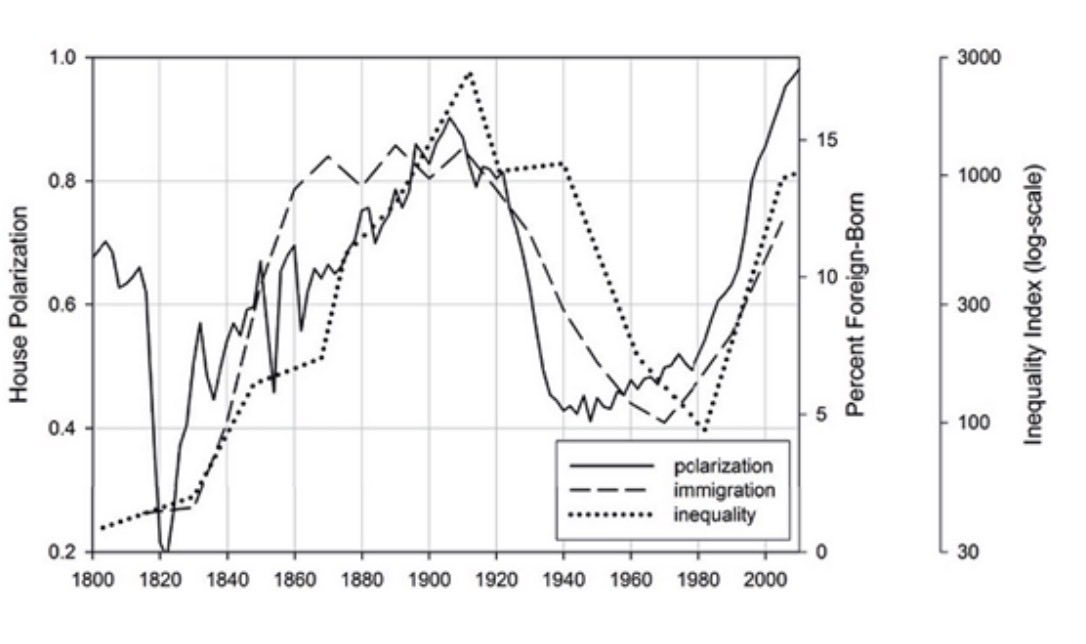
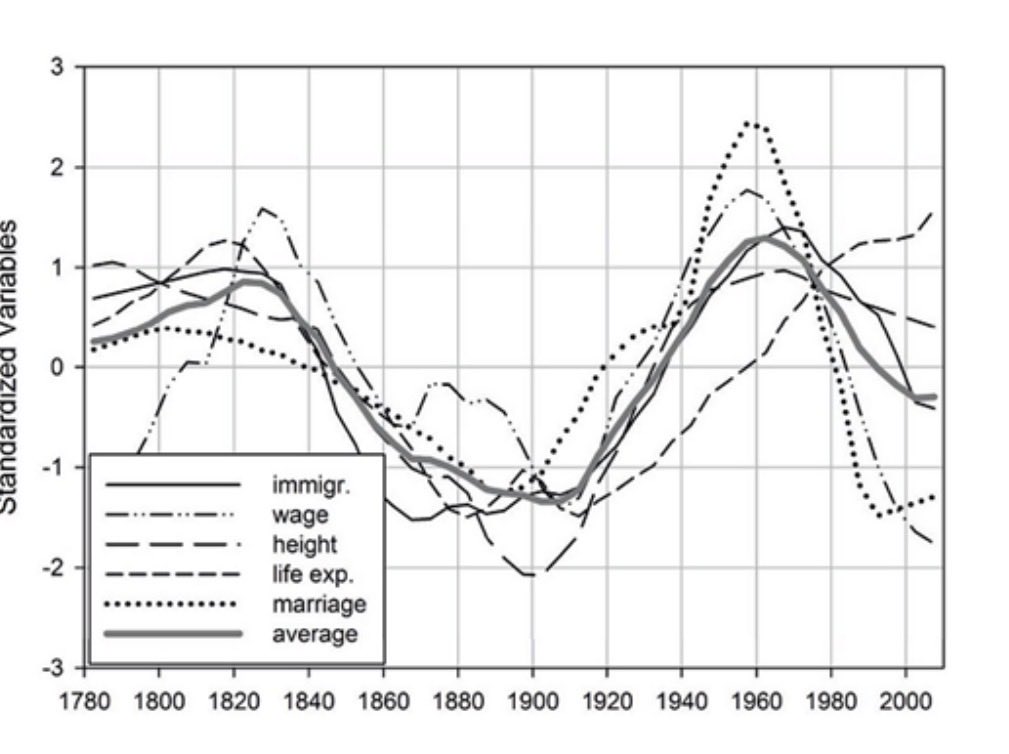
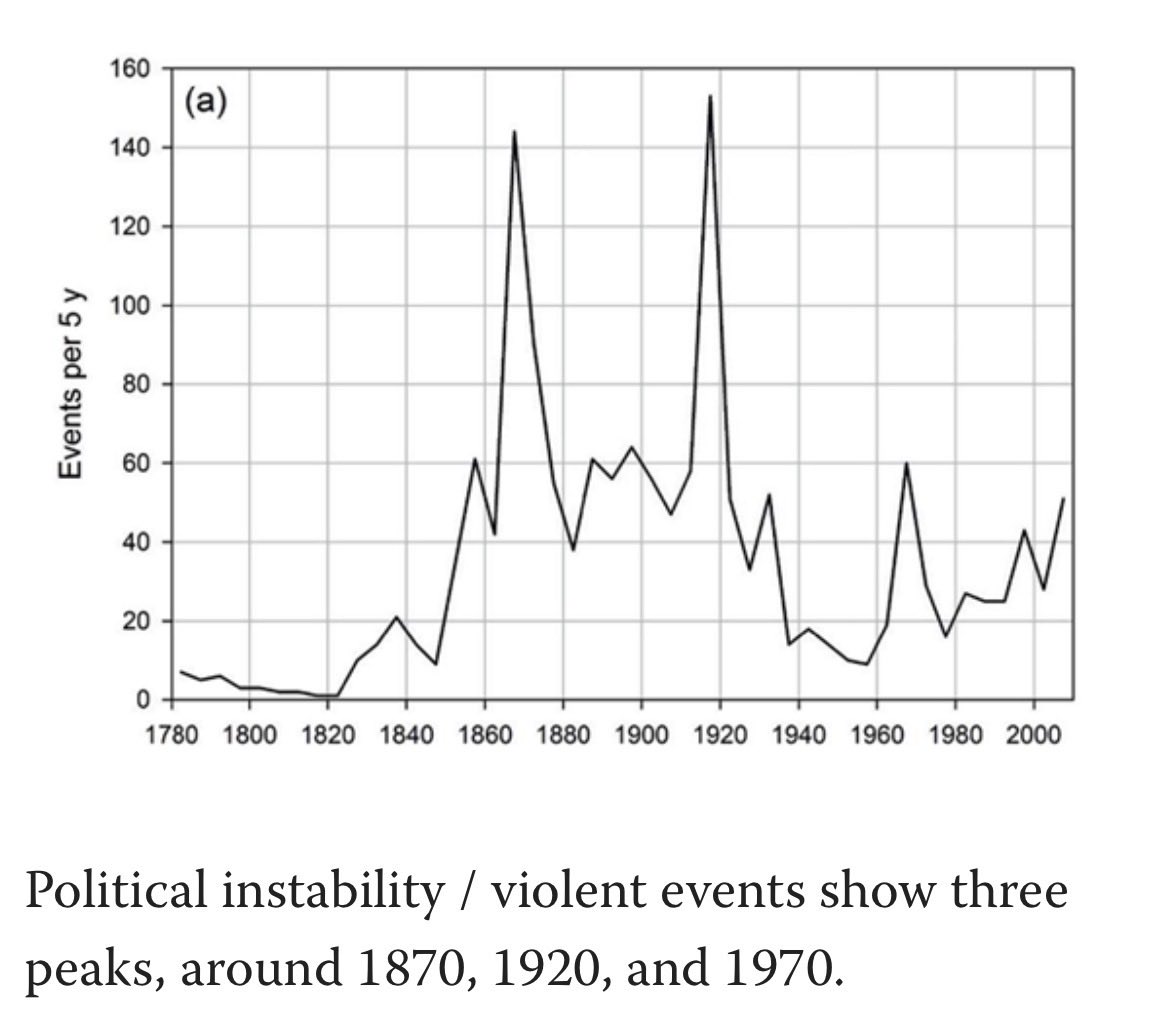
I think Peter Turchin’s data from Ages of Discord adds clarity. Pics posted here.
I think we’re still looking at different time ranges. I’m looking at the pre-Johnson-Reed surge of the late 1800s and early 1900s and the post Hart-Cellar surge of the 70s, and you’re looking at the come down that followed the post Hart-Cellar surge. So what happened during the 90s and into the present?
First off, a massive policy response. Incarceration spikes. Sentencing gets far more stringent. Second, a population shift. Birthrates plummet - a function of abortion and a looser labor market that makes having kids a more costly proposition. Note the follow on birth dearth of ‘08 and a follow up one in ‘20 (which are driving the current Higher Ed enrollment cliffs). We also have some pretty large demographic shifts; continued white flight out of cities, aging in the rust belt, and hyper sorting based on socioeconomics where the upper middle class income strata increasingly wall ourselves off from the rest.
Also I want to clarify Roth’s position. He doesn’t argue that immigration drives homicide, but that a fall off in trust and cohesion does. And Turchin’s argument is more indirect too. His is that when we supercharge the labor market, we overproduce elites who get richer from the labor arbitrage, and then surplus elites fragment, which drives discord. Putnam is the one who noted that diversity tends to drag cohesion. Collier and Borgias are the ones who note that the economic benefits of mass immigration primarily flow to the immigrants, and that the strain on the host country might not be worth the paltry aggregate economic benefits.
Personally, I probably benefit most from the current system and have way more in common with an Indian tech executive who lives half way around the world than a poor Black or white fellow citizen who might live a few miles away. And I’m even more likely to have day to day contact with the former than the later. But I feel like in the grand sweep of things and over a longer period, based of my read on history and some of the authors above, really restricting things for a few decades might be a good idea.
Thanks for sharing those!
Had a grandfather who was an aeronautical and electrical engineer who did ICBM guidance for Polaris/Poseidon, moved the family out to Anaheim, and spent time in NV and the Mojave range.
It was a good life. California used to have a big war economy. In Fortress California Lotchin argues that it was actually the cities and not the states that worked with the FedGov to “bulk up” on work like this (especially San Diego, LA, and SF), which led to the easy transition from a warfare state to a welfare state when New Deal order shifted to the neoliberal one.
As to Faustianism maybe Spengler was right. Ours is a culture of the nighttime wanderer; unlimited and death oriented at the same time.
@Empty_America Similar to Gandhi in South Africa. But weirder because the British Empire was defined and he was a London educated lawyer and absolutely a subject of it, whereas our “empire” is simultaneously claimed, fought for, denied, and rejected.
@feelsdesperate Agree, Nebraska is one of the best. Reading some stuff on NYC ahead of a family trip and he looms large in Love Goes to Buildings on Fire when he’s 23 in ‘73, cutting Greetings from Asbury Park. An interesting side of him I was never really aware of.
No need to apologize and I sympathize! People are dumb. It’s a given that we’ll get too personal, engage in ad hom, make points in the worst possible way and with a real lack of grace. Algorithmically filtered discourse on top of an attention economy that’s borderless and sprinkled with slop AI, bots, and sociopaths is going to add a lot of noise too.
The hazing is dumb.
Just finished it about a week ago, reading up on NYC before a family trip there and we’ll probably do an “immigrant experience day” or some such with a visit to the Tenement Museum, the Ellis Island museum, and meals at Katz’s and Veselka.
After reading “Beyond…” I moved onto Fear City by Fein and The Bronx is Burning and it’s wild how prescient Glazer and Moynihan were in ‘62, that there was some risk as the Irish stepped out politically and as the PR and Black demos grew that resources might become more directed towards social support and crime. And it happened! By ‘75 and the Lindsay to Abe Beam admins, city government had increased by 4x and they were out of money.
Back to “Beyond…” It really is an eye opener. And every chapter showcases something about the demo covered that was eye opening. And even though the Germans aren’t included, they had something I hadn’t thought about with regard to that group - that they were faster to assimilate and “melt” away because they came over Catholic and Protestant, high skilled and low. So unlike the Black, Puerto Rican, Jewish, Italian, and Irish covered in each chapter they washed out much faster.
It’s a really good book!
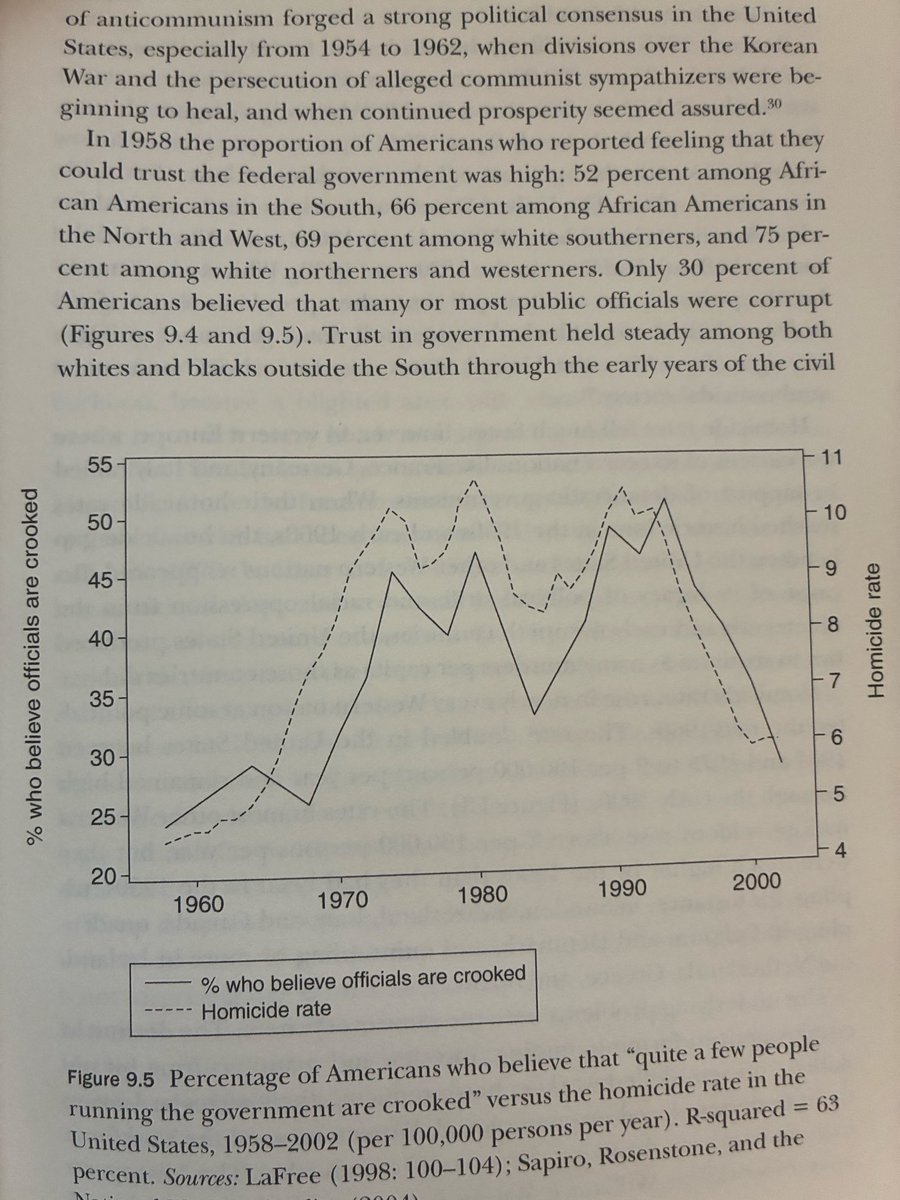
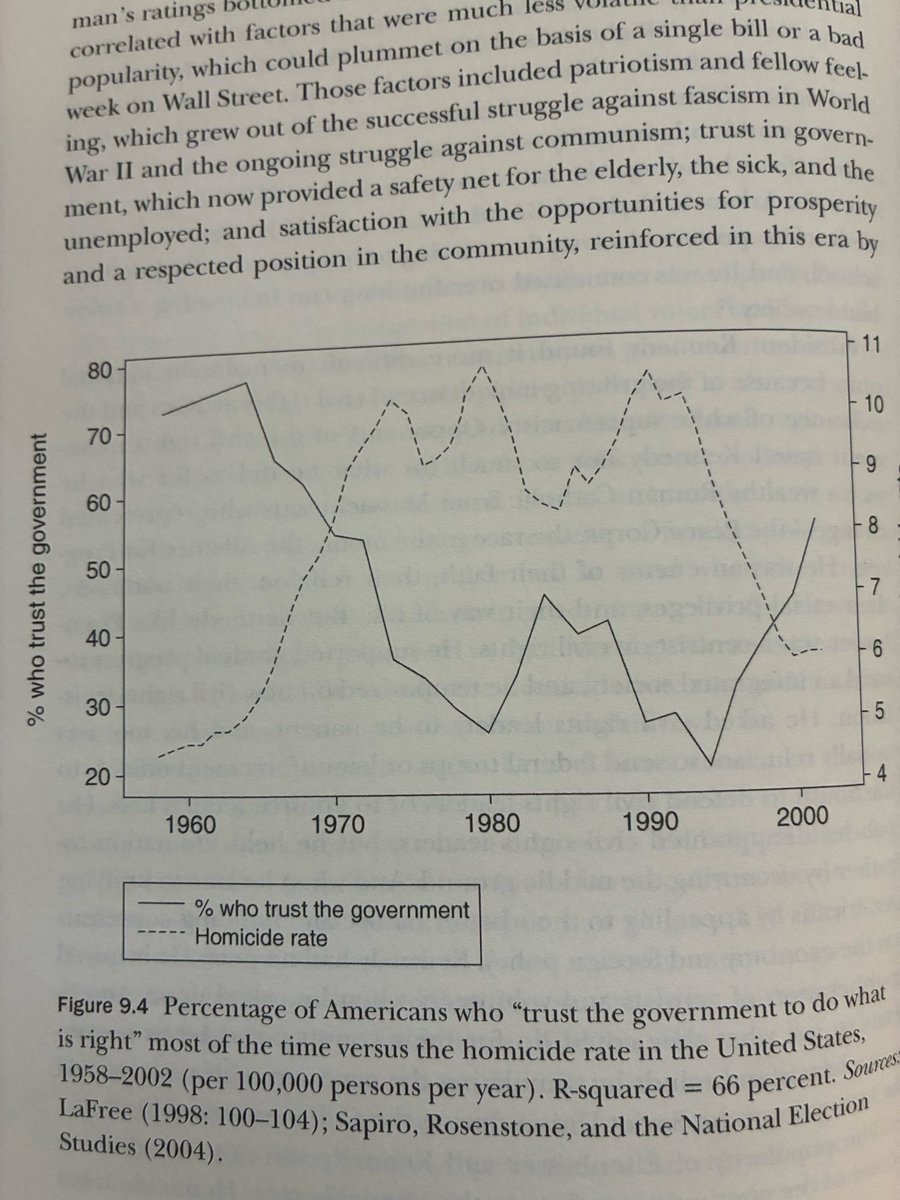
These graphs are from Randolph Roth’s “American Homicide” which is probably one of the more authoritative academic roll ups of long term homicide trends available. Homicide is a better measure than violent crime writ large because bodies are harder to hide than lesser crimes which can vary based on shifts in reporting, definitions, and measurement. The rate of ethnic diversity can also be a substandard measure for the same reason - measures and definitions and how we report such things can change over time, but generally speaking, yes - places with more diversity and less trust and fellow feeling are more violent. You can see this by comparing the United States to other developed and wealthy countries, and by comparing developing and multi-ethnic countries to more ethnically homogeneous ones.
The first pic from Roth shows the relationship between high homicide rates and periods of elevated immigration. Turchin, Collier, and Putnam have more data on high rates of immigration and declining social trust and cohesion, which I can also share pics of, but Roth notes the same relationship. When trust goes down, the homicide rate climbs. This is what the other two pics from Roth show.
But homicide as a function of low trust is only one of the costs of sustained, high volume immigration. We also have other measures like birth rate, upward cost pressure in urban areas, political polarization, acts of political violence, and wealth gap data that we can draw from to see that the costs of mass immigration are real.
Or if this isn’t your jam, you can look at history. The last time we had a global, sustained mass migration surge, the United States along with Australia, New Zealand, Canada, and South Africa put restrictions in place, just like most of the developed world is doing today. A good book on that era’s transnational wave and response is “Drawing the Global Color Line” by Reynolds and Lake.
Hope this helps. No offense to slop AI and loose framing, but the books are usually better.
@JmsOlvr@mattyglesias Snitches get stitches. And even if it wasn’t a joke it was still funny, so much so that I like this Principal even more now even if I don’t agree with him pushing scams (if this is what he was doing).
More to follow, maybe a part II, on Exotica and Tiki Culture, San Francisco, the hippies, Silicon Valley and the American Computer History Museum, and jazz (Third Stream and Progressive, West Coast and San Fransisco Cool variants), some John Adams sounds for Big Sur, and more. This is enough for now.
Here’s a California Midcentury Suburban themed book trip playlist.
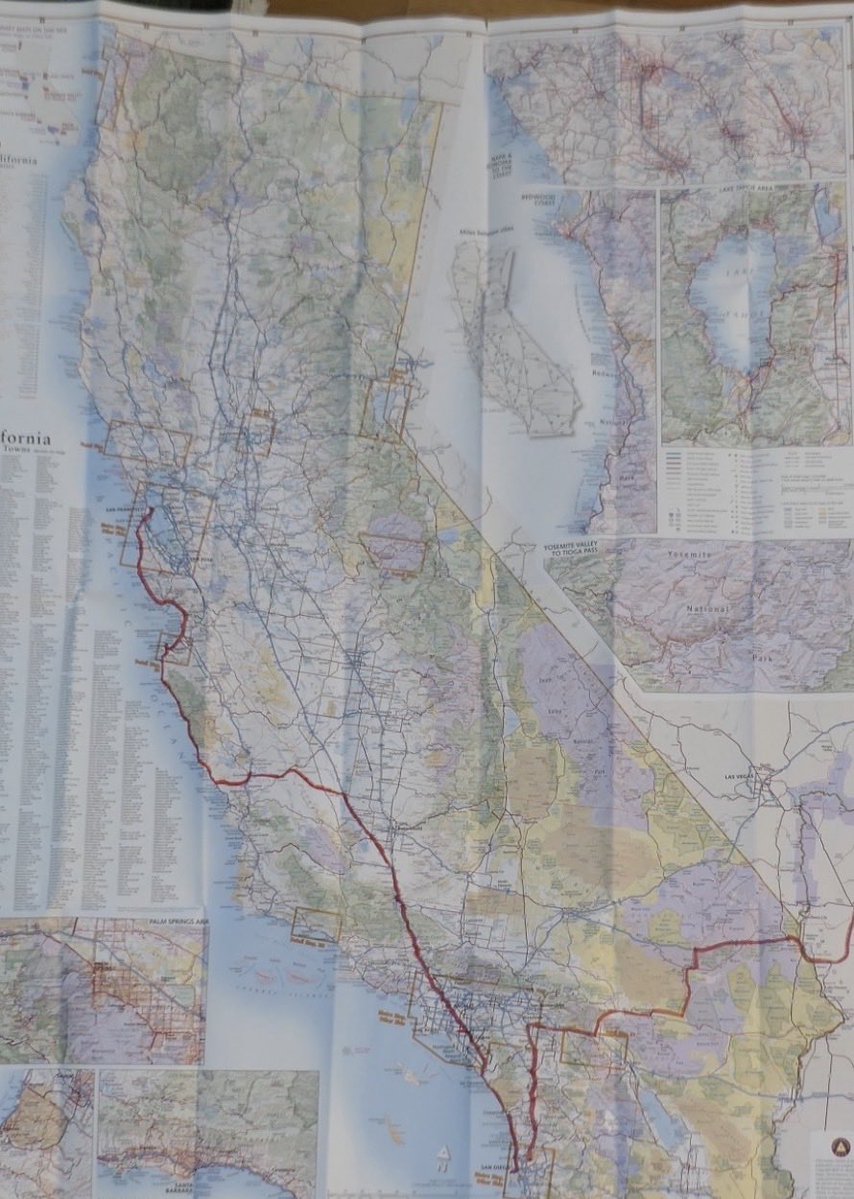
This 3D printed woodcut was purchased at the Joshua Tree farmer’s market. The route for this one comes in from the desert at the old Route 66 crossing near Kingman and ends in SF, with a side trip up into the San Joaquin valley towards Bakersfield to show the kids that CA is more than big cities and Big Sur. They eat a lot of fruit so seeing where a lot of it comes from was also important.
Moving north to Bakersfield, there’s no shortage of great “Bakersfield Country” lists out there that feature Buck Owen, Merle, and Dwight with some LA rock country crossover thrown in, but for this list I just want to call out Dwight Yoakam’s excellent all acoustic album which is titled “https://t.co/CoYAQVjKx3”
I guess it was the early days of the internet and a little ironic? It’s a good title.
https://t.co/B2km7Mb9h5