Palestine Books - Publisher of books on Palestinian art, culture, and history.
We publish books by the authors Nahida Halaby Gordon and Samia A. Halaby.
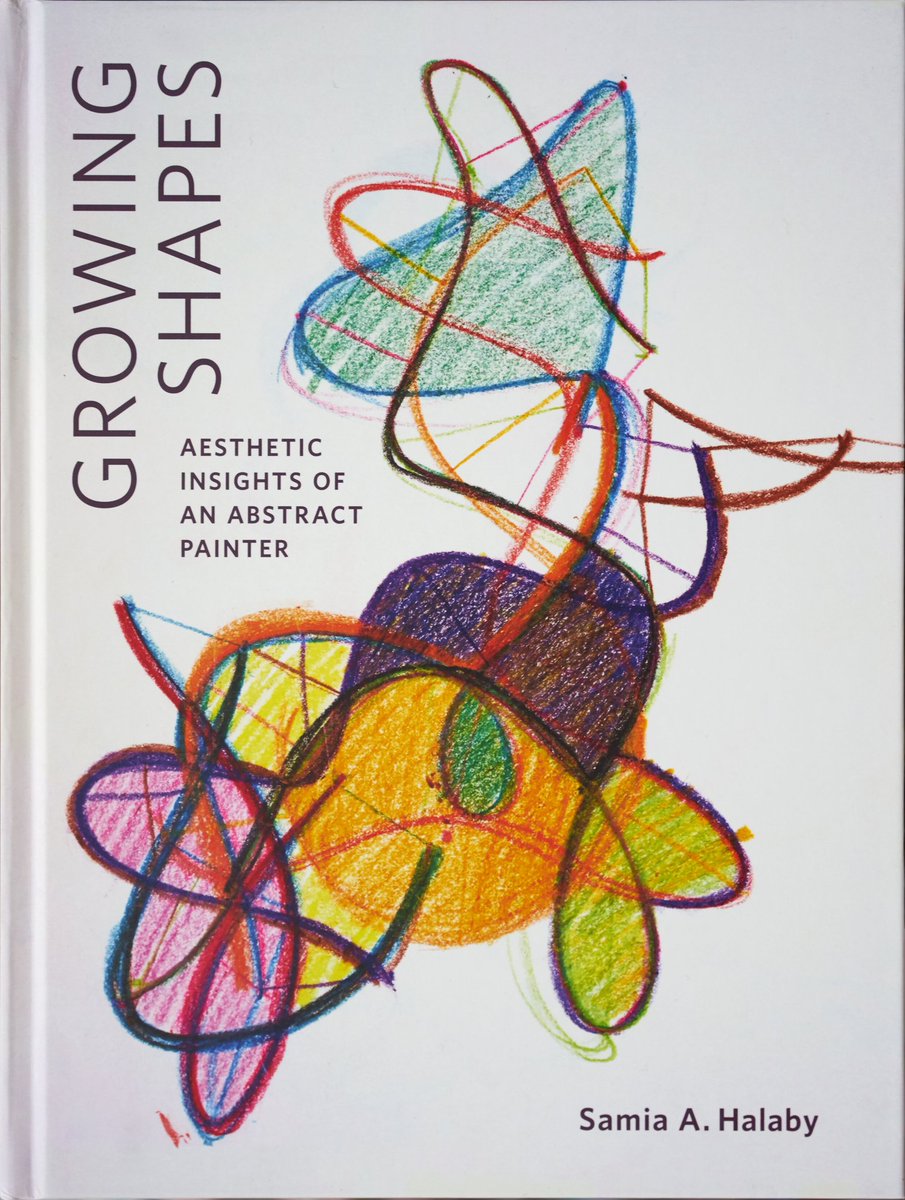
This book documents a narrow part of painter Samia Halaby’s insights resulting from the practice of actively seeing the world and painting it. It is an explanation of how shapes evolved in her paintings beginning in the early 1980s. These ideas were recorded in a little sketchbook, which started as a reply to a question posed by a friend of the artist. The a question was about shape not color and so it is that shape is the focus of this book even though one cannot really separate shape from color in painting as they cannot exist separately.
The 1956 Kafr Qasem massacre was carried out by the Israeli Border Police under cover of the tripartite attack on Egypt by England, France, and Israel. Two other massacres took place during the ensuing days in the cities of Rafah and Khan Younis, where 111 and 275 Palestinian civilians were slaughtered by Israeli troops on their way to Egypt, respectively. In Kafr Qasem, an artifice was created to provide a fig-leaf excuse for the killing of innocent people ― a curfew announced less than a half an hour before it was implemented. Workers returning home, tired and hungry, unaware of the curfew, were cold-bloodedly shot dead by members of the Israeli Border Police. Based on interviews with survivors, Samia Halaby created a set of documentary drawings on the subject. The emotions of anger and fear leap from every page of this book, enabling the reader to bear witness to the terrible suffering endured by the inhabitants of this small Palestinian village.
Art in Palestine is part of the liberation struggle. In her book Liberation Art of Palestine, Samia A. Halaby puts this art in context, explains its symbols, development and historical roots, and gives important insights into one of the conflicts shaking the world today. Material conditions sometimes made traditional art materials hard to find, so artists turned to using bits of exploded shell casings, leather and parts of houses destroyed by the Israeli army in their compositions. In spite of repression and attacks, Palestinian artists persisted. Halaby focuses her book on two broad movements of Palestinian art. One grew up in the liberation movement in Lebanon during the 1970s and the other drew its impulse from the first Intifada. She puts them in their Arab context, since the Palestinians are an Arab people, and shows their relation to the visual forms produced by Cubism, Futurism, Constructivism and the Mexican mural tradition, all of which reflect a revolutionary base. The use of certain symbols in Palestinian art--the cactus, the eye, the horse, the mother--is explained by Halaby in clear and illuminating detail. Full-color plates in the back of the book represent the work of many of the artists discussed, who are carefully put in their cultural and political context. As Halaby states, “The whole point of this book is to illustrate and explain that the true art of Palestine rests on the Palestinian struggle for liberation."
In spite of a brutal military occupation of their country, Palestinians have kept their identity as Palestinians and through perseverance have kept their culture vibrant and alive.
Palestine Is Our Home contains the memories of Palestinians who have suffered loss of home, community, and country at the hands of a people who themselves have suffered greatly.
The omnipresent rainbow spectrums, along with black and white, are intentional suggestions of race and LGBTQ+ human rights issues, as well as representing her commitment to social, racial, and economic justice.
Blocton uses authentic African designs to develop patterns that explore the contrast between geometric and curviliner forms, creating a perception of transparency by layering colors, all of which have social and political connotations.
Lula Mae Blocton is a Michigan-born African American abstract oil painter, who traces her heritage to a rural community near Selma, Alabama. Her fifty-year creative career has been to visualize her rich and complicated racial, cultural, and personal history.