Taki cytat
"Główną motywacją mojej aktywności publicznej była potrzeba władzy i żądza popularności. Ta druga była nawet silniejsza od pierwszej, bo chyba jestem bardziej próżny niż spragniony władzy."
2005 r. Donald Tusk
@PatrykSlowik@CDzwoni Pomyśleć, że to mógłbyć nasz prezydent, mógł podpisać DSA i teraz żaden Słowik czy inne zero nie mógłby ujadać ... i nic byśmy nie wiedzieli o szpitalach, sygnalistach, pieskach, kłamstwach i wykorzystywaniu stanowisk
Opatrzność jednak pilnuje Najjaśniejszej.
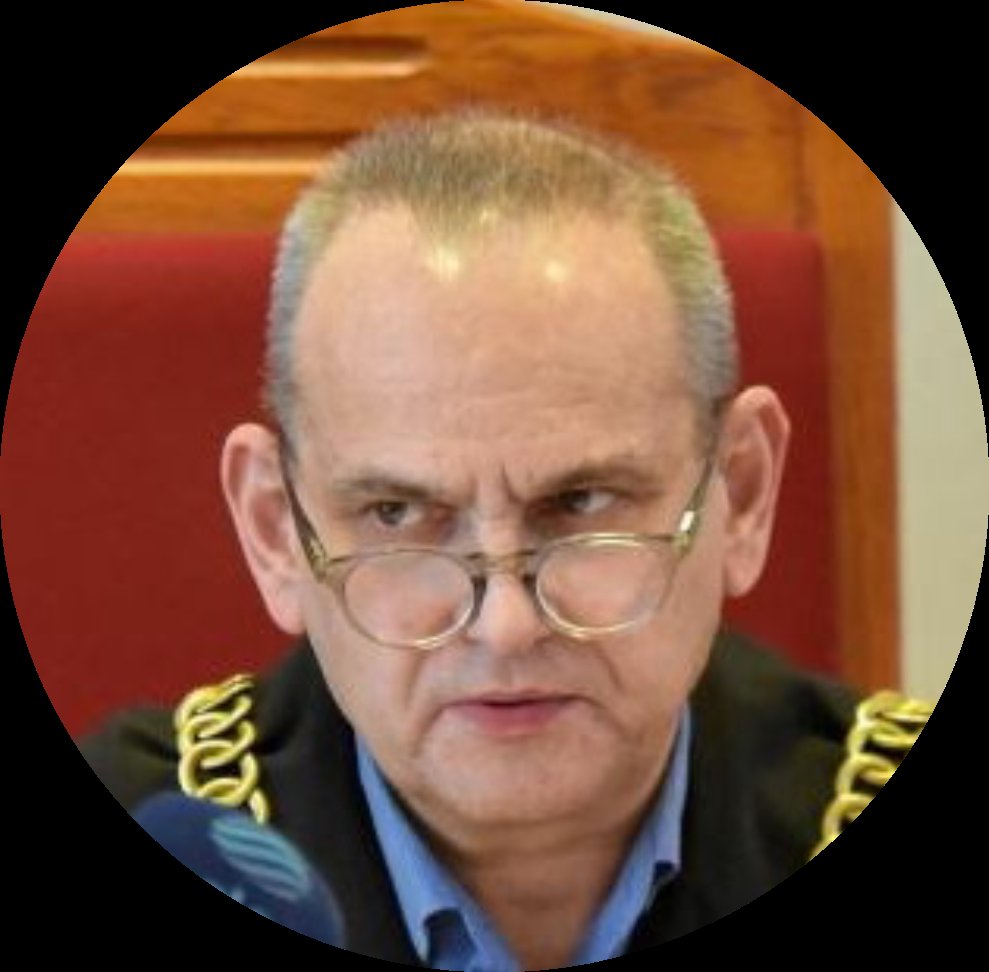
Dzień 120. przypominania o tym, że Paweł Kozanecki zabił dwie kobiety, a dzięki kuriozalnemu wyrokowi sędziego Karola Radaszkiewicza jedyną karą, jaką za to poniesie, będzie 1,5 roku pozbawienia wolności.
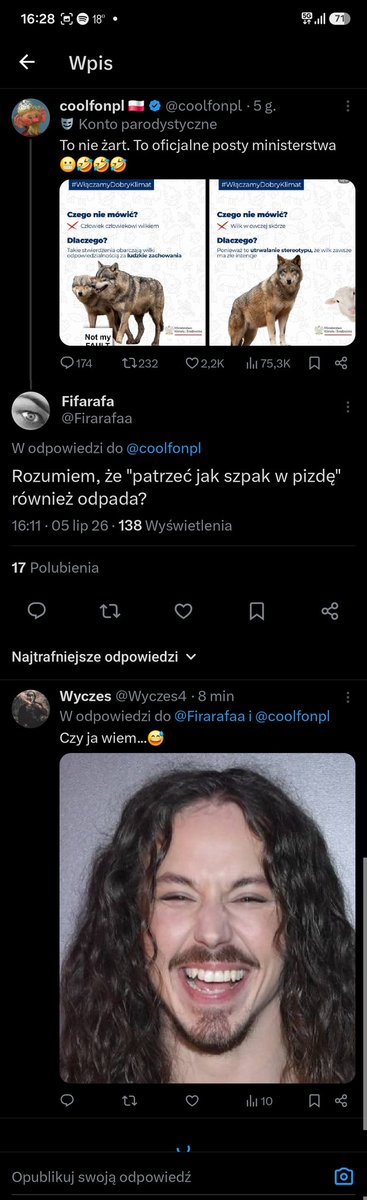
Walczą we mnie dwa wilki. Jeden brechta ze śmiechu jakimi bzdurami zajmuje się mój rząd a drugi jest wściekły na co idą moje podatki.
Jprd.
Screeny moje, to oficjalny profil ministerstwa.
Po konsultacji z premierem @donaldtusk zachowując odpowiedzialność wobec opinii publicznej, w zgodzie z przepisami prawa, zleciłem odtajnienie wszystkich donacji dla Ukrainy w latach 2022-2026.
Proces donacji sprzętu rozpoczął rząd @pisorgpl z ministrem @mblaszczak na czele.
O każdej donacji informowany jest prezydent – obecnie @NawrockiKn, poprzednio @AndrzejDuda.
Poleciłem także SKW zbadanie tego, kto intencjonalnie dążył do ujawnienia tajemnic państwowych. Działamy w warunkach wojny przy naszej granicy, każdorazowe działanie przeciw polskiej racji stanu naraża na szwank bezpieczeństwo Polek i Polaków - panie @blaszczak już raz Pan to zrobił. Za to będziemy rozliczać wszystkich, bez względu na imunitety.
We wszystkich swoich działaniach zawsze kieruje się interesem bezpieczeństwa Polek i Polaków 🇵🇱
Oni przyspieszają. W "kocie łapki" też nie można grać? Kur nam już nie zapieje, a jeż nocą nie zatupta. Czarne koty dostaną łątki a chatka baby jaki już nie będzie na kurzej łapce.
Raczej Zioberek sie z tego wyślizga. Pozwiedza świat, jakąś pustynię. USA wielki kraj a człowiek taki mały. Wybiorą go do kolejnej kadencji sejmu zdalnie, jak Giertycha. Wróci w ministerialny stolec i wam dojebie ... tak będzie.
Ziobro po prostu się przemieszcza. Tak jak Wańka, Słowik, Parasol, Wielki Bu
Taki tam klub globtroterski "Przemieszczacz".
Prędzej, czy później, przemieszczacze kończą swoją podróż za kratami.
„Jestem zaskoczony stopniem nastrojów antypolskich na Ukrainie.
Zajmuję się stosunkami dwustronnymi od 20 lat, ale nigdy wcześniej niczego podobnego nie widziałem. Zarówno w mediach, jak i sieciach społecznościowych widać wręcz falę nienawiści wobec Polski.”
– mówi @W_Kononczuk , dyrektor Ośrodka Studiów Wschodnich.
⬇️
https://t.co/T9fOKuQy3K
Poland's reward for saving Ukraine: AMNESIA.
The Ukrainians seem to have forgotten that without Polish pressure, the West — Scholz, Macron, Biden — would have let them down.
Remember Scholz's 5,000 helmets, Macron's endless phone calls to Putin? Remember Biden's slow, hedged, incremental reaction, weapons systems approved only after months of Ukrainian pleading and battlefield necessity?
Poland decisively changed all of this. It organized the reaction of the West when the West preferred to hesitate. The Poles were everywhere: opening their border to millions of refugees, turning Rzeszów into the logistical spine of Western military aid, pushing NATO to send tanks before Berlin would even discuss it, lobbying for fighter jets while others still calculated the risk of provoking Moscow. Poland did not calculate. It did everything it could.
And in return, once the job of mobilizing the West was done, Ukraine decided that Poland was a second-rate player after all, not a partner worth attention, not a power worth sharing common interests with.
It has always been only about Ukrainian interests, with Poland's own interests treated as an afterthought at best, an inconvenience at worst. German interests, French interests, American interests, however, were courted with real eagerness, real diplomatic tact, real willingness to compromise.
Poland got gratitude in press releases and friction everywhere it mattered: the grain corridor dispute, where Ukrainian exports flooded Polish markets and undercut Polish farmers, met not with negotiation but with Kyiv's indignation that Warsaw would dare protect its own producers. The truckers' blockades that followed were framed by Ukrainian officials as Polish betrayal, not as the predictable consequence of a neighbor absorbing the costs of war with no reciprocal accommodation. Zelensky himself, standing at the UN, could imply that certain unnamed neighbors were playing into Moscow's hands, a remark that landed in Warsaw exactly as intended.
Volhynia remains unaddressed. Seventy years of a massacre Poland has been extraordinarily patient in raising diplomatically, and still no Ukrainian government has been willing to treat it as the reckoning it deserves to be, because admitting Polish grievance has never seemed worth the political cost to Kyiv.
When Poland finally asks for something in return, it is treated as an unreasonable demand from a junior partner who should simply be grateful to have been allowed to help. Ukraine was sure Poland's only interest was that Ukraine would fight Russia, and that Poland, having no interests of its own worth honoring, had nothing to be owed in exchange.
Poland bled goodwill so Ukraine could bank it. That is the whole story, stripped of diplomatic phrasing. Every tank Warsaw sent before Berlin dared to. Every refugee absorbed without a single EU quota forcing the hand. Every border crossing turned into a supply artery running day and night while other capitals debated committees. Poland did not deliberate. Poland moved. And Ukraine watched, took the shipment, and kept its warmth for the countries that made it wait.
Ask what Volhynia has earned in seventy years of Polish patience. Silence, mostly. Diplomatic silence dressed up as tact, because admitting a massacre costs Kyiv nothing with Berlin and everything with its own nationalist mythology. Ask what the grain corridor earned Polish farmers. Ruin, and then indignation from Kyiv that Warsaw dared object to its own ruin. Ask what four years of unconditional logistics earned Poland at the table where decisions are actually made. A folding chair, pulled up after France and Germany had already taken the good seats.
There is a kind of contempt that only the rescued can show the rescuer, because gratitude implies debt, and no nation likes admitting it owes its survival to the neighbor it has spent a century looking down on. Poland was never the ally. Poland was the tool that worked, and tools do not get consulted, they get used and put back in the shed. Warsaw should remember that the next time Kyiv calls.
There is a geography to Ukraine's gratitude, and it runs backward. The farther a capital sits from the Russian border, the more indulgence it receives, the more its hesitations are forgiven, the more its eventual help is treated as a gift rather than an obligation. Washington can arrive late and still be thanked first. Paris can phone Moscow throughout the war and still be received as a statesman. But Warsaw, Vilnius, Riga, Tallinn, the nations that actually share a fence line with the Russian threat, that live with the same fear pressing on their own borders, are expected to help simply because they exist next door. Their assistance is not a choice to be honored. It is a natural feature of the terrain, like weather.
This is the logic Kyiv has never said aloud but has practiced consistently: if you fear Russia the way Ukraine fears Russia, if the threat sitting on your border is the same threat sitting on Ukraine's, then your help was never really a gift, it was self-interest wearing the costume of solidarity, and self-interest does not require gratitude. Only the distant, the safe, the countries who could have stayed comfortably uninvolved and chose otherwise, only they get treated as benefactors. Poland's proximity to Russia, the very thing that should have made its solidarity more credible, more urgent, more deserving of trust, became instead the reason that solidarity was assumed rather than earned. Nobody thanks the neighbor for putting out a fire that could have reached his own house next.
And so the arrangement settles into something almost administrative. Poland's help gets taken, filed, consumed, and the relationship moves on without adjustment, without priority, without a single Ukrainian concession ever weighed against it. Ask for movement on Volhynia, and the answer is silence. Ask for consideration on the grain corridor, and the answer is indignation. Ask, simply, to be treated as a partner whose interests matter as much as Berlin's or Washington's, and the answer is a folding chair. Fear of Russia, it turns out, is not a currency Kyiv values in its neighbors. It is simply the price of admission, paid in advance, and never redeemed.
There is a word for a relationship where proximity to power obligates assistance but confers no standing, where the neighbor's role is fixed in advance and cannot be renegotiated no matter what is given. That word is not alliance. It is empire, and empires have always organized their peripheries this way.
This is, surprisingly and paradoxically, the shape of what Ukraine has constructed with Poland, whether or not Kyiv would ever use the word for it. Poland's tanks, Poland's border, Poland's logistics, Poland's political capital spent in Berlin and Brussels, none of it was received as the discretionary act of a sovereign equal choosing to stand with a friend. It was received as tribute, the expected offering of a smaller neighbor to the cause that mattered more, collected without negotiation and without the courtesy of treating the giver as someone whose own demands might now be owed a hearing in return. Tribute does not buy influence. That is precisely what distinguishes it from investment, from partnership, from any relationship between equals.
What makes this arrangement particularly bitter is that Ukraine is not even the empire in the classical sense, it is itself the smaller power fighting for survival against one. And yet it has absorbed, perhaps unconsciously, the exact reflex of empire toward its own periphery: the assumption that those closest to the danger owe the most and are owed the least, that proximity is a debt rather than a claim, that the neighbor who cannot afford to look away has therefore already committed to helping regardless of how he is treated.
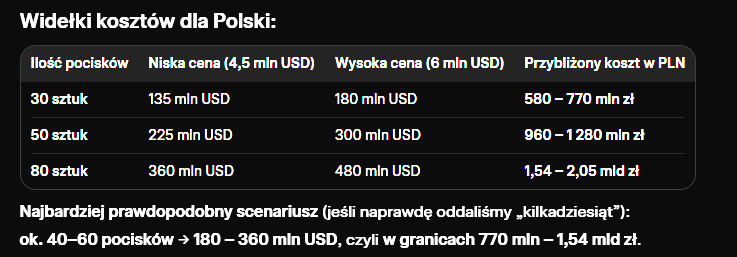
Dziś przeczytałem, że Polska już dała jakiś czas temu Ukrainie kilkadziesiąt swoich PAC-3MSE. Dziękujemy władzom Kijowa, że je łaskawie przyjęły, bo byśmy tego nie przeboleli, gdyby stwierdziły, że nie potrzebują tak jak Migów-29. Jestem przeciwny dalszemu osłabianiu naszej wciąż ułomnej obrony powietrznej. Nawe za kasę. Z tego co wiemy, mamy do SPRZEDANIA jeszcze OSY z genialnymi pociskami ziemia-podwoda-powietrze. Taki pocisk wystrzelony z plaży może trafić okręt podwodny, a następnie wylecieć w powietrze i zestrzelić samolot. Oczywiście musi być dobry barter - technologia za technologię.