The latest Beige Book indicates economic activity has grown slightly, but outlooks remain mixed as gas prices strain household budgets. Read more: https://t.co/B9hliG4IAJ
How does geopolitical risk affect U.S. bank valuations, and which kinds of institutions are most vulnerable? A new study examines how geopolitical risk is priced into bank stock valuations, depending on a variety of factors: https://t.co/0w0oEKlnO9
Could stablecoins and tokenized products reshape the U.S. financial system? This question and more were explored at the Third Conference on Stablecoins and Tokenization, organized by the Boston Fed and @NewYorkFed. Read more: https://t.co/h65BibEO2X
When countries practice geoeconomics, they use their economic might to win concessions from other nations. But this type of coercion could also have critical impacts on global trade. Learn more on our latest podcast episode: https://t.co/yz1cQRMzks
New podcast episode: Countries are more connected than ever through commerce, but this also means far-away economic shocks can now have a much greater impact on the U.S. What might that mean for the future of global trade? Listen here: https://t.co/zrf3CuQwE3
Since 2000, the gap between the 30-year fixed mortgage rate and the yield on a 10-year U.S. Treasury note has ranged from 100 – 300 basis points. Beyond the well-known factors, what's really driving this gap? A new Boston Fed study explains: https://t.co/3qEAWsSg1i
The Boston Fed and @NewYorkFed will co-host the third Conference on Stablecoins and Tokenization on May 22. Presenters will discuss the potential impacts of stablecoins on the broader financial system and more. Register to attend virtually: https://t.co/iWcUFlIDcn
Boston Fed President Susan M. Collins traveled to Rhode Island last week to hear directly from business and community leaders about housing, workforce challenges, higher education, economic conditions, and more across the Ocean State. Read more: https://t.co/Rm0DyL8RRS
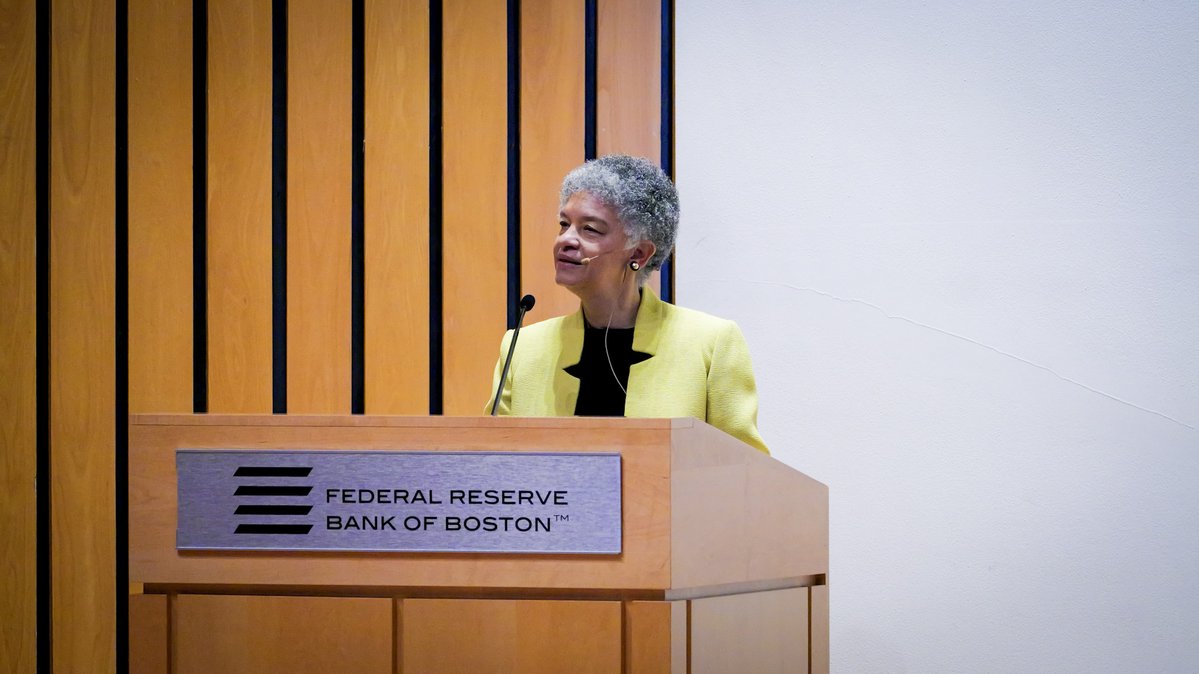
Boston Fed President Susan M. Collins shared her thoughts on the economy and monetary policy with the Boston Economic Club today. She emphasized challenges to price stability amid ongoing risks, uncertainty, and supply-side shocks: https://t.co/3MZJxKrUFF
Boston Fed President & CEO Susan M. Collins shares her views on monetary policy and the economic impacts of the conflict in the Middle East with @business' @Eloisa_mdeo on The Big Take podcast: https://t.co/aeNx6Hs214
The latest Beige Book reveals that overall economic activity has slightly declined in New England, with sharp increases in energy prices linked to the conflict in the Middle East. Read more: https://t.co/S4aUNdkNeu
In the last decade, more than 30 colleges in New England that offered four-year degrees have closed or merged. A recent “Boston Fed in Focus” article looks at how these closures are affecting the region, famed for higher education: https://t.co/1IkAJROuSb
In the latest episode of our Six Hundred Atlantic podcast, FedNow’s Nick Stanescu discusses the FedNow Service’s role in the payments space and how the Fed is working to enable cross-border instant payments from the U.S. to other countries: https://t.co/vy2LdCef6s
Watch live today, 4/14 @ 12:45 p.m.: Governor Barr gives opening remarks and moderates a fireside chat with Federal Reserve Bank presidents Tom Barkin, Susan Collins, and Anna Paulson at “Strengthening America's Economy through Rural Investment: A Working Forum”
https://t.co/s9Xis2gcn7
https://t.co/F0g41i7VRz
For more information: https://t.co/OOP2cjqhXs
Private funds: bank competitors, or big borrowers?
A 2025 Boston Fed study found that large bank lending to private equity and private credit funds rose from about $10 billion in 2013 to $300 billion in 2023 – nearly 30x larger. Learn more: https://t.co/LLARlGPtd1
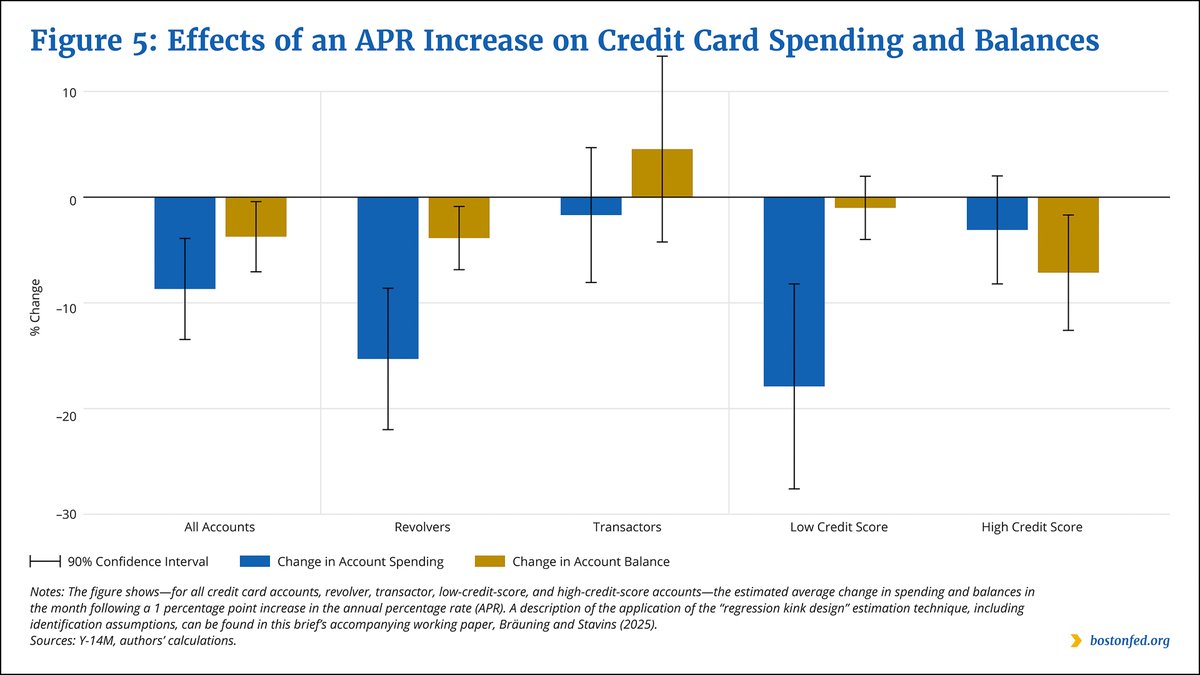
A new study by Boston Fed economists finds that on average, a 1 percentage point increase in APR leads to an 8.7% drop in credit card spending the following month. But the impact varies based on a user’s financial position: https://t.co/axMtoo47mm
“Is college worth it?” Boston Fed research indicates it is, but there’s nuance. Senior economist Pinghui Wu discusses the college premium – the higher wages earned by workers with college degrees – and what makes that premium increase or decrease: https://t.co/JgvWYNFS3o
How has the last dairy farm in Deerfield, Mass., survived for more than 100 years? Owner Peter Melnik said innovation is critical. Boston Fed President Susan M. Collins spoke with him and other farmers during a visit to western Mass. Read more: https://t.co/5jPK7wLL5E