Community Organizer Submariner Emeritus Personal Protection Specialist.
My Tweets do not represent my employers past, future or present. RT ≠ Endorsement
Most people know the Army stormed Normandy. The Navy bombarded the shore. The Air Force owned the sky.
Nobody thinks about the Coast Guard.
They should.
The United States Coast Guard is not a combat force. Their entire purpose, the reason they exist, is to save people from the sea. They are trained to swim into storms, to pull drowning sailors from sinking ships, to run toward disaster when everyone else is running away.
On June 6, 1944, the Germans gave them more drowning men than they had ever seen in their lives.
The Coast Guard brought 800 men to Normandy. Five major assault transports were USCG-crewed. Eleven tank landing ships. Twenty-four troop carriers running soldiers directly onto Omaha and Utah Beaches. The USS Bayfield served as the command ship for the entire Utah Beach sector, the nerve center through which an entire army was directed ashore. The USS Samuel Chase led the assault group landing the 1st Infantry Division, the Big Red One, onto the eastern flank of Omaha.
But the thing almost nobody knows about is Rescue Flotilla One.
60 small Coast Guard cutters, nicknamed Matchbox ships because of how easily they burned, were assigned a single mission: pull men out of the water. As the landing craft were torn apart by German fire, as soldiers drowned in the surf under the weight of their own equipment, as wounded men on the beach were swallowed by the incoming tide, Rescue Flotilla One was already moving.
Their swimmers jumped into the Channel. Tethered to their boats by lines, they swam toward the men going under, grabbed them, and dragged them back. They did this 2,000 yards from shore. Under active German machine gun fire. Under mortar fire. Under artillery.
Again and again, all day long.
Two miles offshore a lookout spotted men from a sunken British landing craft floating in the Channel. One cutter went to them and pulled 24 soldiers and four Royal Navy sailors from the water before they went under.
One Coast Guard LCI was hit 25 times by German fire and kept going. Coxswain Delba Nivens kept driving his craft toward the beach after a grenade caught fire aboard his boat.
By the end of June 6, Rescue Flotilla One had pulled 400 men out of the sea.
400 men who would have drowned. 400 men who went home. 400 men whose families exist today because a Coast Guardsman jumped into the English Channel under machine gun fire and refused to let go.
Out of 800 Coast Guardsmen at Normandy, 15 were killed.
Every branch that fought on D-Day deserves its place in history. But the men who spent that day swimming between the dead to find the living, tethered to a burning ship with the whole weight of the German army trying to kill them, did something that has no good word for it.
They saved people. That's what they were built for.
On the worst day in the history of the sea, they were exactly who they were supposed to be.
Ray Lambert had already been shot twice and blown up once before he ever set foot on Omaha Beach.
He had survived the invasion of North Africa in 1943. Then Sicily. Each time he had been wounded. Each time he had gone back. By June 6th, 1944, the 23-year-old Staff Sergeant and head medic of the 16th Infantry Regiment's 2nd Battalion was on his third invasion in two years. He had already won a Silver Star for running through German lines in North Africa to drag wounded men out.
He was not supposed to survive a third one.
Lambert landed in the first wave at Omaha Beach. Of the 31 men in his landing craft, only 7 survived the day. The other 24 were killed before they even reached the sand.
He started working immediately.
The first bullet hit his right arm and shattered the bone. He kept going. A second round tore through his right elbow as he was pulling a wounded soldier through the surf. He kept going. Something hit his leg and opened it down to the bone. He put a tourniquet on himself, injected himself with morphine from his own kit, and kept going.
He found a slab of concrete on the beach that offered a few inches of cover. He set up a treatment zone behind it, dragging men out of the water and working on them one by one under constant fire. That piece of concrete is still there today. People who visit Omaha Beach call it Ray's Rock.
Then a loose landing craft ramp swung loose in the surf and slammed into him. It broke his back.
He kept going.
Lambert lost count of how many men he treated. The official record credits him with saving at least 15 lives that morning. Other accounts say closer to two dozen. He worked until his body physically stopped, collapsing unconscious at the edge of the surf, bleeding from multiple wounds, his back broken, still in the water.
A doctor spotted him. A landing craft pulled him out.
Here is the part that does not feel real.
Lambert's brother, Euel, had also been wounded at Normandy that day. The two brothers were loaded onto the same evacuation landing craft. They were placed in the same wheeled ambulance. They were taken to the same tent hospital in England. They were brought into the same operating room at the same time.
Lambert spent almost a full year recovering before he could walk properly again.
He went home. He lived quietly for decades, rarely talking about what happened. In 2019, at the age of 98, he went back to Normandy and stood on the beach again. He published a memoir called Every Man a Hero. It became a New York Times bestseller.
In 2021, Ray Lambert died peacefully at home. He was 100 years old.
He had three invasions, four serious wounds, a broken back, a Silver Star, multiple Bronze Stars, multiple Purple Hearts, and two dozen men who came home because he refused to stop moving on the worst morning in American military history.
Today is June 6th.
Remember him.
I’m going to say this as calmly as possible:
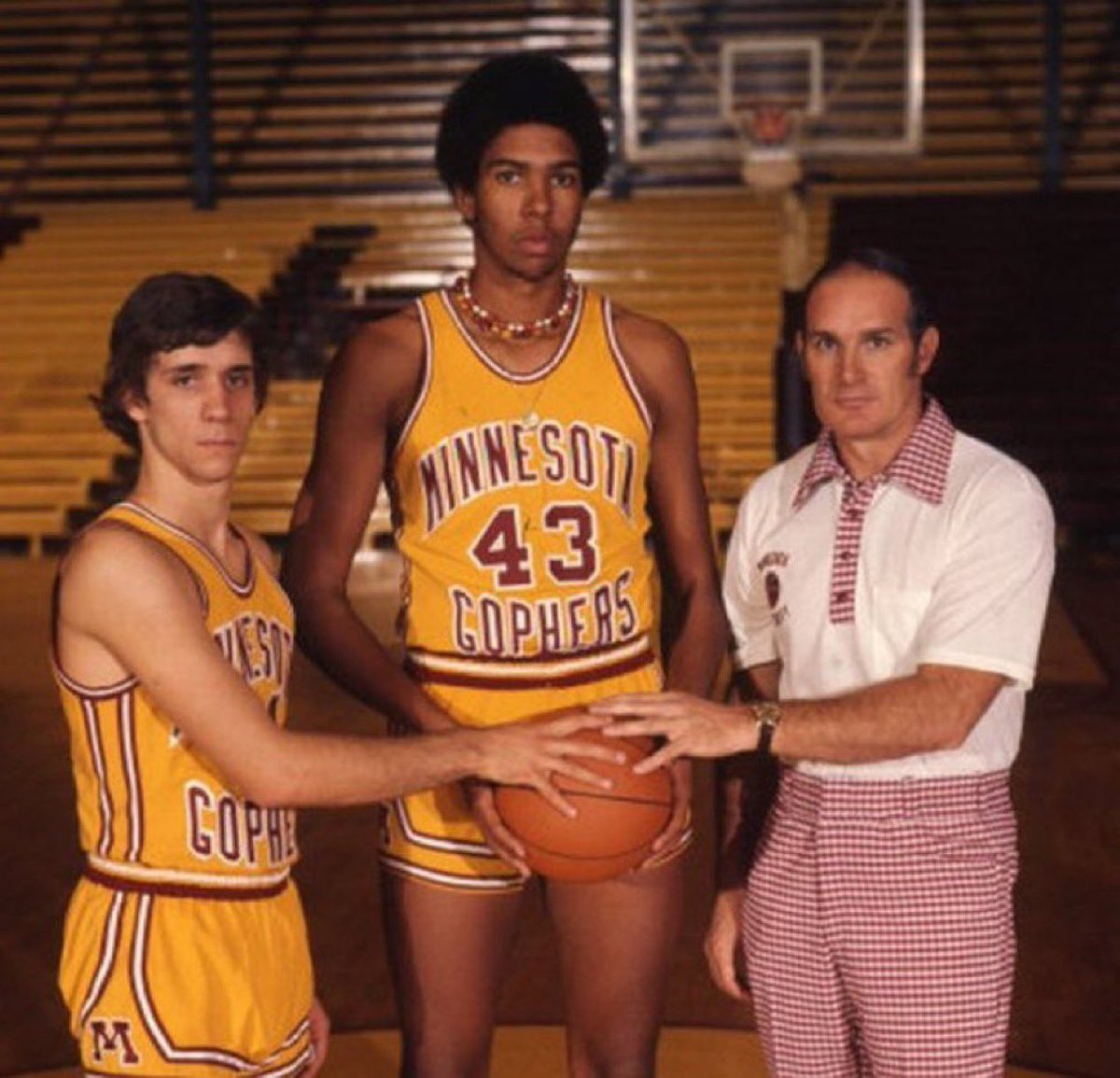
Watching Caitlin Clark in the WNBA has become genuinely hard to stomach.
Not because she struggles sometimes. Not because she makes mistakes. Not because she gets criticized. That comes with being great.
It’s hard to stomach because it has become obvious that the league, the officials, the media, the players, and even her own organization have all decided that the most important thing is not letting Caitlin Clark become too big.
And that is insane.
This league was handed the most marketable, electric, revenue-generating player women’s basketball has ever seen, and instead of building around the moment, too many people seem obsessed with humbling her.
She gets fouled. Held. Hit. Cheap-shotted. Mocked. Targeted. Then when she reacts like a normal competitor, suddenly everyone wants to analyze her attitude.
No.
Her attitude is not the story.
The story is that a generational player is being treated like a problem by the very league she helped drag into mainstream relevance.
This reminds me of the worst kind of youth coach... the one who sees a special player, feels threatened by her talent, and slowly drains the joy out of her in the name of “teaching humility.”
That is what this looks like.
The freedom she played with at Iowa is disappearing. The fire is still there, but the joy looks damaged. The confidence looks weighed down. She looks like someone constantly fighting the refs, opponents, narratives, coaching decisions, jealousy, and a league culture that should be protecting its golden opportunity instead of resenting it.
And let’s be honest: Stephanie White has not helped.
Benching Caitlin Clark randomly when she is controlling the game tempo, or having your best shooter off the floor in critical game ending minutes when a victory is within reach is basketball malpractice. Limiting her rhythm, downplaying her greatness, benching momentum, and treating her like just another piece instead of the engine is absurd.
You do not take a player who changed the economics of your sport and manage her like you’re afraid her greatness might offend the room.
Nike deserves criticism too. Other players get signature shoes rolled out with urgency, while the biggest draw in women’s basketball is somehow still waiting on that signature shoe. That is not confusing. That is revealing.
Fans are not stupid.
They see the fouls.
They see the double standards.
They see the jealousy.
They see the media resentment.
They see the league benefiting from her popularity while refusing to fully embrace her.
And here is the part the WNBA better understand quickly:
People are not tuning in to watch Caitlin Clark be humbled.
They are tuning in to watch Caitlin Clark be great.
If she walked away tomorrow, the fans would follow her. The sponsors would follow her. The energy would follow her. The high salaries and the charter jets would follow her. And the league would be forced to confront the uncomfortable truth it keeps trying to avoid:
Caitlin Clark did not need the WNBA nearly as much as the WNBA needed Caitlin Clark.
At some point, her family, her agent, and her team need to ask a hard question:
How much longer do you let a league profit from her while allowing the culture around her to beat the spirit out of her?
Because from the outside looking in, this does not look like normal adversity anymore. It looks like abuse.
It looks like a league trying to break the very player who made millions of people care.
https://t.co/AAxFrO46Z4
Frank Newell spent 38 years in the military. When he came home to his family farm in North Carolina, the bluebirds were gone.
When Frank was young, the fence posts around the pastures in Warrenton were wood, and Eastern bluebirds nested in them by the hundreds. When he came home decades later, the posts had been replaced with metal. The bluebirds had nowhere to nest and were disappearing.
Bluebirds can't excavate their own nest cavities. They depend on old woodpecker holes and natural rot in dead wood, both of which vanish when a landscape gets tidied up. So Frank started building them nest boxes by hand, 25 a week, with donated lumber and a Sears table saw that lasted him 33 years.
The word spread, volunteers joined, and businesses donated wood. The Eastern Bluebird Rescue Group, which Frank founded in 1996, has now built and distributed more than 500,000 bluebird houses, sold at or below cost. Warren County is now believed to hold the largest concentration of Eastern bluebirds in the United States.
Frank Newell has since passed away, but the group he started is still going, run by his daughter and son-in-law and a few dozen volunteers.
During World War II, for example, three German submariners escaped from Camp Crossville, Tennessee. Their flight took them to an Appalachian cabin, where they stopped for a drink of water.
The mountain granny told them to "git." When they ignored her, she promptly shot them dead. The sheriff came, and scolded her for shooting helpless prisoners. Granny burst into tears, and said that she would not have done it if she had known they were Ger-mans. The exasperated sheriff asked her what in "tarnation" she thought she was shooting at. "Why," she replied, "I thought they was Yankees!"9
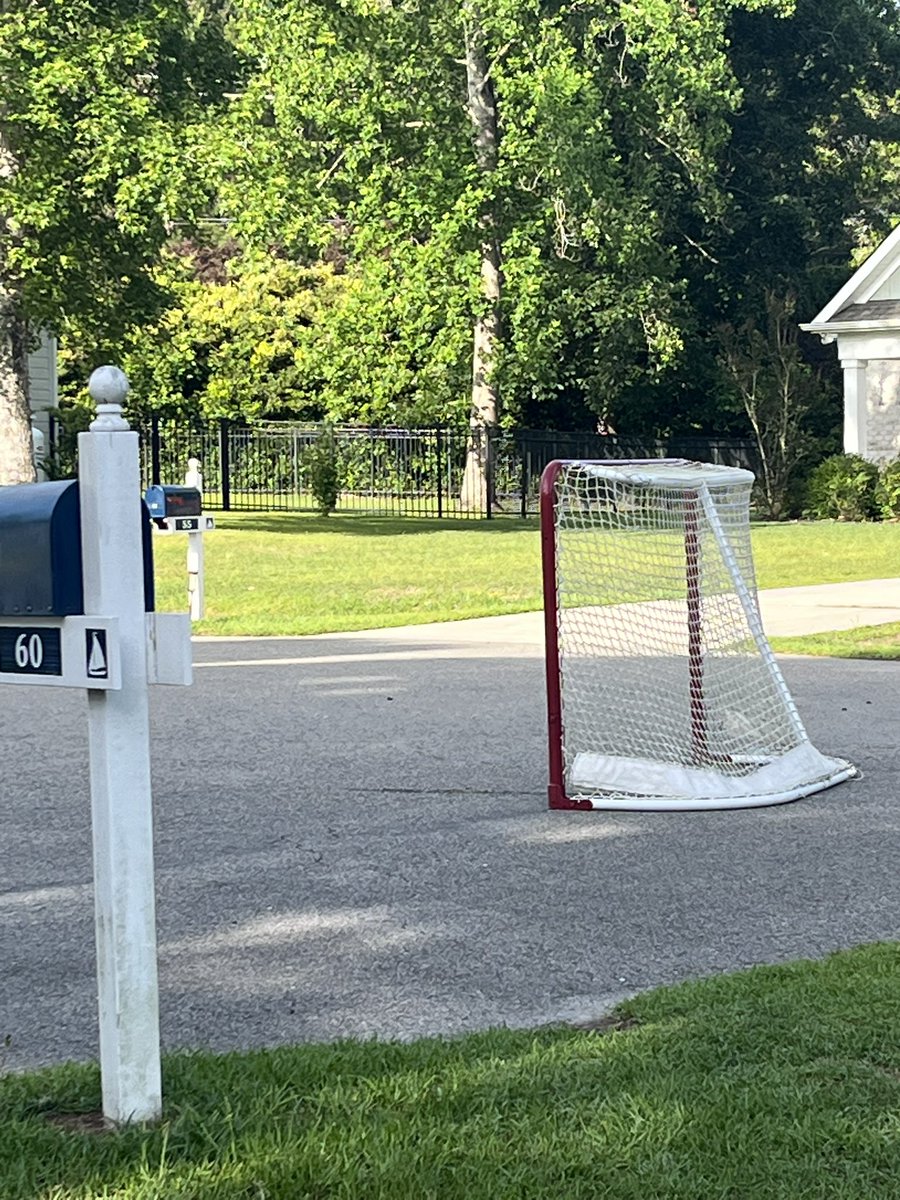
Leaving for work this morning, I looked over and saw what was left behind in the cul-de-sac - a hockey net, scattered sticks, and the remnants of what had to be a 15-20 kid street hockey game last night.
And it hit me… I live at Topsail. A beach community in North Carolina. Yet these kids are choosing to play hockey in the street instead of the “traditional” Southern sports you’d expect around here.
That’s what the Carolina Hurricanes @Canes have done for this state. They didn’t just build a fanbase, they grew the game. It’s honestly amazing seeing hockey take root in places as random as a beach town cul-de-sac. 🏒🌴 Happy Gameday!!!
#SoundTheSiren
#MemorialDay
One of my favorite quotes: "If all else fails, I will retreat up the Valley of Virginia, plant my flag on the Blue Ridge, rally around the Scotch-Irish of that region, and make my last stand for liberty amongst a people who will never submit to tyranny whilst there is a man left to draw a trigger."
General George Washington at Valley Forge 1777;
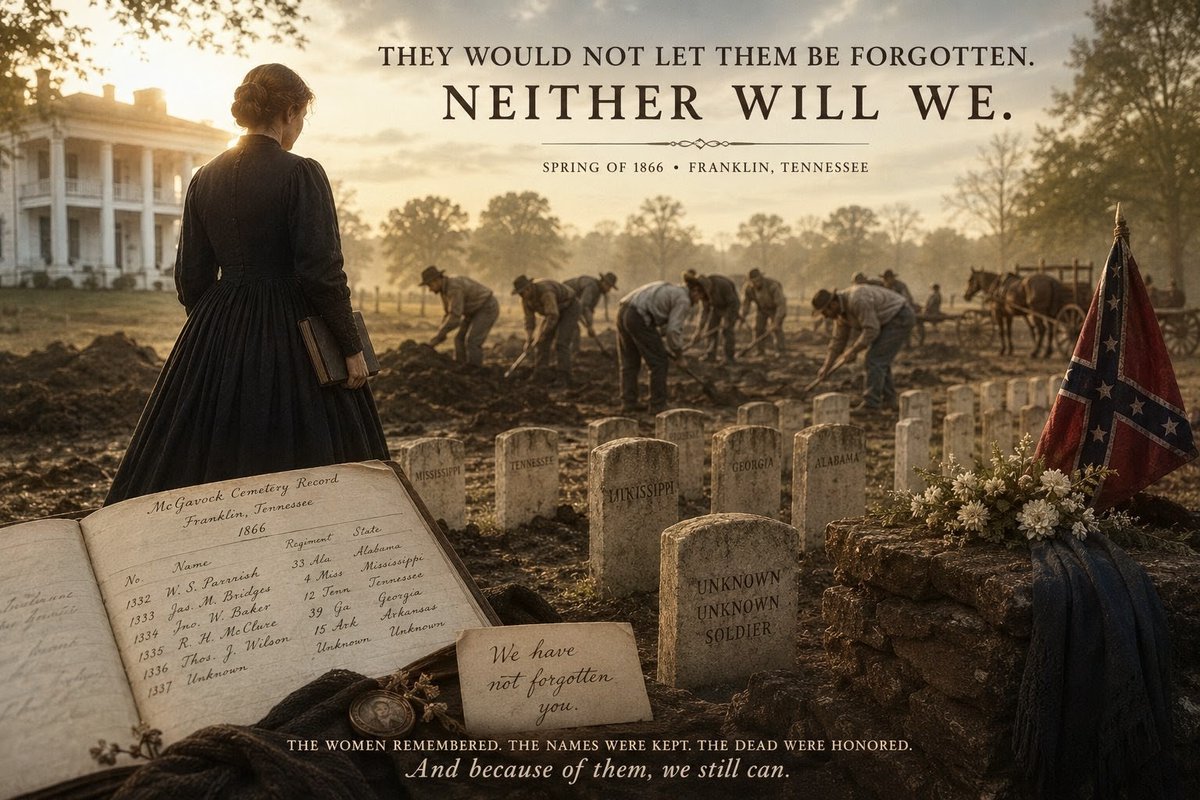
THEY WOULD NOT LET THEM BE FORGOTTEN. NEITHER WILL WE.
Spring of 1866. Tennessee mud still cold beneath the surface. A woman in black walks the old Federal breastworks south of Franklin with hired men and a book.
And they dig.
Nearly fifteen hundred Confederate soldiers buried in haste after the Battle of Franklin. Wooden markers rotting. Names fading. A landowner about to plow the field under.
Carrie McGavock would not allow it.
What she did next, and what the women who came after her kept doing for the next hundred and sixty years, is the real story of Memorial Day.
Not the speeches. Not the proclamations.
The women who showed up with flowers and shovels and subscription lists and a refusal so deep and so stubborn that forgetting was simply never allowed to win.
The graves are still tended. The names are still spoken. The book still exists.
Because of them.
Full essay, footnotes, and bibliography at the link. Read it. Share it. Say the names.
🔗 https://t.co/ptY63Rqhmf
This Memorial Day, you’ll see soldiers, airmen, Marines, and sailors honored.
Sadly, few will remember the US Merchant Marine.
So please take 7 minutes. Watch 97-year-old WWII veteran Dave Yoho deliver a barn-burning speech on why America must never forget is.
92 years ago today a posse of Louisiana and Texas police, led by dogged Texas Ranger Frank Hamer, hid in ambush along a highway in Bienville Parish LA. Their intended quarry: the notorious criminal lovebirds Bonnie Parker and Clyde Barrow.
Bonnie and Clyde had been on a 4 year robbery and burglary spree, abetted by a few accomplices like Clyde's brother Buck and his wife Blanche. Despite a desperate police dragnet, they had eluded capture thanks to three factors; first, their robbery spree was almost completely within the state of Texas, and targeted mostly small mom & pop stores and state chartered banks. Without an interstate commerce pretext, the FBI (then just the Bureau of Investation) was prevented from involvement.
With solid evidence by 1933 that the gang's spree had spread to Missouri and Iowa, the (F)BI was now able to bring their investigators into the hunt. In May 1934 they were known to be in remote rural Bienville Parish, as house guests of a certain Methvin family. Which brings up reason two for Bonnie & Clyde's ability to stay one step ahead of the law: a certain public sympathy and romanticism. Their faces were plastered all over the papers, but not every citizen wanted to cooperate in their apprehension. This was the absolute depths of the Great Depression, and for some a star-crossed mashup of Robin Hood meets Romeo & Juliet was not just boffo headline fodder. They were aided in their spree by sympathetic strangers like the Methvins who were well aware of those crimes.
But Reason Three for Bonnie & Clyde's ability to elude the law is my favorite: Clyde's unbridled enthusiasm for V8 Ford cars. So much so, he was driven to write a letter to Henry Ford himself in April 1934, effusively praising his ill gotten Fords:
Tulsa, Okla
10th April [1934]
Mr. Henry Ford
Detroit Mich
Dear Sir—
While I still have got breath in my lungs I will tell you what a dandy car you make. I have drove Fords exclusively when I could get away with one. For sustained speed and freedom from trouble the Ford has got ever other car skinned and even if my business hasn’t been strictly legal it don’t hurt anything to tell you what a fine car you got in the V8.
Yours truly
Clyde Champion Barrow
Mat Best - Folded Flag (Official Music Video)
This song was written for the men and women who stepped into the fire for this country and never made it home, and for the families, friends, and brothers left carrying their memory forward.
Memorial Day isn’t just a long weekend. Behind every folded flag is a name, a story, and a sacrifice that built the freedom we live in every day.
This song proudly supports the Major Brent Taylor Foundation and the Gold Star families it supports.
I CANNOT TAKE IT ANYMORE!!!!!!
16-year-old Joseph Samuel is DE*D in Charlotte, NC because the man charged with his m*rder, who has been arrested ELEVEN PREVIOUS TIMES...
...WAS LET OUT OF PRISON 9 MONTHS AGO FOR TRYING TO M*RDER SOMEONE ELSE!!!!!!!!
ELEVEN PRIOR ARRESTS.
THIRTY PRIOR CHARGES.
Meet Taquawn "Buck" Lewis, he is 28 years old.
In 2019, Lewis was convicted of ASSAULT WITH A DEADLY WEAPON WITH INTENT TO K*LL INFLICTING SERIOUS INJURY.
He tried to m*rder somebody and the judge sentenced him to the MINIMUM POSSIBLE SENTENCE:
Six years and one month.
He was released from prison in AUGUST 2025.
NINE MONTHS LATER, he shoots a 16-year-old child who was JUST WALKING A PATH HOME to DE*TH in broad daylight in Charlotte.
He was on PAROLE.
He had a gun he was BARRED BY LAW from possessing.
Every. Single. Failure. Was. Preventable.
A judge let him out at the minimum.
A parole board approved his release.
Joseph Samuel is de*d because NOT A SINGLE FREAKING ONE OF THEM did their job.
PLEASE STOP LETTING VIOLENT PEOPLE OUT OF PRISON.
WE DO NOT HAVE TO LIVE LIKE THIS!!!!!!!






![iowahawkblog's tweet photo. 92 years ago today a posse of Louisiana and Texas police, led by dogged Texas Ranger Frank Hamer, hid in ambush along a highway in Bienville Parish LA. Their intended quarry: the notorious criminal lovebirds Bonnie Parker and Clyde Barrow.
Bonnie and Clyde had been on a 4 year robbery and burglary spree, abetted by a few accomplices like Clyde's brother Buck and his wife Blanche. Despite a desperate police dragnet, they had eluded capture thanks to three factors; first, their robbery spree was almost completely within the state of Texas, and targeted mostly small mom & pop stores and state chartered banks. Without an interstate commerce pretext, the FBI (then just the Bureau of Investation) was prevented from involvement.
With solid evidence by 1933 that the gang's spree had spread to Missouri and Iowa, the (F)BI was now able to bring their investigators into the hunt. In May 1934 they were known to be in remote rural Bienville Parish, as house guests of a certain Methvin family. Which brings up reason two for Bonnie & Clyde's ability to stay one step ahead of the law: a certain public sympathy and romanticism. Their faces were plastered all over the papers, but not every citizen wanted to cooperate in their apprehension. This was the absolute depths of the Great Depression, and for some a star-crossed mashup of Robin Hood meets Romeo & Juliet was not just boffo headline fodder. They were aided in their spree by sympathetic strangers like the Methvins who were well aware of those crimes.
But Reason Three for Bonnie & Clyde's ability to elude the law is my favorite: Clyde's unbridled enthusiasm for V8 Ford cars. So much so, he was driven to write a letter to Henry Ford himself in April 1934, effusively praising his ill gotten Fords:
Tulsa, Okla
10th April [1934]
Mr. Henry Ford
Detroit Mich
Dear Sir—
While I still have got breath in my lungs I will tell you what a dandy car you make. I have drove Fords exclusively when I could get away with one. For sustained speed and freedom from trouble the Ford has got ever other car skinned and even if my business hasn’t been strictly legal it don’t hurt anything to tell you what a fine car you got in the V8.
Yours truly
Clyde Champion Barrow](https://pbs.twimg.com/media/HJAc-VpW4AAyW66.jpg)


