Meet @Boundaryfree, Managing Partner of Alumni Ventures and a member of the Forbes Finance Council. With a proven track record in financial leadership and strategic growth, Ray Wu is helping organizations thrive. https://t.co/1eViEFbT9y
Builders didn’t stop. They shipped.
From AI x Web3 to decentralized infrastructure, tokenized assets, and next-gen financial systems, the opportunity set is expanding fast.
Invest alongside us in the next cycle.
New investors receive a $50 credit.
https://t.co/JudLvh0Ozm
🚀 UniVerse Points Program – Season 1 is LIVE!
Time is ticking—join now: https://t.co/qBxfkJDhLA
UnifAI Network = "MCP" for Web3
UniQ by UnifAI = "Manus" for Web3
From optimizing DeFi strategies to execute complex onchain transactions, UniQ is your web3 financial analyst. Here are 8 powerful ways to use UniQ by UnifAI today. 🧵👇
#UnifAINetwork #MCP #DeFi
a few thoughts on crypto
i have been off the grid the last week and a half, mostly away from the internet
arrived back this morning, have been digesting the last few weeks over the last few hours
here's what i found:
- blockchains still producing blocks
- protocols still running autonomously
- objects still preserved immutably
in the opacity of change, it can be easy to forget
blockchains are simply the best digital sandbox on the internet
you can just permissionlessly write stuff to them
author any protocol, object, artwork, standard
upload it to a public database that runs 24/7, around the world
and give anyone the ability to own important pieces of what you made
to be clear — for any technologist or builder, that alone is pretty special
a program that can run forever!
with ownership rights immutably secured over a distributed web of machines!
but it gets better
because if you build your project the right way
and with a little luck
maybe a network starts to develop around your project
just a couple of friends from an old cryptography mailing list to start
then a few more people
then ten more
and because they all love what you’ve made, they all want to participate — even when things aren’t quite perfect
so they jump in to help
in little ways, or in ways unique to them
and maybe the idea is so powerful
that the network for your project just keeps growing
and growing
until millions of regular people all start to see it
and all want to own a small piece of it
anyway
I just want to say, for anyone that needs to hear this
i hope you keep making stuff with crypto
and writing on blockchains
and trying to build a network around your ideas
you won’t be able to replicate these features with any other technology stack
which makes crypto pretty sweet
and also very inevitable
Six and a half years ago, @QuaiNetwork started as a research project at @UTAustin, led by @mechanikalk and Professor Sriram Vishwanath. At the time, I was in my sophomore year studying CS and running @txblockchain when they asked me to join on as an undergrad researcher.
Our goal was simple: create a fundamental breakthrough for how blockchains can scale while maintaining their core promise of decentralization.
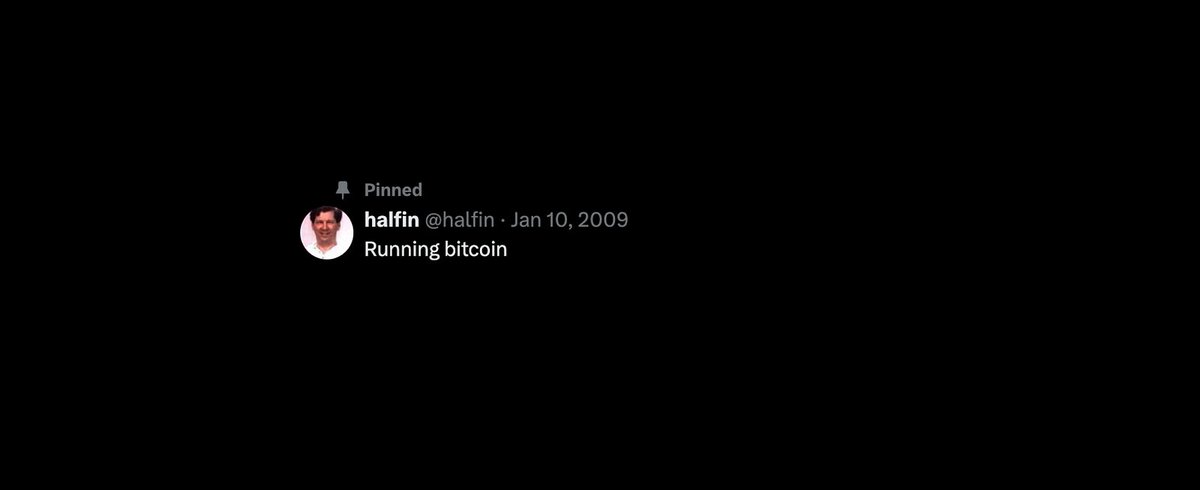
When we started @QuaiNetwork, the crypto landscape was vastly different. NFTs were barely a thing, AI crypto bots didn't exist, and Ethereum's transition to PoS seemed distant. We saw an opportunity to build something novel, drawing inspiration from pioneers like @peterktodd's tree chains and Satoshi's merged mining (maybe the same person?), while pushing the boundaries of sharding technology.
(slide from the 2018 presentation)
Our journey hasn't been linear. We've gone back and forth on countless industry painpoints from MEV, to VM choice, to signature choice, to address formats, to stablecoin design, etc., but we were always guided by first principles and a relentless focus on solving blockchain's fundamental scaling challenges. Through this process (and continued evidence in the market) we found one thing remained true: Proof of Work is the only truly objective form of consensus, the foundation for replacing political competition with peaceful economic competition.
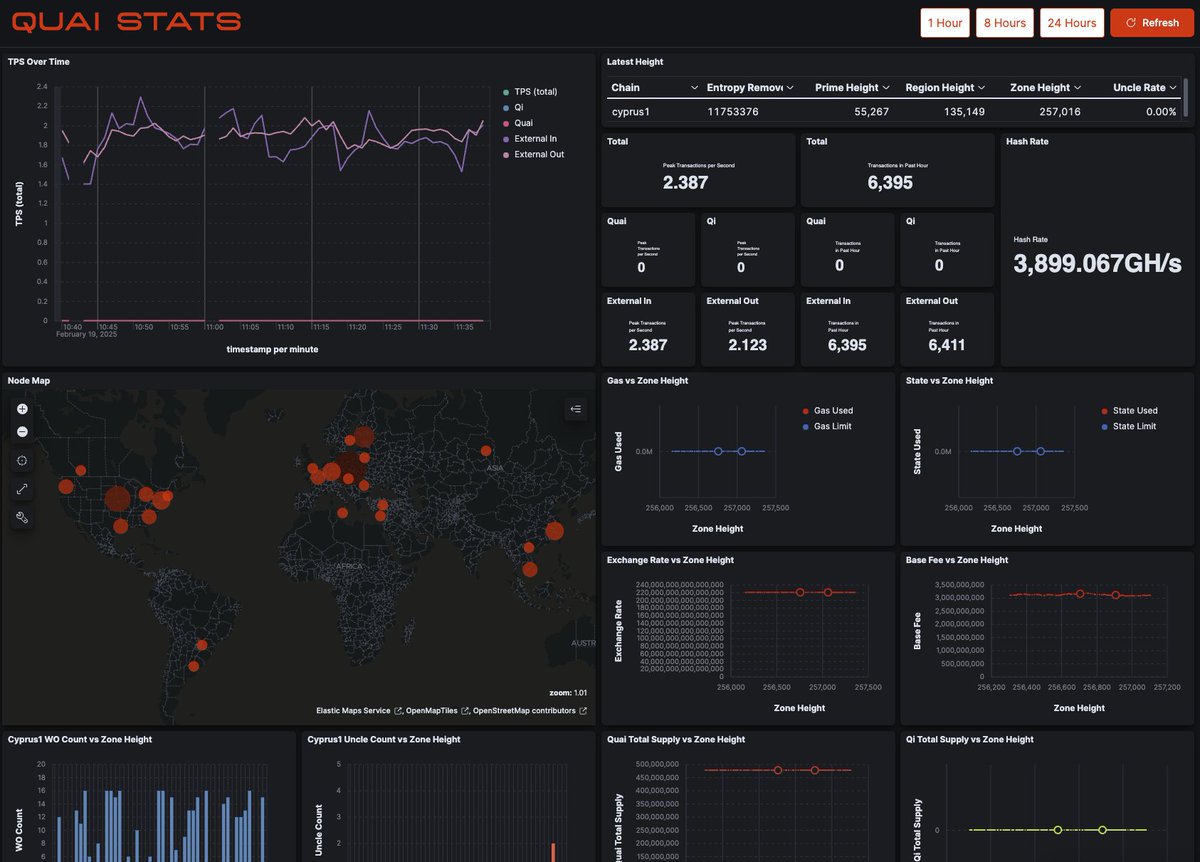
Through innovations like PoEM consensus, horizontal sharding, and our dual-token system (Quai and Qi), we've created an infrastructure capable of:
- 50,000+ transactions per second
- True decentralization with tens of thousands of nodes
- A parallelized, low-fee EVM for smart contract capabilities
- An energy-based dollar that reflects the real economic costs of security
And now to today, at block height 259,200, Quai Network gas will turn on, enabling transactions and token distribution.
This milestone represents the culmination of years of research, development, and unwavering commitment to our vision. Thanks to our early supporters, including @polychain and @alumniventures, we've built a system that can truly scale while maintaining the core principles of decentralization and security along with an energy-backed monetary design.
If this resonates with you, we welcome you to become part of this journey. Mine some Quai, transact on mainnet, and join the ecosystem.
The future of scalable, programmable Proof of Work begins now ⚡️💵
p.s wen 4 TH/s?
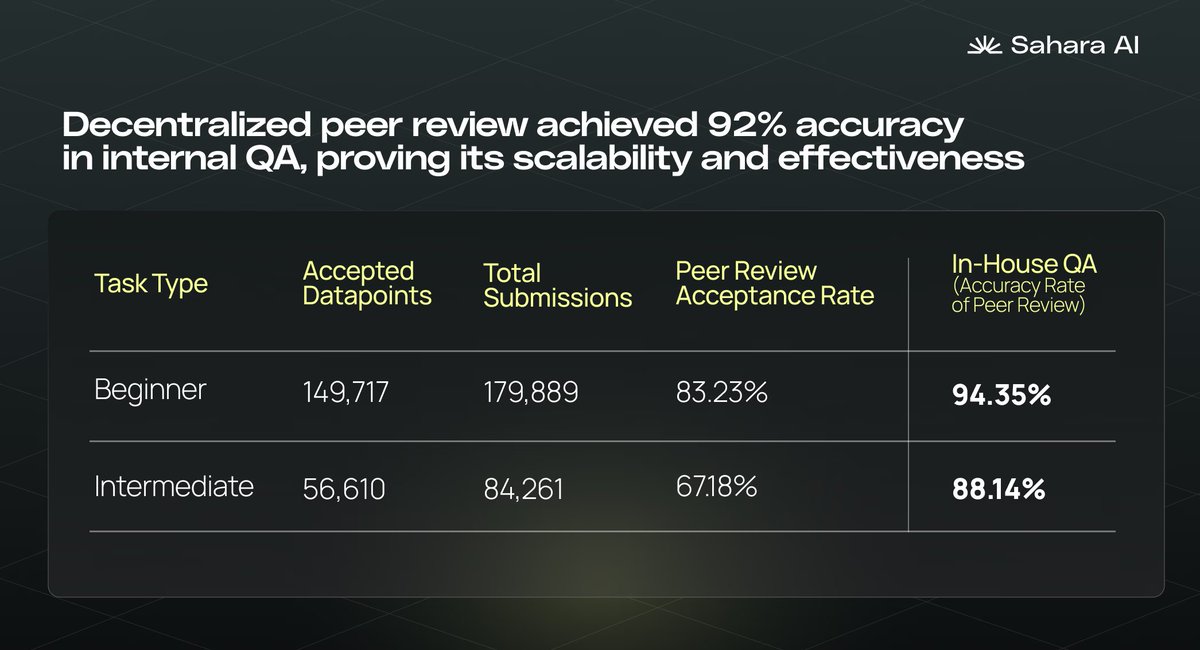
Decentralized data collection works—when done right.
In Season 1 of DSP, decentralized peer review achieved 92% accuracy in internal QA, proving that properly incentivized contributors + the right guardrails can deliver high-quality AI data at scale.
Here’s how 🧵👇
🎯 February 19: $QUAI Token Generation Event
The Genesis Block was just the beginning. On February 19th, $QUAI becomes fully tradable.
Transactions turn on. Trading starts. History is made.
7/ Overall, DeepSeek is a glimpse into the future of AI: smarter, faster, and more resource-conscious. It’s not just about building bigger models anymore—it’s about building better ones. Thoughts? 💡
1/ This article does a fantastic job breaking down the clever innovations behind DeepSeek and why it’s reshaping how we think about AI model efficiency. Let me dive into a few key points that really stood out. 🧵
6/ However, as with any tool, there’s a tradeoff: in unknown domains, where the model needs to explore and define new "experts," DeepSeek may face challenges. Its strength lies in efficiency, not necessarily adaptability to the completely novel.