It's always a good day when the 碎篇 (Fragments) newsletter from @tabithaspeelman arrives--chock-a-block with interesting articles about China, mostly written by Chinese people. This issue features articles on an indy bookstore, hyperlocal journalism...
https://t.co/jPJfIFJnrQ
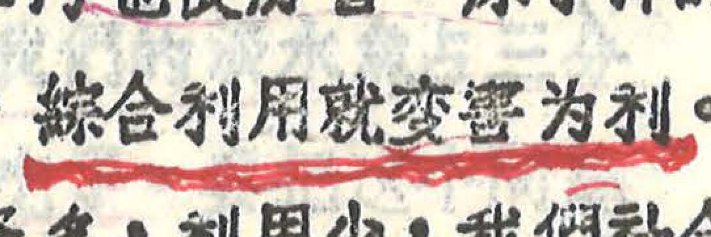
What does Japanese scholarship tell us about the Chinese Communist Party?
A new review by Prof. Ishikawa Yoshihiro examines five recent Japanese books on CCP history, including mine. Worth reading for anyone interested in the CCP and contemporary China. https://t.co/EDAsnpbzsm
China’s environmental strides came out of the clash between grassroots activists and the state, argues a new book by a Chinese journalist. But now that the Party leads all, it's not so simple for economic development to stay green.
Read Brian Spivey's review-essay on "In Search of Green China" by Ma Tianjie and the future of Chinese environmentalism: https://t.co/B4IYNP23sN
https://t.co/65s97sbBUf
Delighted to share my review of Ma Tianjie's "In Search of Green China" at @chinabksreview
Much thanks to @alexludoboyd and @alecash for their peerless editorial work
A cracking essay by @BrSpivey reviewing books on "Green China" that opens with a black humor from Beijing, and closes with a Soviet joke!
https://t.co/dDY8HNLzK9
I want to take up this challenge and offer a defense of scholar-activism that I hope, by stepping outside the confines of US domestic politics, will help opponents of scholar-activism recognize its value
Reporting from the Financial Times on Xinjiang remains incredibly grim:
* In some areas, 90% of children are taken from parents to be educated in boarding schools where they aren't allowed to speak Uyghur
* Officials monitor who eats during Ramadan and report those who skip meals
* Basic items like prayer mats and religious text are considered illegal contraband
* Adult Uyghur women are pressured to marry Han Chinese men, and there are official goals to sterilize a certain % of them.
* Xinjiang has the largest prison capacity in the world relative to population
* Huge numbers of Uyghur prisoners are now being shipped across the country in forced labor schemes, as a way to dodge Xinjiang sanctions/boycotts
* The CCP shut down all 10 existing Uyghur-language publishers, none remain. They fed one university's book collection into a shredder.
There's a lot going on the world, but it's worth remembering that China is still actively engaged in cultural genocide. They're barely even hiding it, they openly talk about the need to 'correct' Uyghur culture and create 'ethnic unity'. They are openly destroying an entire culture as efficiently as they can, cutting children off from parents, restricting language, restricting religious practice, forcing sterilizations and intermarriage, imprisoning anyone who resists the tiniest amount and shipping them out to forced labor factories. That is what the CCP is.
https://t.co/gHK9ZS38Vx
This week is the 37th anniversary of the June 4 crackdown in Beijing.
We had a big development in the available evidence on the violence since last year: the trial video of General Xu Qinxian leaked.
I wrote about the video for @WarOnTheRocks here:
https://t.co/hQ3o0WmwbE
Taiwan Travelogue has won the International Booker 2026. Congratulations to Yáng Shuāng-zǐ and translator @linkinglionking!
Taiwan Travelogue won the 2024 Baifang Schell Book Prize & @kuokuomich reviewed it for China Books Review in 2025: https://t.co/slPgSDmu2w
Xu Zhiyuan on Chinese Intellectuals
A journalist, author, bookstore owner and vlogger talks about the legacy of Liang Qichao, the changing nature of China’s intellectual scene, and whether studying history is escapism.
Read the latest installment in Yi Liu's "What China's Thinking" column:
https://t.co/HHl0YpTH8b
🚨 EXCLUSIVE: The Telegraph can reveal a secret Chinese surveillance platform used to track foreigners, journalists and individuals deemed “of interest” to the state
@sophia_yan explains how the platform's records label her as "trackable" ⤵️
https://t.co/TzrG4Jh1DM
Having spent the past few weeks in Beijing giving talks and attending meetings, here are some quick observations as I wait for my flight to NYC to board:
1. The talk of the town has, of course, been the Xi-Trump meeting, but no one (not even usually well informed elite circle insiders) seems to know what it actually accomplished, other than a continuation of the detente that’s been in place for the past several months. That’s about as good an outcome as one could realistically expect, I suppose, but clearly a real “grand bargain” is not in the cards anytime soon.
2. The Chinese economy seems to be in a steady state, neither improving much nor visibly deteriorating like it was in 24-25. In that sense the government’s stimulus policies have had a positive effect, but the vast majority of industry people I talked to remain very pessimistic about domestic profits and consumption. The dominant sentiment is that the only way for major firms to generate profit growth is through direct overseas expansion.
3. That said, technological advancement is of course very real and quite impressive (although it’s not quite as visible in Beijing as it is in, say, Shenzhen). One interesting and very pleasant side effect of the EV revolution (paired with infrastructure investment) has been that Beijing is now a bike-able city again, given the sharp reduction in exhaust fumes on city streets and the expansion of bike lanes. Armed with a new bike, I could almost explore the city like I used to back in 2000. Hugely nostalgic feeling.
4. Academia is, in general, in a pretty dour mood. STEM subjects and the social sciences/humanities alike have seen very significant funding reductions over the past 2 years, but the latter have of course gotten the worst end of the deal. Political censorship also seems to be visibly ramping up again, with the sheer scale of perceived “red lines” snowballing to levels unprecedented since the early 1990s. As the recent Yang Nianqun incident suggests, administrative regulation of faculty members’ personal affairs has also expanded (i.e., consensual extramarital relationships between adults who were not in a direct teacher-student relationship would almost certainly have gone unpunished as recently as 5 years ago).
5. In general, it’s hard not to notice the steady increase in government presence in everyday life—in both positive and negative ways. The city feels safer and cleaner than it ever has been, and yet the layers of administrative review needed for just about any kind of professional activity have clearly proliferated on a vast scale (made less painful by the digitization of most government services and more uniform law abidance, but still more onerous than it used to be despite all that).
6. The most alarming thing, I suppose, is that general optimism (personal or socioeconomic) seems to be in particularly short supply among the younger generations. This is obvious even among the most intellectually gifted kids at Tsinghua and PKU, where the level of career anxiety seems to be at a level that I have never encountered before. Unsurprisingly, willingness to form families or plan ahead in general at the personal level is very low.
All in all, it was, as always, a very informative couple of weeks. The stay was also made much more pleasant by the fact that I managed to do it before Beijing becomes brutally hot. I look forward to being back more often in the near future.
Tomorrow, May 16, is the 60th anniversary of the Cultural Revolution. In my two books, I wrote about how its legacy shaped elite politics after Mao's death and the entire Xi family. Today I'm re-upping my recent piece on new findings about the origins of the Cultural Revolution.
https://t.co/FUVJXFxhDW
This is unbelievably dumb. The Qing (ruled by Manchus, for what it's worth) did not run a universal public education system (anywhere, much less in Tibet) and had no interest in Sinicizing Tibet (except for a couple years at the very end of the dynasty)
Major news for the study of party history: a brand new chronology of Jiang Qing by Yu Ruxin, the author of an earlier two-volume study of the PLA during the Cultural Revolution. All published by @NewCenturyBaopu in Hong Kong.
Hirokazu Koreeda reminds us that sometimes the greatest miracle is simply finding the strength to keep living in a world that doesn't always grant our wishes
🚨 🚨 My new article in The China Journal (@TheChinaJournal): "Historical Nihilism: The Rise of a Political Technology." It traces how 历史虚无主义 went from a fuzzy polemical label into an institutionalized apparatus of epistemic control under Xi
https://t.co/LFNocVfCa0
1/
The China watcher sphere on X is currently dominated by geopolitics, tech dominance, he green transition, and macro finance. But framing issues exclusively through the lens of "great power competition" masks the intense, complex social changes happening on the ground.
A recent viral controversy in Shenzhen perfectly illustrates what we are missing. (https://t.co/GtBtMFozE2)
Last week, a man and a woman got into a physical altercation at a bus stop after she tried to stop him from smoking. Both were detained and refused to settle. In response, police subjected the woman to a forced strip search—sparking massive public outrage regarding law enforcement overreach.
But the controversy itself isn't what caught my attention. It’s the woman at the center of it: 29-year-old Wang Ronghao.
It turns out Wang is a meticulous, active chronicler of the grueling service industry. Over the past 9 years, she has worked at Haidilao, Hema Fresh, Lawson, and various other gig economy jobs, documenting the crushing reality of modern labor. Reading her diaries, you realize that the mechanisms of control over labor have evolved right alongside economic development, taking on terrifying new forms. (A report from 2025: https://t.co/0qqWA9E0F3)
Her writings expose the invisible, often dehumanizing architecture required to maintain "extreme service":
Algorithmic Panic: At Hema grocery, strict "30-minute fresh delivery" timers force kitchen workers to literally reach into 100°C steamers without gloves to grab RFID tags just to avoid algorithmic penalization, leaving them covered in burns.
Panopticon Management: At Haidilao hotpot, a relentless reporting culture and surveillance enforce "16 zero-tolerance rules." If a customer pours their own water before a server can sprint over to do it, the server faces docked pay and public reprimand.
Systemic Overwork: A total deprivation of basic human needs. Convenience store clerks are forced to stand for 10+ hour shifts even when the store is empty, and workers battle for corners on the street just to sleep for 20 minutes.
I don’t want to frame this merely as a "China labor story." It is clear that we are seeing the exact same algorithmic exhaustion in Amazon warehouses and among Uber drivers in the U.S. It could be any country.
The very "substrate" of society is shifting globally. In both countries, and in many others, the driving forces are identical: the relentless optimization of technology and the unchecked leverage of large, powerful companies.
It is not a question of which country is "better" or who is winning a geopolitical rivalry. Beneath the high-level macro narratives and great power posturing, this is plainly an age-old labor struggle, evolving alongside technology, that never actually left.
Deng's famous motto on "black/white cat" is often viewed as reflecting his pragmatic side. It is that, but it is deeper than that. Deng Xiaoping was also an empiricist. See an excerpt of my 2026 book published in my substack. https://t.co/LrEJRhzMPq