🇬🇧 New UK immigration rules dropped! On 9 July 2026 the Home Office laid Statement of Changes HC 259, amending 42 rules. EU Settlement changes hit 30 July; most others on 3 Aug.
If you’re an applicant or already settled in the UK, here's what matters.
👇
The JUDGE WROTE BUT I THINK Wisdom Gomashie DID VERY WELL AS STATED
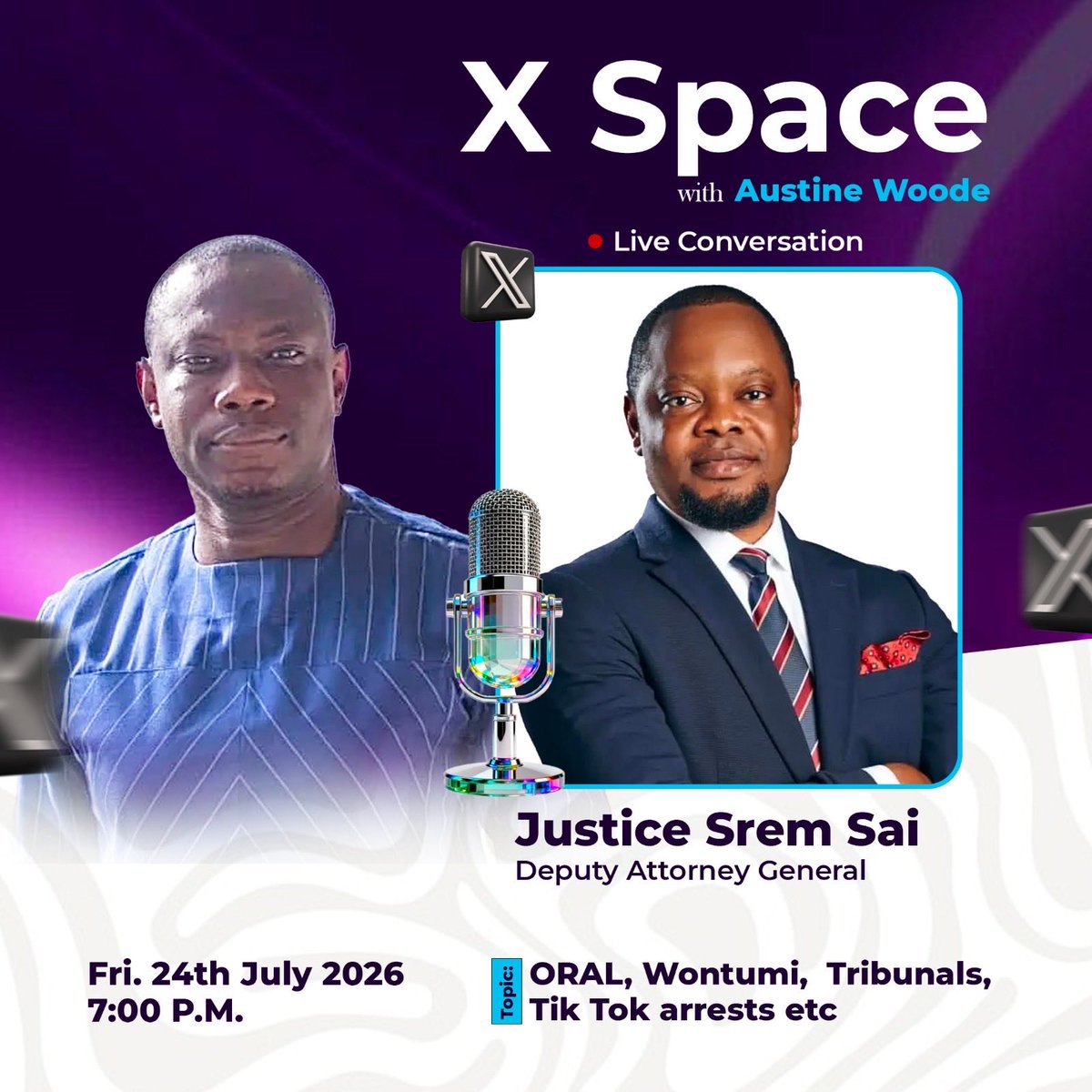
HOW WONTUMI'S OWN EXPERT WITNESS CRUCIFIED HIM
1. One of the charges against Wontumi was that he assigned his mineral rights to another person (assignee) to mine without the approval of the Minister of Lands and Natural Resources.
2. Because it would be difficult to prove this and other charges, the State decided to use the assignees and his site manager as prosecution witnesses.
3. Wontumi then put up a cleaver but weak defense that there was no written agreement between him and the assignee therefore he did not assign his rights to them to mine. According to him, he had a verbal agreement with the assignee to do reclamation through which they would plant coconuts. The assignee rejected this assertion.
4. To prove the lack of documentation, Wontumi called Wisdom Gomashie as an expert witness. The strategy was that, if Gomashie was able to prove that the law requires that all assignments must be in writing, then Wontumi would go scot free.
5. Indeed, Wisdom Gomashie did a brilliant job by quoting portions of the law which require that assignments must be in writing. According to him, in the absence of written agreement between Wontumi and the assignee, no law had been breach, and thus, Wontumi must be set free.
6. At this point, Wontumi and his lawyers thought Wisdom Gomashie had killed the game for him. Then the deputy Attorney General stood on his feet to cross examine Wisdom Gomashie. The deputy AG, after series of questions, puts it to Wisdom Gomashie that a person who fails to put an assignment into writing was in breach of section 14 of the law. Wisdom Gomashie then caved in and answered in the affirmative. The implication of this was that, Wontumi was in breach of section 14 of the law according to his expert witness. Gomashie's admission collapsed Wontumi's defence that insofar as there was no written agreement between him and the assignee, he had not committed any offence.
7. Wontumi's second defense to the charges was that he authorized the assignee to do reclamation and not to mine. At this stage, there was not documentary evidence to support this since the whole agreement was orally done. The judge therefore relied on circumstantial evidence.
8. Again, the deputy AG used Wisdom Gomashie to discredit Wontumi's claim that he asked the assignee to reclaim not to mine. Gomashie was asked whether reclamation was costly and he said it was very costly. He was asked whether he was aware Wontumi paid the assignee to do reclamation. He said he had no knowledge of that.
9. Wontumi had indicated both in his witness statement and under cross examination that he did not pay the assignee to do the reclamation but asked them to plant coconuts so that when it started bearing fruits, proceeds from that would be used to pay for the reclamation. The judge was not convinced with this explanation and held that it was an afterthought.
10. The deputy AG asked Gomashie whether he was aware that one needed a license from Minerals Commission to carry out reclamation. He said yes and gave a brilliant explanation of the kind of licence needed to do reclamation. It was put to him that the assignees had no such license to do reclamation but instead had license to mine. Indeed, when the assignee and his workers were arrested, the team seized gold from them. A person engaged in reclamation could not have in his possession gold. Gomashie conceded.
11. If the assignee had no license to engage in reclamation but had license to engage in small scale mining, and Wontumi himself admitted under cross examination that he knew the assignee was a miner, then the irresistible conclusion was that the verbal agreement was to assign the rights to him to mine and not to reclaim.
Rep. v. Wontumi: In case you missed it- Having read the 59-paged judgment by H/L Audrey Kocuvie-Tay (J)- Justice of the High Court, in full, here is a summary in simple terms in the Benard Antwi Bosiako case #Wontumi 1/2
@Lace_700@SteveSabcess@kofigabs You still lack comprehension
Leaving in ghana permanently is different form the view I suggested that coming back home has a different feeling of happiness …lol
For the records, H/L Justice Audrey Kocuvie-Tay, the judge who presided over the Wontumi case was sworn in as a High Court judge on 16th September, 2020 by President Nana Akufo Addo. Ends!
For those of you who were not in court, this audio summarizes everything you need to know about why Chairman Wontumi couldn’t evade his 20-year sentence. The allegations were overwhelming!
We look forward to closing our case in The Republic v Kwabena Adu-Boahene & 2 Others next week. In the case, the principal accused person is being tried for stealing Ghc 49.1 million from a government bank account.
Our hard working state attorneys and EOCO investigators have already placed the following body of evidence before the trial court:
▪️Evidence that the Ghc 49.1 million is a Government of Ghana money in a government agency bank account. No dispute in court over its source.
▪️Evidence that the principal accused person created a fresh bank account (on the day of the first cheque) in the name of his private company to mimic the name of a government agency.
▪️Evidence that the principal accused person carefully diverted 3 cheques which were meant for a government agency into the private bank account.
▪️Detailed evidence of how, within 6 months, the principal accused person spent each pesewa of the money, buying houses in prime locations and luxury cars for himself, family and friends.
▪️Purchase receipts, bank statements, ownership documents, containing dates, amount, names, etc., evidencing the bank transfers, purchases and payments, etc.
▪️Evidence that the accused persons initially denied knowledge and ownership of some of their own companies, bank accounts and the luxury properties, but later, upon confrontation, admitted them.
▪️Evidence that the principal accused person deliberately misled the public when he said that he used the Ghc 49.1 million for fund political campaigns in 2024.
▪️Evidence that the principal accused person was forced to close that bank account when his own bankers flagged the bank account as “suspicious”.
▪️Evidence that the equipment which the principal accused person claimed he was going to use or used the money to buy was never bought.
▪️ Evidence of forged purchase receipts for the said equipment - in an attempt to conceal the fact that the equipment was never bought.
We believe that justice will be served to both the accused persons and our beloved Republic at the end of the day.