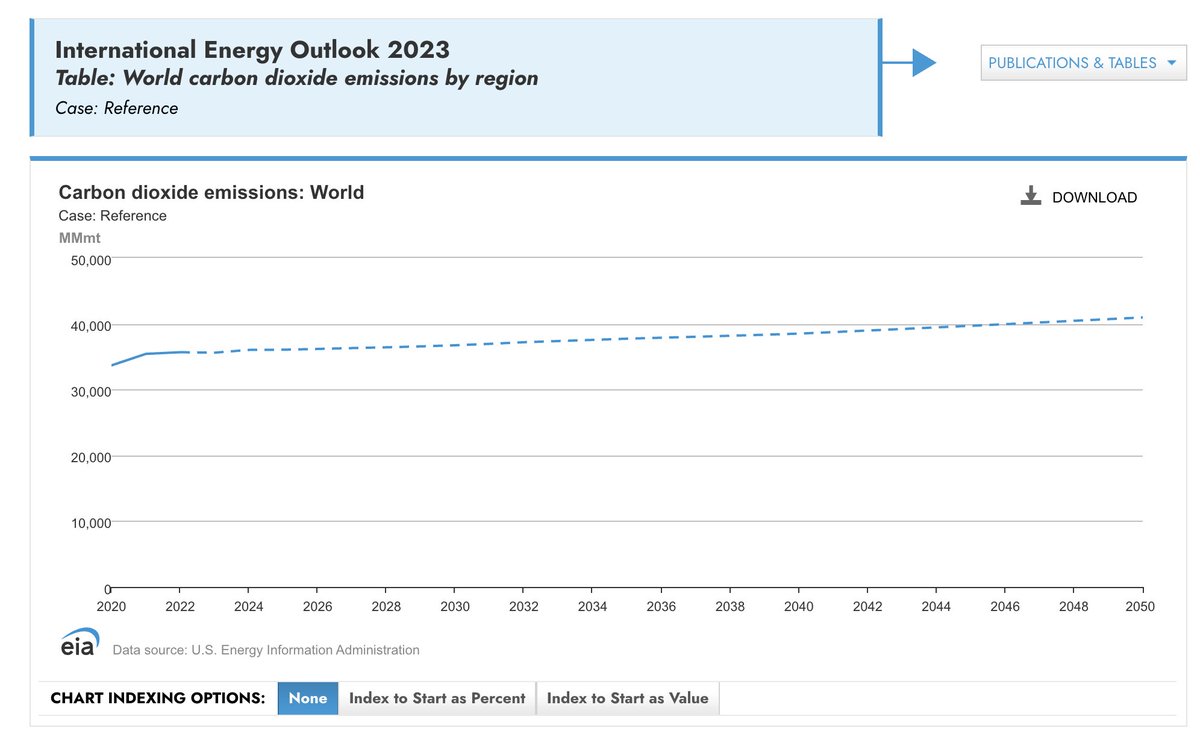
@atrembath because of timelines to develop projects, my understanding is that most of the projects coming online this year were permitted pre-Trump. So if you're trying to argue that permitting barriers are fake (?) you might need another year or two to see that in deployments
@DByers21 agree, and few are as transparent as IEA about policy assumptions. guess we'll see in the next WEO when they do CPS and STEPS and we can see how big a difference it makes.
(i do think there's a case that CPS is its own form of wishcasting, but agree it's more straightforward.)
@DByers21 fair points, though we don't say what you put in quotes. pros and cons to current policy vs stated policy.
one thing i wonder is how much of the difference in IEA STEPS vs OPEC is due to using current policy vs OPEC simply projecting much higher GDP/capita.
@NiyerEnergy that is super interesting—iirc there are quite a few utilities/regulators out there who have said let's focus on getting to ~80% and worry about the rest when we get there
@NiyerEnergy in the solar/wind/clean firm scenario what's the rough contribution of each? ie how big a role does clean firm play in the gen mix? (or is that not how it works)
@RyanAlimento@atrembath ah ok. I just don’t get how the final House bill can have a shorter window/faster phaseout for all of wind/solar/batteries/geothermal AND nuclear and still lead to more spending. But I’ll read more closely
@RyanAlimento@atrembath that is surprising to me. thought everyone agreed that final house version is waaaay more restrictive on solar/wind/batteries than SFC and I assume those three drive most of the spending. but maybe that misses something
@atrembath are you comparing SFC draft with the initial House Ways and Means bill or the version that ultimately passed? (agree if it's the former, not the latter)
@ppavnr would there be any significant budgetary savings from doing this? (you probably induce somewhat fewer wind/solar projects on net but the ones that do get built are potentially more expensive, depending on the battery requirements)
@atrembath is this a metaphor for the miracle of time-saving technologies or was he saying his kids secretly tossed books into the machine when no one was looking?
More detail here on why this is a potentially pretty significant tweak for new nuclear projects.
(Though not as much of a boost as the original IRA, which would keep tax credits for new reactors until at least 2032—and probably longer.) https://t.co/xBkQd0jS7i
The manager's amendment to the reconciliation bill keeps the tax credits for advanced nuclear and expanding existing plants if construction starts by the end of 2028. A lot of projects could meet this deadline if they apply to the NRC soon and seek a LWA, or buy long lead items
New House GOP text has faster phaseout for IRA clean electricity credits—you gotta start building 60 days after the law passes and put it in service by the end of 2028, or no credit.
There's an exception for nuclear—you can claim the credit if you start construction by end 2028.
Oh wait, sorry. The full tech-neutral clean electricity credits will only apply to plants that are "in service" by 2028, which is a major restriction — this is a MUCH faster phase out than it first looked.
Looking at IRA:
—phase down of tech-neutral clean electricity credits after 2028, to zero by 2031
—termination of EV tax credits after end 2026
—termination of hydrogen tax credits after end 2025
—new restrictions on foreign entity of concern for domestic manufacturing credits
BREAKING NEWS: House Republicans are out with their tax bill extending the 2017 tax cuts, granting Trump’s campaign priorities & more
UPDATED TIME - Markup kicks off 2:30 p.m. tomorrow
The bill is 389 pages !!
READ IT HERE: https://t.co/ybuYbGLR9U