Provides ADA, 508 & WCAG compliant materials for your customers who are blind or visually impaired. Braille, Large Print, Audio & Accessible PDF Services.
Today marks the beginning of an exciting new chapter for Braille Works.
We're proud to announce that Braille Works has joined Allyant.
Learn more about today’s announcement: https://t.co/UIXg5swfpV
If you're having a document converted into an accessible format, don't be surprised if it looks different.
Knowing what to expect can help you plan and understand why certain changes are recommended.
Learn more: Things To Know Before Making Your Documents Accessible.
An accessible version of your document will look different from the original, and that's ok!
What matters is that people can access the same information in a format that works for them.
https://t.co/Ayi2wXtmRc
An ADA Coordinator should guide an organization’s accessibility efforts.
But no one person can review every document, inspect every facility, monitor every vendor, and identify every barrier.
Read more in our blog post, National ADA Symposium Takeaway #1: Who Is Responsible?
Who is responsible for ADA Title II compliance?
The public entity is responsible overall.
A government agency may delegate work to contractors and vendors. It can't delegate its legal responsibility to ensure accessibility.
https://t.co/84T5CuWGIX
If your organization has 15 or more employees, Section 1557 requires you to designate a coordinator. This person helps ensure compliance with nondiscrimination rules, including accessible communication for people with disabilities.
Learn more in our Section 1557 blog post.
Accessible healthcare communication starts with the format that works for the patient.
For one person, that may be large print. For another, it may be braille or an accessible PDF.
The goal is simple: give people information they can actually use.
https://t.co/cHjahxWJwz
What's the difference between Section 508 and WCAG?
Section 508 is the requirement.
WCAG is the roadmap.
Different roles, same goal: Better access to information.
Learn more in our blog post, 508 and WCAG: What’s the Difference?
Section 508 sets accessibility requirements for ICT developed, procured, maintained, or used by federal agencies.
WCAG itself is an international accessibility standard developed by W3C.
Related? Absolutely. Interchangeable? No.
https://t.co/lzo9Oam4m4
Did you hear the news? Santa Reads Braille is back for its 11th year!
Spread the word this holiday season to help Santa send braille & large print letters to boys & girls with visual disabilities.
Check out our Santa Reads Braille page for more details on requesting a letter!
Can Santa read braille? Of course he can!
Santa Reads Braille is back and we’re ready to help Santa send braille and large print letters to kids all around the U.S.
Parents and teachers can submit requests now through December 8th!
https://t.co/JBMyHSwYnS
Section 508 requires federal agencies to make covered information and communication technology accessible to everyone. But understanding what that means in practice can get complicated.
Our Section 508 Guide for Federal Agencies and Service Providers breaks it all down.
Have you ever wondered who Section 508 protects, how it differs from other accessibility laws, or what makes a PDF compliant?
Whether you're new to Section 508 or reviewing your agency's accessibility process, this guide is a helpful place to start.
https://t.co/vW78Frrsln
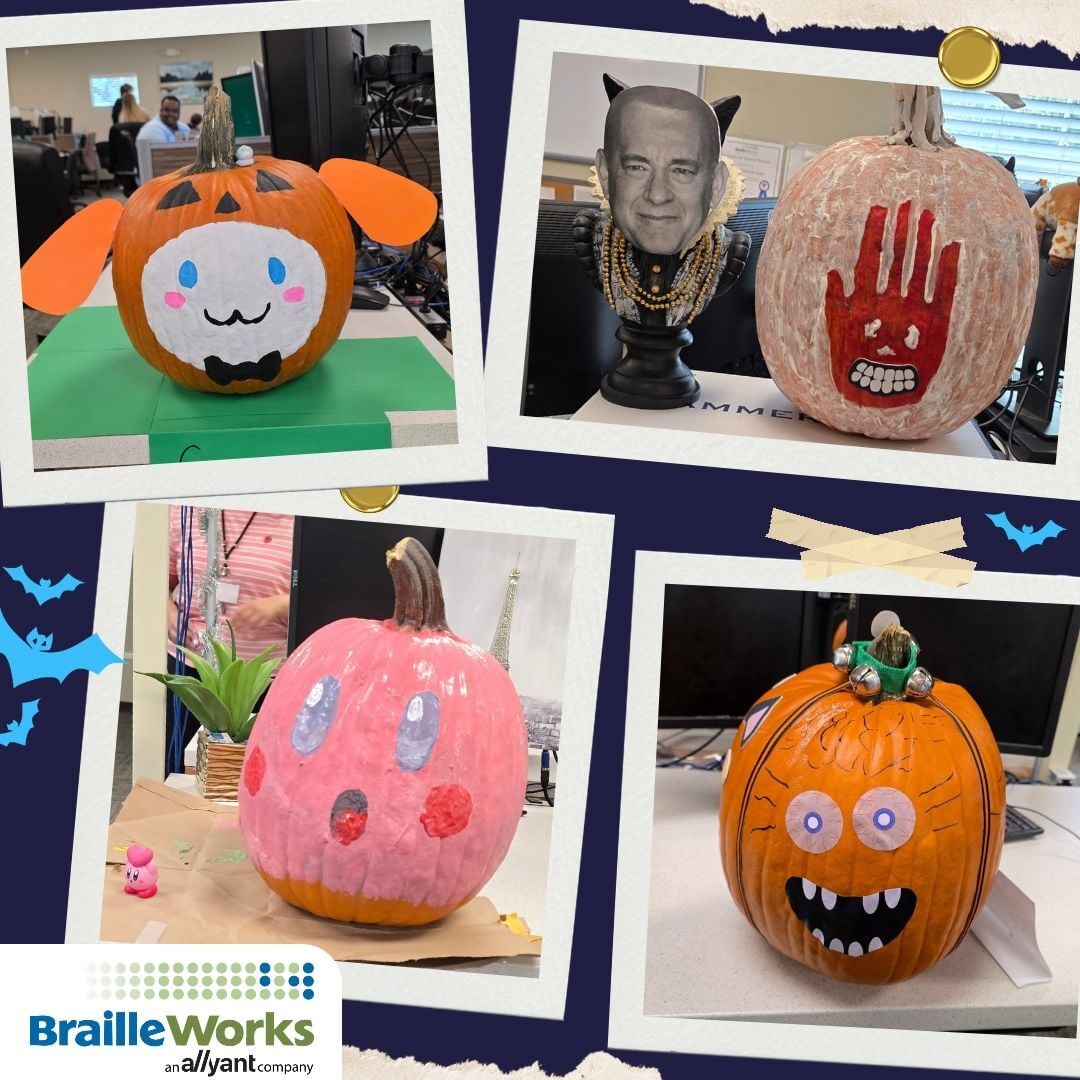
Things are looking a little spooky around Braille Works!
Our Transcription team got into the Halloween spirit with a pumpkin decorating contest, and the results were too fun not to share!
Which is your favorite?
Healthcare organizations need to consider accessibility throughout the patient experience, including the information they take home.
Can someone review their instructions? Understand a medical bill?
Learn more in our blog post, The Tale of Two Titles: Title II and Title III.
When organizations think about ADA compliance, they often think of physical barriers first.
But what about the information people need?
Organizations need to consider whether people with disabilities can access information without unnecessary barriers.
https://t.co/bxAAT7DKxw
A customer can access the promotional message but still hit a barrier when they try to respond.
Marketing accessibility requires coordination across the entire experience.
Learn why accessible marketing deserves a place in that process in our blog post, Accessible Marketing.
Barriers are easy to overlook when marketing teams focus on impressions, traffic, and conversions without examining accessibility.
Reviewing the full customer journey can reveal accessibility issues that traditional campaign metrics don't explain.
https://t.co/0BWpWnCLLU
Braille is a valuable reading tool, but it's not the right format for everyone with a visual disability.
Some people prefer audio, while others rely on screen readers or large print.
Learn more in our blog post, Effective Communication is a Title II Responsibility.
Have you ever heard the term "effective communication"?
Effective communication means making sure someone can understand the information you're sharing.
For someone with a visual disability, that means receiving documents in a readable format.
https://t.co/0E4nmCQlpj