@VincentB755 La diff de perf provient du montage des prix two-ways, du hedge du book sur les grecques et le volume que tu fais.
IMO la grosse diff de perf s’explique surtout par le fait que les books sont pas 100% anonyme et que certains sales taffent que avec certains traders et vice-versa.
@derimonkeyfin C’est l’approche théorique du majeure qui est différente.
BA = Cours type école co (approche littéraire)
BsC = Cours type école d’ingé (approche mathématique)
Seuls exceptions, Oxford et Cambridge qui proposent que des BA ou BAHons en undergraduate peu importe la matière étudiée
@derimonkeyfin Un MsC c’est 1 an et ~60K£ pour une top école.
Je suis à Cambridge en BA, je peux t’assurer que les 100K c’est que si tu sors first class sinon t’enlève facile 10K.
Faut surtout rentrer en BsC dans ces écoles, bonne chance pour ça alors que en MsC c’est + simple niveau admission.
@0FGambler Elles traitent toutes de la vol après des annonces économique avec des donnés de marché fiable et donné en annexe
Seule la méthode diffère.
Pour le côté digeste il faut une base en maths, si besoin d’explication sur les concepts DM sans soucis. GL à toi dans tes recherches.
@0FGambler Il y a bcp d’études sur ce sujet :
Andersen(1994,2003,2004,), Lyons (1996,1997,2001,2005), Roll(1984), Clarida(2002), Rapach(2005), Rigobon(2003), Gürkaynak(2002), Lucca(2015), Meese & Rogoff(1983) …
J’en oublie mais toutes font partie de ce qu’on apprend en 1ere Année de BA.
Four life lessons I learned while studying statistics:
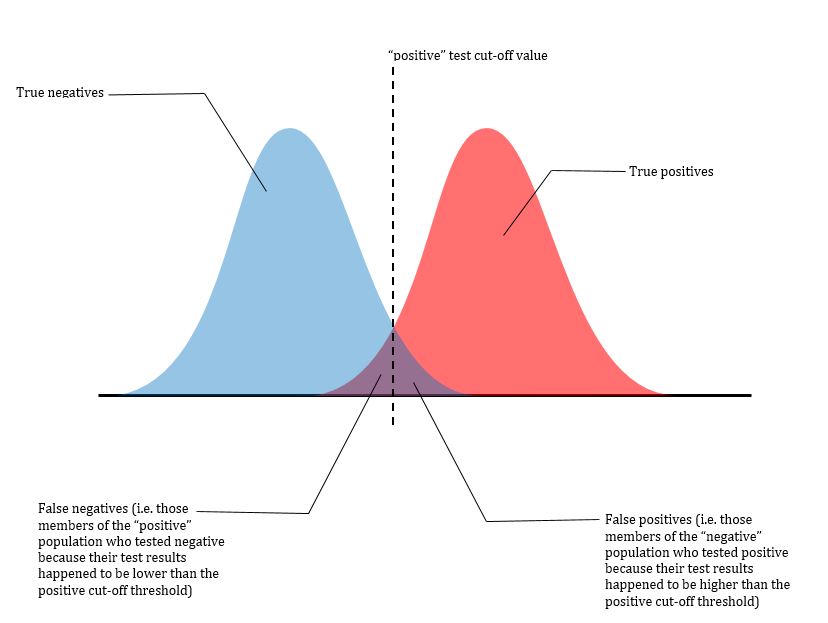
1. False positives vs false negatives: Fewer false positives often come at the cost of more false negatives and vice versa.
LIFE LESSON: The less stringent your criteria, the more crap you need to deal with, but the more stringent your criteria, the more genuinely good stuff you miss out on.
Missed opportunities is the price of never wasting your time. Wasting your time is the price of never missing an opportunity.
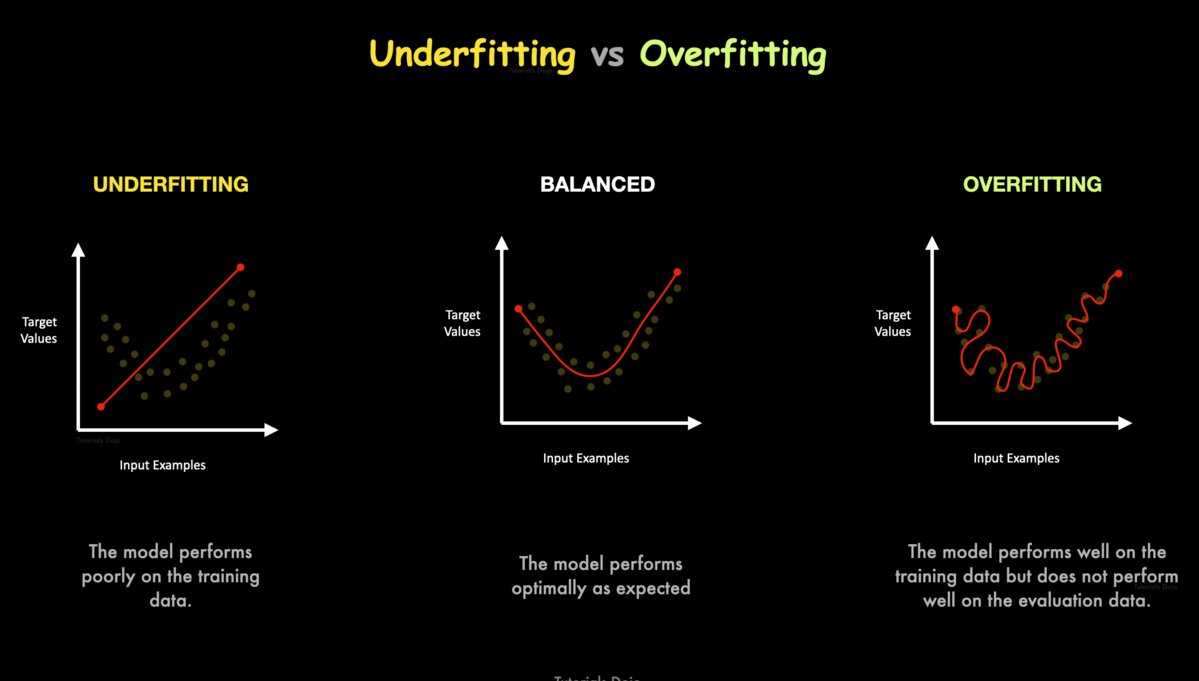
2. Overfitting vs Underfitting: Less flexible models can't fit the data. More flexible models are prone to picking up patterns that don't generalize.
LIFE LESSON: Over-thinking makes you more vulnerable to seeing patterns that aren't there. It turns you into a misinformation machine.
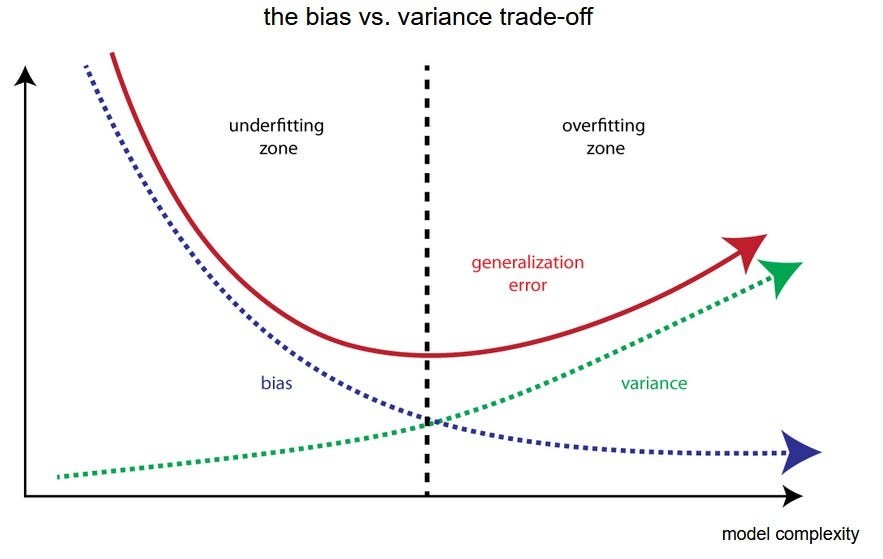
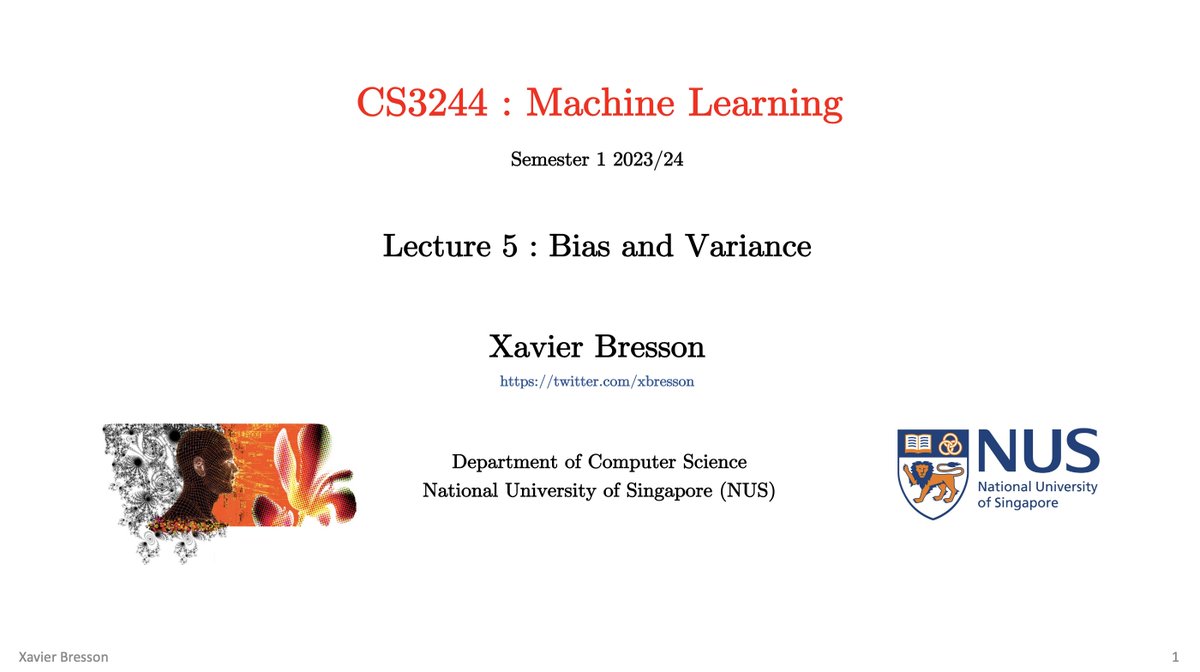
3. Bias vs Variance: More complex models give less consistent answers. Less complex models give more biased answers.
LIFE LESSON: There is a natural trade-off between nuanced thought and consensus.
People get mad when experts disagree especially when non-experts don't but that's actually what you would expect.
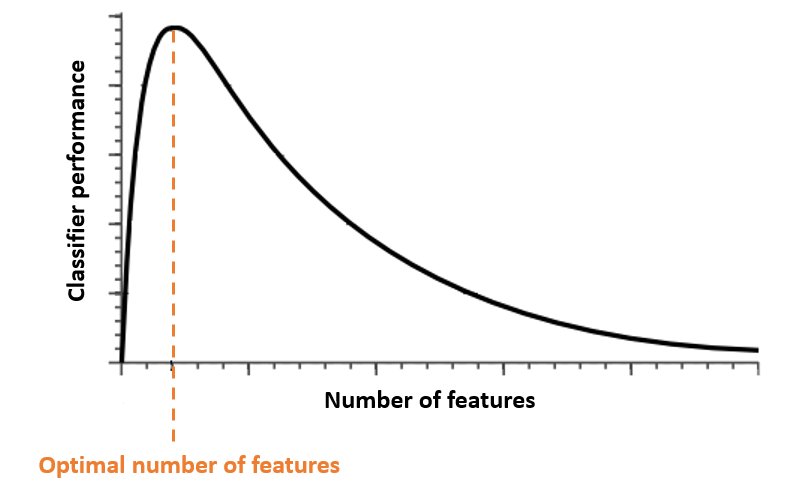
4. Curse of Dimensionality: Given a fixed amount of scenarios to learn from, there's a point beyond which considering additional factors stops helping.
LIFE LESSON: If you haven't experienced much, keep things simple. Nuance without experience is actively harmful.
SUMMARY:
The common theme I see is these are cautionary tales for over-thinkers like me. There are hard mathematical limitations on what we can possibly know as rational beings.
There is wisdom in knowing when to think but there's also wisdom in knowing when to stop.
@filodoxia_ Ceux qui veulent les contacts pour stage/first job au USA ( si vous êtes pas École target ils vous laisseront en vu )
Analyst > Dana Kingman / Milllie Shi / Chance Masloff
Trading > Claire Kanaley / Betsy Buhrendorf / Caitlin O’Connell Dellaquila
Data/ML : Jason Koulouras
@filodoxia_ Sans XP, ça se passe via ton université directement.
Les profils qui cherchent le + c’est BA/BS/MA/MPhil en Maths/Stats/ML/Physics + 1st Class Honours + TOP Ecole ( NYU, Harvard, Yale, Cambridge, Oxford …).
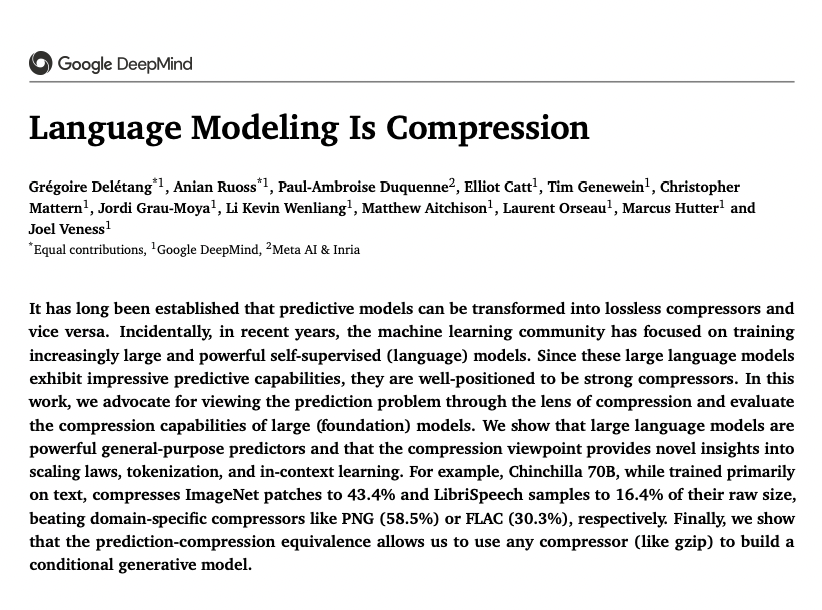
Language Modeling Is Compression
paper page: https://t.co/tECPHg8y8S
It has long been established that predictive models can be transformed into lossless compressors and vice versa. Incidentally, in recent years, the machine learning community has focused on training increasingly large and powerful self-supervised (language) models. Since these large language models exhibit impressive predictive capabilities, they are well-positioned to be strong compressors. In this work, we advocate for viewing the prediction problem through the lens of compression and evaluate the compression capabilities of large (foundation) models. We show that large language models are powerful general-purpose predictors and that the compression viewpoint provides novel insights into scaling laws, tokenization, and in-context learning. For example, Chinchilla 70B, while trained primarily on text, compresses ImageNet patches to 43.4% and LibriSpeech samples to 16.4% of their raw size, beating domain-specific compressors like PNG (58.5%) or FLAC (30.3%), respectively. Finally, we show that the prediction-compression equivalence allows us to use any compressor (like gzip) to build a conditional generative model.
A little 'dirty secret' of Scikit-learn is that 'predict_proba' does not actually predict probabilities and the function name is a complete misnomer.
Want to know why? This great article explains why
https://t.co/O0eaFebXFj
#calibration#machinelearning
@omni_scalp Intéressant. Si ça peut t’aider dans tes recherches tu as bcp d’études qui traitent de ce sujet en s’appuyant sur des données empiriques de différents marchés ( Andersen(2002), Goodhart(1993), Fair(2003), Kim(2001), Parker(2007), Galati(2001)… ). GL a toi pour tes recherches.