Now we're cooking.
The sooner people realize what's going on here, the more you can prepare.
Get ready for chronic energy shortages, lockdowns, food shortages, rationing and a prolonged war involving most of Europe and Asia.
This is the great reset.
FUEL DIVIDE: WHY INDONESIA IS THRIVING WHILE AUSTRALIA FACES SHORTAGES, RATIONING, AND PRICE SHOCK
By Business Review Australia
While Australians brace for fuel shortages, rising prices, and potential rationing measures, a very different story is unfolding just to our north.
In Indonesia, fuel remains not only readily available, but significantly cheaper — in many cases, around half the price of Australia.
No panic buying.
No empty bowsers.
No talk of lockdown-style restrictions tied to fuel supply.
Instead, Indonesia is quietly demonstrating what energy security looks like in a shifting global order.
INDONESIA: FULL TANKS, STABLE PRICES
Across Indonesia, service stations continue to operate normally. Supply lines remain intact, and consumers are not experiencing disruptions.
Fuel affordability is a key differentiator.
•Indonesian fuel prices remain substantially lower than Australia
•No widespread shortages reported
•No rationing policies being discussed
•No restrictions on movement tied to fuel access
This stability is not accidental.
It is the result of strategic geopolitical positioning, diversified relationships, and increasing alignment with emerging global power blocs
THE BRICS FACTOR: A NEW ENERGY ALLIANCE
Indonesia’s growing alignment with the BRICS economic bloc is proving to be a decisive advantage.
With BRICS nations representing a significant share of global energy production and trade, member and aligned countries are gaining access to:
•Alternative fuel supply routes
•Non-Western energy markets
•Strategic trade agreements outside traditional systems
Critically, Indonesia has strengthened ties with major energy producers — including Iran, a key player in global oil transit routes.
STRAIT OF HORMUZ: ACCESS MATTERS
The Strait of Hormuz is one of the world’s most important energy chokepoints.
Recent developments indicate that Indonesia has secured cooperative arrangements allowing its vessels passage through the region.
In an environment where access may be restricted or influenced by geopolitical alignment, this becomes a major strategic advantage.
The implication is clear:
👉 Countries with the right alliances maintain flow
👉 Others face disruption
AUSTRALIA: SHORTAGES AND SYSTEM STRESS
In contrast, Australia is beginning to show signs of strain.
Reports indicate:
•Hundreds of service stations impacted by fuel shortages
•Increasing pressure on supply chains
•Rising fuel costs significantly above regional competitors
•Early discussions around rationing measures
There are growing concerns that, if supply disruptions worsen, Australia could see:
•Controlled fuel distribution
•Priority access systems
•Restrictions on non-essential travel
In extreme scenarios, policymakers may even consider movement limitations similar to COVID-era controls, tied not to health—but to energy scarcity.
THE PRICE GAP: A NATION AT A DISADVANTAGE
The economic impact is immediate and compounding.
Australian consumers are now facing:
•Fuel prices double those seen in Indonesia
•Increased cost of living across transport, food, and logistics
•Greater vulnerability to global supply shocks
Meanwhile, Indonesia’s lower energy costs provide a powerful competitive advantage:
•Cheaper goods movement
•Lower operational costs
•Stronger tourism recovery potential
A TALE OF TWO STRATEGIES
What we are witnessing is not just a fuel story.
It is a strategy story.
Indonesia has positioned itself within a multi-polar energy network, ensuring access, affordability, and stability.
Australia, by contrast, remains heavily exposed to:
•Traditional supply chains
•External geopolitical pressures
•Limited domestic refining capacity
THE BIGGER QUESTION
As global alliances shift and energy becomes an increasingly strategic asset, the divide between nations that adapt—and those that don’t—is becoming impossible to ignore.
One nation is securing its future.
One hasn’t .
🗣️ Donald Trump :
"Orang ini [Lionel Messi] datang ke sini [MLS] dan dia juara. Banyak pemain hebat datang ke sini, mereka bermain dengan cukup baik, tapi mereka tidak juara. Namun Leo, kamu datang dan kamu juara. Dan kamu juga punya tekanan yang jauh lebih besar daripada yang lain, kamu datang dengan semua tekanan itu dan kamu bisa juara."
"Lionel Messi telah memenangkan 48 trofi sepanjang kariernya, sebagai pemain dengan trofi terbanyak dalam sejarah, bisakah Anda bayangkan itu?"
Saat Indonesia membutuhkan Said Didu, dia malah menghilang dan bungkam...atau lagi asik berendam di lautan?
Sampai detik ini, dia masih bungkam, mungkinkah belum mendengar soal isu impor pikap India ini? atau dia lagi melindungin oligarki dibalik import ini?🤣
Padahal dia kalau bahas import ginian, selalu terdepan dan paling keras kritiknya soal Import.
Ada Apa dengan Didu?
Oligarki mana yang sedang kau lindungi?
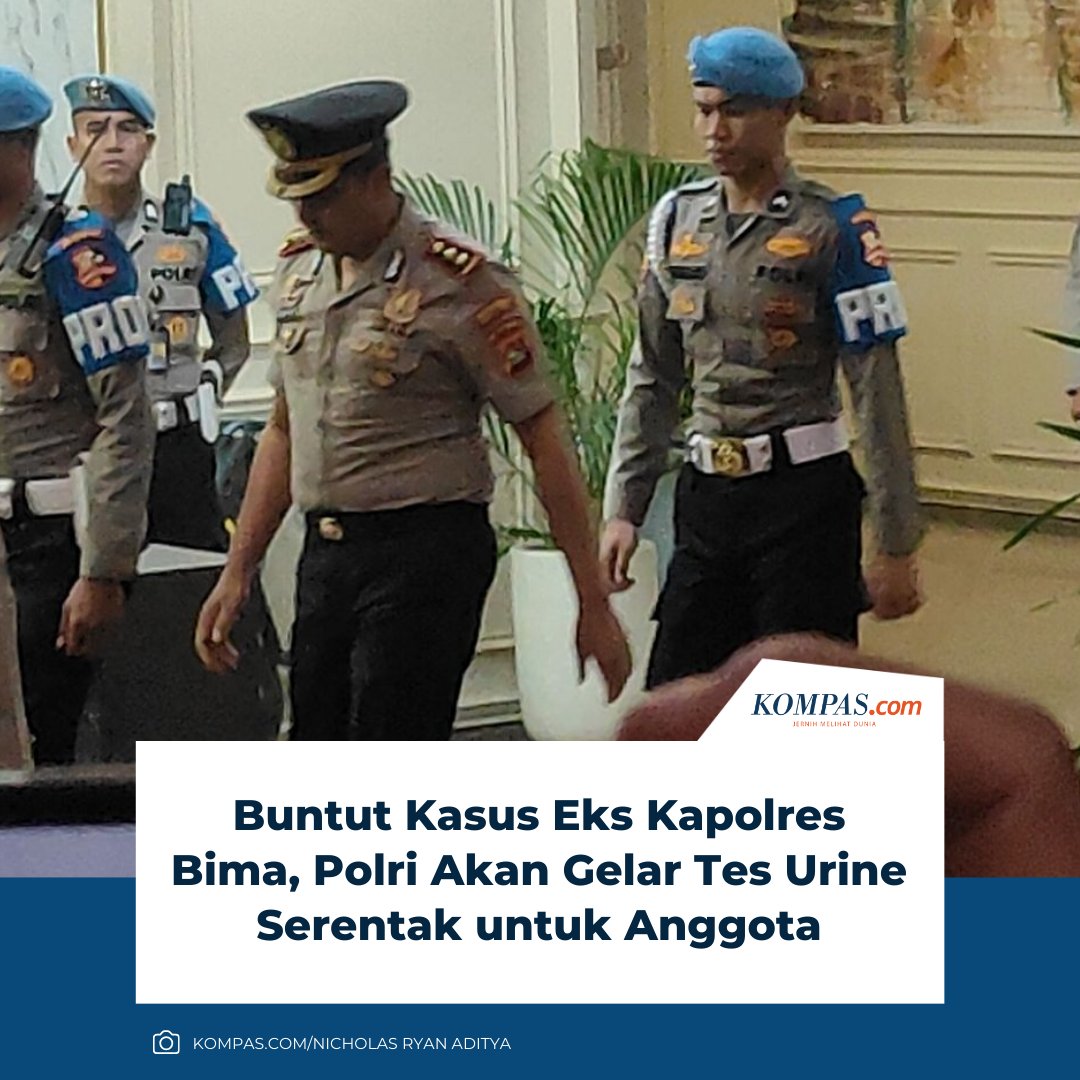
Polri akan menggelar pemeriksaan urine secara serentak di seluruh jajaran sebagai tindak lanjut atas maraknya kasus penyalahgunaan narkotika yang melibatkan oknum anggota, khususnya kasus eks Kapolres Bima Kota, AKBP Didik Putra Kuncoro.
Kebijakan itu disampaikan Kepala Biro Penerangan Masyarakat (Karo Penmas) Divisi Humas Polri Brigjen Pol Trunoyudo Wisnu Andiko.
"Berdasarkan perintah Kapolri, Divpropam Polri dan jajaran akan melaksanakan kegiatan pemeriksaan urine," kata Trunoyudo.
Baca di: https://t.co/TR4CDOxCNF
~WR #Polisi #TesUrine
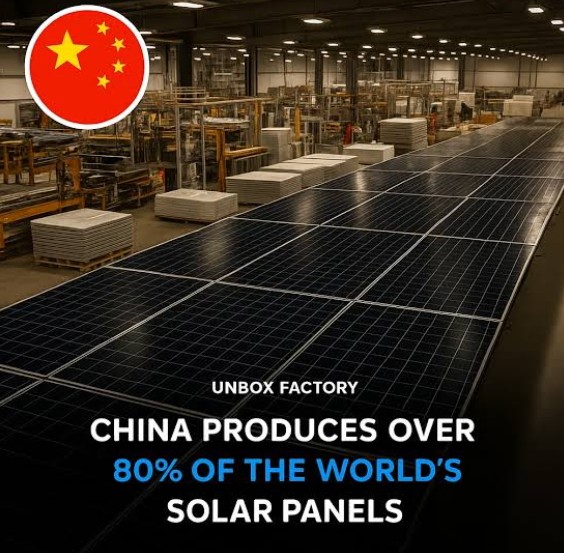
China makes 80% of the world’s solar panels, 75-80% of all batteries, 60-65% of wind turbine parts and 55% of global crude steel production. This is more than the next 15 countries combined. China is still commissioning six state-of-the-art coal plants a month, reaching 50-80 GW a year– these are cleanest coal plants ever built.
Its the workshop of the world and its output is now roughly equal to or larger than the US + Japan + Germany + South Korea combined. Some sources say it exceeds the entire top 9-10 nations combined when including gross production—but definitely larger than the US + EU + Japan alone. It's all consistent with IEA and industry reports.
China’s manufacturing share of global GDP went from 6% in 2000 to 30% today; America's fell from 22-25% to 10-15%; and Europe’s collapsed from 25% to 14-15%. This miracle is embarrassingly simple: Abundant coal energy, no net-zero cults, and a government that sees steel mills and giga-factories as strategic assets. It's the biggest transfer of wealth and power in human history.
This global power handover happened without guns, fanfare or treaties. One side builds things; the other side writes letters or pays influencers to sell PR agenda. However it happened, it's a shameful time for the West.
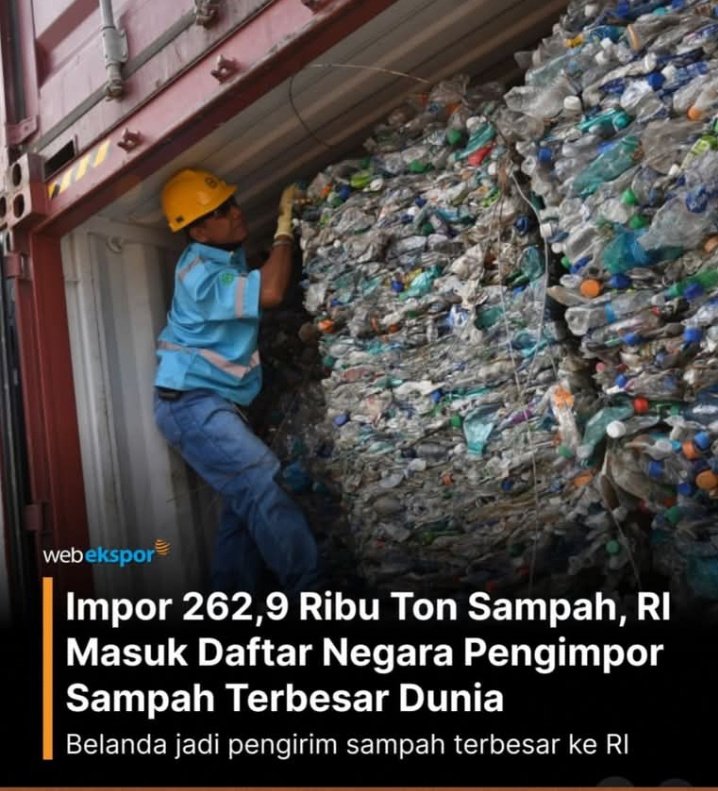
Hahaha parah banget. Sampah aja import, padahal sampah Indonesia banyak, sampai numpuk di gedung Senayan. 🤣🤣
Sampah terbanyak kalian tau dari mana? dari Belanda cuyy...
Yuk yg mau belajar cara deteksi FOTO manipulasi atau tidak cukup memakai tools "FORENSICALLY", "IMAGE https://t.co/lMR7t886cU" <= atau "FOTO https://t.co/qE68v1pUja" <= dengan metode Error Level Analysis.
Semoga bermanfaat 🙏🙏🙏
@GemesLess










![idextratime's tweet photo. 🗣️ Donald Trump :
"Orang ini [Lionel Messi] datang ke sini [MLS] dan dia juara. Banyak pemain hebat datang ke sini, mereka bermain dengan cukup baik, tapi mereka tidak juara. Namun Leo, kamu datang dan kamu juara. Dan kamu juga punya tekanan yang jauh lebih besar daripada yang lain, kamu datang dengan semua tekanan itu dan kamu bisa juara."
"Lionel Messi telah memenangkan 48 trofi sepanjang kariernya, sebagai pemain dengan trofi terbanyak dalam sejarah, bisakah Anda bayangkan itu?"](https://pbs.twimg.com/media/HCrhEG8aUAEqFcu.jpg)