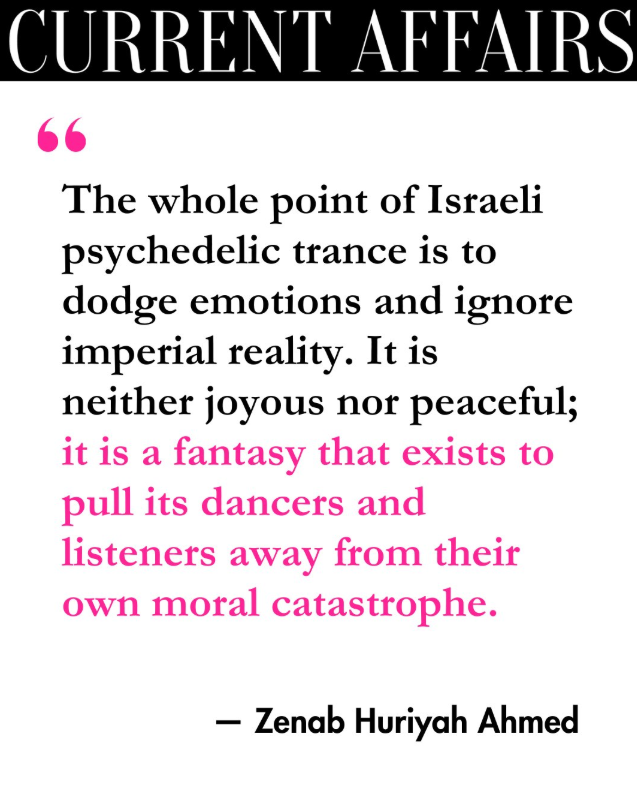
The ultimate luxury belief—one that combines much of what I call negative narcissism—is: “My people are the worst people who ever lived, and the world would be better off without us.” Just as positive narcissism says, “Daddy is responsible for everything good in the world,” this kind of societal self-hatred is also narcissistic: “Daddy is responsible for all the evil in the world.”
Growing up with a Russian father who is now 100 years old, and being taught world history from an early age, I was always struck by the insularity of this view. I noticed it particularly when I was living in San Francisco after law school. So many highly educated people seemed convinced that America had created problems in the twentieth century that they did not appear to know had existed in other countries for decades, centuries, or, in the case of Afghanistan, millennia.
If your conclusions always come back to “Daddy is responsible for everything bad in the world,” you are still making everything about yourself. It is still narcissism. And negative narcissism is worse than the positive kind. Excessive national pride has its own obvious dangers, but I will take it over national self-hatred.
This is the attitude of a late empire telling itself, “We can afford contempt for ourselves.” But that contempt becomes a self-fulfilling prophecy: it is one of the reasons the empire enters its late stage in the first place. (Edward Gibbon FTW.)
1901: Average American family spent 42% of budget on food
1945: 23%
1965: 15%.
Today: 9.5% (tho we eat out far more than ever and have far more variety)
In recent years we had a spike because of covid and inflationary domestic policy and then things like avian flu (eggs) and a drought (beef). Grocery prices aren't insane. Americans spend less of their budget on food than any other country.
We certainly don't need the air force to come home and help us with our groceries. We've figured that out. We could do with less whiny doomer grievance culutre
our nation has been radically altered by donald trump and his army of tech bros. we must return to the way things were, which is why we support: abolishing the senate, the supreme court, and the executive branch, revoking your right to property, and seizing all private industry.
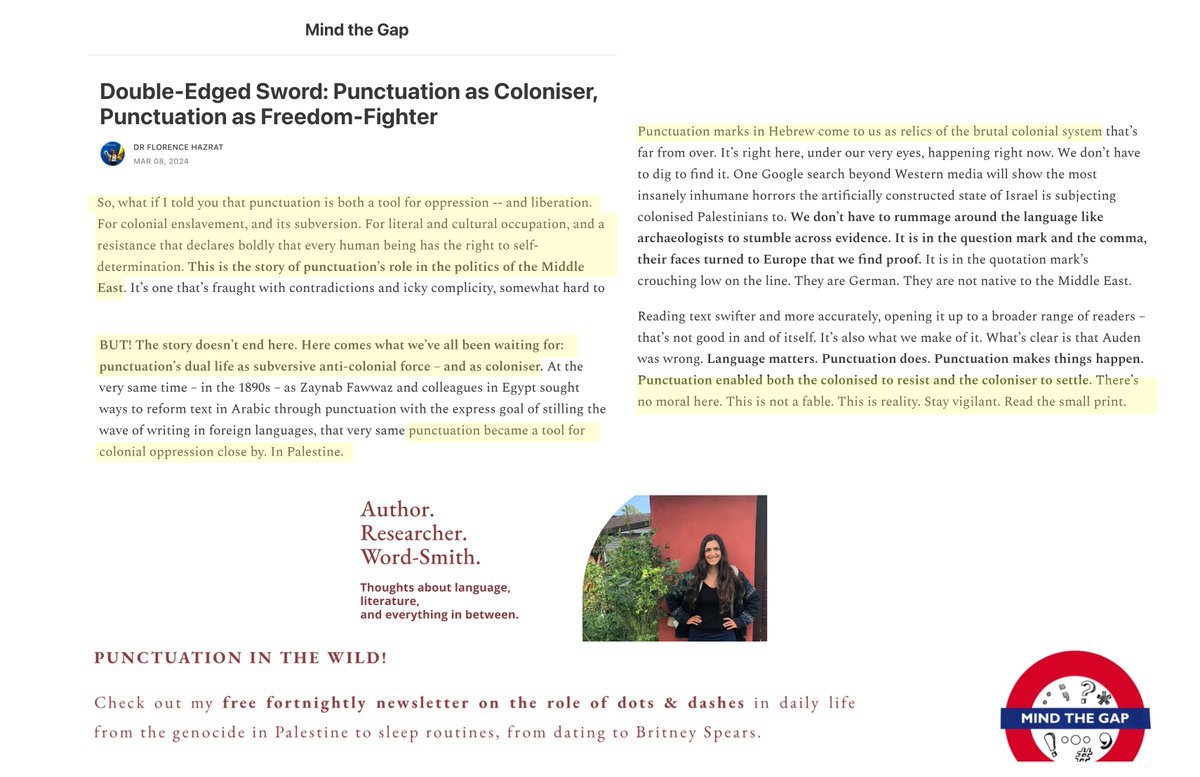
it's absolutely wild how anti-Israeli lunacy has taken over every square inch of the publishing sector. A publicity company just sent me info about a lovely-sounding new book about the history of punctuation—the kind of quirky book I'd normally enjoy
I then googled the author:
Mamdani understanding that expanding government benefits requires a brighter line between citizens and noncitizens is the beginning of the end of open borders as a progressive priority.
A recurring pattern from 20th century history:
1. A tiny fanatical Marxist group tries to stage a violent coup d'état and install themselves as a minority government by committing mass-atrocities against a latent majority that's blindsided by their willingness to discard the rule of law in the service of "the revolution."
2. Authoritarian elements on the right mistake the fanatical Marxist groups for a majority faction, urge militarization of society to defeat them, and thereby hasten the demise of the rule of law.
3. The authoritarian right succeeds in defeating the Marxists, and then installs itself as dictatorship for the next couple of decades under the guise of "necessity" for preventing the return of the Marxists instead of a Cincinnatus-style return to the farm and restoration of the pre-coup peacetime order.
4. The right wing dictator eventually dies or falls from power after decades of peacetime abuses that undermine all attempts to reconstitute the rule of law.
5. After the dictator is gone, the country swings to the left and votes in a succession of socialist regimes with terrible policies.
6. Decades later after the abject failures of both the socialist and right wing dictator governments, socialists and right wing authoritarians alike both blame classical liberalism and insist that the only reason their side didn't deliver on its promised utopia is that they didn't socialist or dictator hard enough.
Also known as the Schmitt Show.
They honestly believe that it’s an arbitrary, imaginary line that creates a standard of living.
Zero concept of culture, laws, history, or Philia.
I do not know how we can reason with people so genuinely divorced from reality.
Prison abolition is one of those issues where you can safely quarantine every single person who believes in it as an insane lunatic not to be trusted with an iota of power or influence. No exceptions.
Many such policies, in fact, but prison abolition is one of the clearest.
I’m not scared. I think you guys will fail because your ideas are stupid and very, very, old and will fail wherever put into practice. Price controls are older than Christianity, for instance. Your Mao schtick is moronic and takes advantage of your fans’ ignorance. I think you’re a cosplaying radical kid of privilege and apologist for murderers and terrorists. But you’re not scary dude. You’re a poseur. I think it’s hilarious you streamed my comments to your easily duped fans.
@hecubian_devil I think the fundamental disconnect here is that you wants politics to solve man's search for meaning and I want politics to deliver a prosperous, safe, free society in which everyone can go find meaning in something other than politics.
The myth that greedy billionaires are the only barrier to 100% free health care, child care, & housing is the centerpiece of the DSA worldview.
They rely on this innumerate, low-information conspiracy theory because polls show even DSA'ers wont accept higher taxes for socialism.
Let's suppose that Mamdani Marts--by selling 30% below retail--put all the mom and pop NYC grocery stores out of business.
The people who normally freak out about Walmart doing this, will then oppose him right
Yep. Every time I ever am booking a vacation and I'm like "hmm this hotel seems good, why only 4.2/5 though?" I read the negative reviews, and it is full of people claiming they were horribly mistreated in ways I have never once experienced anywhere in my life.
The term "Palestine" until the 20th century referred to an administrative region without fixed or clear borders and with no national identity. The people who lived there before then were either regarded as Ottomans or as part of the Syrian region.
The term came from the final humiliation of the Jews by the Romans in AD 135, following the Bar Kokhba Revolt. The Romans put down the revolt and humiliated the Jews by renaming Judea, etc., "Syria Palaestina," which means "philistine Syria." Arabs and other Arabic speakers record this by naming the land of "Filastin" (ard Filastin) in their fatwas and some other writing.
While some Muslims used the term that we'd render as Palestine, and many Europeans did as a hangover from the Latin name for the region, especially given the general vacancy and irrelevance of the region to most world affairs, it was never anything more than a vague regional designation. There was no state, no province, no administrative district, even, referred to by any name that would render to "Palestine" today. There was, as noted, certainly no national or even sub-national identity, and any attempt to do so would have been shut down by seeing them as incorporated within the broader Syrian identity. The name carried roughly the same kind of specific significance as a term like the "Near East" would today.
Identifying people as "Palestinians" didn't really begin until the very end of the 19th century, and even then it was a reaction to Zionism and Jews starting to move into the region. The term was sort of mainstreamed as a political reality after the Ottoman Empire was broken up in defeat after World War I, and the region came under British control using the old Latin terminology as "British Mandate Palestine," meaning "the part of the Palestinian region under British control." That was roughly thirty years before Israel would declare independence as the sovereign nation-state of Israel as we know it today. At no point in this story is there a sovereign nation-state called Palestine or anything resembling it.
That said, the beginnings of an Arab "Palestinian" identity as oppositional to Zionism and British Mandatory control, developed from their previous 1890s beginnings to something more like a dedicated resistance identity when the Brits took over. Arabs didn't believe in British sovereignty or control over what they deemed Islamic land, either, and they were adamantly opposed to the Mandate's explicit Zionism, which was being acted upon to bring Jews into the region (even though the British were wishy-washy on this and then betrayed it during WWII, when it was arguably needed most).
The "Palestinian" identity at the time wasn't exactly national but quasi-national and born (and borne) only in resistance. It gained some crystallization as such in the mid and late 1930s after the failed Arab Revolt, significantly as a response (back-up plan) to the failure of Greater Syria to defend "Arab" interests in the region against British (and Jewish Zionist) control.
Still, it didn't acquire something approaching the identity status people might recognize today for about another decade. That had to wait until after the "Nakba" in 1948-49. This contested event occurred when five of the surrounding actual Arabian nations declared and LOST a war on the newly declared Israel. These were Egypt, Syria, (Trans)jordan, Iraq, and Lebanon.
Now, this war was the continuation of the same war being fought in the region before Israel's declaration of independence (May 15, 1948) following the late 1947 UN Partition of the region, which the proto-Israelis accepted and all the Arabs rejected. The Arabs started that war, too. Notice no state of Palestine was involved because there was no state of Palestine to be involved. Something like a "Palestinian identity" as a refusal of these developments took significant shape at the time, though.
The Arabs refer to this humiliating loss as a "catastrophe," THE catastrophe (Nakba), and rewrote history to create a "Palestinian" people who were displaced, harmed, and killed by the (defensive) military actions of the Israelis, which they see as an act of colonial aggression because they cannot admit or accept that they lost the wars, including WWI, which removed the land from Muslim control (which they believe is permanent). The "Palestinian people," whom none of these Arab states would absorb because they were more useful as a military-political weapon against Israel, came into existence as a tool to further their Islamic designs.
By the way, the UN Partition in 1947 (General Assembly Resolution 181) does not name the two states it partitioned "Israel" and "Palestine." It called them the "Jewish State" and the "Arab State." The Jews took for themselves the name "Israel" for that land, as they would. As for the "Arab State," it is not actually clear what would have been its fate. Jordan (Transjordan) viewed the Arab land by the Jordan River to naturally be part of its territory, not an independent state called "Palestine." The Syrians opposed this not particularly because they wanted the land but because they didn't want Jordanian expansion. As for Gaza, Egypt wanted administrative control but not to annex it. It is not clear what it's fate as "Arab State" would have been.
In all, in 1948-49, and following the "Nakba," these behaviors and conflicts reflected the broader pattern of inter-Arab rivalry more than anything else. The neighboring states were more focused on preventing a Jewish state and on blocking one another’s gains than on creating a viable independent Palestinian Arab state under the UN plan. The very idea of "Palestine" with a unique national identity and (fabricated) national history would have to wait.
Identity during this period (1949-1967) was still largely either "Arab" or as part of one of the Arab states, like Syrian, Jordan, or Egyptian, specifically, or just "Islamic." Movements like pan-Arabism and even pan-Syrianism were more relevant to the identity of the people today treated as "Palestinians" than was anything to do with Palestine, although the word was used. The biggest change in this period from the one before is that before this, the term "Palestinian" referred also to Jews in the region (under the Mandate), which more or less ended. Arab states also kicked out all the Jews (850,000 of them) during this time, and most of them were absorbed by Israel.
Even still, the idea of a "Palestinian nation," wasn't really invented in 1948. It didn't really gain solid identity in the global imagination as such until after the Six-Day War in 1967, which the Arabs (especially Egypt) lost badly to Israel. This second humiliation, referred to as the Naksa ("setback" or "relapse" or "defeat"), which displaced some 400,000 people* as Israel pushed threats out of its immediate vicinity by taking the lands from which they operated, changed the strategic needs of the resistance movement and fabricated a Palestinian national identity with a bogus history more or less out of thin air. That's the one defended to this day.
*These people were in large part there as a stand of active resistance against the existence of Israel as part of the aforementioned strategic refusal of any Arab states to absorb them, etc., so focusing on their displacement alone is complicated, to say the least.
The thing is, the idea to do this Palestinian national identity thing was largely due to Yasser Arafat, who was working with and getting aid and assistance from the Soviets (and arguably strategic advice in this regard, as the "Palestinian cause" strongly resembles elements of Soviet korenizatsiya programming, which has proved a useful wedge device all over the world). Moscow got involved after 1967 largely because it was only after the Six-Day War that Israel allied formally with the United States (and Western Alliance), which was the ultimate enemy of the Soviets.
Palestinian "national" identity has always therefore been a political contrivance designed to be used as a wedge and weapon against any sovereign control, especially by Jews, of any land in the broad region the Romans once declared "Syria Palaestina." A nontrivial part of this curious effort was an allied Soviet-Arab program to damage Israel and weaken American and Western interests in the Middle East (another regional designation term that isn't a nation, by the way).
That is, it's NOT REAL. It's a political contrivance meant to destabilize the region, kill and displace Jews, and fight Western interests. That's why it exists.
Since it's not real in the sense of being a genuine national identity stretching back into history in any regard, the culture that is assigned to it is also a fabrication. It is a blend of various Islamic and Arab cultural points with outright jihadist and Soviet-Communist radicalism and terrorism treated as though it's a culture. It's a culture of "resistance" and "liberation" in precisely the Communist uses of the terms. It's a "culture" in the same way "Woke" is a culture. In fact, it's basically the same thing, just Islamic and Third-Worldist Arab flavored instead of Western identity politics.