I've noticed that one of the most common mistakes ambitious people make is believing that happiness is waiting on the other side of achievement.
In behavioral science, we call this the arrival fallacy. It's the idea that once you reach the next milestone, get the promotion, earn the recognition, or accomplish the goal, you'll finally feel fulfilled.
But satisfaction doesn't come from arriving. It almost always comes from making progress toward something meaningful. That's why goals are important, but they are not the reward. The pursuit is.
Thousands of generations lived and died without ever seeing a sunset on another world.
You didn’t.
You are alive in the single sliver of time when this became possible.
This is a real photo sunet on Mars— taken by a nuclear-powered robot we threw across 140 million miles.
“This is a special place and a special time.”
There have been a lot of special moments in the history of @WSUPullman. Am hard pressed to think of a moment greater than this.
Thank you Lee Corso for providing Cougars this wonderful memory. #GoCougs
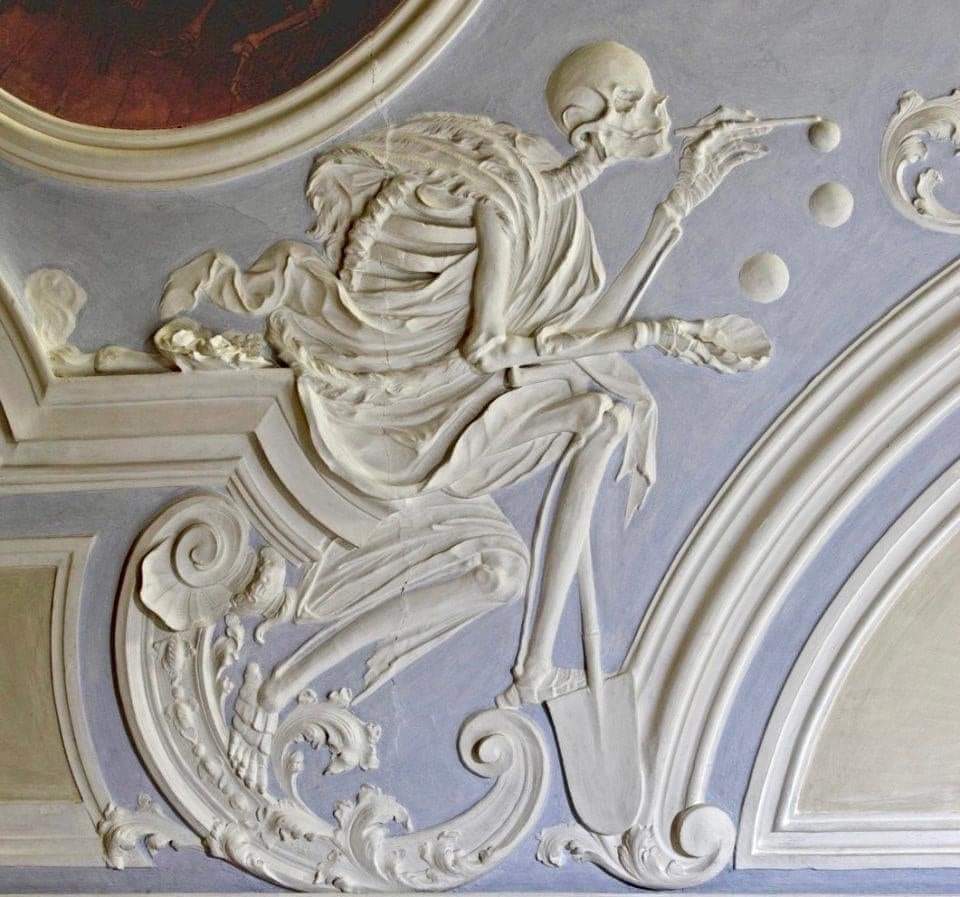
“Death Blowing Bubbles,” one of several plaster work piece, depictions of death created by Johann Georg Leinberger between 1729-1731 AD, for ceiling of Holy Grave Chapel in Michaelsberg Abbey in Bamberg, Germany 🇩🇪
The combination of the tomb with a dance of death scene, establishes a close relationship between the passion story of Jesus and the ubiquity of death is an unique scene. The bubbles are symbolic of life’s fragility. The Skeleton acts as a memento mori.
A fair number of the most prolific architectural wonders in Europe happen to be churches and chapels, many of whom harbor priceless works of art. One example of this is Michaelsberg Abbey, located in Bamberg, Germany. This chapel was first erected in 1015 AD, under the Order of Saint Benedict and worked as an abbey until the major territory reconstruction of Germany that occurred during the early 19th Century.
Prior to its seizure by Bavarian troops in 1802 AD, the abbey was decorated with plaster work by an artist named Johann Georg Leinberger. Leinberger decorated the chapel between 1729 through 1731 and is best known for the piece “Death Blowing Bubbles.” This particular illustration is said to symbolize “life’s fragility” and remained intact despite the building being turned into a hospital in 1803.
Leinberger depicts death in many forms throughout the chapel and the work is modeled within the Rococo style, which was popular throughout France and Italy at the time. After being used as a hospital for many years, the building was reclaimed in 1993 as a UNESCO World Heritage Site, however, due to structural problems it has been closed since 2012. Repairs to the building began in Spring of 2016 and completed in 2021.
#archaeohistories