$SHMD’s order volume is rising, but profit margins are shrinking. This is the true state of this German equipment manufacturer.
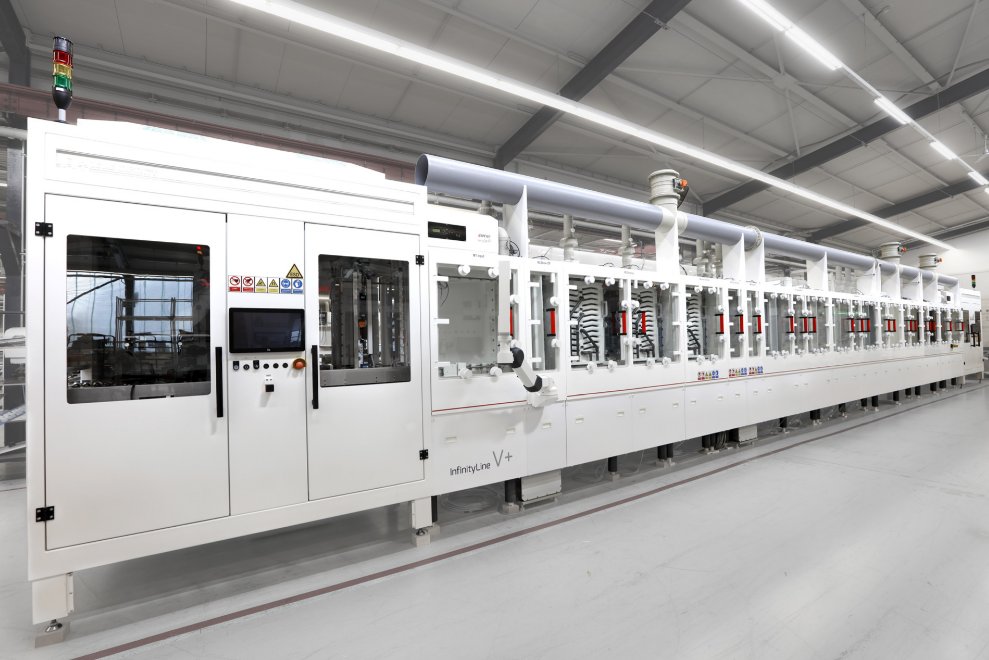
SCHMID manufactures equipment for high-end PCBs, mSAP, HDI wet processes, and advanced packaging. H1 revenue reached 46 million euros, nearly tripling year-over-year; as of August 21, orders received this year totaled 96.6 million euros, with a backlog of approximately 95 million euros.
In July, the company secured a repeat order for HDI-ML/mSAP equipment worth over 37 million euros. Full-year revenue guidance remains above 100 million euros, with order intake projected at 125–150 million euros; the company also stated it expects results to fall toward the upper end of the range.
The cost is outlined in the next line: the adjusted EBITDA margin has been slashed from “over 12%” to 6–9%. More than half of revenue comes from China, where the gross margin has been squeezed to 21%.
The net loss of 47.8 million euros was primarily due to convertible bonds and non-cash financial items. The company plans to invest approximately 11 million euros in a new plant in Zhongshan, which is scheduled to begin production in mid-2027. Dilution from convertible bonds and shelf-registered shares continues.
On Friday, the stock rose from 3.62 to 4.37 (+21%), and after today’s opening, it reached 4.7–5.0. There are no Wall Street price targets with sufficient coverage.
Short-term: This is an order-driven stock, not a profit-driven one. 4.37 is merely a rebound from the 3.00 range; 5.00 is last Friday’s high and the immediate resistance level.
Today’s trading is more likely to consolidate in the 4.50–5.20 range; only after firmly holding above 5.00 can we consider a move back toward 5.50–6.00. A break below 4.30 would lead to a retest of the 3.50–3.80 range. The next key test will be whether incoming orders can be converted into high-margin shipments from the German plant, rather than just another order from China.
#QQQ #STOCK #SHMD
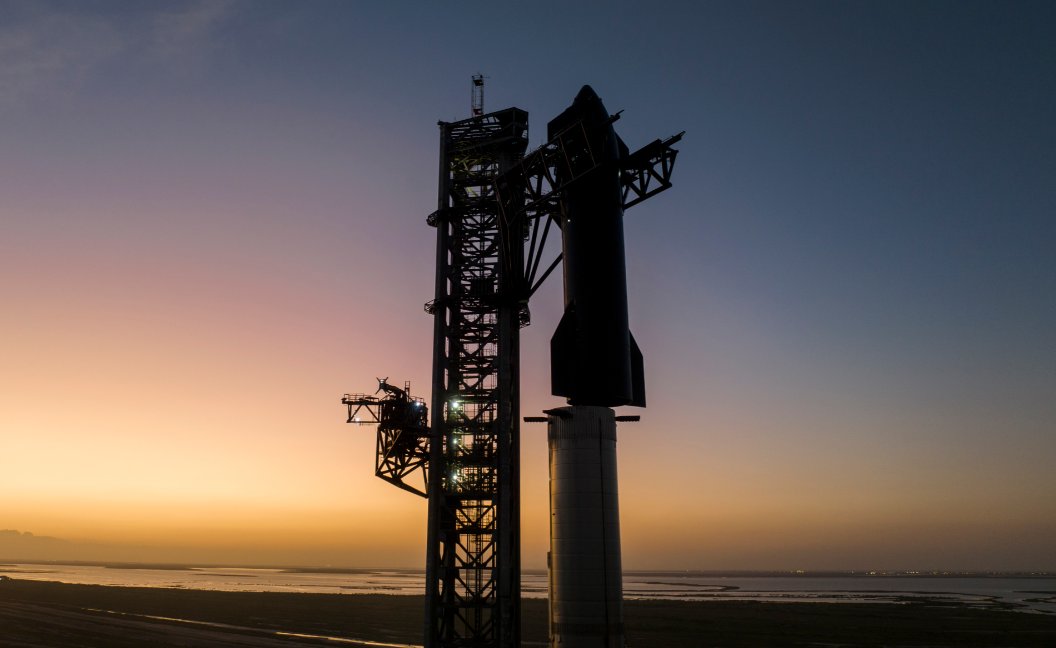
Flight 14 NET this morning, 7:15 CT, pending FAA. First planned orbital profile. $SPCX trades the attempt. A scrub is weather. A failure is the multiple. #SPCX
WTI back toward $92–$93 on reports of a phased Hormuz path. Brent still heavy. Gasoline near $4.50. Diplomacy is a headline. Shipping is the price. #Oil
$MFI
Software: $4 million annually. Market cap follows the “treasury” narrative. Closed at around 9.49, up slightly. Trading range: 9.50–9.71, with 2,000–3,000 shares traded. Dropped from 45 to 9; the market no longer offers a premium based on the financing price.
The real business is the trading system sold to brokers. Its valuation is driven by that 500 million private placement and the BCH on the books, not by subscription fees. Mining and insurance have not yet become stable cash flows.
In the first half of the year, software revenue was approximately 12 million HKD, while the fair value of digital assets showed a loss of 2.1 billion HKD. A single day’s volatility in the “Vault” holdings could wipe out a year’s worth of software profits.
The next table focuses on just two things: the value of the BCH holdings, and whether software revenue has been distorted by the “vault” narrative. The software is just a shell. The price follows the coin, not the orders.
This is not investment advice.
#MFI #QQQ #STOCK
$MFI Software generates $4 million in annual revenue.
Market cap is based on the “treasury” narrative. Its actual business is selling trading systems to brokers. The valuation is driven by that $500 million private placement and the BCH on the books, not software subscription fees.
Mining and insurance haven’t yet become stable cash flows. The stock price plummeted from $45 to $9, indicating that the market is no longer willing to pay a premium based on the financing price.
The next table focuses on just two things: the value of the BCH holdings and whether software revenue has been skewed by the Treasury’s narrative. A single day’s fluctuation in the Treasury’s holdings can wipe out a year’s worth of software profits.
The software is just a shell. The price follows the coin, not the orders.
#MFI
$MFI Software generates $4 million in annual revenue.
Market cap is based on the “treasury” narrative. Its actual business is selling trading systems to brokers. The valuation is driven by that $500 million private placement and the BCH on the books, not software subscription fees.
Mining and insurance haven’t yet become stable cash flows. The stock price plummeted from $45 to $9, indicating that the market is no longer willing to pay a premium based on the financing price.
The next table focuses on just two things: the value of the BCH holdings and whether software revenue has been skewed by the Treasury’s narrative. A single day’s fluctuation in the Treasury’s holdings can wipe out a year’s worth of software profits.
The software is just a shell. The price follows the coin, not the orders.
#MFI
White House bilateral, then a state dinner. Cook, Huang, Altman in the room. A photo with no language on export controls is catering with better lighting. #NVDA#AAPL
$NNBR doesn’t sell computing power. It sells liquid-cooling connectors, circuit breakers, and micrometer-tolerance parts like those used in surgical instruments.
That “data center” mention after the market closed drove the price up. During the session, watch to see if the parts were delivered. Closed around 3.86–3.89, up about 15%. Opened at 3.74, with a high of 4.02 and a low of 3.55.
Pre-market range: 3.45–3.95. Opened above 3.70; held steady at 3.60; broke through 3.90 and even touched 4.02. The momentum didn’t fade back to 3.40 as it did earlier in the day. The upward revision to guidance appears significant. The core figures only increased by approximately 10 million in sales and 3 million in EBITDA.
Compared to the full year, this reflects existing orders already being recognized on the books, not new growth areas. The Wuxi expansion into machine tools, with approximately 100 million in new orders, will only count toward revenue once realized. The automotive segment remains, but its share is shrinking.
The third-quarter earnings report on October 28 will be the next benchmark.
Four-week outlook: If Q3 hits the upper end of the range → 3.80–4.60; if shipments or the auto sector drag → 2.70–3.20. 6.7 is the annual target, not this week’s price. The upward revision confirms that order volumes are rising. Component manufacturers shouldn’t be judged by the same yardstick as GPU stories.
Follow @BrandonHayes52
Not investment advice. #NNBR #QQQ #STOCK
$NNBR This isn’t a company that sells computing power. It’s a factory that manufactures micrometer-tolerance parts for liquid-cooling connectors, circuit breakers, and surgical instruments.
The upward revision to the guidance looks impressive. Zhongshu only added $10 million in sales and $3 million in EBITDA. Relative to the full-year outlook, this simply reflects orders that were already on the rise being added to the financials—it doesn’t represent a new growth track.
The addition of machine tools in Wuxi and new orders totaling approximately $100 million won’t count until they translate into revenue. The automotive segment is still there, but its share is shrinking. The after-hours buying was driven by the phrase “data center.” During regular trading hours, investors will focus on whether parts are being delivered on schedule. The third-quarter earnings report on October 28 will be the next key indicator.
Today: $3.45–$3.95. If it opens above $3.70, first see if it can hold $3.60; a break above $3.90 is likely to be followed by a pullback.
1–3 days: $3.20–$4.20. Once the hype fades, it will likely return to around $3.40.
4 Weeks: If Q3 results align with the new price range → $3.80–$4.60. If shipments are delayed or the automotive segment underperforms → $2.70–$3.20. Analysts’ $6.7 target is a one-year projection, not a target for this week’s trading.
The upward revision confirms that orders are picking up. Component manufacturers aren’t valued by the same yardstick as the GPU story.
Follow @BrandonHayes52
#NNBR #QQQ #STOCK
I’ve selected a few stocks worth tracking from today’s limit-up and sharply rising stocks.
$B***
Follow me + comment or send a DM, and I’ll send you the full report with one click.
$NNBR This isn’t a company that sells computing power. It’s a factory that manufactures micrometer-tolerance parts for liquid-cooling connectors, circuit breakers, and surgical instruments.
The upward revision to the guidance looks impressive. Zhongshu only added $10 million in sales and $3 million in EBITDA. Relative to the full-year outlook, this simply reflects orders that were already on the rise being added to the financials—it doesn’t represent a new growth track.
The addition of machine tools in Wuxi and new orders totaling approximately $100 million won’t count until they translate into revenue. The automotive segment is still there, but its share is shrinking. The after-hours buying was driven by the phrase “data center.” During regular trading hours, investors will focus on whether parts are being delivered on schedule. The third-quarter earnings report on October 28 will be the next key indicator.
Today: $3.45–$3.95. If it opens above $3.70, first see if it can hold $3.60; a break above $3.90 is likely to be followed by a pullback.
1–3 days: $3.20–$4.20. Once the hype fades, it will likely return to around $3.40.
4 Weeks: If Q3 results align with the new price range → $3.80–$4.60. If shipments are delayed or the automotive segment underperforms → $2.70–$3.20. Analysts’ $6.7 target is a one-year projection, not a target for this week’s trading.
The upward revision confirms that orders are picking up. Component manufacturers aren’t valued by the same yardstick as the GPU story.
Follow @BrandonHayes52
#NNBR #QQQ #STOCK
$NNBR This isn’t a company that sells computing power. It’s a factory that manufactures micrometer-tolerance parts for liquid-cooling connectors, circuit breakers, and surgical instruments.
The upward revision to the guidance looks impressive. Zhongshu only added $10 million in sales and $3 million in EBITDA. Relative to the full-year outlook, this simply reflects orders that were already on the rise being added to the financials—it doesn’t represent a new growth track.
The addition of machine tools in Wuxi and new orders totaling approximately $100 million won’t count until they translate into revenue. The automotive segment is still there, but its share is shrinking. The after-hours buying was driven by the phrase “data center.” During regular trading hours, investors will focus on whether parts are being delivered on schedule. The third-quarter earnings report on October 28 will be the next key indicator.
Today: $3.45–$3.95. If it opens above $3.70, first see if it can hold $3.60; a break above $3.90 is likely to be followed by a pullback.
1–3 days: $3.20–$4.20. Once the hype fades, it will likely return to around $3.40.
4 Weeks: If Q3 results align with the new price range → $3.80–$4.60. If shipments are delayed or the automotive segment underperforms → $2.70–$3.20. Analysts’ $6.7 target is a one-year projection, not a target for this week’s trading.
The upward revision confirms that orders are picking up. Component manufacturers aren’t valued by the same yardstick as the GPU story.
Follow @BrandonHayes52
#NNBR #QQQ #STOCK
Fifth down day in crude after a three-hour U.S.–Iran sit-down at the UN. Trump called the meeting “very good,” then used “annihilate” in the speech. Markets bought the meeting, not the verb. #Oil
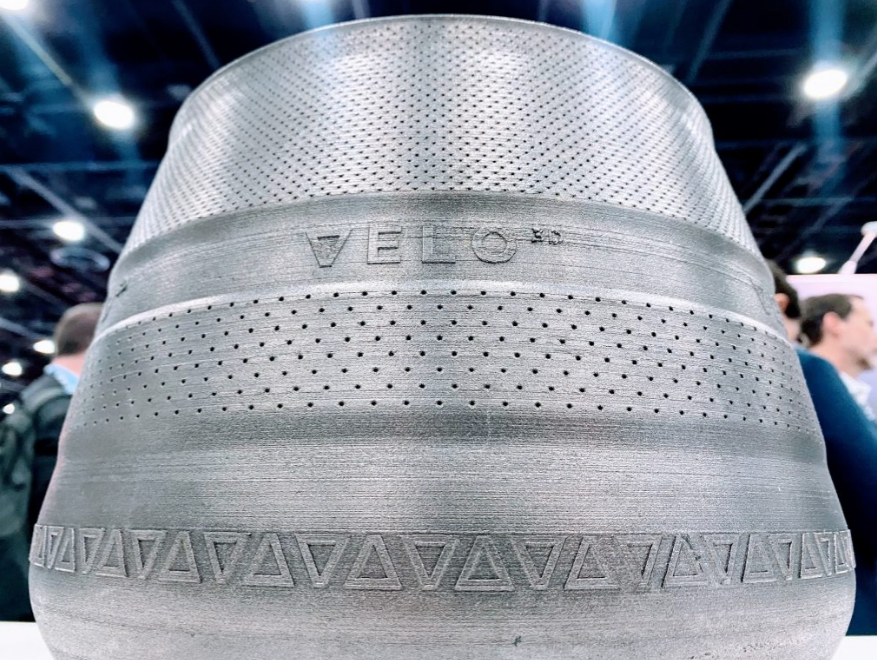
$VELO printers are shipping. The new factory is still burning through cash. Closed at 11.52, up about 2%. Opened at 11.28, with a high of about 11.56 and a low of 10.98. Pre-market range: 10.6–12.2; briefly touched 11.50 but didn’t reach 12.2;
nor did it drop below 11 to test 10.6. No new printer orders. The 13 level couldn’t hold. Sapphire manufactures parts for rockets, engines, and gas pipelines—components where suppliers are hard to switch. Revenue is rising, with a gross margin just over 20%, but the company is still far from “expanding production to become self-sustaining.”
Livermore plans to triple capacity, so capital expenditures must keep pace. RPS needs to achieve 25%–30% annual revenue growth; only then will machine sales become a reliable source of income. GIDEP merely demonstrates the ability to exchange quality data with defense projects. Short interest is high, so news can easily trigger a short squeeze; once the squeeze is over, the question is whether there will be buyers for the next machine. The market consensus is around 23 as the one-year target, not this week’s price.
Four-week outlook: Q3 gross margin heading toward 30%, cash flow not dropping sharply → 12–16; shipment slowdown or refinancing expectations → 8–10. June high of 31. Defense contracts are driving demand. Whether gross margins and cash flow can sustain the new plant will determine if this small-cap stock can hold its ground. Not investment advice.
#VELO #QQQ #STOCK
$VELO printers are shipping, but the factory is still burning through cash.
Sapphire focuses on parts for rockets, engines, and fuel lines—components where suppliers can’t be easily switched. Revenue is picking up, with a gross margin just over 20%, but the company is still a long way from being able to “self-fund its expansion.” The new plant is projected to triple production capacity, and capital expenditures will need to keep pace.
RPS (replacement parts/services) aims to account for 25%–30% of annual revenue; only then will the one-time sale of machines turn into predictable income. GIDEP merely demonstrates the ability to exchange quality data with defense projects. Short positions are high, so news can easily trigger a short squeeze; once that subsides, the market will still depend on whether there are buyers for the next machine. Analysts’ target price of around $23 is a one-year target, not a target for this week’s trading.
Today: $10.6–$12.2. If it breaks above $11.50, test $12.2; if it falls back below $11, watch for $10.6 first.
1–3 days: $9.8–$13.0. Without new machine orders, it will be difficult to hold $13.
4 Weeks: If Q3 shows gross margins moving toward 30% and cash flow doesn’t drop sharply → $12–$16. If there’s a shipment slowdown or refinancing expectations → $8–$10. $31 is the previous high from June.
Defense components are driving demand. Whether gross margins and cash flow can support a new factory will determine whether this small-cap stock can hold its ground.
#VELO #QQQ #STOCK
Here are a few handpicked stocks showing early momentum from today’s market
Ticker:$B***
Follow me and leave a comment or send a DM to receive the full report immediately
$VELO printers are shipping, but the factory is still burning through cash.
Sapphire focuses on parts for rockets, engines, and fuel lines—components where suppliers can’t be easily switched. Revenue is picking up, with a gross margin just over 20%, but the company is still a long way from being able to “self-fund its expansion.” The new plant is projected to triple production capacity, and capital expenditures will need to keep pace.
RPS (replacement parts/services) aims to account for 25%–30% of annual revenue; only then will the one-time sale of machines turn into predictable income. GIDEP merely demonstrates the ability to exchange quality data with defense projects. Short positions are high, so news can easily trigger a short squeeze; once that subsides, the market will still depend on whether there are buyers for the next machine. Analysts’ target price of around $23 is a one-year target, not a target for this week’s trading.
Today: $10.6–$12.2. If it breaks above $11.50, test $12.2; if it falls back below $11, watch for $10.6 first.
1–3 days: $9.8–$13.0. Without new machine orders, it will be difficult to hold $13.
4 Weeks: If Q3 shows gross margins moving toward 30% and cash flow doesn’t drop sharply → $12–$16. If there’s a shipment slowdown or refinancing expectations → $8–$10. $31 is the previous high from June.
Defense components are driving demand. Whether gross margins and cash flow can support a new factory will determine whether this small-cap stock can hold its ground.
#VELO #QQQ #STOCK
$VELO printers are shipping, but the factory is still burning through cash.
Sapphire focuses on parts for rockets, engines, and fuel lines—components where suppliers can’t be easily switched. Revenue is picking up, with a gross margin just over 20%, but the company is still a long way from being able to “self-fund its expansion.” The new plant is projected to triple production capacity, and capital expenditures will need to keep pace.
RPS (replacement parts/services) aims to account for 25%–30% of annual revenue; only then will the one-time sale of machines turn into predictable income. GIDEP merely demonstrates the ability to exchange quality data with defense projects. Short positions are high, so news can easily trigger a short squeeze; once that subsides, the market will still depend on whether there are buyers for the next machine. Analysts’ target price of around $23 is a one-year target, not a target for this week’s trading.
Today: $10.6–$12.2. If it breaks above $11.50, test $12.2; if it falls back below $11, watch for $10.6 first.
1–3 days: $9.8–$13.0. Without new machine orders, it will be difficult to hold $13.
4 Weeks: If Q3 shows gross margins moving toward 30% and cash flow doesn’t drop sharply → $12–$16. If there’s a shipment slowdown or refinancing expectations → $8–$10. $31 is the previous high from June.
Defense components are driving demand. Whether gross margins and cash flow can support a new factory will determine whether this small-cap stock can hold its ground.
#VELO #QQQ #STOCK
$AZO reports before the openStreet wants ~$54 EPS on ~$6.7B. Options priced a ±10% day. This is the consumer check, not an AI name. If comps miss, the rally stays a tech-only tape. #AZO
On the day $NOK was added to the index, profit margins did not follow suit. The ADR closed at around 10.95–10.98, up about 2.5%. It opened at 10.98, with a high of 11.05 and a low of 10.57. The pre-market high of 11.0 essentially marked the upper limit for the entire day. It did not reach 12.
It didn’t break through 10.15. I bought a small position based on index weighting, but the optical segment’s profit margin wasn’t revised upward. Second-quarter figures remained unchanged: optical +20%, IP +16%, AI/cloud orders at 2.8 billion euros, and a group operating loss of 50 million euros. Mobile networks are still part of the group. Telxius, Microsoft, and eight other companies are testing AI-RAN, which is still in the deployment phase.
Ciena has already projected growth of approximately 30% for 2026–2029, with an operating margin of 32–35% in 2029. Nokia’s optical business accounts for about 20%. Growth rates are comparable, but profit margins are not. Three points missing from the press release: the optical segment’s operating margin has risen from 8% to the teens; IP and optical combined have stabilized at 18–20%; and free cash flow has turned positive.
In Q3, the optics segment continued to see high growth with margins edging up slightly; we expect 11.5–13.5. For the Deployment and Index segments, margins remain flat at 8.5–10. 15 is the sell-side target. Focus on margins, not index performance.
This is not investment advice.
#NOK #CIEN #QQQ #STOCK
$NOK joined the EURO STOXX 50 today. Index buying and optical margins are not the same thing. The ADR closed at 10.68 on Friday, trading between 10.52 and 10.86 during the session. It was around 11.0 in premarket trading. It dipped briefly to 10.90, but 12 is still a long way off. The optical rally didn’t end at 10.15, and margins weren’t revised upward either.
B. Riley issued a Buy rating with a target price of 15. Second-quarter optical networking revenue was up 20% year-over-year, IP revenue up 16%, net sales to AI/cloud customers doubled, and order intake reached 2.8 billion euros, with visibility through 2027. Group operating profit was a loss of 50 million euros—compared to a profit of 147 million euros in the same period last year.
The mobile network division remains within the group, so no matter how strong the optics business becomes, its performance will be diluted. Telxius’s 800G, Microsoft’s network data layer, and eight carriers testing AI-RAN are all deployment announcements. Ciena has already projected that the growth wave will bring approximately 30% growth from 2026 to 2029, with an operating margin of 32–35% in 2029.
Nokia’s optical business accounts for about 20% of the group. While growth rates may be comparable, profit margins are not. The optical segment’s operating margin has risen from 8% to the teens, IP+optical has stabilized at 18–20%, and free cash flow has turned positive—none of these three points appeared in the press release.
In Q3, the Optics segment continued to post strong growth with a slight margin improvement, targeting 11.5–13.5; the Deployment segment, however, was weighted by index inclusion with no margin movement, targeting 8.5–10. 15 is the sell-side target. Focus on margins, not index inclusion.
This is not investment advice.
#NOK #CIEN #QQQ #STOCK
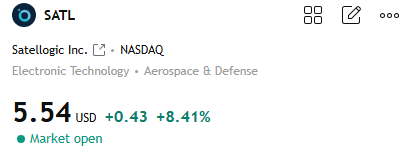
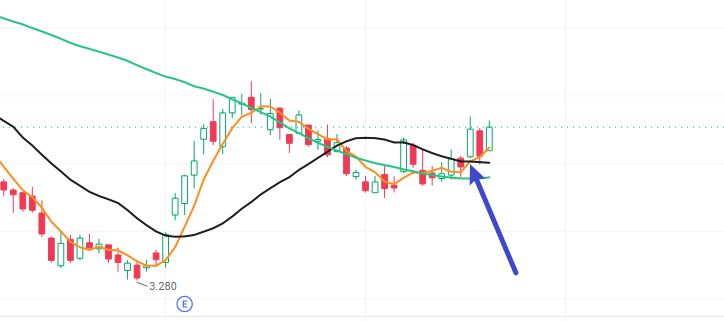
$SATL is up 8%. Although the chart shows a clear bullish signal, and the overall moving average trend is also a standard uptrend,
there is still no sign of a breakout above the $6 resistance level in the short term.
Therefore, it’s best to limit your trading to a single, very short-term intraday trade.
Profits are looking good right now; you can either close your position or continue to wait and see.
For those choosing to wait, please proceed with caution.
If you plan to hold for the long term, be prepared to hold for half a year—you’ll see significant returns.
I’ve selected a few stocks worth tracking from today’s limit-up and sharply rising stocks.
$S***
Follow me + comment or send a DM, and I’ll send you the full report with one click.
I’ve selected a few stocks worth tracking from today’s limit-up and sharply rising stocks.
$S***
Follow me + comment or send a DM, and I’ll send you the full report with one click.
$NOK joined the EURO STOXX 50 today. Index buying and optical margins are not the same thing. The ADR closed at 10.68 on Friday, trading between 10.52 and 10.86 during the session. It was around 11.0 in premarket trading. It dipped briefly to 10.90, but 12 is still a long way off. The optical rally didn’t end at 10.15, and margins weren’t revised upward either.
B. Riley issued a Buy rating with a target price of 15. Second-quarter optical networking revenue was up 20% year-over-year, IP revenue up 16%, net sales to AI/cloud customers doubled, and order intake reached 2.8 billion euros, with visibility through 2027. Group operating profit was a loss of 50 million euros—compared to a profit of 147 million euros in the same period last year.
The mobile network division remains within the group, so no matter how strong the optics business becomes, its performance will be diluted. Telxius’s 800G, Microsoft’s network data layer, and eight carriers testing AI-RAN are all deployment announcements. Ciena has already projected that the growth wave will bring approximately 30% growth from 2026 to 2029, with an operating margin of 32–35% in 2029.
Nokia’s optical business accounts for about 20% of the group. While growth rates may be comparable, profit margins are not. The optical segment’s operating margin has risen from 8% to the teens, IP+optical has stabilized at 18–20%, and free cash flow has turned positive—none of these three points appeared in the press release.
In Q3, the Optics segment continued to post strong growth with a slight margin improvement, targeting 11.5–13.5; the Deployment segment, however, was weighted by index inclusion with no margin movement, targeting 8.5–10. 15 is the sell-side target. Focus on margins, not index inclusion.
This is not investment advice.
#NOK #CIEN #QQQ #STOCK
$NOK joined the EURO STOXX 50 today. Index buying and optical margins are not the same thing. The ADR closed at 10.68 on Friday, trading between 10.52 and 10.86 during the session. It was around 11.0 in premarket trading. It dipped briefly to 10.90, but 12 is still a long way off. The optical rally didn’t end at 10.15, and margins weren’t revised upward either.
B. Riley issued a Buy rating with a target price of 15. Second-quarter optical networking revenue was up 20% year-over-year, IP revenue up 16%, net sales to AI/cloud customers doubled, and order intake reached 2.8 billion euros, with visibility through 2027. Group operating profit was a loss of 50 million euros—compared to a profit of 147 million euros in the same period last year.
The mobile network division remains within the group, so no matter how strong the optics business becomes, its performance will be diluted. Telxius’s 800G, Microsoft’s network data layer, and eight carriers testing AI-RAN are all deployment announcements. Ciena has already projected that the growth wave will bring approximately 30% growth from 2026 to 2029, with an operating margin of 32–35% in 2029.
Nokia’s optical business accounts for about 20% of the group. While growth rates may be comparable, profit margins are not. The optical segment’s operating margin has risen from 8% to the teens, IP+optical has stabilized at 18–20%, and free cash flow has turned positive—none of these three points appeared in the press release.
In Q3, the Optics segment continued to post strong growth with a slight margin improvement, targeting 11.5–13.5; the Deployment segment, however, was weighted by index inclusion with no margin movement, targeting 8.5–10. 15 is the sell-side target. Focus on margins, not index inclusion.
This is not investment advice.
#NOK #CIEN #QQQ #STOCK
$NOK Ciena forecasts annual revenue growth of approximately 30% from 2026 to 2029, a gross margin of about 50%, and an operating margin of 32–35% in 2029.
They’re in the same race. Nokia acquired Infinera; optics account for about 20% of the group’s business. The growth rates are comparable, but the profit margins aren’t. Having orders doesn’t necessarily mean having pricing power.
Telxius has demonstrated that 800G is in use on transoceanic and terrestrial networks. The key questions are: Can the optical segment’s operating margin move from 8% to the mid-double digits? Can the combined IP and optical segment maintain an annual margin of 18–20%? And will the negative free cash flow in Q2 turn positive after capacity ramp-up? With the mobile network division still part of the group, even strong performance in the optical segment will be diluted.
Today: $10.3–$11.2. If it breaks above $10.90, it will test $11.2; if it falls below $10.15, the optical segment’s rally will end.
1–3 days: $9.8–$11.8. Without an upward revision to optical margins, it won’t break $12.
4 weeks: Q3 optical segment continues strong growth, margins rise slightly → $11.5–$13.5.
If only deployment news is reported and margins remain unchanged → $8.5–$10. $15 is the sell-side target, not the four-week price. In a nutshell: Ciena has proven that the tide is rising.
Nokia needs to prove it’s not just selling more at lower prices. Look at margins, not press releases.
#NOK #CIEN #QQQ #STOCK
Fed week afterglow. Funds at 3.75–4.00%. October hike still around 53–55%. Goolsbee speaks today. One hawkish sentence and the futures bid is gone. Policy did not ease.
#Fed#FOMC