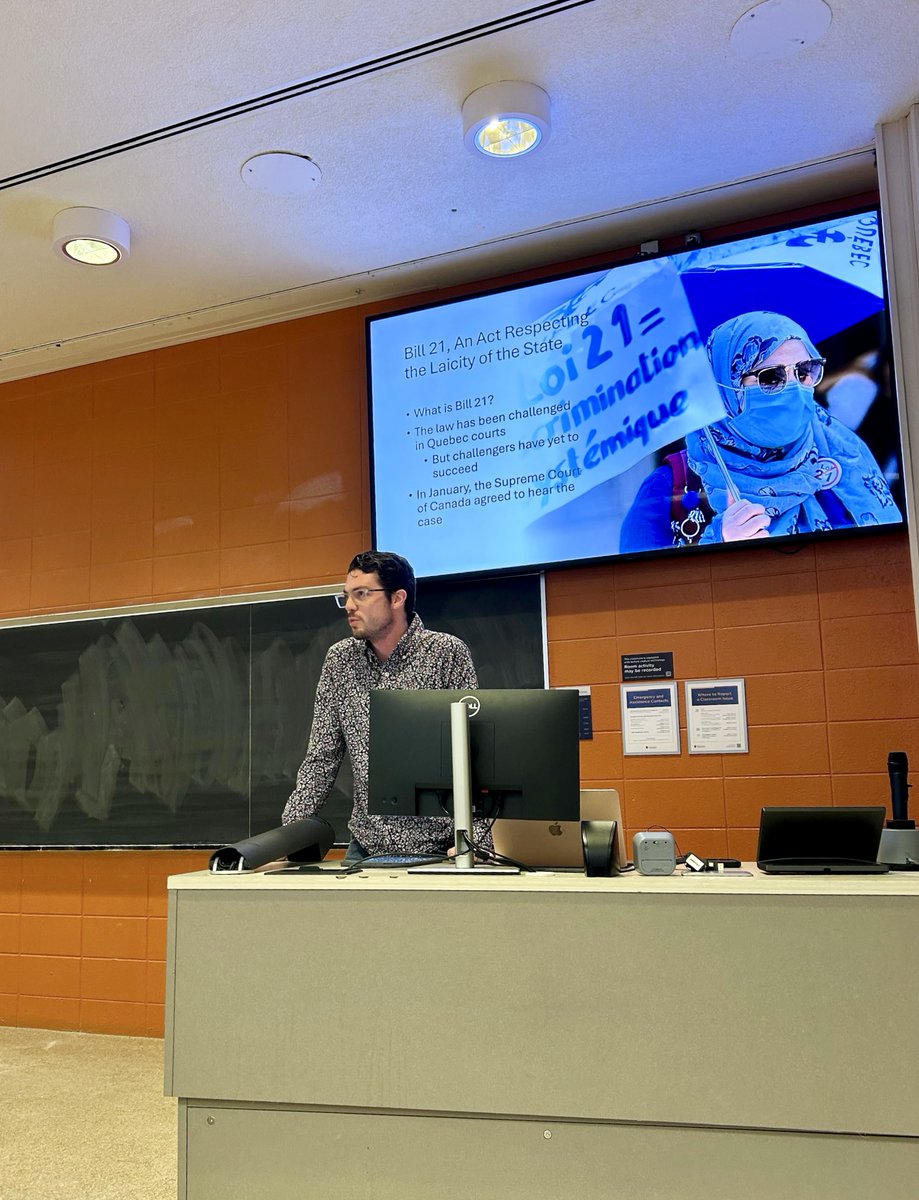
I had a great time giving a short guest lecture on Bill 21 to @QueensuPOLS Canadian Politics course for their week on Quebec politics! Bill 21 is a great contemporary case study to use to talk about Quebec politics (and the Charter, of course). Thanks for having me, @caredunton
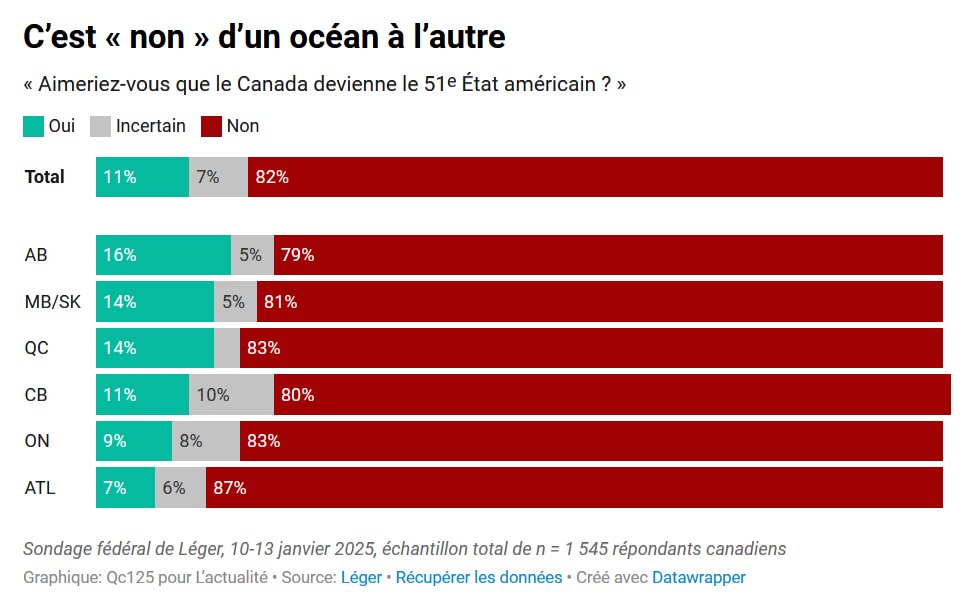
📊Léger: "Would you or would you not like Canada to become the 51st state of the United States?" (Jan. 2025)
Alberta says No.
The Prairies say No.
Le Québec dit Non.
B.C. says No.
Ontario says No.
Atlantic Canada says No.
And it's not even close. https://t.co/z38H9I4Ajn
This is an area where both the legislature and the judiciary have important roles to play. For more, check out the article here: https://t.co/j3CfIpTAf5
It's cool to see this editorial in The Globe and Mail engage with my work published in the @RDO_OLR. I agree with some of points made here, but not all.
https://t.co/dM8GWQ0MeN
Second, there are definitely issues with how the reasonable hypothetical test is applied, but as my paper in the @RDO_OLR discusses, it's useful and important to expand how we think of the issue of MMS beyond how courts are treating them. 3/n
The Decriminalization of Abortion in Latin America: A Tale of Gradual Judicialization | PS: Political Science & Politics | Cambridge Core - https://t.co/13SAviyV8q
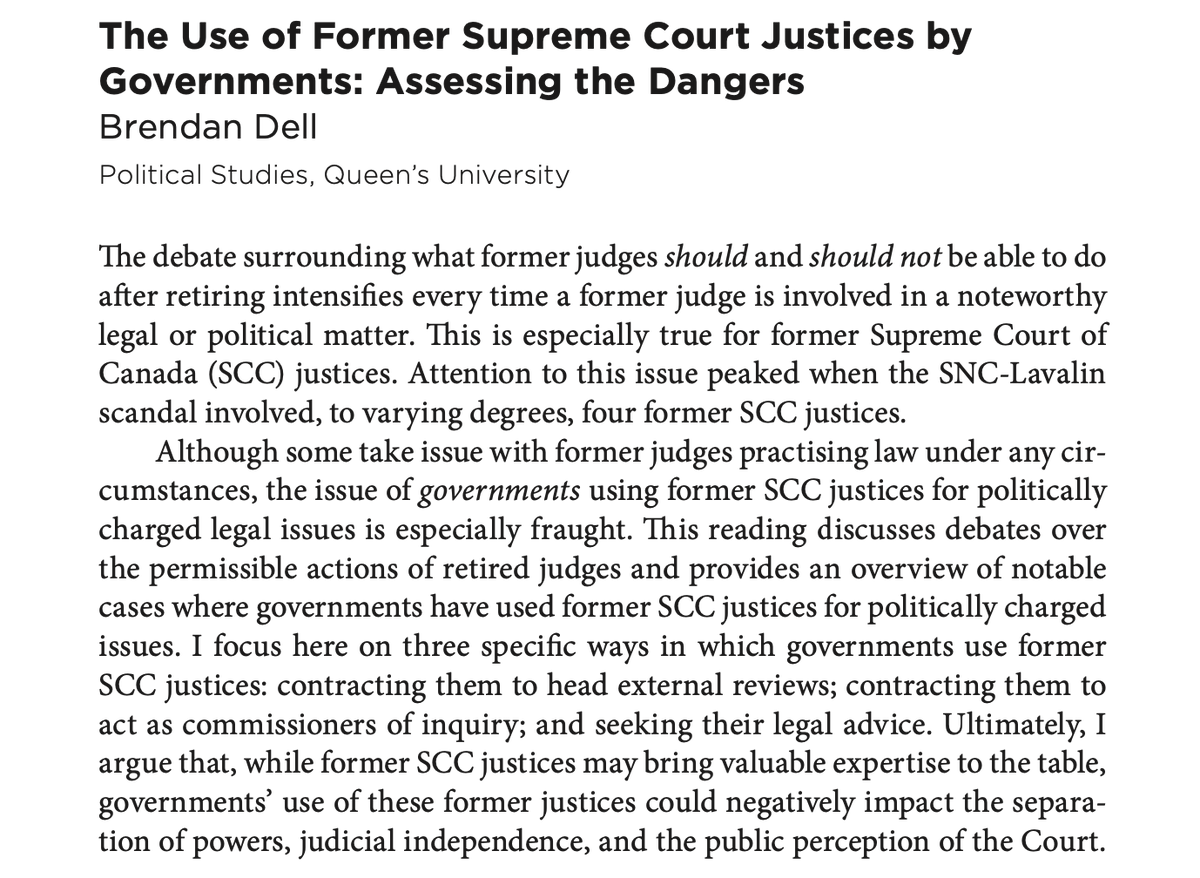
I am happy to share that my piece on the use of former SCC justices by the federal government has recently been published in Morton & Snow's latest edition of Law, Politics, and the Judicial Process in Canada.
I discuss various ways in which governments use former SCC justices and argue that while they may bring valuable expertise to the table, the use of former justices could negatively impact the separation of powers, judicial independence, and the public perception of the Court.
I am very excited to share that my piece on Harper-era mandatory minimum sentences has been published by the Ottawa Law Review (@RDO_OLR). It is open access and free to download. Check it out here:
https://t.co/j3CfIpTAf5
The article looks at how Canadian courts have treated the constitutionality of these provisions. It also dives into the institutional roles in sentencing and the thorny issue of reasonable hypotheticals.
New publication, with superstar colleague @mcnabb_danielle!
In the Review of Constitutional Studies (vol. 28).
We present an analysis of the way intervention at the @SCC_eng has been used as a strategic tool for the advancement of language rights by Francophone minorities. 1/2