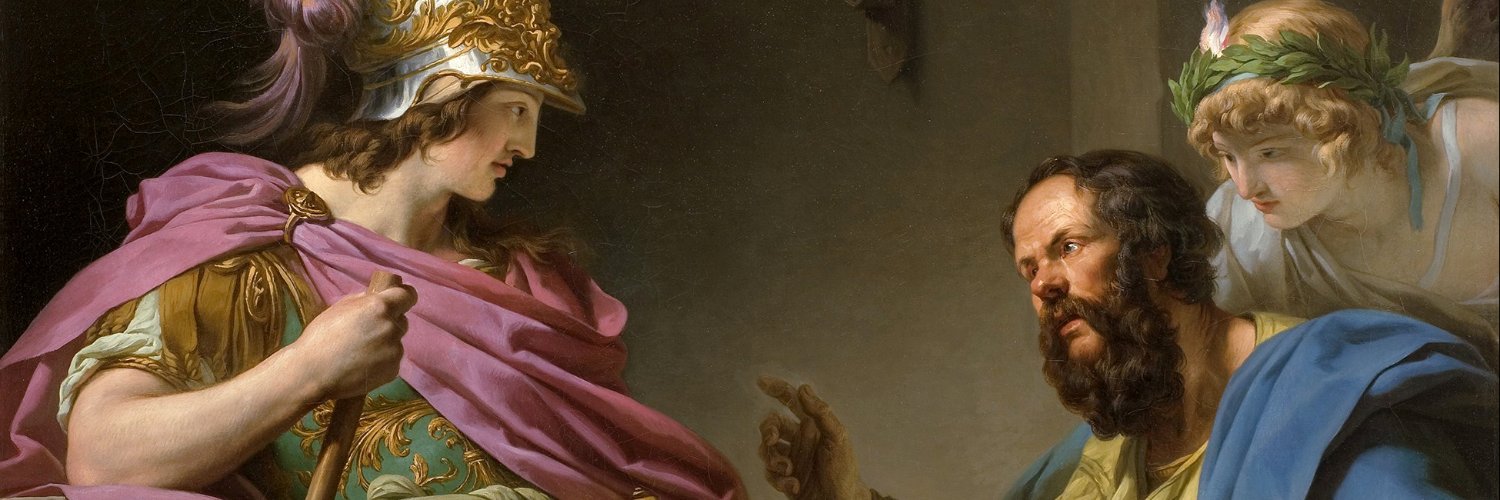
Pope Francis was at his best when he was telling young people to love their country, their Patria, their homeland.
Just watch his passion here addressing young people in Argentina:
"Go back to the roots and build your future from the roots where the sap comes from: you do not deny the history of your Fatherland, do not deny the history of your family, do not deny your grandparents. Search for your roots, search for your history. And from there, build the future. And those who say to you: “Yes, the national heroes are already in the past or they don’t make sense, now we have to start all over again” ... Laugh in their face! They are clowns of history."
Chills.
The culmination of 144 years of work, inspired by faith, to create a temple of unparalleled beauty.
It is the great Gothic tradition brought to life in and for our own times.
It is the realization of the impossibly audacious vision of a humble man of prayer, one of the great artistic and technical geniuses of the modern age.
And it is a miracle of sorts, having risen from the ashes after the efforts of hateful communists anarchists to destroy it in 1936.
The Expiatory Temple and Basilica of the Holy Family.
In what will certainly become one of the most fundamental speeches of his pontificate, Pope Leo XIV told the Spanish Parliament, before receiving a 7-minute standing ovation: "The defense of human life is neither a partisan issue nor a confessional interest: it is a goal of civilization."
"If life ceases to be recognized as a fundamental value, what future can our societies have?" he said, speaking to a gathering of politicians, many supporting abortion and euthanasia.
"Can a community that casts into the shadows the unborn child, the elderly, the sick, those who suffer in silence, or those who depend entirely on the care of others be called fully just?"
"Every human life must be recognized and safeguarded from conception to its natural end, in every circumstance of its existence. When this certainty is obscured, the most vulnerable are the first victims, and the law loses its deepest meaning: to serve and protect every person."
"For this reason, the moral greatness of a nation is manifested, above all, in its capacity to accompany, protect and love those lives that are most fragile," he said, repeating what John Paul II emphasized decades ago.
Starting his speech he commented that Church's is the "message offered in the spirit of service to the human person."
"When the Church addresses anything concerning public life, she does so while respecting the proper mission of institutions and the legitimate responsibility of those who have received the mandate to legislate," Pope Leo said, emphasizing "the Church offers a reflection born of the desire to serve the common good."
He hailed Spain as country that "has known how to view the human being as more than just a cog in the social, economic or political order. It has recognized the human being as a creature open to truth, endowed with freedom, and driven by a thirst for eternity that no temporal reality can quench -- in a word, as someone whose dignity takes precedence over all utility and to whose service legislative action is subject."
He said it was Catholic orders that "helped to shape a legal and moral consciousness capable of remembering that authority always entails responsibility and that every human being must be recognized as a subject of rights and duties."
"That aspiration continues to resonate today: that dignity, justice and the common good should be the measure of social relations, both at the national and international levels."
Referring multiple times to his "Magnifica Humanitas" encyclical, he said: "When the common good ceases to be a shared horizon, public action runs the risk of fragmenting into partial interests, incapable of safeguarding what belongs to all."
"In this context, the family — the primary human reality and the natural foundation of the community — takes on particular importance," Pope Leo said.
"The family will always be the first school of humanity, where one learns, before anywhere else, the basic grammar of living together: welcoming life, caring for others, forgiving, serving and belonging."
"Human life can never be treated as a commodity," the pope said.
"A law does not attain its true greatness merely by having been formally enacted; it attains it when, in addition to being valid in form, it can stand before the dignity of the person and pass that test without shame."
"I invite you, then, to lift your gaze to the world around you, not to turn away from reality, but to remember that every decision by public authorities affects real people, especially those who have less power to make their voices heard."
"The expanse of one’s vision consists precisely in looking more deeply at what is at stake in every public decision. This is why, alongside technical solutions and legal reforms, a moral renewal is also needed."
Video: Vatican Media
(fragment of speech follows)
Something to remember on Good Friday when we take our places among disciples who betray and abandon him, religious leaders who scheme against him, and stand within the crowd that preferred Barabbas and shouted “Crucify him”!
Friends, a great professor of mine at Mundelein Seminary, Dr. Richard Issel, once said, “If you want to be happy, stop worrying about being happy and get on with becoming fulfilled.” We find something similar in Jordan Peterson’s observation that “self-consciousness is equivalent to misery.” In short, we’re most unhappy when we’re turned inward, fussing about ourselves. If you want to be psychologically healthy, forget about yourself and move out toward others. I always think of this when I come across our Gospel for today from the great Sermon on the Mount.
Holiness must blossom precisely where decisions are made that affect the lives of thousands of families. The world needs entrepreneurs and leaders who, out of love for God and neighbor, work for an economy that serves the common good. It is possible to be both an entrepreneur and a saint—economic efficiency and fidelity to the Gospel are not mutually exclusive—and charity can penetrate even industrial and financial structures.
Leo XIV at the Jubilee of Justice:
“Justice calls us to respect the rights of each and to establish in human relationships the harmony that promotes equity with regard to persons and to the common good… It is impossible to have law in a state where there is no true justice. An act performed according to law is certainly performed according to justice, and it is impossible for an act to be truly lawful if it is carried out against justice. A state without justice is not a state.” (internal quotation omitted).
An outstanding reaffirmation of the classical conception of law, justice and the state.
Almost every expected and promised safeguard that Canadian courts relied on to legalize euthanasia has proven false. While the courts anticipated that MAiD ("medical assistance in dying") would include robust protections for vulnerable Canadians and have minimal impacts on them, a new Cardus report finds that people with disabilities—including people who didn't receive needed disability supports—disproportionately die via MAiD in Canada. At the same time, increasing proportions of Canadians dying via MAiD say they feel like a burden on others. Report author Alexander Raikin explains more in this clip from our recent interview.
Disturbingly, the report also finds that despite the court's belief that MAiD would be an option of "last resort"—with a low percentage of accepted MAiD requests—ten years later, that assumption has proven totally wrong. Today, almost 80 percent of MAiD requests in Canada are approved.
Learn more by reading the full report ➡️ https://t.co/PIyLFX74Gk
@BrianDijkema Thank you for these sir! I love the idea of just immersing myself with Blaise in children's literature. And your point about being willing to lose face is especially well taken. I've had a bit of practice at that getting a driver's license in my 30's... I will ride the wave!
Friends, I seek your wisdom. I want to learn French. What is the best way to go about that? Life context: at home (my wife is French) and increasingly at work, I am immersed in French. But I lack the basics of French knowledge to engage in conversational French.
Pope Leo on preparing to receive Jesus:
"Every gesture of willingness, every gratuitous act, every forgiveness given in advance, every effort patiently accepted, is a way to prepare a place where God can dwell. We can ask ourselves, then: what spaces in my life do I need to reorder so that they are ready to receive the Lord? What does it mean for me today to “prepare”? Perhaps to renounce a demand, to stop waiting for others to change, to take the first step. Perhaps to listen more, to act less, or to learn how to trust in what has already been prepared."
What are we even doing anymore.
Ford should recall the legislature and reenact the law in 24 hours with the notwithstanding clause and the minute it gets Royal Assent, he should take a jackhammer to the closest lane himself. You can just do things.
https://t.co/qVAwoAenkh
Antisemitism across Canada is on the rise. Hate crimes against Jews are at record highs in our country. Christians can't be complacent. We must stand shoulder-to-shoulder with the Jewish community in defence of human dignity, justice and freedom.
Over the next two days, Cardus and our partners will bring together Christian and Jewish leaders for the Simeon Initiative Summit. Through encounter, dialogue, and mutual learning, the Summit will kick off a year of accompaniment between these leaders as we together move from concern to concrete action. We are uniting to turn back the tide of antisemitism across the country.
Follow Cardus on X (@cardusca) to experience key moments at the #SimeonSummit live. As we begin, we want to express our gratitude to our many partners for making this extraordinary gathering possible: @CIJAinfo, @rickekstein and Phaze 3 Associates, @MLInstitute, and @UJAFederation.
A rather silly article appeared in the Sunday edition of the Minneapolis Star-Tribune concerning my participation in the President’s Religious Liberty Commission. The author, Karen Tolkkinen, claimed that I “advocate erasing the boundaries between church and state.” This is a gross mischaracterization of my position.
The first amendment to the Constitution does indeed say that Congress shall make no law respecting the establishment of religion, and I completely support this. But the amendment contains a second clause in regard to religion, namely, that Congress shall make no law “prohibiting the free exercise thereof.” Though there can never be an official American religion, there can indeed be expressions of religion in the public space and in civic life. The relegation of faith to the private sphere, which has been encouraged by some of the regrettable jurisprudence of the last seventy-five years, is happily being overturned by a number of recent decisions of our Supreme Court. It is no accident, in fact, that freedom of religion is the first liberty guaranteed in the Bill of Rights. For if the capacity to express one’s deepest moral convictions in public is denied, all of the other freedoms can and will, in time, be denied.
Ms. Tolkkinen represents the elite liberal class that, unfortunately, controls many of the institutions of our society. What she and her colleagues fear the most are confident and assertive religious people who refuse to stay sequestered in private. So I say: fight hard against any formal establishment of religion, but fight just as hard for the right to exercise religion in the public space.