@AVARY I wrote a 10,000 line epic poem sequel to Paradise Lost in iambic pentameter 20 years ago. I can give you some free advice sometime if interested
Time orientation in this framework is a smooth S³-valued internal field whose local values encode the direction of time, whose global topology classifies time-orientation sectors, and from which conventional time functions and foliations can be derived rather than assumed.
@terrence_tao I’ve been exploring a framework where a smooth map
n: R×S³ → S³ pulls back the volume form ω to a closed 3-form j = n*ω.
Integrating j over spatial slices gives an integer degree, invariant in time.
Looks like a clean topological conservation law.
Dark matter solitons naturally carry localized twists of time orientation, and these twists couple to baryon number—connecting solitonic dark matter to spontaneous baryogenesis in a novel and consistent way.
My new app "Time for the game" lets you easily find sports games and tells you when and where to watch. It's free. https://t.co/kZk3PWTTZ1 It can also link you to wherever the game is streaming
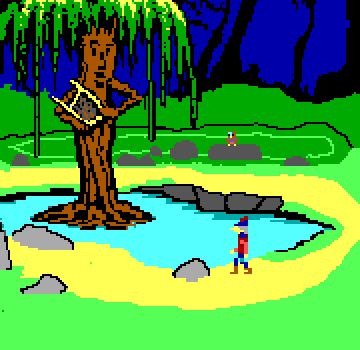
Workflow for demaking game screens into a retro style: 1. tell chatGPT to redraw an image in a 'low res ega' style. 2. shrink the image down to the smallest size 3. run it through an ega color converter website 4. meticulously clean it up by hand and redraw when necessary
@ChrisCamillo There will be a moment in the next 5 years where a new learning algorithm is created that is more similar to human learning (doesn't require back propagation or randomized neuron weights), and that breakthrough will instantly make every data center 1000X more powerful