A civilization endures when knowledge is transmitted, lived, renewed and institutionalized, not just inherited.
Bringing civilisational frameworks into active conversation with contemporary life: through education, culture, leadership and institutional might.
Bṛhat - Culture Engine for Indian Knowledge Systems.
Yoga, Ayurveda and modern healthcare - where do they meet?
Dr. Amy Wheeler and Sh. Satyam Tiwari discuss the evolving field of integrative medicine, yoga therapy, contemplative health, and emerging tech, ahead of the upcoming International Conference on Contemplative Health, AI & Innovation (@ICCHAI2026).
Watch the full conversation on YouTube: https://t.co/wH4nWsd3O7
For fifteen days every year, the guests of honour are our ancestors.
Mahālaya is the fortnight when we remember our ancestors.
They stay among us for two months, but wait for this fortnight to receive śrāddha.
Remember them this Mahālaya.
#Mahalaya#Pitrupaksha#Shraddha #Ancestors #HinduTraditions
A film is a visual and cultural product, shaped by its characters, costumes, symbols, language, music and the world it creates.
What makes each of these choices appropriate in the context of visual storytelling? This is where Aucitya becomes important. The principle asks us to consider the relationship between form, context, character, purpose and experience, helping a filmmaker discern what is appropriate to show and how it should be expressed.
At the Pune edition, filmmaker Vishal Chaturvedi @filmervishal, director of the hugely successful Hanuman Ansh, explores Aucitya in creative industries and what this Indic principle can offer in the contemporary filmmaking and creative practice.
Join us to explore how cultural intelligence can shape better creative choices.
https://t.co/aINFOx5c9d
We're honored to announce Dr. Sat Bir Singh Khalsa Corresponding Member of the Faculty of Medicine, Harvard Medical School as a speaker at ICCHAI 2026 (International Conference on Contemplative HealthTech and AI).
His talk, "Yoga as a Therapeutic Intervention: The Scientific and Clinical Rationale and Research Evidence," brings decades of research at the intersection of yoga science and clinical medicine to a conference built for exactly that convergence contemplative practice meeting AI and digital health.
📅 October 22–23, 2026
🌐 Primarily online in-person attendance is limited seats, Day 1 (Oct 22) only, at IIT Delhi
🎟️ Registration is free
Join us to hear from Dr. Khalsa and the full ICCHAI 2026 speaker lineup spanning contemplative neuroscience, Indian Knowledge Systems, and health AI.
👉 Register free at https://t.co/hPARl33HPn
📩 To request in-person attendance (Day 1 only, limited seats at IIT Delhi), email [email protected]
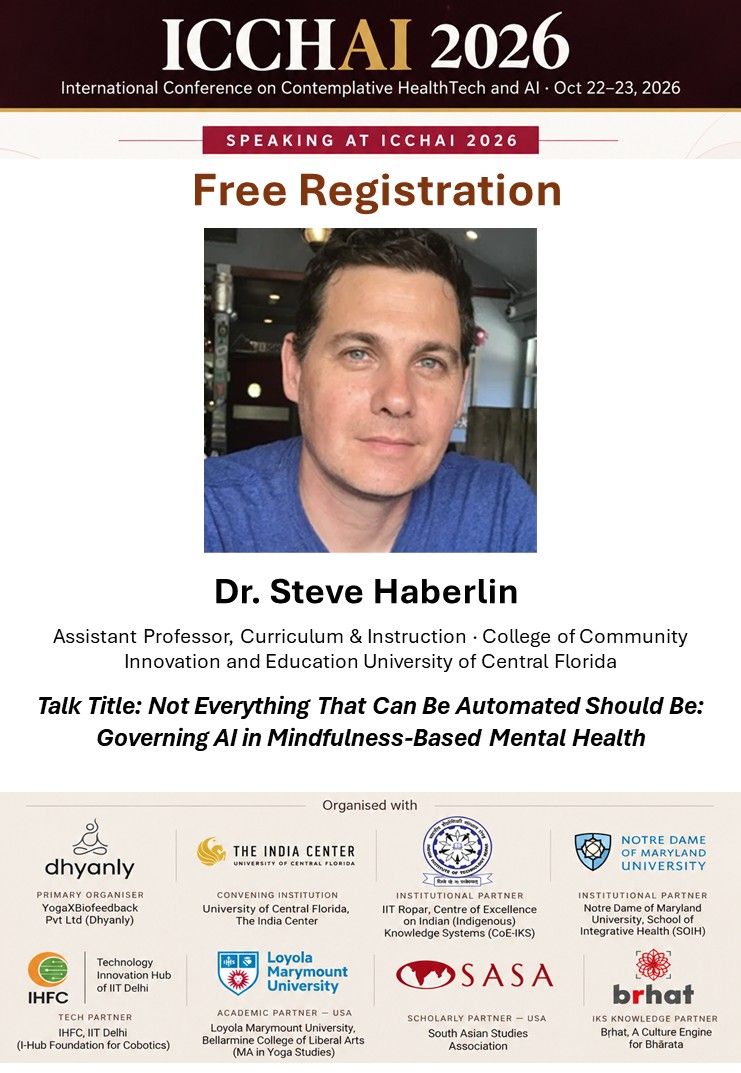
Can AI have a place in mindfulness and mental health and where should we draw the line?
At ICCHAI 2026, we're bringing that question to the stage with Dr. Steve Haberlin, Ph.D. (University of Central Florida), who isn't just speaking at ICCHAI he's been shaping it from day one as Co-Convener and Head of Global Outreach.
His talk, "Not Everything That Can Be Automated Should Be: Governing AI in Mindfulness-Based Mental Health," tackles head-on one of the most urgent conversations in digital health today how far AI should go in spaces built on human presence and care.
If you work at the intersection of mental health, mindfulness, or AI ethics, this is a session you don't want to miss.
📅 October 22–23, 2026
🌐 Primarily online, in-person attendance is limited seats, Day 1 (Oct 22) only, at IIT Delhi
🎟️ Registration is free
https://t.co/RghgWT86HG
📩 To request in-person attendance (Day 1 only, limited seats at IIT Delhi), email [email protected]
Seats and speaker slots are filling register now to secure your spot.
What if India's oldest knowledge systems are also its most underused diplomatic asset?
At ICCHAI 2026, Shri Akhilesh Mishra IFS (Retd.), Former Indian Ambassador to Ireland and High Commissioner to Maldives makes that case from the inside.
His talk, "Indian Knowledge Systems as Global Soft Power: From Diplomacy to Digital Health," connects decades of diplomatic experience to a bold vision IKS as India's next global export, from foreign policy to health tech.
📅 October 22–23, 2026
🌐 Primarily online in-person attendance is limited seats, Day 1 (Oct 22) only, at IIT Delhi
🎟️ Registration is free
https://t.co/RghgWT86HG
📩 To request in-person attendance (Day 1 only, limited seats at IIT Delhi), email [email protected]
Seats are filling fast, reserve yours today.
In Part 3 of the series, Sadasivan delves deep into the nuances of Saṃskṛta poetry and the language itself.
He explores Saṃskṛta nouns, derivation, cultural associations, and wordplay and looks at how familiar ślokas hide surprisingly clever layers of meaning.
https://t.co/UyDhYyj8eu
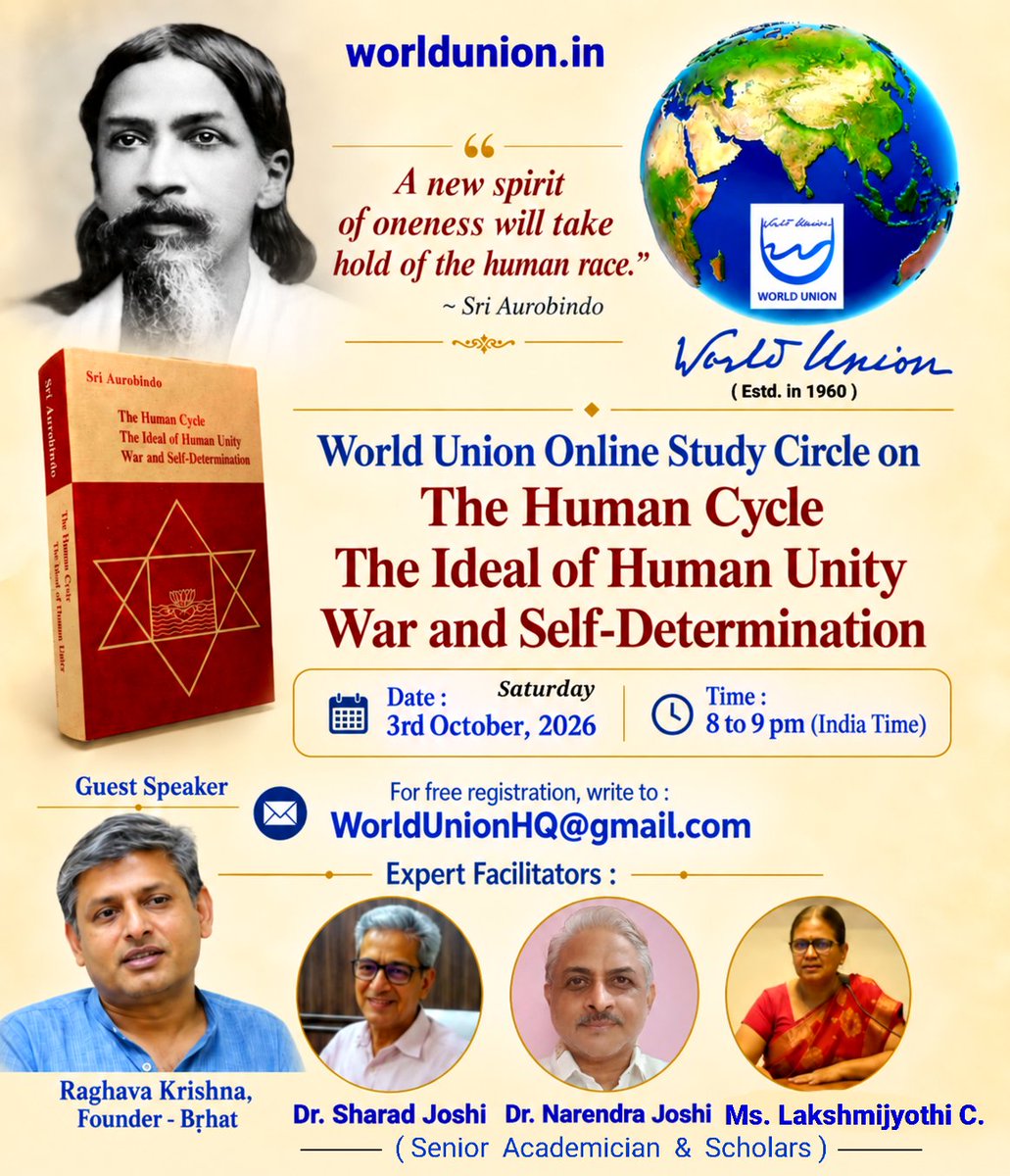
Śrī Aurobindo’s writings invite us to look beyond immediate challenges and reflect on the deeper possibilities of human civilisation.
This Study Circle is an opportunity to explore his vision of human unity, collective evolution, and the future of humanity through guided study and dialogue.
Date and Time: 3rd October, 8-9 PM IST
Write to [email protected] for free registration!
𝗧𝗵𝗲 𝗯𝗼𝗱𝘆 𝗶𝘀 𝗰𝗼𝗻𝘁𝗶𝗻𝘂𝗼𝘂𝘀𝗹𝘆 𝗽𝗿𝗼𝗱𝘂𝗰𝗶𝗻𝗴 𝗱𝗮𝘁𝗮.
Heart rate.
Respiration.
Electrodermal activity.
EEG.
But a signal is not the same thing as an experience.
That distinction matters.
At ICCH-AI 2026, 𝗕𝗶𝗼𝗳𝗲𝗲𝗱𝗯𝗮𝗰𝗸, 𝗪𝗲𝗮𝗿𝗮𝗯𝗹𝗲𝘀 & 𝗕𝗶𝗼𝘀𝗶𝗴𝗻𝗮𝗹 𝗦𝗰𝗶𝗲𝗻𝗰𝗲 explores how physiological signals can be captured, processed and interpreted in the context of contemplative practice.
Topics include:
• HRV and biofeedback wearable design
• Real-time physiological monitoring
• Nasal-airflow sensing
• Signal processing
• Biosignal integration into digital health platforms
The opportunity is extraordinary:
To move from asking people only 𝘄𝗵𝗮𝘁 𝘁𝗵𝗲𝘆 𝗲𝘅𝗽𝗲𝗿𝗶𝗲𝗻𝗰𝗲𝗱 to also investigating 𝘄𝗵𝗮𝘁 𝘁𝗵𝗲𝗶𝗿 𝗯𝗼𝗱𝗶𝗲𝘀 𝘄𝗲𝗿𝗲 𝗱𝗼𝗶𝗻𝗴 𝘄𝗵𝗶𝗹𝗲 𝘁𝗵𝗲𝘆 𝗲𝘅𝗽𝗲𝗿𝗶𝗲𝗻𝗰𝗲𝗱 𝗶𝘁.
But the scientific challenge is equally important:
𝗛𝗼𝘄 𝗱𝗼 𝘄𝗲 𝗶𝗻𝘁𝗲𝗿𝗽𝗿𝗲𝘁 𝘁𝗵𝗲 𝘀𝗶𝗴𝗻𝗮𝗹 𝘄𝗶𝘁𝗵𝗼𝘂𝘁 𝗼𝘃𝗲𝗿𝘀𝗶𝗺𝗽𝗹𝗶𝗳𝘆𝗶𝗻𝗴 𝘁𝗵𝗲 𝗽𝗲𝗿𝘀𝗼𝗻?
That is the kind of question ICCH-AI exists to explore.
📅 October 22–23, 2026
🌍 Worldwide
💻 Fully online
🎟️ Free to attend - Register: https://t.co/bGRsdiXTqN
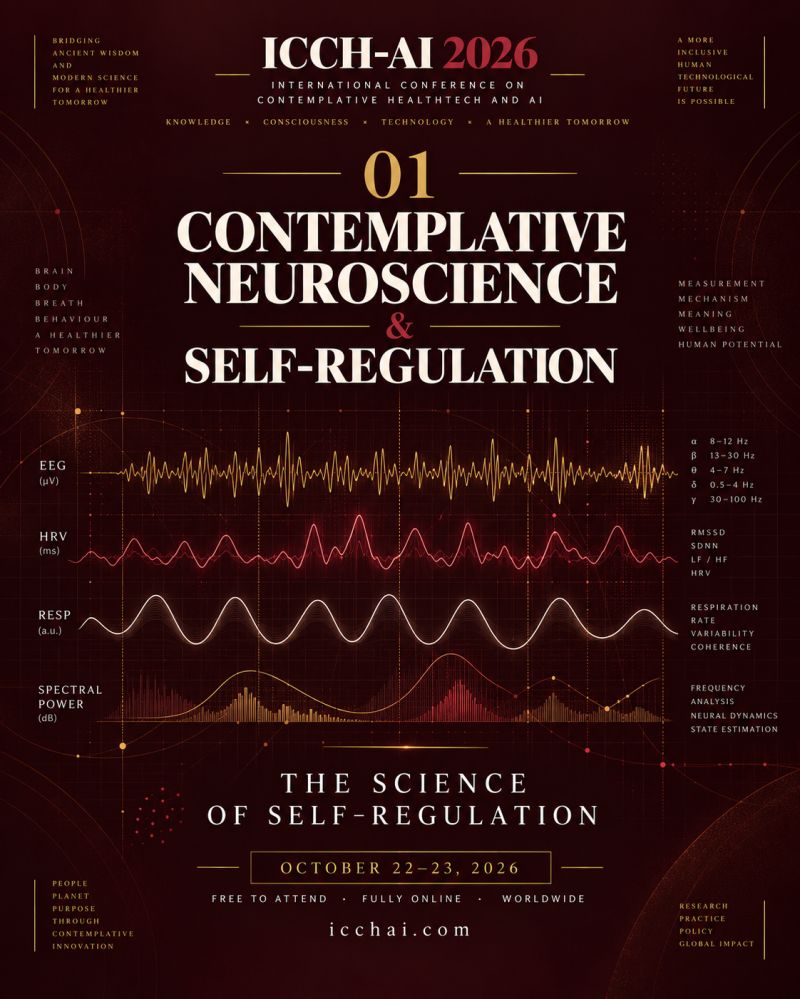
At the ICCH-AI International Conference On Contemplative Health and AI 2026, Contemplative Neuroscience & Self-Regulation explores questions around:
1) Neuroimaging and EEG
2) Heart-rate variability and vagal tone
3) Pranayama and paced breathing
4) Autonomic nervous-system regulation
5) Mindfulness-based interventions
𝗪𝗵𝗮𝘁 𝗵𝗮𝗽𝗽𝗲𝗻𝘀 𝗶𝗻 𝘁𝗵𝗲 𝗯𝗿𝗮𝗶𝗻 𝗮𝗻𝗱 𝗯𝗼𝗱𝘆 𝘄𝗵𝗲𝗻 𝘄𝗲 𝗽𝗿𝗮𝗰𝘁𝗶𝗰𝗲?
Contemplative traditions have developed detailed methods for working with breath, attention and mental states.
Modern neuroscience now has increasingly sophisticated tools for studying what happens physiologically during those practices.
The goal is not to reduce contemplative practice to a single number.
It is to understand what rigorous measurement can reveal, and what it cannot.
Because between lived experience and measured physiology lies one of the most fascinating interdisciplinary questions of our time.
📅 𝗢𝗰𝘁𝗼𝗯𝗲𝗿 𝟮𝟮–𝟮𝟯, 𝟮𝟬𝟮𝟲 (Online)
Register: https://t.co/bGRsdiXlBf
𝗝𝗼𝗶𝗻 𝘁𝗵𝗲 𝗰𝗼𝗻𝘃𝗲𝗿𝘀𝗮𝘁𝗶𝗼𝗻.
𝗪𝗵𝗮𝘁 𝘀𝗵𝗼𝘂𝗹𝗱 𝗔𝗜 𝗱𝗼 𝗶𝗻 𝗰𝗼𝗻𝘁𝗲𝗺𝗽𝗹𝗮𝘁𝗶𝘃𝗲 𝗰𝗮𝗿𝗲?
This may be one of the most important questions in the emerging field.
Artificial intelligence is increasingly capable of recognising patterns, personalising learning and interacting with people through digital systems.
But contemplative practice is not simply information.
It involves relationship.
Context.
Embodiment.
Experience.
And, often, a teacher or therapeutic relationship.
ICCH-AI 2026 therefore explores the possibilities — and limits — of:
• AI-powered posture and breath recognition
• Meditation-state classification
• Digital phenotyping
• Personalised learning platforms
• Generative AI tutors and coaching systems
• App-based digital therapeutics and clinical trials
The goal isn't to ask:
“𝗛𝗼𝘄 𝗰𝗮𝗻 𝘄𝗲 𝗽𝘂𝘁 𝗔𝗜 𝗲𝘃𝗲𝗿𝘆𝘄𝗵𝗲𝗿𝗲?”
It is to ask:
“𝗪𝗵𝗲𝗿𝗲 𝗰𝗮𝗻 𝗔𝗜 𝗴𝗲𝗻𝘂𝗶𝗻𝗲𝗹𝘆 𝗵𝗲𝗹𝗽 — 𝗮𝗻𝗱 𝘄𝗵𝗲𝗿𝗲 𝗺𝘂𝘀𝘁 𝗵𝘂𝗺𝗮𝗻 𝘄𝗶𝘀𝗱𝗼𝗺 𝗿𝗲𝗺𝗮𝗶𝗻 𝗰𝗲𝗻𝘁𝗿𝗮𝗹?”
📅 October 22–23, 2026
🌍 Worldwide
💻 Fully online
🎟️ Free to attend - Register: https://t.co/bGRsdiXTqN
Join the conversation.
Explore the fascinating day- night celebration of Bengal’s Viśvakarma Pūjā and Manasā Pūjā.
Beginning with offering prayers to tools of trade, machines and craftsmanship during day, the celebration culminates with prayers to Goddess Manasā by night.
By: Sriti Hazra (@S_Sriti01)
#VisakarmaPuja #Manasapuja #MansaPuja
https://t.co/NoPtGSoF3w
Rāmakathā Beyond the Rāmāyaṇa by @purvaja_h | Ep. 4 - Vasiṣṭhopadeśaḥ
Recognising the depth of Rāma’s vairāgya, Ṛṣi Viśvāmitra invited Ṛṣi Vasiṣṭha to impart the wisdom that would become the foundation of the Yoga Vāsiṣṭha.
From puruṣārtha and the nature of bondage to the four gateways of liberation - Śama, Vicāra, Santoṣa, and Satsaṅga, a profound dialogue began.
Stay tuned for further episodes!
#RāmakathāBeyondTheRāmāyaṇa #ŚrīRāma #YogaVāsiṣṭha
Your practice is 𝟱,𝟬𝟬𝟬 years old.
The science measuring it is 30 years old.
The AI personalising it is being built right now.
𝗜𝗖𝗖𝗛-𝗔𝗜 𝟮𝟬𝟮𝟲 𝗶𝘀 𝘄𝗵𝗲𝗿𝗲 𝗮𝗹𝗹 𝘁𝗵𝗿𝗲𝗲 𝗺𝗲𝗲𝘁.
For the first time, 𝘆𝗼𝗴𝗮 𝗽𝗿𝗼𝗳𝗲𝘀𝘀𝗶𝗼𝗻𝗮𝗹𝘀 will sit in the same conversation as neuroscientists from 𝗛𝗮𝗿𝘃𝗮𝗿𝗱, AI researchers from IIT Delhi, and clinicians from 𝗢𝘅𝗳𝗼𝗿𝗱 — not as subjects of study, but as co-investigators of a tradition that was always rigorous.
This conference is for you if:
→ 𝗬𝗼𝘂 𝘁𝗲𝗮𝗰𝗵 𝘆𝗼𝗴𝗮 and want to understand what the science says
→ You want to know 𝗵𝗼𝘄 𝗔𝗜 𝗶𝘀 𝗿𝗲𝘀𝗵𝗮𝗽𝗶𝗻𝗴 𝘆𝗼𝗴𝗮 𝘁𝗵𝗲𝗿𝗮𝗽𝘆 and delivery
→ You practice and wonder what is actually happening in your nervous system
→ You sense that yoga’s moment in global health is now — and you want to be part of it
What’s inside ICCH-AI 2026:
🧘 Yoga, Ayurveda & Indian Knowledge Systems
🧠 HRV, EEG & Contemplative Neuroscience
💻 AI-Powered Digital Therapeutics
📡 Biofeedback, Wearables & Biosignal Science
🌿 Clinical Translation of Yoga Therapy
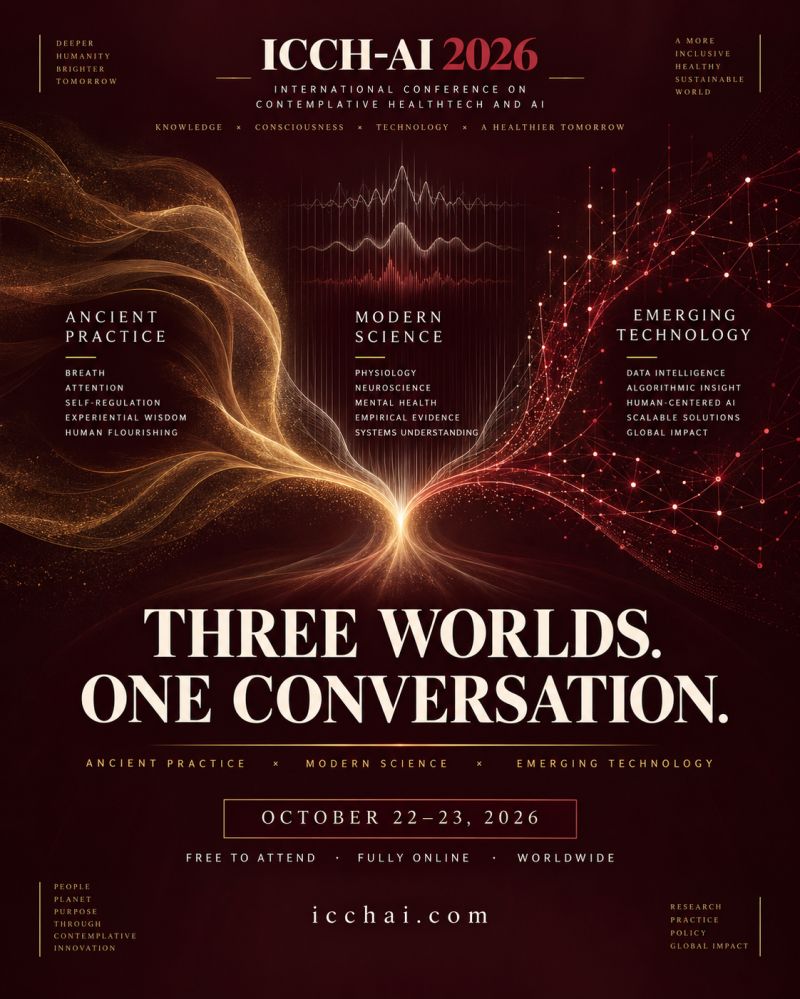
For centuries, contemplative traditions have developed practical knowledge about breath, attention, embodiment and the regulation of the mind.
For decades, modern science has developed increasingly sophisticated methods for studying those processes, from neuroimaging and EEG to heart-rate variability and physiological measurement.
And now, emerging technologies are changing what becomes possible.
Artificial intelligence can analyse complex patterns.
Biosensors can continuously measure physiological signals.
Digital platforms can personalise interventions.
Together, these developments create an extraordinary opportunity.
But opportunity alone is not enough.
The deeper question is:
What happens when ancient experiential knowledge, rigorous empirical science and intelligent technology enter the same conversation?
That is the space ICCH-AI 2026 is designed to explore and Bṛhat is proud to be a Knowledge Partner for this definitive Conference.
📅 October 22–23, 2026
🎟️ Free registration at https://t.co/bGRsdiXTqN
🌍 Fully online · Worldwide