@businessbarista Virtual reality simulation of curricular or historical lab experiments that accompany moocs to help students get more tangible understanding of concepts as well as getting more hands on experience
@benz145 I agree. Headsets are getting lighter and better in quality much faster than games and software being developed for VR. Especially want to emphasize that VR needs more experiences that are not games
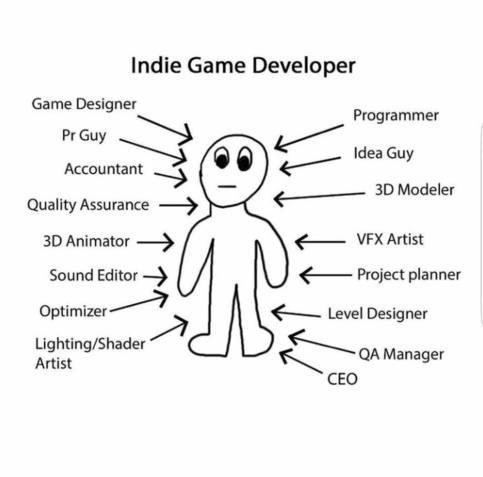
Games are basically all the 7 artistic mediums together, no?
Film = Cinematics
Music = Songs
Painting = 2D Art
Literature = Story
Architecture = Environment design
Sculpture = Character design
Performing = Voice/Animations
How could this not be the ultimate art form?
In my experience, smart founders are always hunting for advantages in the early stage because they understand how hard it is to find product market fit. They want to figure out how to slightly bend the odds in their favor.
"The research shows the LucidGlove Prototype 4 as to be suitable for current XR-based medical teaching" - from https://t.co/5VZYnAbKlz
From the journal, Current Directions in Biomedical Engineering
@hrafntho Yeah I can’t disagree. A lot of people play VR for first time, really impressed by it, but most don’t find long term value in using VR headsets.
@anshelsag It’s mainly a crypto hype train, just like NFTs and crypto tokens. Just people hoping that price of their land will rise. Why pay for a virtual land that is not tangible, has no utility and can expand indefinitely?
This post really captures the nature of technology. With each iteration cycle and (hardware) technology breakthrough, there is another term that is added to the similar concept.
A recent example of this would be machine learning. Even just a decade ago,…https://t.co/e1v9L3fosg