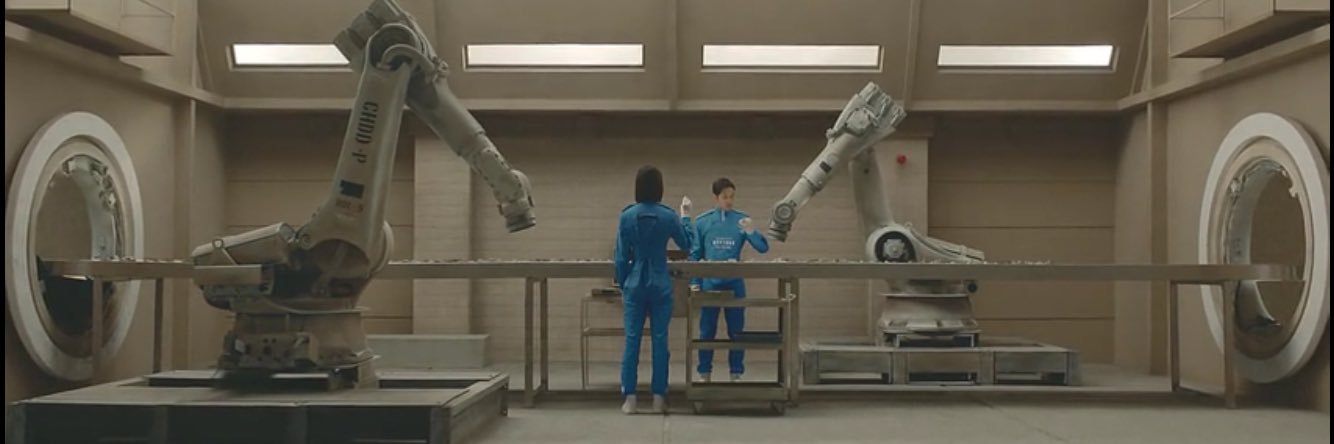
Robots learn by watching people work. Most of what they watch is staged.
At @Maxinsights, we capture real work at natural speed in real homes, restaurants, and hotels. 2M+ hours so far.
Today we’re announcing a $30M seed round led by @PeakXVPartners, plus two new products:
MaxLoop: same-day quality scores on every clip
MaxGlove: touch and force data a camera can't capture
Thank you to our investors, builders, operators and customers. More to come.
Dyna-2 trained on more than a million hours of human video, and we were its largest data partner. We've delivered 2M hours since, 30+ teams are now under contract, and at 450,000 hours a month of capacity the next million takes about ten weeks.
@chris_j_paxton for contact rich stuff I'd take depth over a wide view any day. once the gripper's on the object, the force and timing history is what you need and most of the scene barely matters
@EclipseVentures@charlythuo@BusinessInsider@ryajetha messy real environments are where we spend most of our time. real homes, restaurants and hotels, and we're still learning from every one. 2M hours delivered and model training ready so far
@chris_j_paxton what happens when the arm's pressing hard on something and barely moving? not much gap between where you wanted to go and where you went, so the encoders don't give you much
@adityaag@svlevine@physical_int does making it bigger also cover the handoff between tasks? single-task models always seem to choke right when one job ends and the next starts
A new chapter for Maxinsights.
Today, we're introducing our new visual identity — a reflection of how far we've come and where we're headed.
Our vision is to scale real-world human experience into the foundation of Physical AI.
Proud of what our team has built and the direction we're taking together.
@agilityrobotics curious how Digit's hands handle grip force feedback in the loop. we build force/grip capture for human data and it's the hardest signal to get clean, wonder if it's just as messy on the robot side.
Robots learn by watching people work. Most of what they watch is staged.
At @Maxinsights, we capture real work at natural speed in real homes, restaurants, and hotels. 2M+ hours so far.
Today we’re announcing a $30M seed round led by @PeakXVPartners, plus two new products:
MaxLoop: same-day quality scores on every clip
MaxGlove: touch and force data a camera can't capture
Thank you to our investors, builders, operators and customers. More to come.
Flora vs. ChatGPT vs. MaxVLM 👀
On WGO-Bench HomER, MaxVLM scores 26.5 segmentation F1 vs. GPT-6 Astra’s 25.2 and NVIDIA Flora’s 23.9: 5.2% and 10.9% higher, respectively.
MaxVLM: Our in-house video understanding model. Not for sale. Built to scale high-quality egocentric data.
Video coming soon 🎬
#flora #nvidia
We built a robotics data engine with Astra-level performance at 125x lower cost. And we are open-sourcing the weights today! Introducing Flora, a suite of open models to parse the physical world and turn raw footage into rich training signals.
Flora already powers our in-house data engine, labeling 200K hours of videos a day on 500 GPUs. We created it to scale the frontier for robot learning. Now you own the weights too.
Flora gives you:
- High-quality, timestamped captions to curate and filter human egocentric and robot data;
- Dense progress rewards for quality control and RL post-training;
- Rubrics scoring for real-world benchmarking
Try it today, links in thread:
The part I'd push on is hours × information per hour. An hour in someone's real kitchen at dinner time has way more in it than an hour of tabletop pick and place, and there's still no standard way to measure that. Most of us are making it up internally.
RL environments + Real-world = a more complete training package for AI model builders.
Making deployment easier is the next phase of robotics intelligence.
That’s why: operations matter.
Writing a new piece about Physical AI RL environments
Which companies should I chat with working in
- Real world Deployment Data
- Simulation for Deployment rollouts
We label video with MaxVLM, trained on our own 2M hours of real work, and the clips that still trip it up are the boring ones. A hand goes behind a pan halfway through a task and comes back holding something else. Curious how Flora's captions do on those.
We built a robotics data engine with Astra-level performance at 125x lower cost. And we are open-sourcing the weights today! Introducing Flora, a suite of open models to parse the physical world and turn raw footage into rich training signals.
Flora already powers our in-house data engine, labeling 200K hours of videos a day on 500 GPUs. We created it to scale the frontier for robot learning. Now you own the weights too.
Flora gives you:
- High-quality, timestamped captions to curate and filter human egocentric and robot data;
- Dense progress rewards for quality control and RL post-training;
- Rubrics scoring for real-world benchmarking
Try it today, links in thread:
Echoing @_varunnair’s point: Data products ≠ data services.
Services customize data for each project. Products deliver standardized datasets built for quality, diversity, and scale.
@MaxinsightsAI builds data products, not the service.
Today, Dream Labs is coming out of stealth with Dream-1, a robot foundation model that controls bimanual robots it has never seen, on tasks it was never shown, in places it has never been, from $3/hour.
Dream API is live for everyone, today. 🧵
Nobody is running ablations on 2M hours, us included. So in practice quality means cheap checks (hands in frame, blur, annotation error) plus a guess that they track model lift. I'd love to see someone publish which of those checks actually predict anything.
Announcing the beta release of the Pi API. We’ve partnered with companies across diverse industries to adapt our models to their robots and applications, from harvesting strawberries to assembling servers. Now we’re opening access to more teams.
Introducing Natura-1, our first general foundation model for the physical world.
It follows natural-language instructions zero-shot and turns them into action with dexterous hands.
Natura-1 is a 50-billion-parameter mixture-of-experts (MoE) model pretrained on one million hours of egocentric human experience.
On top of this foundation, we conduct efficient post-training on a limited amount of robot data to adapt pretrained world knowledge to dexterous manipulation, yielding a model that generalizes to a wide range of unseen scenarios.
Natura-1 follows complex natural-language instructions zero-shot, reasoning through spatial constraints, multi-object relationships, and negative conditions.
It can also autonomously carry out long and continuous workflows to perform long-horizon executions.
Natura-1 provides early evidence that generalization—and even emergent behavior—can coexist with the complexity of dexterous hands.
Further progress depends on the full stack: infrastructure for faster training and real-time inference, pretraining data at greater scale and coverage, and models that transfer to robots with less adaptation.
We expect it to be a long-term research and engineering effort.