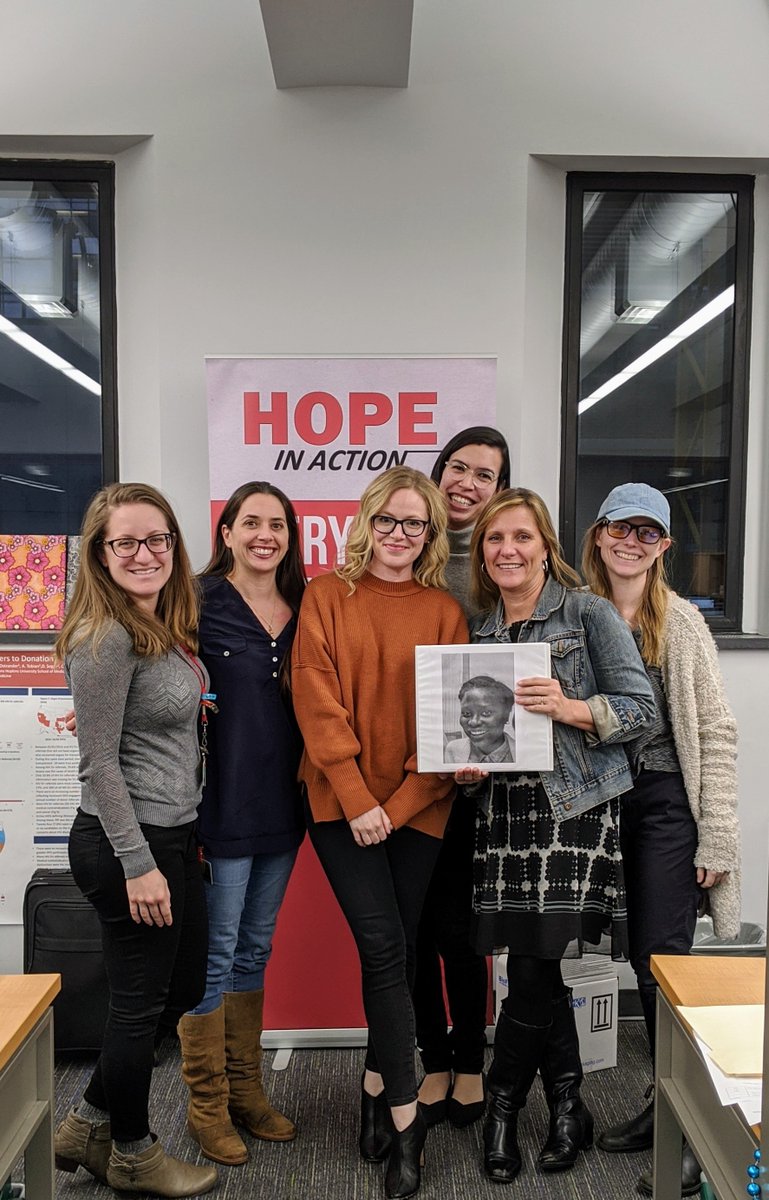
It's awesome to work on a team with smart, capable, strong people who want to solve big problems and do good things. More transplants, for more patients, from more #organdonors. That's what #HOPEtransplants are all about! #DonateLife cc: @JRJohnstone
@PeterPReese1 @emilyvailmd @PeterAbt2@neumanmd Could not agree more. Different practice, different structures, and wholly unregulated. Very important not to elide all DCUs as equally effective or *safe*.
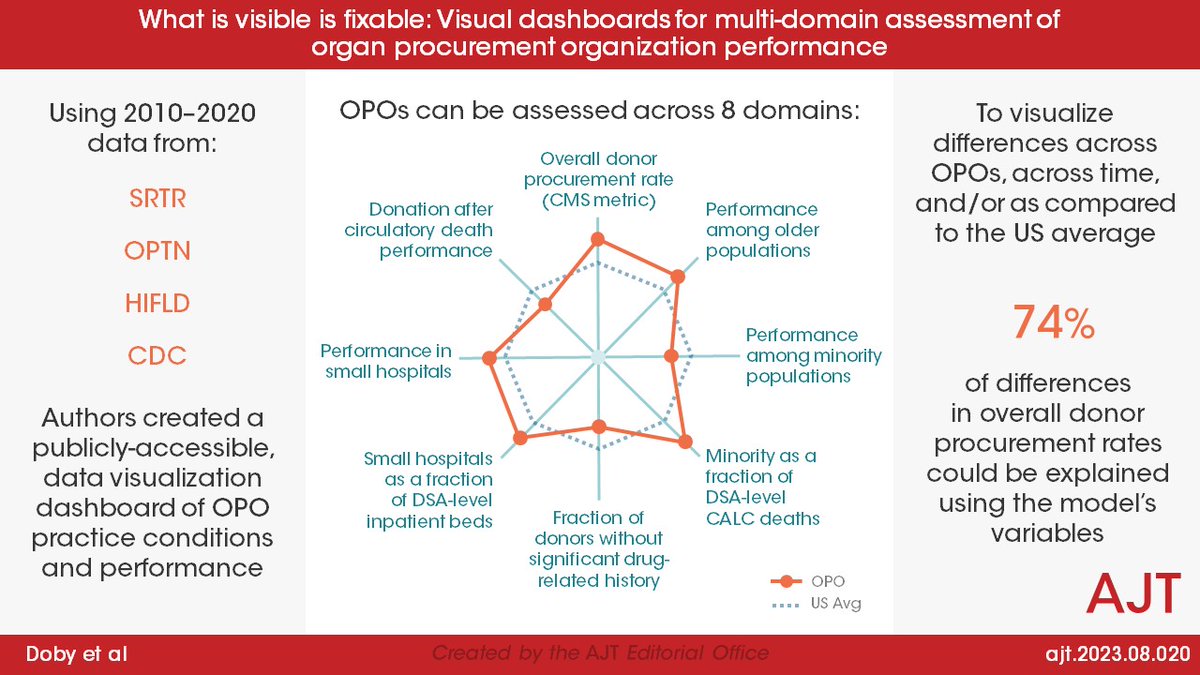
I'm proud of how much information our tool communicates about how OPOs do their work differently as healthcare orgs. Different providers have different pt outcomes!
Centering patients & families who get care from OPOs will lead to the greatest improvements in procurement care.
Brief communication by Doby et al, "What is visible is fixable: Visual dashboards for multi-domain assessment of organ procurement organization performance"
https://t.co/EiJsmqUMZB
Check out our new @amjtransplant paper that uses a valid and reliable measure of OPO performance to compare practice domains. And: we made it accessible, free, and easy to use!
Paper here: https://t.co/o2XGtOl45i
Comparison tool here: https://t.co/cKSVwVTmAY
cc: @kross_epi
As a researcher who studies organ procurement systems, I have some war stories to tell about Nudge-based mythology wasting a ton of time on the wrong topic. @RottenInDenmark gets it right when he says opt-in vs. opt-out debate masks *healthcare system* issues re: organ donation.
@DrLiver@CMSGov@DonateLifeAR And, I can tell you, there are plenty of OPO CEO changes without proper focus on clinical standards. The problem with your paper is that the key personnel changes are not necessarily CEO. The OPO changed clinical director in the same era, and admins-on-call are also v important.
@DrLiver@CMSGov@DonateLifeAR I consulted for AROR over the same period. The valuable part of leadership change was permitting change in clinical process/SOPs. The previous standard of care permitted at that OPO was directly related to their poor performance.
We've seen transformational advances in science and technology since we passed the National Organ Transplant Act, but our organ transplant system has not kept up. I’m thrilled that is finally changing thanks to tireless advocacy from patients and leaders like @JerryMande.
Curious what friends/colleagues in tx & procurement think about this exchange between Senator @ChuckGrassley & @SecBecerra from the @SenateFinance hearing yesterday.
The perception of our system is that it is opaque w/ data & corrupt. How do we fix this?
https://t.co/vAj7idJkMJ
@camwolfe@DrLiver@MichaelGIsonMD WaPo is reporting because we, as a transplant system, created a mess. The House and Senate are functioning properly as oversight of the OPTN and HHS. If we, as a system, kept our house clean, we would not be here. All the press can do is report on what we allowed to happen.
@camwolfe@DrLiver@MichaelGIsonMD Ha! I understand the anxious response, but I see more and better options than the "blow it up" vs. "keep the devil we know" false dichotomy (this frame only benefits the status quo, IMO). The rest, I'll share offline, or maybe in a paper... :))
@AOPOHQ@JAMASurgery@JAMA_current@theNASEM Hi @AOPOHQ!
I'm a researcher with peer-reviewed papers about OPOs, & I previously worked as an OPO consultant.
Would it be helpful to provide an explainer on our new paper?
OPOs are healthcare organizations with variable patient outcomes & performance. Like hospitals!
@AOPOHQ@JAMASurgery@JAMA_current I am so disappointed in @AOPOHQ's response. Being scared of data is understandable, but the better response is to collaborate & improve.
Our study shows that differences in clinical practice by OPOS matter! Some OPOs perform better than others.
@BarryCMassa want to discuss?
I am so proud of our new study!
When you register to be an #organdonor, you trust that the care providers who will evaluate and care for you in that process will provide high quality care.
Research like ours can guide OPOs to improve their clinical practice & save more lives!
Focusing on organ procurement organization performance at individual hospitals could eliminate the shortage of extrarenal organs and increase the kidney supply. #donatelife https://t.co/wLvO9BIf8W
@AOPOHQ@JAMASurgery@JAMA_current If I told you that every hospital had exactly the same patient outcomes, would you believe it?
Of course not!
Because different providers & healthcare orgs have different patterns of practice.
OPOs are healthcare organizations. Therefore, they vary in process & outcome!
@KayeSteinsapir@AnthemBCBS Please contact the Organ Procurement Organization which provided care for your family--they should litigate these costs directly with the hospital. Legally, there is no cost for this clinical care to families, & this is a billing error. I am so sorry this is happening.
Original Article by Brianna L. Doby et al, “Examining utilization of kidneys as a function of procurement performance.” https://t.co/apjjreZmcd @Kross_epi@briannadoby @miriamgodwin4