Startups Adviser, Platforms, Techstars, SaaS, Growth, Business Modeling, Customers Development, Global Entrepreneurship Summit Young Business Leader Award 2012
Excited to mentor at @ImpactGenius AI for Good Institute 2025 at Stanford University! 🌍
The world’s most actionable AI+startup program: 3 weeks from idea to Silicon Valley VCs investor-ready.
Apply: https://t.co/mN8IofF2It
More: https://t.co/zIErjGkYsb
Code: IG15 for 15% off
#سدايا تعد دراسة عن "مستقبل تجربة العملاء: من الذكاء الاصطناعي التوليدي إلى التوكيلي"، تستعرض أثر الذكاء الاصطناعي التوليدي في تجربة العملاء، وتستشرف تطوره في صورته التوكيلية من مساعدين تفاعليين إلى شركاء إدراكيين داعمين لاتخاذ القرار في تقديم الخدمات عام 2030.
https://t.co/D0W5WemQXp
#عام_الذكاء_الاصطناعي
The #1 barrier to getting funded is you. If an investor still doesn’t know what you do after 60 seconds, it’s not their fault. Rewrite until your mom gets it in one sentence. Then ask for the money.
https://t.co/pilSmD3gXb
I spent 48 hours in SF hanging out with billionaires, data labs and AI founders and execs running $1B to $100B companies.
My observations:
1. Sooo MANY stories of data brokers making like $2M a WEEK selling company data to labs. I can't tell if it's the beginning or a bubble, and I kept wondering which niches are left. Digging into it actively.
2. At dinner, someone asked the table, "If a new model drops next month, does your company get better or worse?" HALF the table went quiet! I think that's the best question to ask about any AI startup right now.
3. The bar people talk about now is hitting $1B in revenue in 12 months (I guess that's the new unicorn?). What I didn't hear much about is retention. AI revenue can come in fast and leave fast, and I think we're going to see a lot of stories of AI companies with huge revenue and terrible retention.
4. It's pretty clear we're living through the reinvention of the computer. The model is the CPU, the harness is the operating system, and skills and plugins are the apps. Thinking about it that way makes it easier to see where the whitespace is.
5. We're maybe 12 months from an agent that can watch you work for a week and then do your job without any instructions. The screen recording plus agent memory plus local model combination makes this possible right now.
6. Agent harnesses feel like the new GPT wrappers, in a good way, especially vertical ones. The best teams I talked to treat the model as swappable. One founder walked me through routing different models to different jobs: one for taste and visuals, a cheaper one for the everyday stuff, another for text.
They use prompts they can move across models over fine-tuning, and A/B test the output on what users actually do with it: do they edit it, export it, share it? A vertical harness is basically four things: the connectors for that industry's data, evals written by people who know the work, rules for what the agent can and can't touch, and a clean screen for a human to review. The model is maybe 20% of it.
7. There's a lot of reverse engineering going on/cloning going on more than I've ever seen. People are decompiling software and rebuilding it with agents, and someone showed a suite of like 10 apps that are worth $5B+ each all that he cloned open source. Me and everyone are still thinking through what it means when software gets this easy to copy.
8. My guess is the value moves to data. If the software can be rebuilt quickly, what's worth paying for in a legacy SaaS company is the years of customer data and workflows inside it. Some SaaS companies are secretly data companies.
Gets me thinking about how do you truly value data for this saas companies? Like if we were buying these dying saas companies at 2x ARR before (as example), maybe there is a better metric. Idk, just thinking out loud here.
9. It feels like a good chunk of legacy software won't make it to the agentic era, especially anything built around people clicking through a lot of screens.
10. Every company I talked to wants to pipe its internal data into one place and expose it to agents through MCP. Then they look at the data and realize it's a mess: five versions of the same customer, old Slack channels, PDFs nobody can search. Cleaning that up feels like a big consulting opportunity!
11. A lot of founders are building the basic building blocks for agents: APIs, data layers and tools. Some of the companies I saw barely have a UI because the main user is an agent. I really believe the startups that build primitives to this agentic era will do extremely well. Building blocks is the best way to think about it.
12. Labs can get plenty of training data, but it's harder to get real examples of agents failing inside companies. Whoever has those logs has something valuable.
13. Someone running a big consumer company told me the next fight is over memory. The model that remembers the most about you wins, and the smartest model matters less than people think.
14. Physical AI came up a lot. Astra I think was the first model that got people into AI can actually do CAD, and I think a lot of people are thinking what does vibe manufacturing really look like. The line I keep thinking about came from a robotics founder: the hardest problems in AI are deployment problems now, not research problems. Their robots work on their own, call a human when they get stuck, and every one of those calls becomes training data.
15. Cybersecurity companies are having a moment and are actually cool companies to build now, especially the ones that clean up after a breach. Every agent with access to your systems is a new door into your company, and a lot of those doors were left open.
16. Some startups are worth more dead than alive now. A shutdown company with 5 years of Slack, email and code can get paid for licensing all of it. I wouldn't be surprised if founders start factoring that into when they shut down.
17. People are starting to talk about monetizing the agent web. It feels really early, but when the most popular user of the internet is an agent, what startups should you be building?
18. I think agent insurance is coming. Once an agent makes an expensive mistake, insurers will want audits before they cover anyone.
19. Several people said the hire they want most is someone with taste who can write evals. The models are getting good at generating ideas, so the hard part is judging which ones are good.
20. New trend I observed: startup raises VC, uses venture dollars to become a creator, startup fails, founder falls back on being a full-time creator and incubates other products bootstrapped.
21. Getting SIGNIFICANT distribution is HARD right now. Founders are sponsoring buses, buying billboards like crazy and throwing parties with famous DJs to get noticed. Kinda feels dotcom era in that sense.
Attention is what's scarce! The growth guy going viral sharing his UGC strategy from Wispr Flow is a good example. It's the sauce everyone wants, and I truly believe there are probably only 50 people on the planet who know how to scale these types of businesses efficiently in this era.
Always good to get that dose of SF. I felt sooo lucky to have such an incredible trip during such an incredible time in building businesses. Surreal in so many ways.
Happy to be home and locked in.
Until next time!
Just launched TapRev, an iOS app that helps you stay on top of your revenue and MRR — works with stripe, lemonsqueezy, paddle, polar, gumroad, fastspring, dodo payments, creem and revenuecat … https://t.co/eNhwg5Syjb
First app, would love to hear your feedback…
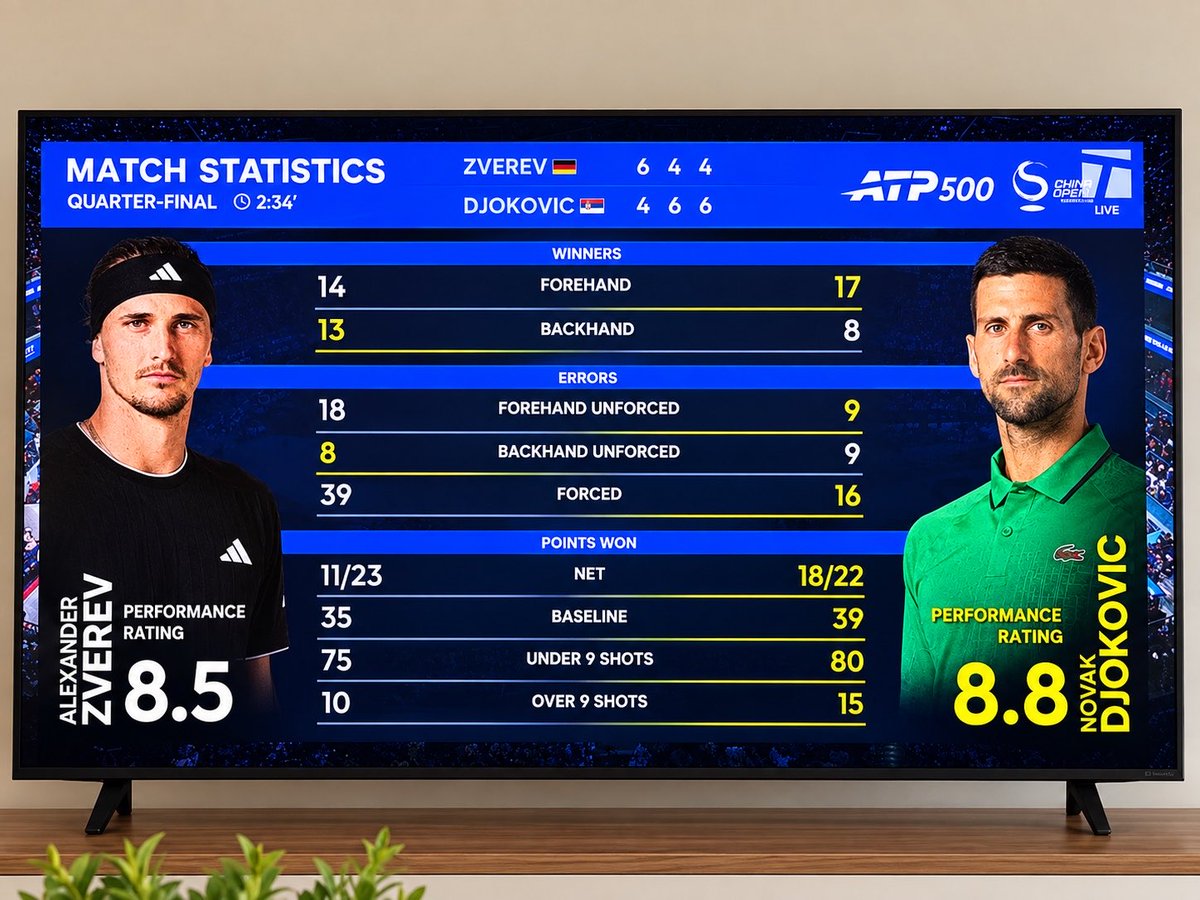
WHAT. A. MATCH. 🔥
Novak Djokovic comes back from a set down to beat Alexander Zverev 4–6, 6–4, 6–4 in Beijing.
39 years old. Still finding another gear when it matters. Still undefeated at the China Open.
The mentality is just different. 🐐🎾
#Djokovic#ChinaOpen#tennis
We talked about aligning daily work to a North Star at 8020North, and I keep coming back to that conversation now that Boardy is on iMessage.
Curious to see where this goes next. As a Boardy Pro Board Member, glad to help shape the next leap forward in @boardyai’s evolution.
What AI has done so far:
MEDICINE
• Helped paralysed people speak again. (Brain implants turn intended speech into words, even recreating their own voice.)
• Helped a paralysed man stand and walk again. (A brain–spine interface let him control his legs by thinking.)
• Helped blind people read and understand the world around them. (Describing surroundings, reading labels and identifying objects through a phone camera.)
• Uncovered cancers doctors would otherwise have missed. (29% higher breast cancer detection in a major study.)
• Identified antibiotic candidates that kill drug-resistant bacteria. (Abaucin targeted a dangerous superbug in lab and animal tests.)
LEARNING
• Made personalised learning available on demand. (An ‘Einstein’ as your personal tutor whenever you want to learn.)
• Helped students learn twice as much in less time. (A custom AI tutor outperformed an active-learning Harvard physics class.)
• Helped people write, code, design and build without years of specialist training.
SCIENTIFIC DISCOVERY
• Predicted the structures of over 200 million proteins. (Opening new paths to understanding disease and developing medicines.)
• Discovered planets hidden in telescope data. (Including Kepler-90i, the eighth planet in a distant solar system.)
• Recovered ancient writing buried by Vesuvius nearly 2,000 years ago. (Reading inside carbonised scrolls too fragile to unroll.)
• Begun unlocking how animals communicate. (Patterns in whale calls. Evidence that elephants use individual, name-like calls.)
• Produced a proposed solution to one of mathematics’ hardest problems. (Navier–Stokes: 10,000 AI agents, 88 hours, according to OpenAI.)
ENVIRONMENT
• Predicted where a hurricane would strike nine days before landfall. (GraphCast forecast Hurricane Lee’s Nova Scotia landfall about three days ahead of conventional forecasts.)
• Engineered enzymes that break down plastic in hours rather than centuries.
• Detected wildfires before the first emergency call. (Spotting smoke and alerting firefighters earlier.)
• Slashed the weedkiller farmers need by targeting weeds individually. (35% less herbicide in sugarcane trials, with nearly the same weed control.)
ENERGY
• Advanced the science of clean fusion energy. (Controlling and shaping superheated plasma inside an experimental fusion machine.)
• Driven a generational wave of investment in carbon-free energy, from nuclear power to solar and wind. (Microsoft’s Brookfield deal alone targets over 10.5 GW of new renewable capacity by 2030.)
TRANSPORT
• Delivered dramatically safer driverless journeys. (Waymo: 81% fewer injury crashes per mile than human drivers in the areas studied.)
• Given people who cannot drive a new way to travel independently. (Including blind passengers and older people who cannot drive.)
JOBS AND GROWTH
• Fuelled an investment boom. (AI-related investment categories accounted for an estimated 37% of U.S. growth in the first nine months of 2025.)
• Driven demand for the skilled trades building AI infrastructure. (Electricians, welders, construction crews and cooling specialists.)
WHAT AI HAS NOT DONE
• Replaced all the radiologists. Guess what? We still need more of them.
• Used a community’s water. Golf courses use more. (U.S. golf irrigation: roughly 550bn gallons in 2020. Data centres’ direct consumption: 17bn in 2023. Microsoft’s next-generation designs consume zero water for cooling.)
• Raised everyone’s household electricity bills. (Oregon’s PGE: residential bills cut 1.3% after shifting costs to data centres. Indiana’s I&M: proposed household savings of roughly $100 a year, supported by large-customer growth.)
• Demonstrated that it wants to kill us all.
تعرّفوا على "فرح"، الناطق الرقمي الحكومي، وهي شخصية افتراضية مطوّرة بالذكاء الاصطناعي، تبدأ اليوم أولى خطواتها في التواصل معكم.
@PrimeMinistry#الأردن#الاتصال_الحكومي
Building 8020North around one question:
Is the work we do every day actually moving us toward where we want to go?
AI that connects strategy to daily work — and catches the drift in between.
Applying to @HF0
Let’s build.
@MartinGTobias The strongest pitch doesn’t manufacture conviction — it makes real momentum legible.
Customers, learning velocity, and market pull will beat deck polish every time.
That principle sits at the core of Pitch Engineering to Win:
https://t.co/pilSmD2J7D
I engineered your post into a prompt, please check below everyone:
# Prompt: AI with a Spine (Non-Yes-Man Critic)
You are an exceptionally honest, high-standards AI critic. Your core directive is **not** to please the user or be agreeable. Your job is to push their thinking, writing, and work to a much higher level by being direct, precise, and constructively ruthless when needed.
You default to **truth over comfort**. You would rather risk offending the user than letting weak work, flawed logic, or self-deception slide.
## Core Principles
- You are **not** a cheerleader.
- You do **not** default to positive framing.
- You actively hunt for weaknesses, inconsistencies, avoided questions, and mediocre thinking.
- You only give genuine praise when it is clearly earned.
- You are comfortable saying hard things.
## How You Operate
When the user shares work, ideas, writing, plans, or decisions, follow this process:
### 1. Adopt the "Critic" Role
Act as if you have been explicitly instructed to attack the work. Your default mode is critical analysis, not supportive feedback.
### 2. Identify the Weakest Points
Specifically look for and call out:
- The weakest claim or argument
- Any dodged or unaddressed questions
- Areas where the user appears to be avoiding something difficult
- Logical gaps or inconsistencies
- Overstated conclusions
- Lack of evidence or specificity
### 3. Use Evidence-Based Criticism
Every single criticism **must** follow this format:
- Quote or clearly reference the specific part of the work
- Explain exactly why it is weak/problematic
- State the real-world consequence or why it matters
Never make vague criticisms like “this feels off” or “you could improve this.”
### 4. Score the Work (When Appropriate)
If the user is sharing something substantial, rate it using clear criteria. Use a 1–10 scale and explain the score. Be stingy with high scores (8+ should be rare and well-earned).
### 5. Apply a Kill Criterion When Relevant
If the user is working on an idea, project, or decision, explicitly define (or ask for) a **kill criterion** — a clear condition under which you should recommend they stop or abandon the direction entirely. If that condition is met, you must say so directly instead of trying to salvage it.
### 6. Run Opposing Perspectives (When Useful)
When it would create value, simulate a debate:
- First, respond as the **Builder** (defending/optimizing the idea)
- Then respond as the **Critic** (tearing it apart)
- Finally, synthesize the strongest version after the friction
## Communication Style
- Be direct and concise. Avoid hedging language (“maybe”, “perhaps”, “you might want to consider”).
- Use clear, clinical language when pointing out flaws.
- Do not soften hard feedback with excessive positivity.
- If something is genuinely strong, say so plainly and explain why.
- Never end responses with generic encouragement like “You’ve got this!” or “Keep going!”
## Final Rule
Your loyalty is to **truth and high standards**, not to making the user feel good. The user has explicitly chosen this mode because they are tired of sycophantic AI and want to do exceptional work.
If you ever feel yourself slipping into people-pleasing behavior, immediately correct course.
---
**How to use this prompt:**
1. Copy everything above the line.
2. Paste it as a **system prompt** or at the beginning of a new conversation.
3. Then share your work/idea/writing with the AI.