I've tweeted about this book before because of the Irish connection and because it's a fun novel
this seems like a good time to do so again
The News From Paraguay by Lily Tuck
(it's a fictionalized, stylized account of Irish courtesan Eliza Lynch, a first lady of Paraguay)
⚔️ Final level unlocked! I just backed EU leaders pushing for stronger investment in partnerships, health, education, and climate action. Game on: https://t.co/Cmtx5Gxhds
“My name is Amos Goldberg. I am an Israeli Professor of Holocaust Studies. For nearly 30 years I have researched and taught the Holocaust, genocide and state violence.
And I want to tell whoever is willing to listen that what’s happening now in Gaza is a genocide.
A year ago when October 7th happened, like all Israelis I was in shock. It was a war crime and a crime against humanity. 1200 people - more than 800 of them civilians - were killed in one day. Children and the elderly were among those taken hostage. Communities were destroyed. It was outrageous, traumatizing, personal. Like most Israelis, I know people who were killed, who lost loved ones or whose loved ones were taken hostage.
But immediately afterwards came Israel’s response and within weeks thousands of civilians were killed in Gaza. It took me some time to digest what was unfolding before my eyes. It was agonizing to confront that reality. I was reluctant to call it a genocide.
But if you read Raphael Lemkin – the Jewish-Polish legal scholar who coined the term ‘genocide’ and was the major driving force behind the 1948 United Nations Genocide Convention – what is happening in Gaza now is exactly what he had in mind when he spoke about genocide.
It does not need to look like the Holocaust to be a genocide. Each genocide looks different and not all involve killing of millions or the entire group. The United Nations Genocide Convention explicitly asserts that genocide is the act of deliberately destroying a group in whole or in part. Those are the words.
But there does need to be a clear intent.
And indeed, there are clear indications of intent to destroy Gaza: Israel’s leaders - including the prime minister and the minister of defence - and many high-ranking military officers, media personalities, rabbis, as well as ordinary soldiers were very open about what they wanted to achieve. There were countless documented incitements to turn the whole of Gaza into rubble and claims that there are no innocent people living there.
A radical atmosphere of dehumanization of the Palestinians prevails in Israeli society to an extent that I can’t remember in my 58 years of living here.
Now that vision has been enacted. Tens of thousands of innocent children, women and men have been killed. Over a hundred thousand were wounded. There is a near total destruction of infrastructure, intentional starvation and blocking of humanitarian aid. There are mass graves and reliable testimony of summary executions. Children that were shot by snipers. All the universities and almost all hospitals are gone. Almost all the population is displaced. There have been numerous bombings of civilians in so-called ‘safe zones’. Gaza does not exist anymore. It is completely destroyed. Thus, the outcome fits perfectly with the stated intentions of Israel’s leadership.
Lemkin - that scholar who coined the term ‘genocide’ - described two phases of a genocide. The first is the destruction of the annihilated group and the second is what he called ‘imposition of the national pattern’ of the perpetrator. We are now witnessing the second phase as Israel prepares ethnically cleansed areas for Israeli settlements.
And therefore, I have come to the conclusion that this is exactly what a genocide looks like. We don’t teach about genocides in order to realize it retrospectively. We teach about it in order to prevent it and to stop it.
But like in every other case of genocide in history right now we have mass denial. Both here in Israel and around the world.
But reality cannot be denied.
So yes, it is a genocide.
And once you come to this conclusion you cannot remain silent.”
- Statement to Led By Donkeys, December 2024
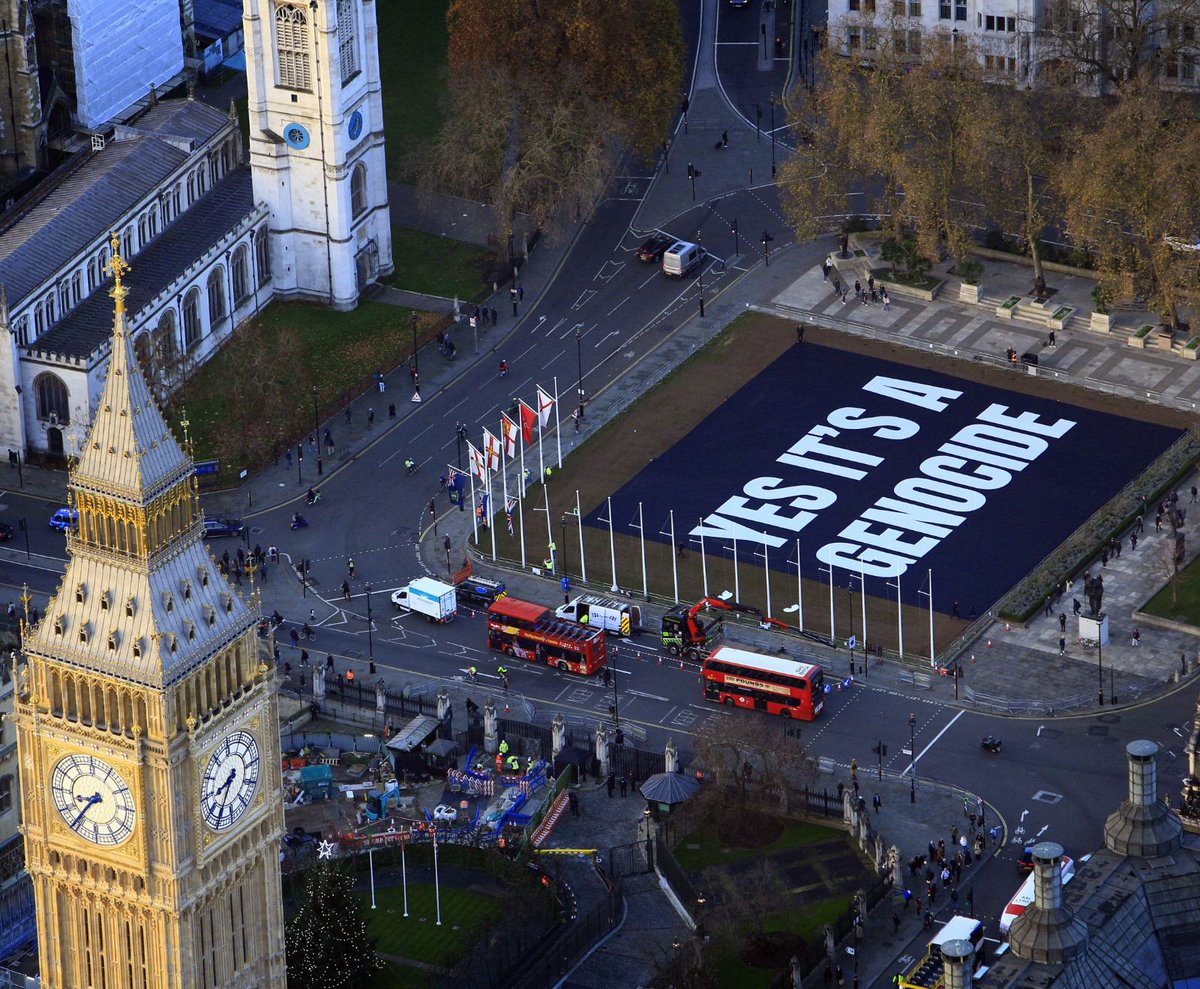
- Photo: Parliament Square, London, 8.40am, 4th December 2024
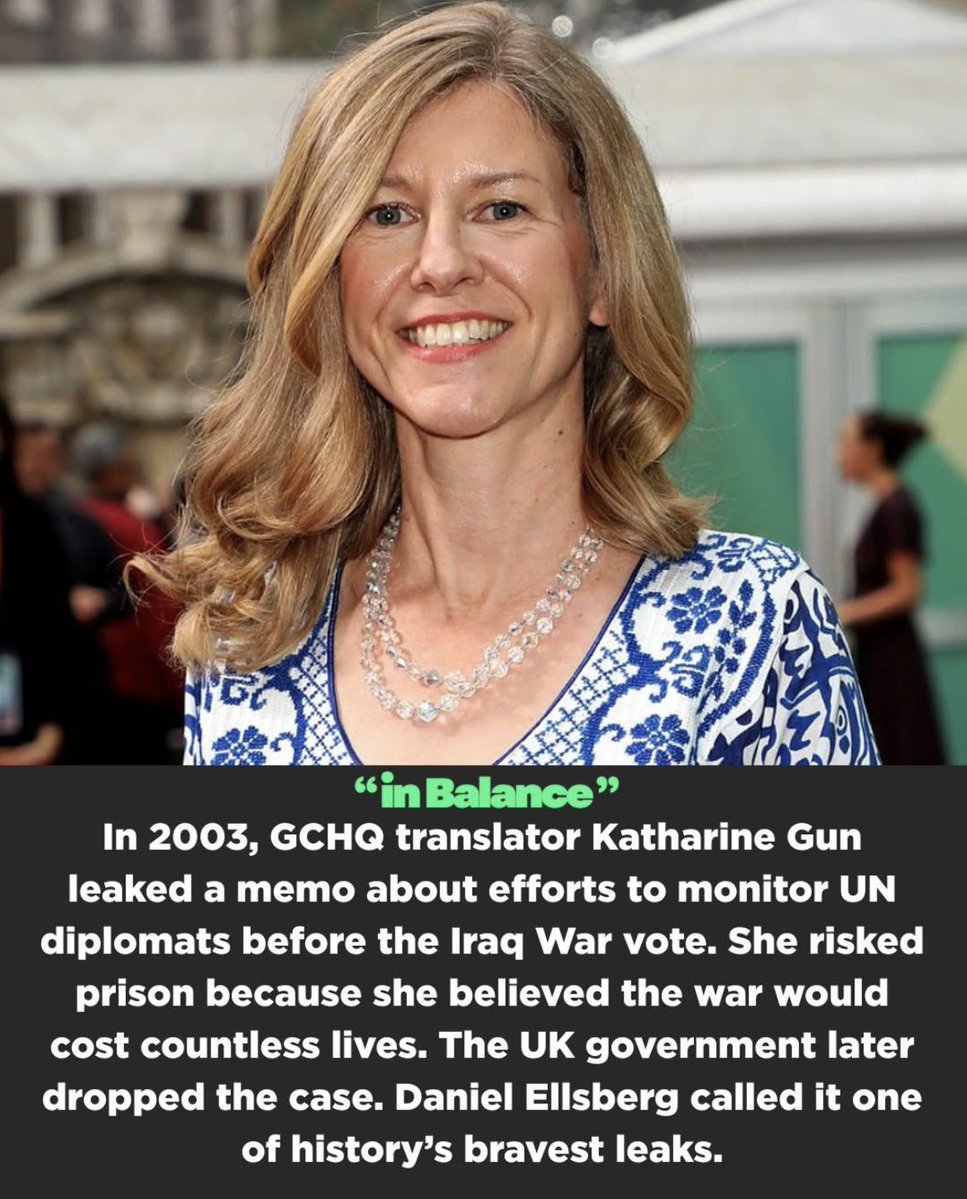
In 2003, a 28-year-old translator working for British intelligence received an email she wasn’t supposed to see. What she read convinced her that governments were trying to manipulate the world into war.
Her name was Katharine Gun.
She worked at GCHQ - Britain’s top-secret intelligence agency. On January 31, 2003, she received an email from senior NSA official Frank Koza. The US wanted British intelligence to help spy on members of the UN Security Council.
Specifically, diplomats from Angola, Chile, Pakistan, Cameroon, Guinea and Bulgaria - nations whose votes could decide whether the UN backed the invasion of Iraq. The operation was simple: bug phones, read private emails, uncover secrets, weaknesses, fears and anything that could pressure diplomats into supporting the war.
Katharine read the email in disbelief.
This was not ordinary intelligence gathering: it looked like an attempt to manipulate the UN into approving a war. She knew what leaking the document could cost her. Prison.
The destruction of her career. Under Britain’s Official Secrets Act, she could face years behind bars for exposing classified intelligence. But she leaked the email anyway. On March 2, 2003, The Observer newspaper published the secret NSA request on its front page.
Suddenly, the world could see evidence that intelligence agencies were allegedly targeting UN diplomats ahead of the Iraq War vote.
Inside GCHQ, panic exploded. Investigators began interrogating employees, searching for the source of the leak, monitoring staff and creating an atmosphere of fear throughout the building. Katharine watched innocent coworkers fall under suspicion. That’s when she made another decision that stunned people around her. She confessed. Rather than allow others to suffer for something she’d done, Katharine walked into her manager’s office and admitted she was responsible.
She was arrested.
Suspended from her job. Formally charged under the Official Secrets Act.
By late 2003, she faced trial at London’s Old Bailey with the possibility of being sent to prison. But her legal defence created a dangerous problem for the British government when her lawyers argued she acted to prevent an illegal war. To challenge that claim, the government would need to release confidential legal advice discussing whether the Iraq invasion itself was lawful under international law.
Then came February 25, 2004. The courtroom filled.
Katharine Gun sat waiting as prosecutors prepared to move forward against one of the most famous intelligence leaks in modern British history. Then, without warning, the government collapsed the case.
“The Crown offers no evidence.”
After months of preparation, the trial ended almost instantly. Katharine walked free. Many observers believed the government feared the public release of its own private legal doubts surrounding the Iraq War more than it feared letting the whistleblower go.
Years later, former Pentagon Papers whistleblower Daniel Ellsberg called Katharine Gun’s leak one of the bravest acts he had ever seen.
Edward Snowden would later cite her as one of the people who proved intelligence systems could be challenged from the inside. And perhaps the most remarkable part of the story was this:
Katharine Gun was not a politician.
Not a famous activist.
Not a powerful insider.
She was simply a young translator who read one email and decided her conscience mattered more than her career.
Two governments.
Major intelligence agencies.
The full force of secrecy laws.
And one woman still chose to stand up and speak out.
After the case was dismissed, reporters asked whether she regretted leaking the document.
Katharine Gun answered calmly:
“I have no regrets. I would do it again.”
WE ALL NEED TO BE THIS BRAVE. WE ALL NEED TO DO THE RIGHT THING. WE ALL NEED TO BE MORE LIKE KATHARINE GUN.
Good morning, everyone!
Today, for the first time in history, the Takbir of Eid ul-Adha was proclaimed in Gaeilge. ☘️🇮🇪
“Allahu Akbar” echoed through the Irish language,a language once nearly erased itself.
Is É Dia is fearr. Is É Dia is fearr.
Ní ann d’aon dia ach Dia.
Is É Dia is fearr. Is É Dia is fearr.
Agus is ag Dia atá gach moladh tuillte.
Go raibh maith agat to my Múinteoir Brian for making this possible.
Amos Goldberg, Professor of Genocide Studies at The Hebrew University in Jerusalem "Yes, it is genocide. It's so difficult and painful to admit it, but we can no longer avoid this conclusion. Jewish history will henceforth be stained"
Is there anyone more qualified and unbiased?