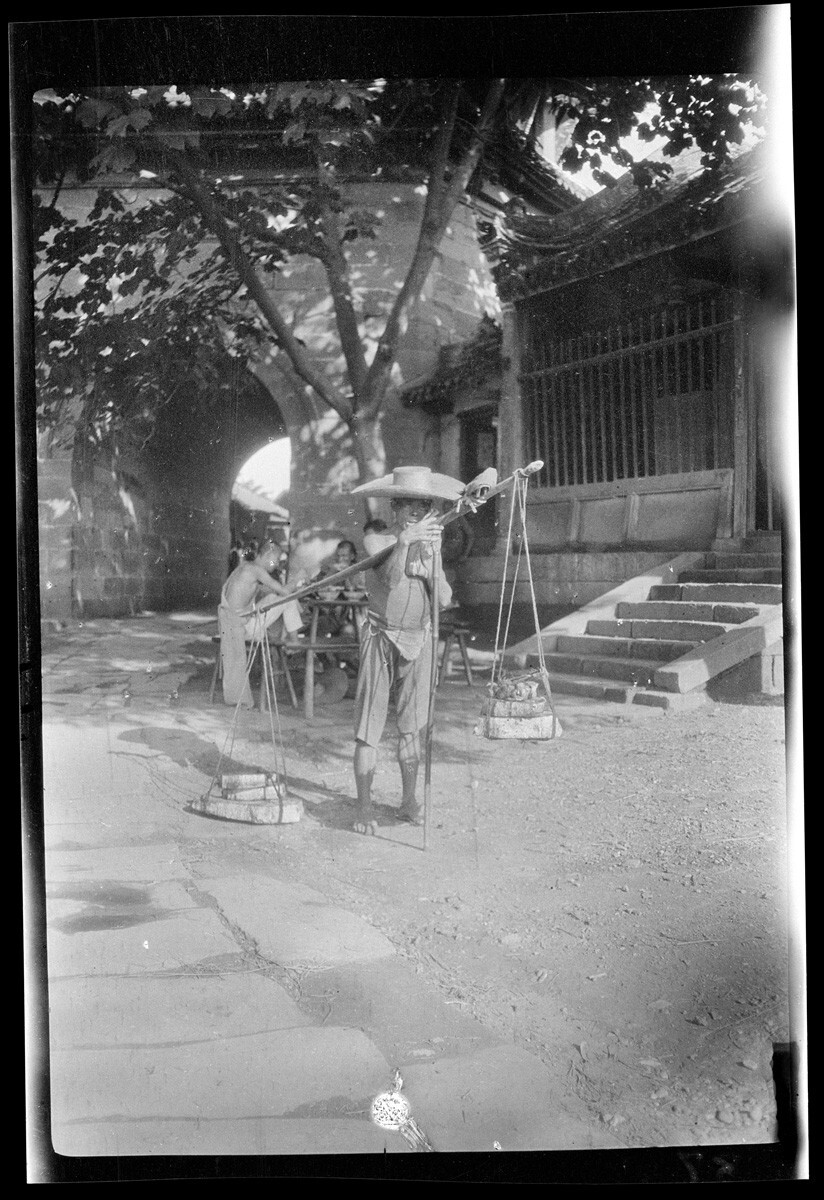
Not tea, salt, and a different load entirely, but the same province and the same decade as our porters in 山 shān. Gamble photographed this man in Chengdu in 1917. We keep finding these and keep being surprised how much of old Sichuan moved on somebody's shoulders.
The Confucius Temple in Beijing, around 1918. Sidney Gamble took this. Whatever that stele says, someone decided it needed to outlast the person reading it, which is most of what 日 rì is about for us. Duke has the Gamble archive free to browse if you want to go looking yourself.
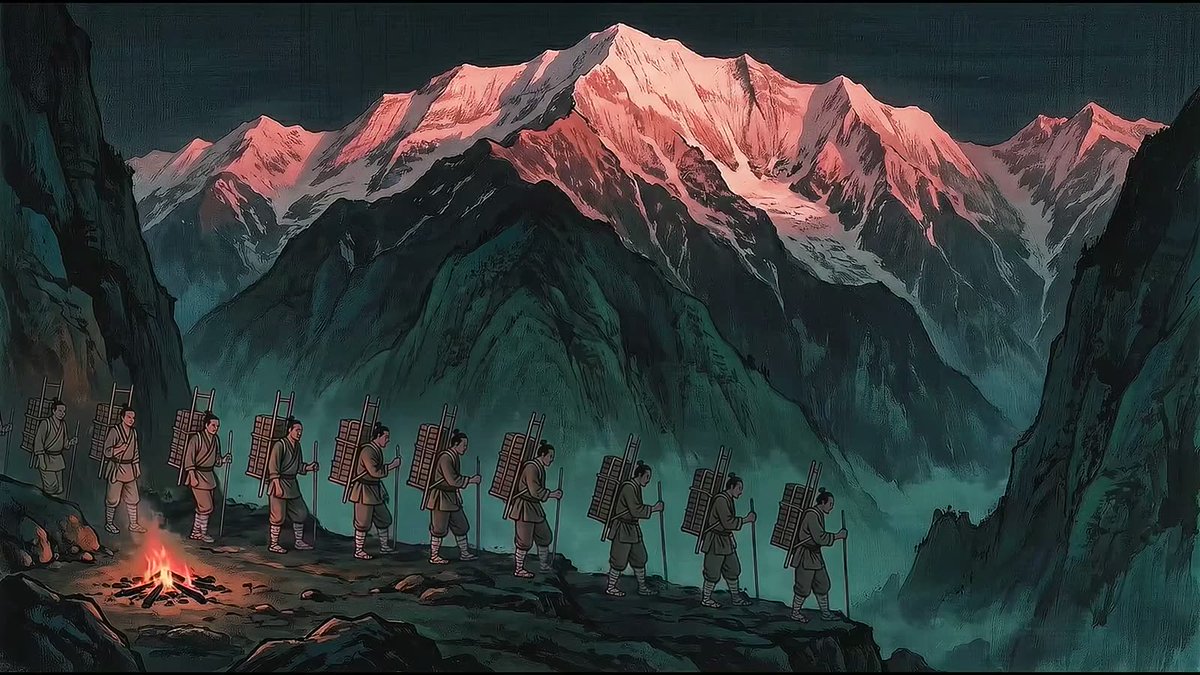
They could not set the load down and pick it up again, so each porter carried an iron-tipped staff and rested standing on it every few steps.
The staffs wore holes into the rock. They are still there, filling with rainwater.
東, east, is usually taught as the sun coming up behind a tree. In the oracle bones it looks more like a sack tied off at both ends. The sun and the tree arrive later, once the shape had already changed.
霸 means overlord now. In the bronzes it has a moon in it and meant the light on a waxing moon, 既生霸. The overlord sense is borrowed from somewhere else entirely.
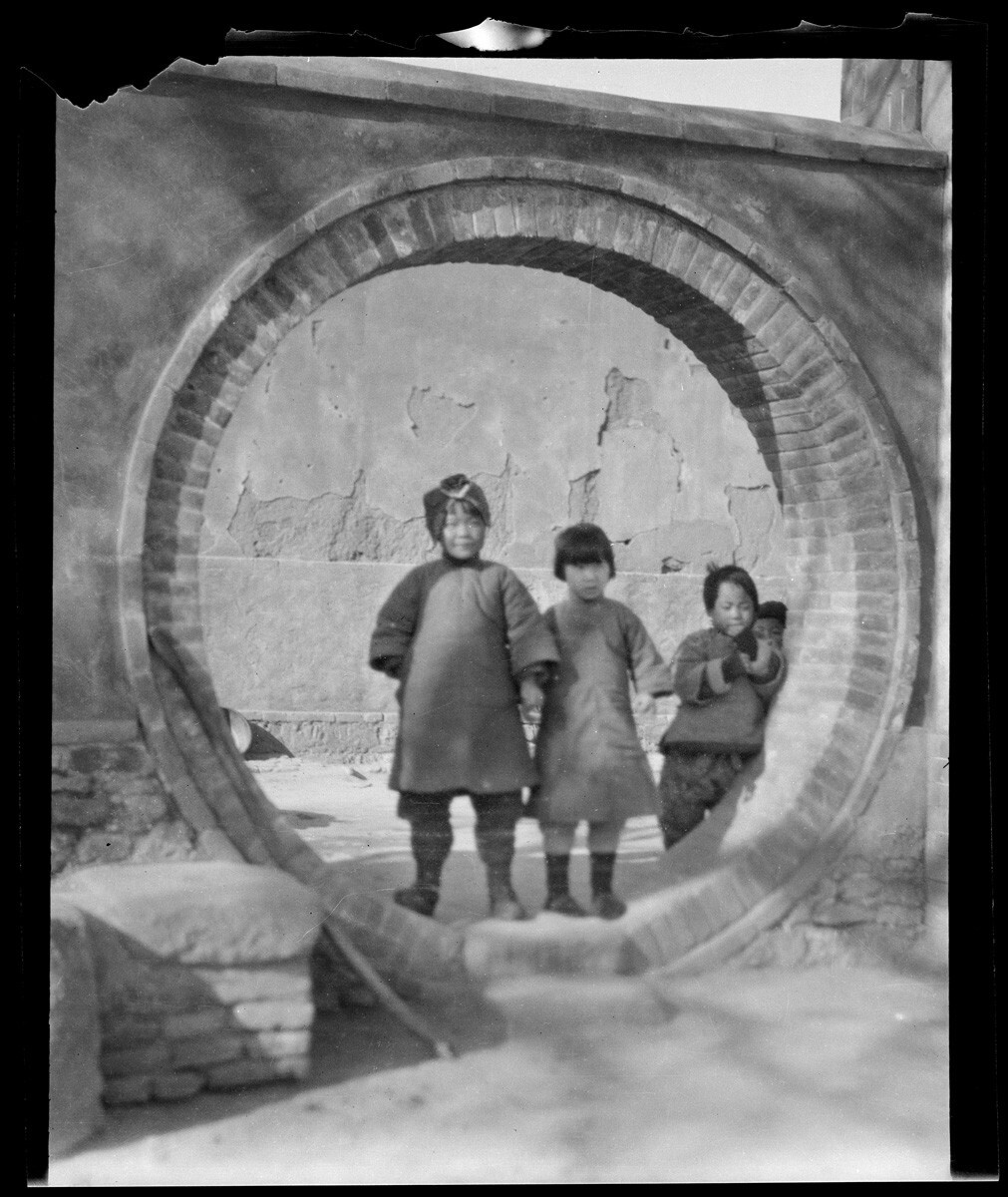
Episode two is about 月. Chinese architecture makes the moon round. The character does not, it is a sliver, which is the shape you actually see on most nights.
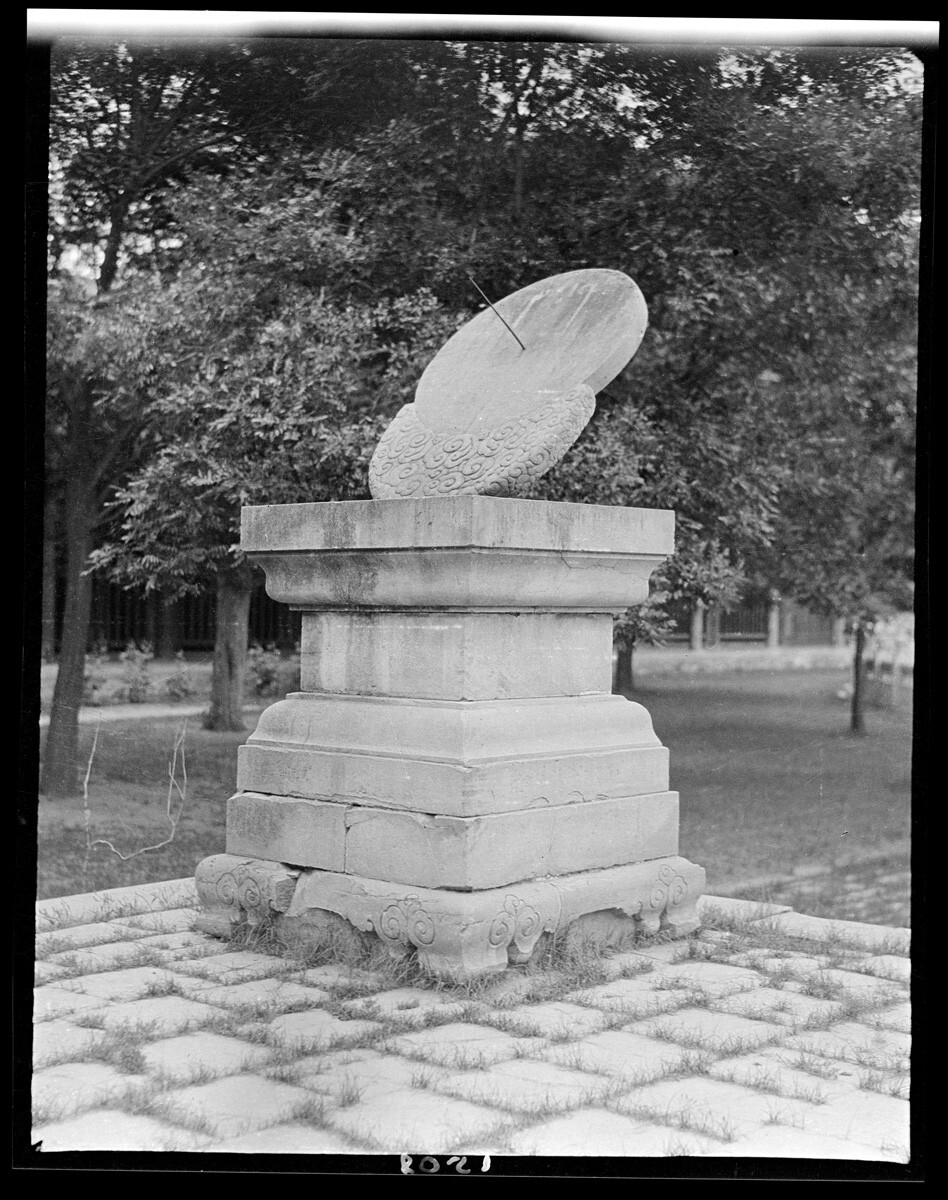
The sundial at the Hall of Classics in Beijing, photographed by Sidney Gamble between 1918 and 1919. Duke put his negatives online and waived every right they had in them.
@ihptaiwan Thank you for posting these. I keep ending up in the Grand Secretariat holdings when I want the actual wording of something rather than a summary of it.