The Bristol Scleroderma Service provides care to people and families affected by Systemic Sclerosis (scleroderma).The clinic is based at North Bristol NHS Trust
@RheumJnl@WeAreSRUK Thank you @RheumJnl for speaking with me. And thank you to all the team at @WeAreSRUK for all the fantastic work they do for our patient community here in the UK for helping to fund this work. #WorldSclerodermaDay
@RheumJnl@WeAreSRUK It is therefore important we flag up the symptoms and clinical features that GPs should consider to be 'red flags' and ensure these people are tested promptly to rule out conditions like systemic sclerosis.
@RheumJnl@WeAreSRUK We need to work with GPs to raise awareness and develop tools to help identify people at risk of SSc promptly. It is generally accepted that earlier diagnosis of SSc is important for avoiding treatment delay and improving patient outcomes.
@RheumJnl@WeAreSRUK For patients, it means raising awareness and encouraging people to visit their GP if they have symptoms of Raynaud’s to get themselves checked out promptly. This typically starts with getting a blood test done for the antibodies we usually find in people with systemic sclerosis.
@RheumJnl@WeAreSRUK have developed a tool to help people identify symptoms of Raynaud's and to encourage people with Raynaud’s to get themselves checked out at their GP. We recommend an onward referral to a rheumatologist if needed (https://t.co/NBcwQfujWF).
@RheumJnl Raising awareness of the ‘red flags’ for early SSc and getting people checked out for it. Red flags for systemic sclerosis include late-onset Raynaud’s phenomenon (>25 years old), puffy fingers, heartburn, and the development of sores on the fingers (digital ulcers).
@RheumJnl This is a very serious issue. Many patients with SSc tell us they knew something serious was the matter but were falsely reassured that it was just Raynaud’s phenomenon. Both Raynaud's and other symptoms that can occur in early SSc are very common and can be easily missed.
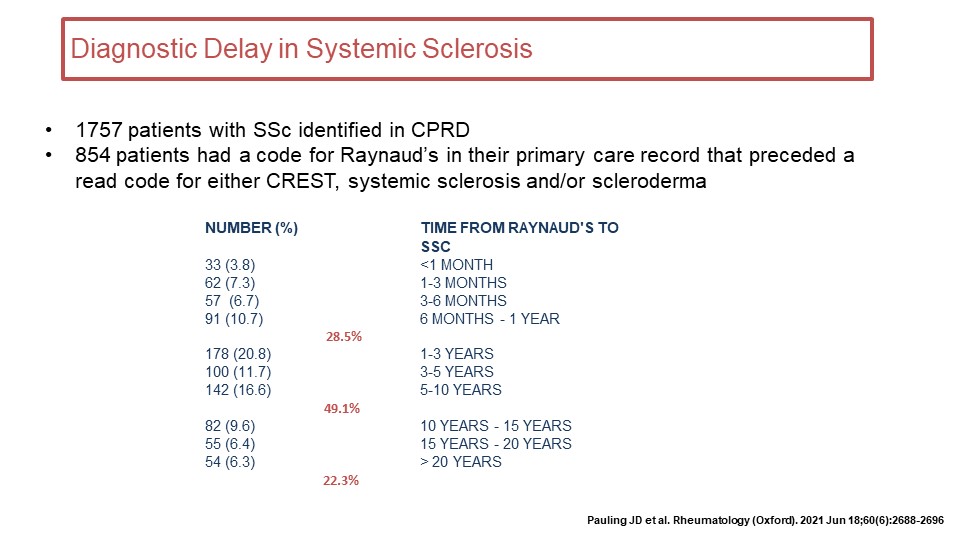
@RheumJnl A study in 🇨🇦 found ~25% of women with the commonest form of SSc waited 10yrs from Raynaud’s onset to being diagnosed with SSc.
We found that 1/2 of people with SSc were diagnosed with Raynaud’s at their GP practice. Of these, 1 in 5 waited 10 years before SSc diagnosis.
@RheumJnl This is an example of the kind of GP record of people who were subsequently found to have systemic sclerosis we identified in CPRD. I have changed the exact details and dates to maintain anonymity.
@RheumJnl https://t.co/BYhI13Wr8Z
We wanted to look at how common systemic sclerosis was in the UK so we can compare with other countries. We were able to come up with new estimates for the incidence, prevalence, and mortality of SSc in the UK.
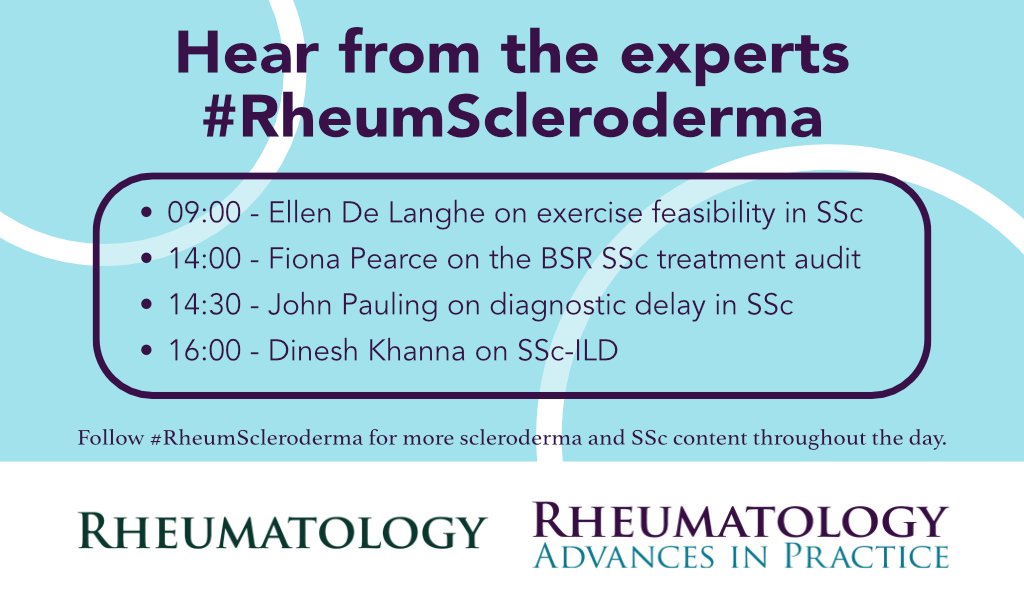
I'll be discussing the findings of a recent study we undertook that examined diagnostic delay in SSc https://t.co/BYhI13Wr8Z
#WorldSclerodermaDay#29thJune2022
I look forward to speaking with Rheumatology and Rheumatology Advances in Practice to discuss diagnostic delay in systemic sclerosis (@RheumJnl) #WorldSclerodermaDay
#WorldSclerodermaDay takes place on 29 June to raise awareness about this disease as well the unmet needs and challenges that the patient community is facing! Watch out for the launch of our new campaign which we will be unveiling soon! #Scleroderma#FESCA
A week of stories from our community
Gwyneth's story highlights the variety of symptoms that can affect those with scleroderma, often taking people by surprise at their severity.
Read her full account here: https://t.co/XHn9RChnX6